
A lot of North Atlanta homeowners start in the same spot. They step onto an old concrete patio, a weathered deck, or a patchy backyard transition area and realize the space isn’t doing much. It might hold a grill and a couple of chairs, but it doesn’t feel like part of the home.
That’s when outdoor flooring stops being a landscaping afterthought and becomes the core decision. The surface underfoot determines how the space drains, how much upkeep it needs, whether it gets slick after summer rain, and whether it still looks good after a few seasons of humidity, pollen, sun, and cold snaps.
Around Cumming, Johns Creek, Milton, Alpharetta, Woodstock, and the rest of North Metro Atlanta, generic outdoor flooring advice falls short. A material that works in a dry climate can become a maintenance problem here. I’ve seen beautiful-looking choices turn into warped boards, stained slabs, loose gravel, and mildew-prone corners because the installation didn’t account for Georgia moisture.
Transform Your Backyard into a North Georgia Oasis
A homeowner in Forsyth County usually isn’t looking for “flooring” in the abstract. They’re looking at a real problem. Maybe the back patio is cracked and stained. Maybe the deck boards are rough, splintered, and hard to keep clean. Maybe the yard gets muddy every time it rains, so the outdoor dining area never feels finished.
That’s why the best outdoor flooring ideas start with use, not just appearance. If the goal is family cookouts, you need a surface that handles furniture weight, foot traffic, food spills, and wet conditions. If the goal is resale, you need something buyers see as low maintenance. If the goal is year-round comfort, the material has to hold up through hot summers and occasional freezes without turning into a repair cycle.
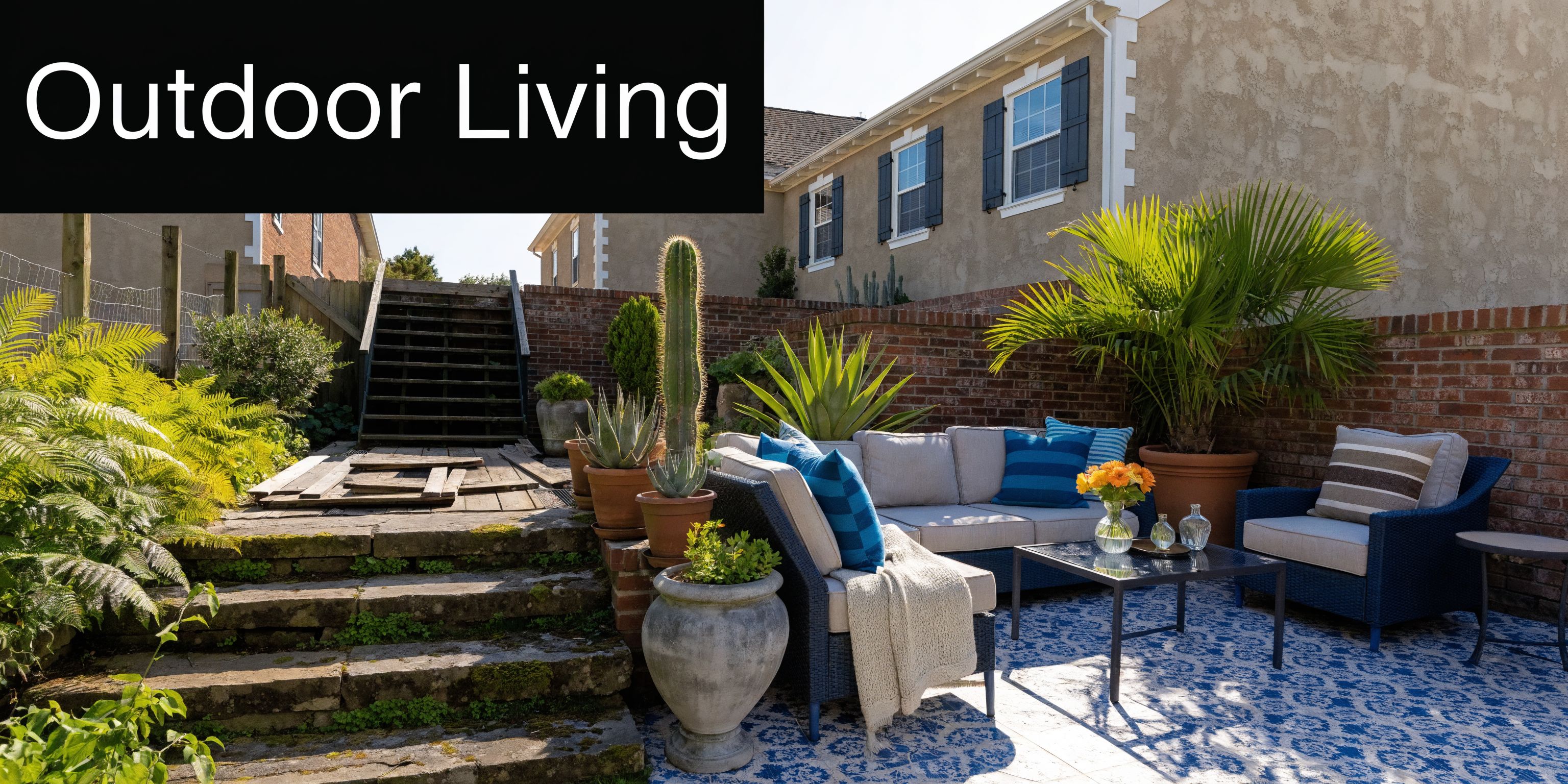
The market reflects that shift. The global outdoor flooring market reached USD 17,569.6 million in 2024, with North America holding over 40% of the share, a sign that homeowners are putting serious money into usable outdoor living areas rather than treating them as leftover space (outdoor flooring market report).
What changes when the floor is right
A good outdoor surface does more than look clean.
- It expands living space by turning a patio, deck, or courtyard into a place you’ll use.
- It simplifies maintenance when you choose materials that don’t constantly need resealing, repainting, or patching.
- It supports home value because buyers respond to finished, functional outdoor areas.
- It improves safety when texture, drainage, and layout are handled correctly.
Practical rule: If you wouldn’t want to clean it, seal it, or repair it every season, don’t install it just because it looks good in a photo.
In North Georgia, the floor has to earn its keep. Pretty matters. Performance matters more.
An Overview of Popular Outdoor Flooring Options
Choosing among outdoor flooring ideas is a lot like choosing tires. The right choice depends on where you’re driving, how much maintenance you’ll accept, and whether comfort or durability matters more for your situation.
Some homeowners in Marietta or Roswell want a polished entertaining patio. Others in Cumming or Canton need a surface that works on a sloped lot, near a pool, or beside a yard that stays damp after storms. The main categories are straightforward, but the trade-offs are real.

Quick comparison
| Flooring type | Best fit | Main advantage | Main drawback |
|---|---|---|---|
| Decks | Raised spaces, backyard entertaining | Warm look and comfortable underfoot | Wood can demand ongoing maintenance |
| Pavers | Patios, walkways, flexible layouts | Design variety and repair-friendly sections | Base prep matters a lot |
| Porcelain tiles | Refined patios, modern designs | Clean look and low maintenance | Needs precise installation |
| Concrete | Budget-conscious large areas | Simple, versatile base | Can crack over time |
| Artificial turf | Play zones, pet areas, accent sections | Soft, green, low mowing | Doesn’t replace every hardscape use |
Where each one shines
Decks
Decking works well when the outdoor area sits above grade or when you want that classic transition from indoor hardwood flooring to a backyard entertaining zone. Composite tends to appeal to homeowners who want less upkeep. Real wood appeals to people who love the natural look and are willing to maintain it.
Pavers
Pavers are the middle ground that solves a lot of practical problems. They can suit traditional homes in Woodstock, modern homes in Alpharetta, and uneven yards where poured concrete isn’t always the cleanest answer. If one section gets damaged, you can often address that area without replacing the whole field.
Porcelain tile
This is one of the strongest options for homeowners who want tile flooring outdoors with a more finished architectural look. It’s especially attractive when you want the patio to feel like an extension of the kitchen or sunroom.
Concrete
Concrete is often the simplest starting point. It can be plain, stained, or textured. It’s useful for larger patios and can pair with outdoor rugs, turf borders, or seating zones. Its weak point is that a plain slab can become visually flat and can show age if drainage or expansion details were skipped.
Artificial turf
Turf is best treated as a specialty material, not a universal answer. It works for dog runs, kid zones, and visual softening around hardscape areas. It doesn’t do the job of a dining patio, but it can make the whole backyard more usable.
Some outdoor flooring ideas fail because they’re chosen by style first and site conditions second. The backyard always wins that argument.
Hard Surfaces Pavers Porcelain Tile and Concrete
Hard surfaces carry the load in most serious patio projects. They support furniture well, create clear walkways, and usually give the cleanest finished look. For homeowners searching for tile flooring, waterproof flooring, or affordable flooring options for an exterior renovation, this group deserves the closest look.

The category is growing for a reason. The outdoor floor tiles market is projected to reach USD 18.22 billion by 2030, with ceramics and porcelain leading because of durability and design flexibility (outdoor floor tiles market forecast). That lines up with what works on the ground here in Georgia. Homeowners want a surface that looks sharp without becoming a maintenance project.
Porcelain tile for a cleaner long-term finish
Porcelain is often the smartest hard-surface choice when the goal is low upkeep and a polished look. It handles moisture well, it’s easy to clean, and it can mimic stone or wood without the same maintenance burden.
For patios and terraces, the details matter. Porcelain stoneware outdoor tiles have water absorption below 0.5% and can handle frost resistance down to -40°C, which is why they outperform more absorbent materials in weather exposure (porcelain outdoor terrace flooring guidance). That same source notes a Dynamic Coefficient of Friction of at least 0.50 when wet for non-slip surfaces and points to a 50-year lifespan with annual upkeep below 5% of wood alternatives when specified correctly.
A few practical takeaways:
- Best use case for porcelain is a patio, covered outdoor kitchen, or pool-adjacent area where you want a refined surface.
- Textured finish matters because smooth tile outdoors can become a problem when rain rolls through.
- Large formats reduce visual clutter and give a more modern look, especially on newer homes in Johns Creek or Milton.
If you want to compare formats, finishes, and outdoor-specific products, this overview of outdoor floor tiles is useful for narrowing down what belongs outdoors versus what only looks suitable online.
Pavers for flexibility and repairability
Pavers are the practical workhorse. They don’t need the same visual style as porcelain, but they solve a lot of site issues well.
They make sense when:
- The yard has movement or unevenness, because a segmented surface usually handles that better than one large slab.
- You want pattern options, from brick looks to large modern rectangles.
- You care about spot repair, since individual units can be reset or replaced.
Pavers also pair well with broader outdoor area planning. If the patio ties into retaining walls, steps, paths, or drainage improvements, homeowners often benefit from looking at the full hardscape plan rather than flooring in isolation. A local overview of Atlanta hardscaping services can help you think through how the floor connects to the whole yard layout.
Concrete for simple projects with honest limits
Concrete works. It’s often the right call when the budget is tight, the patio footprint is large, or the project needs a straightforward foundation before other finish layers go on.
Its strengths are easy to understand:
- It suits many home styles
- It can be stained or textured
- It creates a stable base for covered patios or pergolas
Its weakness is just as clear. Concrete can crack, and once it does, the repair rarely disappears completely. That doesn’t make concrete bad. It just means slab prep, control joints, drainage, and expectations all need to be realistic.
If you want the fewest surprises over time, I’d take a properly installed textured porcelain or a well-built paver system over decorative concrete in most North Georgia backyards.
The Natural Look Wood and Composite Decking
Some outdoor flooring ideas never really go out of style. Decking is one of them. It still gives a backyard that familiar, lived-in feel that hard surfaces can’t always match.
For many homeowners, this decision comes down to one question. Do you want the warmth of real wood, or do you want the easier upkeep of composite?
Why wood still attracts people
Real wood has a look that’s hard to fake. Pressure-treated lumber gives a traditional deck appearance. Other wood species bring richer grain and a more custom feel. If your home leans classic, farmhouse, or lodge-inspired, wood often feels right immediately.
That said, wood outside in Georgia asks for commitment. It needs sealing, cleaning, and ongoing attention. In a humid climate, neglect shows up fast. Boards can cup, discolor, or become rough underfoot if maintenance slips.
The market data behind outdoor flooring also points to why wood remains popular. Wood and laminate-related segments lead because homeowners still value the natural appearance and the comfort of a traditional surface in gathering areas. That appeal is strong. The maintenance is also demanding.
For readers comparing profiles, finishes, and species options, a supplier page on timber decking can be helpful for understanding how different wood deck boards are presented and specified.
Why composite has become the default for many families
Composite has gained ground because it solves the complaints people tend to have after living with a wood deck for a while. It doesn’t ask for the same cycle of sealing and staining. It usually holds color more consistently. It also tends to fit homeowners searching for scratch-resistant flooring, pet-friendly flooring, and best flooring for high traffic areas.
That doesn’t mean every composite board is equal. Some lines feel more plastic underfoot than others. Some show dirt and pollen more than people expect. Some lighter colors handle summer sun better. The right board depends on sun exposure, railing design, and how much traffic the deck will get from kids, dogs, or entertaining.
A straight trade-off table
| Question | Wood decking | Composite decking |
|---|---|---|
| Look | Natural grain and warmth | More controlled, consistent finish |
| Upkeep | Higher | Lower |
| Moisture response | More vulnerable | More stable |
| Barefoot comfort | Often pleasant, depends on condition | Depends on color and product |
| Repair style | Individual boards can be replaced | Also repairable, but color matching can matter |
What works in North Metro Atlanta
For homes in Cumming, Johns Creek, and Alpharetta, composite is usually the safer long-term answer if your goal is low stress. It’s especially sensible for families who don’t want to spend weekends resealing boards or dealing with warped spots after wet seasons.
Wood still has a place. I’d use it when the appearance is the whole point and the homeowner understands what that choice means over time. If someone loves the authentic character and is willing to maintain it, wood can still be a good fit.
The wrong reason to choose wood is price alone. The right reason is that you want real wood and you’re ready to care for it.
One design note that often gets overlooked: decking can help bridge indoor and outdoor finishes. If the home already has hardwood flooring, laminate flooring, or LVP flooring in warm oak or walnut tones, the deck color should complement that transition rather than fight it. The strongest outdoor spaces feel connected to the home, not tacked on behind it.
Specialty Solutions Artificial Turf and Outdoor Rugs
Not every outdoor flooring project needs a full hardscape rebuild. Sometimes the smart move is solving one problem well.
Artificial turf and outdoor rugs fit that role. They aren’t substitutes for every patio surface, but they can dramatically improve comfort, appearance, and usability in the right spot.
Where artificial turf earns its keep
Artificial turf works best in focused zones. Think dog runs, side yards, play areas, or awkward corners where grass never grows evenly. It’s one of the more practical pet-friendly flooring choices outside because it stays usable through wet weather without turning into mud.
It also helps soften a yard that’s heavy on concrete or pavers. A turf strip beside a patio, or a defined play section beyond a dining area, can make the whole space feel more balanced.
A few good uses:
- Pet relief areas where natural grass gets worn down
- Kids’ spaces where a softer landing surface makes sense
- Shaded problem zones where live turf struggles
- Rental-friendly upgrades if you need a visually cleaner outdoor area without a permanent rebuild
Outdoor rugs as a design tool
Outdoor rugs don’t get enough credit. On a plain slab or deck, they can define a conversation area, make dining furniture feel anchored, and add comfort underfoot without changing the structure below.
They also let renters and budget-conscious homeowners make a noticeable upgrade without taking on a full floor replacement project.
For sizing, texture, and placement ideas, this guide on choosing the right outdoor rug helps narrow down what works on patios, decks, and covered exterior spaces.
A couple of mistakes to avoid
- Don’t use turf as a dining patio surface. Chairs, grease, and furniture legs make that awkward fast.
- Don’t undersize the rug. A rug that floats in the middle of the furniture layout makes the patio look smaller, not better.
- Don’t ignore drainage below either one. Even soft-surface solutions need the base to shed water properly.
These products work best as finish layers and problem-solvers. Used that way, they can make a backyard feel complete without pretending to do a harder material’s job.
Choosing Flooring for the North Georgia Climate
Georgia weather is why some patios age gracefully and others become constant repair jobs. A flooring choice that looks smart in a catalog can fail fast here if it doesn’t account for humidity, heavy summer rain, shade, pollen, and seasonal temperature swings.
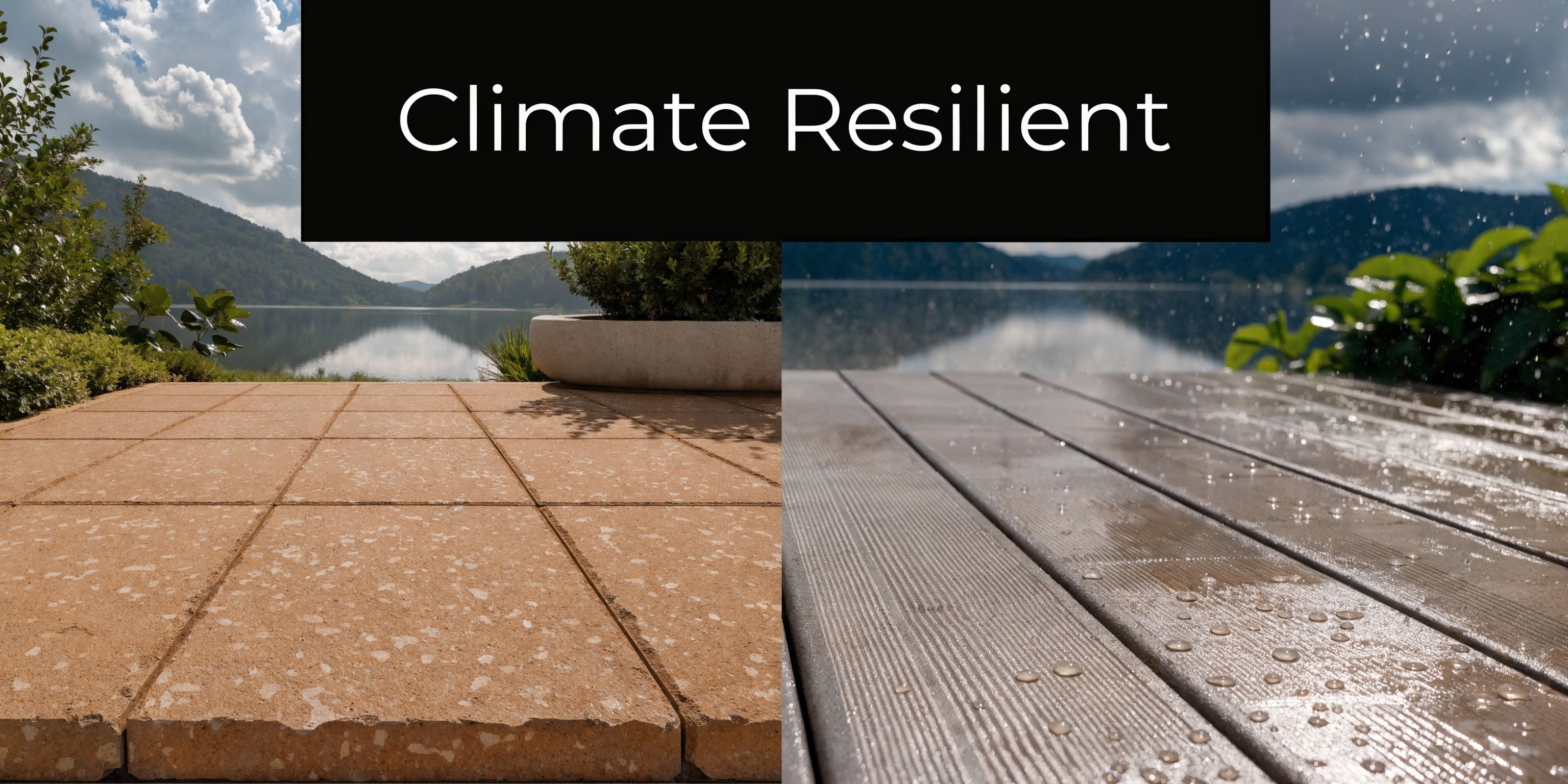
In Cumming, that challenge is especially clear. The area gets more than 50 inches of annual rainfall, and high humidity makes mold prevention a top priority. Mold risk is also twice as high in the humid Southeast, which is why modular PVC, sealed porcelain, and properly installed pedestal systems are recommended over untreated or poorly protected wood (North Georgia outdoor flooring climate guidance).
Moisture is the first filter
If a material holds water, it creates problems. That’s the simplest way to think about outdoor flooring in Forsyth County, Milton, or Johns Creek.
Porcelain performs well because it’s dense and non-porous compared with many alternatives. Composite decking performs better than traditional wood when moisture lingers. Modular systems can help because they encourage drainage and airflow. Concrete can work, but only when the slab is pitched correctly and finished with realistic expectations.
Wood is where homeowners often get tripped up. They love the look, install it, and then discover that a shady, damp backyard doesn’t forgive missed maintenance.
What to prioritize before style
Drainage
The surface should never trap water against the house or under the finish layer. If the installer doesn’t talk about slope, runoff, and base prep, that’s a red flag.
Texture
Outdoor flooring needs grip. A surface that looks sleek but gets slick in a summer storm is a design mistake.
Sealing and detailing
Some materials need active protection. That’s especially true with wood and certain concrete finishes. If the plan depends on sealing, then sealing contributes to the overall cost and upkeep.
Shade exposure
Covered patios and tree-shaded corners often stay damp longer. That changes what works. A flooring material that dries quickly in full sun may stay grimy in shade.
What I’d choose for common local scenarios
| Situation | Smarter choice | Why |
|---|---|---|
| Open patio in sun and rain | Textured porcelain | Handles moisture well and cleans easily |
| Raised entertainment deck | Composite decking | Lower maintenance in humid conditions |
| Problem yard with drainage concerns | Pavers or modular system | Better adaptability to movement and runoff |
| Covered patio with design focus | Porcelain or sealed concrete | Clean finish with strong style options |
Generic national advice usually tells homeowners what looks good. Local advice should tell them what still looks good after wet summers and winter cold.
If you’re trying to match material choice to real local conditions, this guide on the best flooring for humid climate helps frame the decision with moisture in mind.
One product category worth noting for very demanding exterior applications is ultra-compact surface material. Dekton, for example, is specified for outdoor use with zero porosity below 0.05%, thermal shock resistance up to 300°C differential, and UV stability above 95% color retention after 2000 hours of QUV testing, according to Cosentino’s outdoor flooring technical information. It’s not the default answer for every patio, but it shows what high-performance exterior surfacing looks like when moisture, sun, and freeze-thaw exposure all matter.
Planning Your Installation and Design
A good material installed badly still fails. Most outdoor flooring problems in North Georgia start below the finished surface, not on top of it.
That’s why the planning stage matters as much as the product selection. Before anyone talks color, pattern, or plank width, the site has to be assessed. Is the ground level? Where does the water go? Does the patio sit against the house? Will furniture rock because the base is uneven? Those questions decide whether the floor lasts.
The first things to evaluate
- Drainage path determines whether water moves away from the house or sits against the edge of the patio.
- Sub-base condition affects whether pavers stay tight, tiles remain stable, or the slab develops movement problems.
- Sun and shade pattern changes how fast surfaces dry and how hot they feel.
- Daily use matters because a quiet sitting patio and a busy family cooking area don’t need the same finish.
DIY versus professional installation
Some outdoor flooring ideas look deceptively easy online. Gravel is the classic example. It seems fast and inexpensive at first, but on uneven terrain common in Forsyth County it often becomes a repeat-maintenance job. DIY gravel commonly needs a 20% annual refill, while professionally installed alternatives like interlocking tiles or pedestal systems can have double the lifespan (patio floor ROI and installation trade-offs).
That doesn’t mean every homeowner should avoid DIY. It means the project should match the risk.
DIY is more realistic when:
- The installation is temporary
- The area is small
- The base is already stable
- You’re using modular products designed for easy removal
Professional installation makes more sense when:
- The yard is sloped or uneven
- The flooring needs drainage engineering
- The material is rigid and unforgiving
- You want the longest service life from the investment
Field note: On outdoor work, the hidden parts decide the visible result. The base, slope, spacing, and edge restraint matter more than the sample board or tile panel.
Design choices that improve the finished result
A few design moves work well in North Metro Atlanta:
- Match the house, not the trend. Warm brick homes often pair better with natural-toned pavers or wood-look porcelain than cold gray finishes.
- Create zones. Dining, grilling, and lounging don’t have to sit on one uninterrupted material field.
- Think about transitions. The path from indoor hardwood flooring, tile flooring, or waterproof flooring into the backyard should feel intentional.
- Plan for furniture early. Chair legs, umbrella bases, and grills all influence what surface texture and layout make sense.
For homeowners comparing installation, replacement, and longer-term maintenance, one practical option is to bring samples into the space and evaluate them in natural light before making a final call. That usually reveals more than a showroom board by itself.
Your Next Step to a Perfect Outdoor Space
The best outdoor flooring ideas aren’t the ones that photograph well for a week. They’re the ones that still make sense after a Georgia summer, a wet fall, and a cold snap in winter.
For some homes, that means porcelain tile because moisture resistance and easier cleaning matter most. For others, it means pavers because the yard needs flexibility. For raised spaces, composite decking often wins because it gives you the look of a finished deck without asking for constant upkeep. And in smaller specialty zones, turf and outdoor rugs can solve comfort and design problems without a full rebuild.
The common thread is simple. Choose for your site, your maintenance tolerance, and the way your family lives. If you entertain often, prioritize durability and cleanup. If you want the lowest-maintenance route, lean toward non-porous and weather-stable materials. If resale matters, focus on finishes that look permanent, safe, and easy to own.
In North Georgia, climate-resilient flooring isn’t a bonus. It’s the baseline for a project that lasts.
If you’re comparing outdoor flooring for a patio, deck, or backyard renovation in Cumming, Johns Creek, Milton, or the wider North Metro Atlanta area, Flacks Flooring is one place to start the decision process. You can visit the showroom to look at materials in person or schedule an in-home consultation to get recommendations based on your yard, drainage, style, and maintenance goals.