
Ever thought about what makes a great laminate floor feel so solid underfoot? It's not just the planks you see. The real secret is the unsung hero working silently beneath the surface: the underlayment, or padding.
Think of it like the foundation of a house. You never see it once the home is built, but absolutely everything relies on its strength and stability. For your laminate floor, the right padding is the difference between a floor that feels great and lasts for decades, and one that creaks, shifts, and fails prematurely.
Why Quality Underlayment is a Non-Negotiable
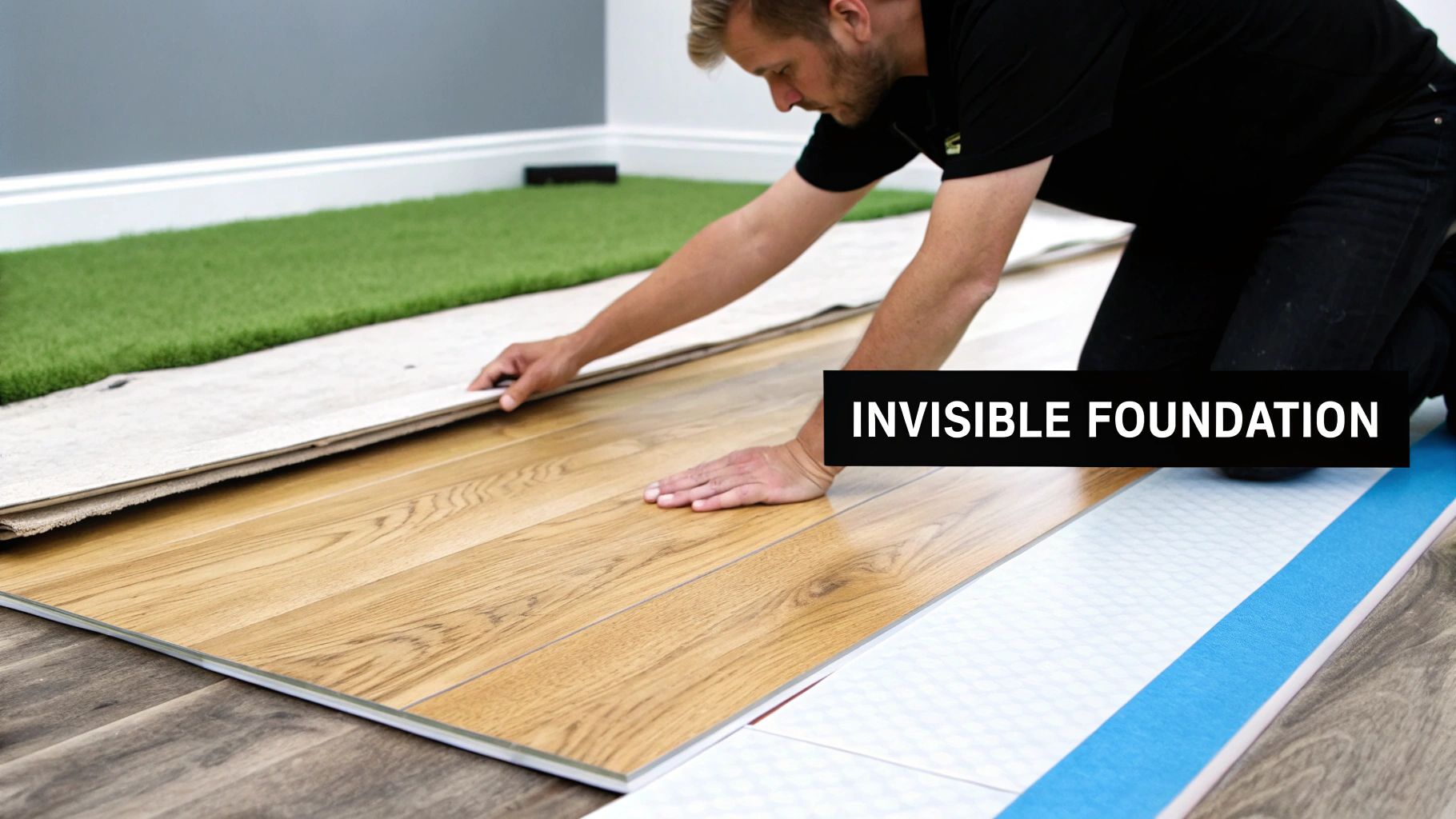
When you're picking out new floors, it’s easy to get caught up in the fun stuff—the color, the grain, the finish. But the long-term performance of that beautiful floor hinges entirely on the thin layer of padding you put down first. This isn't just an optional extra; it's a critical component that serves several vital roles.
Laminate flooring has exploded in popularity, and for good reason. The market itself was valued at around USD 33.95 billion and is expected to grow to USD 52.10 billion by 2032. As more homeowners choose laminate, the technology behind underlayment has had to keep pace, leading to better moisture protection, sound insulation, and overall comfort than ever before. You can find more details on this growth from industry sources like Data Bridge Market Research.
The Four Pillars of Padding Performance
A top-notch underlayment turns a good floor into a great one by excelling in four key areas. If you skimp on any of these, you're setting yourself up for issues like noisy footsteps, moisture damage, or a floor that just feels cheap and unforgiving.
- Sound Dampening: This is huge. Padding absorbs and deadens the sound of footsteps, getting rid of that hollow, click-clack noise often associated with floating floors. It’s an absolute must-have for second-story rooms, condos, and apartments.
- Moisture Protection: Here in North Georgia, humidity is a fact of life. An underlayment with a built-in vapor barrier is essential, especially over concrete subfloors, to stop moisture from migrating upwards and causing your planks to swell or warp.
- Thermal Insulation: It adds a subtle but noticeable thermal break. This helps your floors feel warmer to the touch in the winter and can even contribute to modest energy savings.
- Subfloor Correction: No subfloor is perfectly flat. Good padding helps smooth out minor bumps, dips, and imperfections, creating a stable, even surface for the laminate planks to click together securely.
To really grasp why this is so important, you have to understand that what is laminate flooring is a "floating" system. The planks aren't nailed or glued down; they lock into each other. A stable, supportive underlayment prevents stress on those locking joints, which means no annoying gaps and a much longer life for your floor.
In the end, spending a little extra on the right padding isn't just an expense—it's a smart investment in the comfort, durability, and overall health of your floor for years to come.
Choosing Your Underlayment: Foam, Felt, Cork, and Beyond
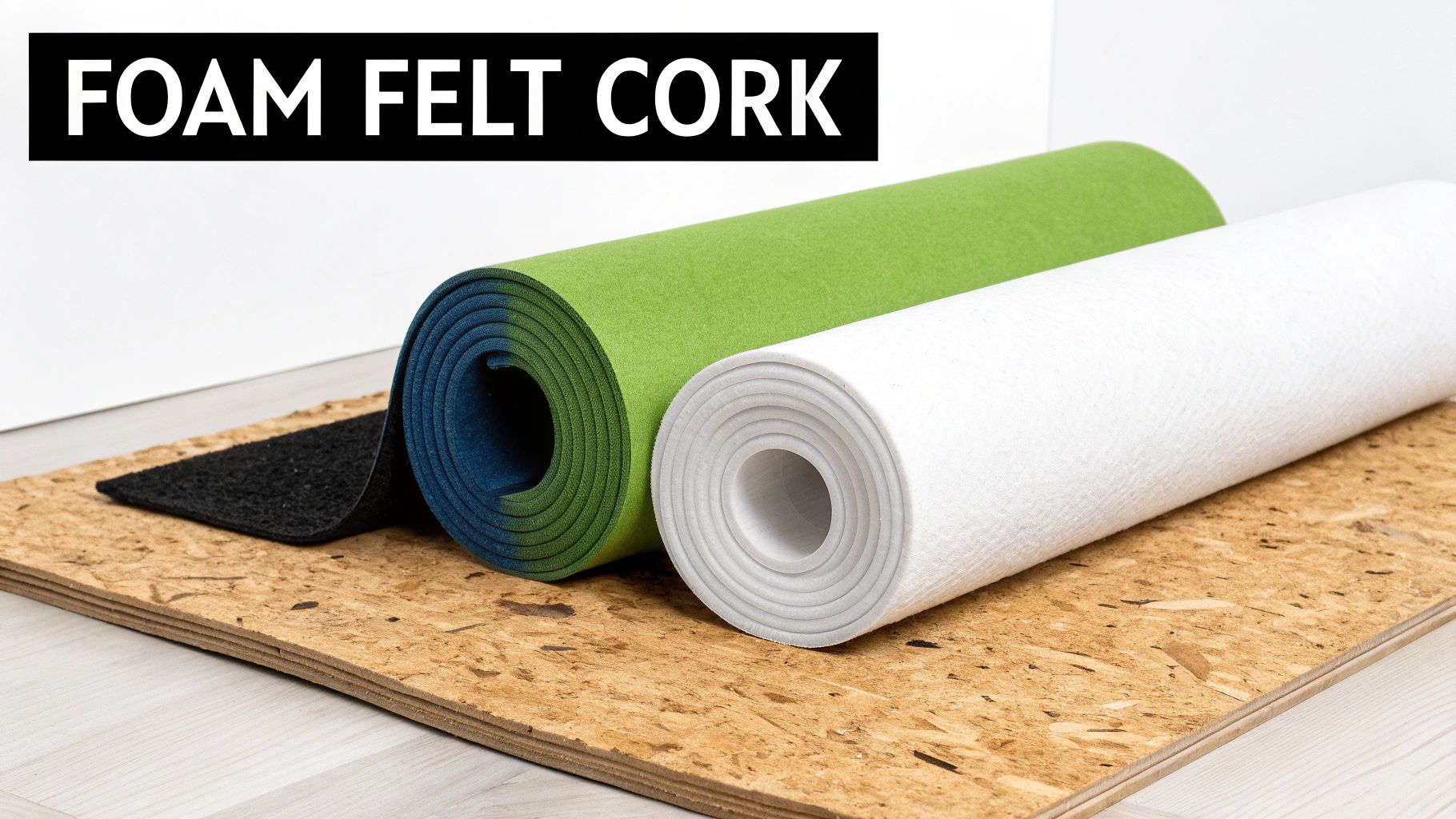
Stepping into the world of laminate underlayment can feel a little overwhelming. You'll find a whole aisle of options: foam, felt, cork, and all sorts of combination products. The secret isn't just grabbing the first roll you see; it's about matching the material to your home's specific needs.
Think of it like choosing tires for your car. The standard tires that come with a family sedan are perfect for daily driving, but you wouldn't take them off-roading. In the same way, the right underlayment depends entirely on the "terrain" of your subfloor and what you expect from your new laminate.
Let's break down the main players.
Standard Foam Underlayment
This is the old reliable. Standard foam is the most common and budget-friendly choice out there, and for good reason. It’s a workhorse that provides basic cushioning and helps even out tiny imperfections in your subfloor. If you’re putting laminate down over a plywood subfloor in a bedroom or a den, a simple foam pad is often all you need.
But remember, not all foam is created equal. The most basic versions are thin and offer minimal sound dampening. Premium foams, on the other hand, are denser, giving you better acoustic performance and a more solid feel underfoot. It’s a great, straightforward solution for many projects.
Felt Underlayment: The Acoustic Specialist
If you're dreading the "click-clack" sound of footsteps on a new hard floor, felt underlayment is your best friend. Made from recycled fibers, felt is much denser than standard foam. This density is fantastic at absorbing sound.
Felt is the go-to choice for second-floor rooms, condos, or any space where you want to keep things quiet. It dampens both the noise of walking around and the ambient sound that travels between floors.
Felt underlayment excels at muffling both impact noise (footsteps) and airborne noise (voices, music). This dual benefit makes it a premium option for creating a quieter, more peaceful home environment, especially in multi-level living situations.
As a bonus, felt adds a bit of thermal insulation, so your floors will feel warmer. It does cost more than basic foam, but the peace and quiet are often well worth the investment.
Cork Underlayment: The Natural Insulator
For those looking for a premium, eco-friendly option, cork is tough to beat. It's a completely natural and sustainable material known for its incredible insulating properties—both for temperature and sound.
Cork is also naturally antimicrobial, meaning it resists the growth of mold and mildew. That's a huge plus, especially here in Georgia. Because it’s so firm and resilient, it provides excellent support for the laminate's locking system, preventing annoying squeaks and ensuring your floor stays stable for years. While cork is at the higher end of the price scale, its durability and all-around performance make it a fantastic long-term investment.
Picking the right material is a big decision, and our guide on the best underlay for wood flooring has some extra tips that are just as useful for laminate floors.
All-In-One Combination Underlayment
If you’re installing laminate over a concrete slab, a combination underlayment is a real game-changer. These products take a high-quality pad (usually foam or felt) and attach a vapor barrier directly to it.
This all-in-one design saves you a ton of time and hassle. Instead of rolling out a separate plastic sheet for moisture protection, you just roll out one product that does it all. It’s the go-to solution for basements, garages, or any ground-floor room on a concrete foundation. This efficiency makes it a favorite for both DIYers and professional installers alike.
Laminate Padding Comparison at a Glance
To make things even simpler, here's a quick cheat sheet. This table breaks down the common underlayment types so you can see how they stack up against each other based on their best features, where they shine, and what you can expect to pay.
| Padding Type | Key Feature | Best For | Average Cost / sq. ft. |
|---|---|---|---|
| Standard Foam | Most affordable, basic cushion | Low-traffic areas, plywood subfloors, budget projects | $0.20 – $0.50 |
| Felt | Superior sound absorption | Second floors, condos, apartments, high-traffic areas | $0.55 – $0.85 |
| Cork | Natural, antimicrobial, best insulator | Homes wanting premium performance, eco-conscious buyers | $0.65 – $1.00 |
| Combination | Built-in vapor barrier, convenient | Concrete subfloors, basements, humid areas | $0.45 – $0.75 |
Ultimately, the best choice depends on where you're installing the floor and what's most important to you—be it budget, soundproofing, or moisture protection. By understanding these options, you're already one step closer to a flawless and long-lasting laminate floor.
Making Sense of Technical Ratings Like IIC, STC, and R-Value
When you start comparing different types of padding for laminate floor installation, you'll quickly run into a wall of acronyms: IIC, STC, R-Value. It’s easy to feel like you need an engineering degree just to pick the right one. But don't worry—these ratings are much simpler than they sound.
Think of them as the "nutrition facts" for your underlayment. They give you a clear, standardized way to see how a product will actually perform in your home. Once you know what these three numbers mean, you can cut through the marketing fluff and choose a pad that delivers real-world benefits, whether that’s a quieter bedroom or a warmer basement.
IIC: The Footstep Muffler
The first rating you'll probably encounter is the Impact Insulation Class (IIC). This one is all about stopping impact noise—the sounds created when something physically hits the floor.
Imagine someone walking in heels on the floor above you. That sharp "clack, clack, clack" is exactly the kind of sound IIC is designed to fight. The rating tells you how well the underlayment can muffle those thumps and taps before they travel down to the room below.
The higher the IIC number, the better the sound isolation. A basic pad might have an IIC in the low 50s, but a premium acoustic underlayment can score 70 or higher. In condos, townhomes, or any multi-story house, a high IIC isn't just a luxury; it's essential for keeping the peace.
For example, putting laminate in a second-floor playroom without a high-IIC pad is just asking for a constant racket downstairs. But with the right padding, those loud thuds get absorbed, turning them into faint, distant taps you can easily ignore.
STC: The Conversation Blocker
Next up is the Sound Transmission Class (STC). While IIC tackles impact sounds, STC measures how well the padding blocks airborne noise.
Think of STC as a privacy shield. It’s built to stop sounds that travel through the air, like conversations, music from a stereo, or the sound from a TV. The underlayment becomes part of the entire floor-ceiling system, working to reduce how much of that airborne sound makes it from one room to another.
Here’s a practical breakdown of what those STC ratings feel like:
- STC 30-35: You can understand loud speech pretty clearly through the floor.
- STC 40-50: Loud speech is audible, but you can’t quite make out the words.
- STC 60+: Most sounds are completely inaudible, offering excellent privacy.
A high STC is a game-changer for home offices where you need quiet for phone calls, or for a media room where you don’t want the movie’s sound effects bleeding into the rest of the house. It's the rating that makes sure private conversations stay private.
R-Value: The Thermal Blanket
Finally, we have R-Value. Unlike the other two, this one has nothing to do with sound. R-Value measures thermal resistance—in plain English, it tells you how well the underlayment insulates your floor.
Think of R-Value as a cozy blanket between you and the subfloor. A higher R-Value means the padding is better at stopping cold from creeping up from below and keeping your room’s warmth from escaping. This is a huge deal for installations over unheated spaces.
Consider these common scenarios:
- Basements: Laying laminate directly on a concrete slab is a recipe for ice-cold floors. An underlayment with a solid R-Value (look for R-3 or higher) creates a thermal break, making the floor noticeably warmer and more comfortable underfoot.
- Rooms Above Garages: These rooms are famous for being chilly. A quality padding with good thermal properties helps keep the space cozy and can even help trim your energy bills by preventing heat loss.
Getting a handle on these three ratings—IIC for footsteps, STC for voices, and R-Value for warmth—gives you the power to choose the perfect padding for laminate floor installation. Instead of just guessing, you can look at the numbers and know exactly what you’re getting.
The Right Padding for Every Type of Subfloor
What’s under your laminate floor is just as important as the planks you see on top. The subfloor isn't just a flat surface; it's a dynamic part of your home that can introduce challenges like moisture or noise. Choosing the right padding for laminate floor installation isn’t a one-size-fits-all deal—it’s about matching the underlayment to the unique foundation of your room.
Think of it like this: you wouldn't wear hiking boots to the beach. Different terrains require different gear. In the same way, whether your subfloor is concrete or plywood, it demands a specific type of padding to make sure your laminate looks and feels great for years to come.
Taming the Concrete Jungle
Concrete subfloors, which you’ll find in most basements and ground-level rooms here in North Georgia, have one big enemy: moisture. Concrete is porous and can slowly pull moisture up from the ground. If that dampness gets trapped under your laminate, you’re looking at warped planks, swelling, and even mold growth.
This is where an underlayment with an integrated vapor barrier becomes non-negotiable. It's not a suggestion; it's a must-have. This thin plastic film acts as a shield, completely blocking moisture from ever reaching your new floor. A combination underlayment that bonds a quality pad to a vapor barrier is the smartest, most efficient solution for any concrete slab.
Don't be fooled by a concrete slab that feels dry to the touch. Moisture levels can change with the seasons. A proper vapor barrier offers permanent peace of mind against this invisible threat.
Comfort and Quiet Over Plywood
When you’re working with a plywood or OSB (Oriented Strand Board) subfloor, common on upper levels, the focus shifts from moisture to acoustics and comfort. Wood subfloors don't carry the same moisture risk, so a dedicated vapor barrier usually isn't necessary unless the room is over a damp crawlspace.
For these spaces, your goals are to muffle sound and add a bit of cushioning underfoot. A standard foam or felt underlayment works perfectly. Felt, with its dense, fibrous build, is especially good at absorbing sound, making it a fantastic choice for a second-story bedroom or playroom where you want to keep noise from traveling downstairs.
This visual guide can help you zero in on what performance ratings matter most for your project—whether it's footsteps, conversation, or cold floors.
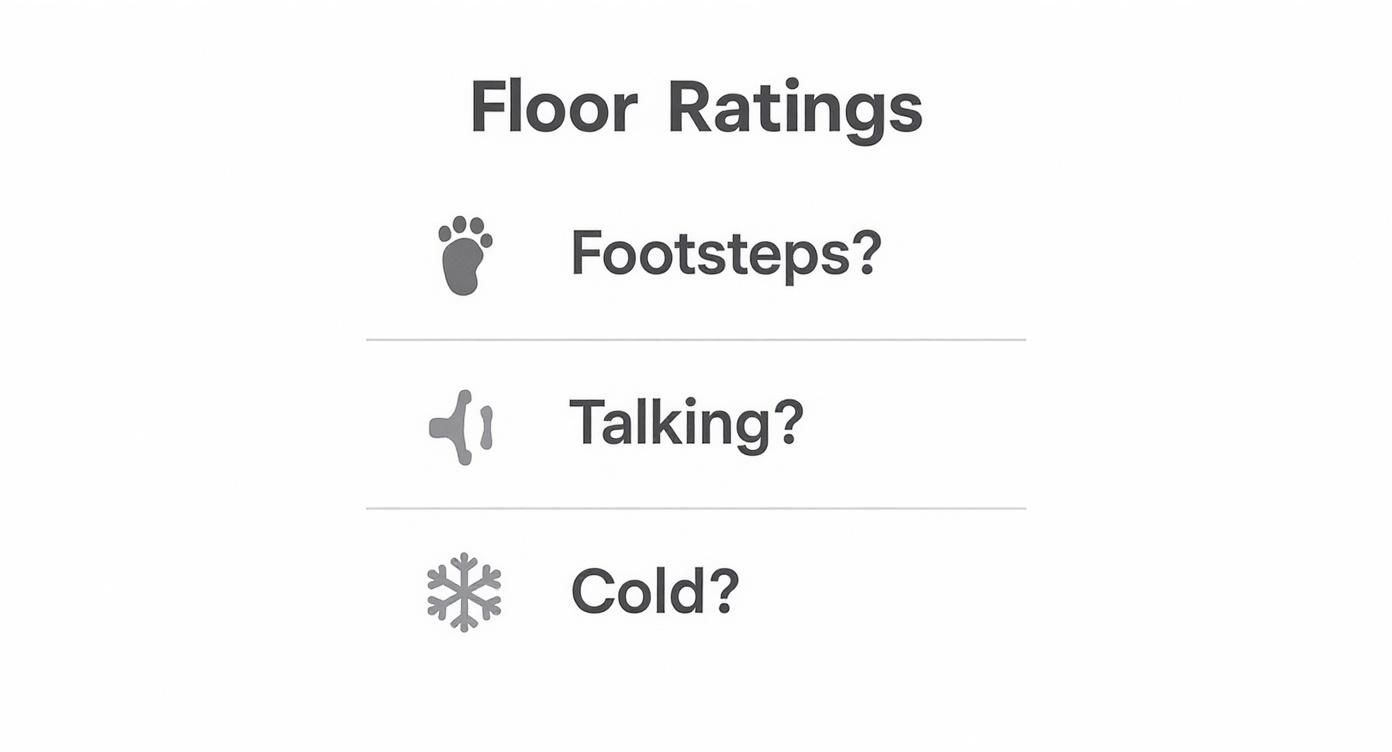
It’s a simple way to frame your decision around solving real-world problems, ensuring the padding you choose has the right technical specs for the job.
Special Considerations for Unique Situations
Beyond the two most common subfloors, a few other situations require a more specialized approach to padding to avoid headaches later on.
- Multi-Level Homes and Condos: For apartments, townhomes, or any second-floor install, look for underlayment with high IIC and STC ratings. Many HOAs have strict rules about these ratings to keep the peace between neighbors.
- Existing Flooring: It’s sometimes possible to install laminate over old flooring like vinyl or tile, but only if the surface is perfectly flat and solid. Even small imperfections like grout lines can eventually show through. We walk through the entire process in our guide on how to level uneven floors to get your base ready.
The flooring market is booming, and the technology behind underlayment is growing right along with it. The global market was valued at around USD 416.56 billion and is expected to hit USD 646.70 billion by 2032. As laminate flooring carves out its share, the innovation in high-performance padding only gets better. By carefully matching your padding to your subfloor, you aren’t just installing a floor—you’re building a complete system designed for lasting comfort and durability.
Avoiding Common Underlayment Installation Mistakes
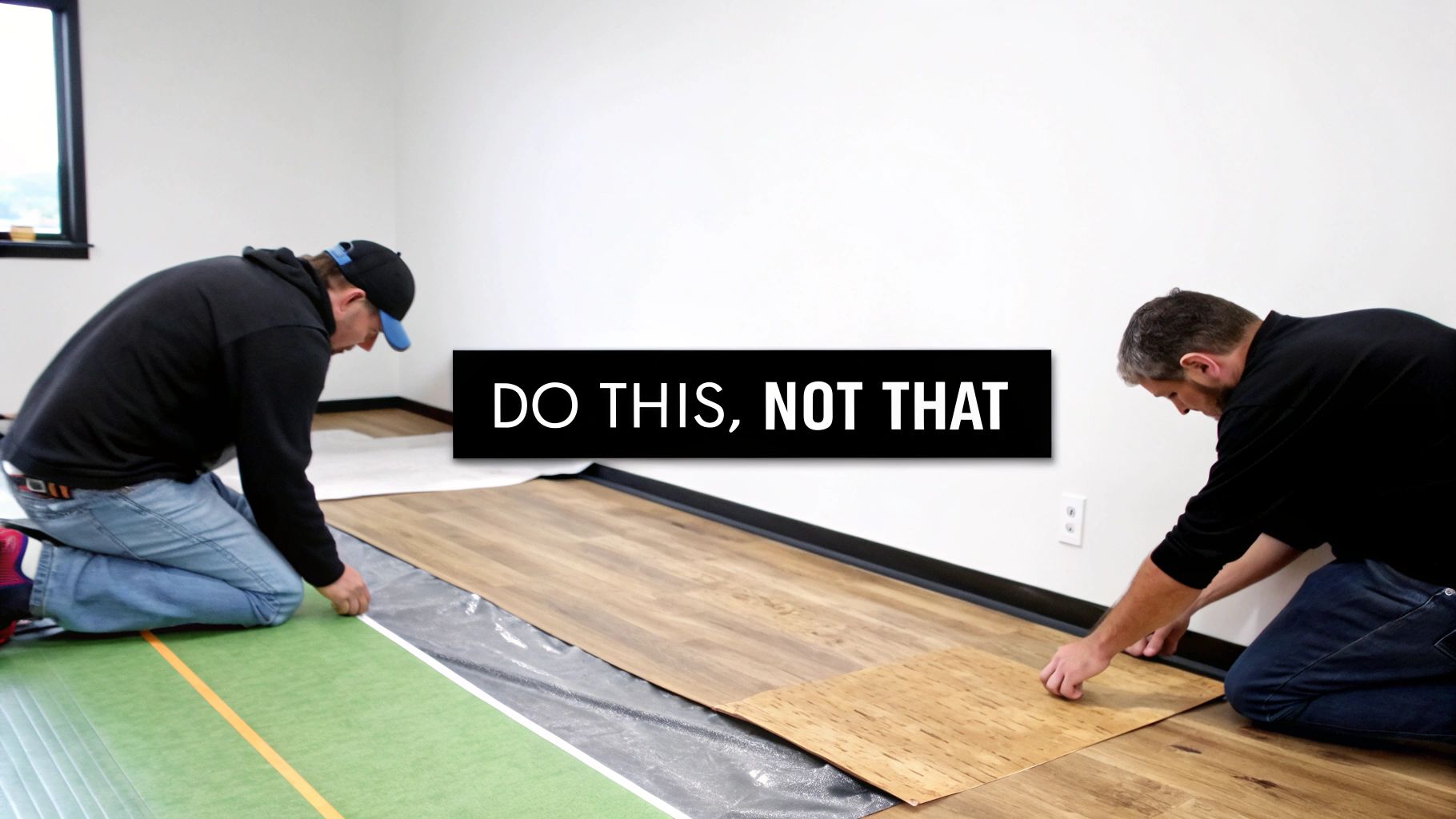
Even the absolute best padding for laminate floor installation is worthless if it’s put down wrong. Getting the small details right at this stage is what makes or breaks the entire project. If you rush through the underlayment, you’re practically guaranteeing future headaches like bumps, squeaks, and a floor that just feels cheap and unstable underfoot.
Think of it like painting a room. You can buy the most expensive, high-end paint on the market, but if you don't prep the walls—cleaning them, patching holes, and taping the trim—the final job will look sloppy. It's the exact same principle here. Careful prep work is the secret to a professional finish that will last for years.
Forgetting Subfloor Preparation
One of the most common blunders we see is people rolling out padding over a subfloor they haven't touched. Before a single inch of underlayment goes down, your subfloor has to be perfectly clean, flat, and dry. Skipping this step is just asking for a lumpy, noisy floor.
Any debris left behind—old staples, drywall mud, even tiny pebbles—will create pressure points under the padding. Over time, these little bumps will make themselves known as annoying creaks or can even damage the locking system of the laminate planks themselves.
Before you start, always:
- Sweep and vacuum meticulously. Get every last bit of dust and grit.
- Scrape away any stubborn gunk like old adhesive, paint drips, or plaster.
- Check for flatness with a long, straight edge. If you find any major dips, fill them with a leveling compound and let it cure.
Overlapping the Seams
When you’re laying out rows of underlayment, it’s tempting to overlap the edges to make sure there are no gaps. This is a huge mistake. Overlapping creates a ridge where the two pieces meet, and you will feel that bump right through your brand-new floor.
The right way to do it is to butt the edges of the underlayment up against each other so they meet perfectly without overlapping. This creates one continuous, smooth surface for the laminate to rest on.
The seams should be joined with a manufacturer-approved tape. This seals the connection, creating a single, unbroken membrane that blocks moisture while keeping the surface perfectly level. This is non-negotiable when you’re using padding with a built-in vapor barrier.
Laying the Padding in the Wrong Direction
It might not seem like a big deal, but the direction you lay your padding really does matter. For maximum stability, you should always install your underlayment perpendicular to the direction you plan to lay the laminate planks.
For instance, if you're running the laminate planks down the length of a hallway, the underlayment should be rolled out across the width. This simple trick staggers the seams of the padding and the planks, preventing them from lining up and creating a weak point in the floor.
Just remember the simple rule: "cross the streams." Always lay the padding across the direction of the flooring.
Using the Wrong Tools or No Tools
Installing padding doesn't call for a workshop full of power tools, but using the right simple tools makes the job faster, cleaner, and more accurate. Trying to hack through underlayment with dull craft scissors or, worse, a car key, will leave you with jagged edges that are impossible to tape neatly.
A few basic tools will make all the difference:
- A sharp utility knife for clean, straight cuts.
- A measuring tape to get your lengths right the first time.
- The correct underlayment tape to seal every seam properly.
Nailing these fundamentals of padding for laminate floor installation is what separates a DIY-looking job from a truly professional one. It ensures your floor's foundation is solid, quiet, and ready for years of daily life.
A Local Perspective for North Georgia Homeowners
Any home project is shaped by local conditions, and picking the right padding for a laminate floor installation is a perfect example. If you live in Cumming, Johns Creek, or anywhere in Forsyth County, our local climate is the single biggest factor for a floor that lasts.
Let's face it: North Georgia is humid, especially during our long, steamy summers. This isn't just about comfort; it's about protecting your home. That humidity makes a quality moisture barrier an absolute necessity, not just an optional upgrade. Without one, moisture vapor will eventually creep up through your subfloor, causing planks to warp, buckle, and even grow mold underneath.
Dealing with Our Climate and Local Rules
Many homes around here are built on concrete slabs or have basements, both of which are notorious for moisture. For these situations, a combination underlayment that has a vapor barrier built right in is your best bet. It’s a single, elegant solution that gives you cushioning and vital protection from the moisture that’s just part of life in our area.
Then there's the noise factor. If you live in one of the many townhome or condo communities in Milton or Johns Creek, your HOA likely has rules about soundproofing.
Before you buy anything, check your HOA’s covenants. They often demand flooring systems meet specific IIC (Impact Insulation Class) and STC (Sound Transmission Class) ratings to keep noise from bothering your neighbors.
Local Projects, Global Products
While we focus on what works here, it’s interesting to see how the global market affects our choices. The Asia Pacific region, for instance, makes up about 38.7% of the global laminate flooring market. That massive demand pushes manufacturers to innovate, which means we get access to better, more specialized underlayment options right here in Forsyth County. If you're curious about these market forces, you can learn more about these global market dynamics on imarcgroup.com.
Whether you’re a weekend warrior taking on a DIY project or bringing in a local pro, thinking about these local factors is crucial. A little bit of planning ensures your new laminate floor doesn’t just look great on day one, but also holds up beautifully to the unique challenges of our North Georgia climate for years.
Laminate Padding FAQs: Your Top Questions Answered
Even with all the details covered, a few nagging questions always seem to surface right before you’re ready to buy. Finalizing your choice of padding for a laminate floor installation can feel like the last little hurdle. So, let’s clear up the common uncertainties we hear from homeowners all the time.
Think of this as your final pre-flight check, making sure no small detail creates a big problem later on.
Do I Need Padding if My Laminate Already Has It Attached?
This is a great question, and the answer is usually yes, you still need something. That thin layer of padding pre-attached to your laminate planks is a nice feature, but it’s really just a basic starting point. It offers minimal sound reduction and comfort, and almost never includes a real moisture barrier.
Here's the critical part: if you're installing over concrete (think basements or ground-floor rooms on a slab), a separate vapor barrier is non-negotiable. The attached pad is not designed to stop moisture from wicking up from the concrete and destroying your floor from below. Even on a standard plywood subfloor, a quality secondary underlayment will dramatically improve the floor’s acoustics and give it a much more solid, premium feel underfoot.
Expert Tip: Before you buy anything, double-check the warranty for your specific laminate flooring. Many manufacturers will void the warranty if you don't use the right type of underlayment—even if the planks have padding attached.
Can I Just Reuse the Old Carpet Padding for My Laminate Floor?
Absolutely not. I can't stress this enough: reusing old carpet padding is a recipe for disaster and one of the worst mistakes you can make. Carpet padding is engineered to be soft, thick, and spongy, which is the complete opposite of what laminate flooring needs.
Laminate is a "floating floor," meaning its planks click together to form a single, solid surface. This system depends on a firm, stable base to keep those joints locked tight. Placing it over soft carpet padding would cause the planks to flex and bend with every single step. This constant movement will quickly strain the locking mechanisms, leading to squeaks, gaps between boards, and eventually, total failure of the floor. Always use an underlayment specifically made for hard-surface flooring.
What’s the Best Thickness for Laminate Floor Padding?
For laminate flooring, the sweet spot is between 2mm and 3mm thick. This range provides the perfect combination of sound dampening, subtle cushioning, and—most importantly—the firm support needed to protect the plank’s locking system.
It might seem tempting to go thicker for more "cushion," but anything over 3mm can introduce too much give. This instability creates excessive stress on the joints every time you walk on them, which can cause them to weaken, separate, or even break over time. In fact, using an underlayment that's too thick is a common reason for manufacturers to deny a warranty claim. Stick to that 2mm-3mm zone for a floor that will look and feel great for years.
Ready to find the perfect foundation for your new floors? The experts at Flacks Flooring can guide you through every option to ensure your project in Cumming, Johns Creek, or Milton is a success. Explore our flooring solutions at https://flacksflooring.com.