
Finding the perfect floor when you have pets can feel like an impossible task. You’re trying to find something that looks great, holds up to daily chaos, and keeps your furry family members safe. It’s a real balancing act.
The best pet-proof flooring really comes down to four key features: it has to be scratch-resistant, waterproof, offer good traction, and be easy to clean. This guide will walk you through everything you need to know to find a floor that can handle the zoomies and still look fantastic for years to come.
What Really Makes a Floor Pet Proof?
"Pet-proof" isn't just a buzzword slapped on a label. It's a promise that the floor has specific features designed to handle the realities of living with animals. Think of it less as a type of material and more as a standard of performance.
A truly pet-friendly floor doesn’t just survive your pets—it helps create a healthier, happier home for everyone. It needs to do more than just be tough; it has to solve the unique problems pets bring, from the constant clicking of claws to the inevitable accident that needs a fast, deep clean.
The Four Pillars of a Pet-Proof Floor
When a floor really holds up to pets, it's because it excels in four critical areas. Each one solves a major headache for pet owners.
- Scratch Resistance: This is your front line of defense against claws, dropped toys, and frantic games of fetch. A good floor won't look like a roadmap of your pet's activity after just a few months.
- Waterproof Capabilities: Life with pets is full of liquids—spilled water bowls, muddy paws, and potty-training mishaps. You need a floor that prevents moisture from soaking through to the core or the subfloor underneath, which is where real damage happens.
- Secure Traction: Ever watch your dog slide into a wall trying to stop on a slick floor? It's funny until someone gets hurt. A floor with decent grip helps your pets keep their footing, especially older animals or those with joint issues.
- Easy Maintenance: Let's be honest, you'll be cleaning up something eventually. The best floors don't just resist stains and odors; they make the cleanup process quick and painless, keeping your home feeling fresh.
Keeping things clean is more than just about appearances. A floor that allows for thorough sanitization is crucial for a healthy home, especially considering the CDC warnings about the unseen dangers in dog poop.
Once you understand these core principles, you can look past the marketing and focus on what truly matters. It gives you the confidence to evaluate any flooring option based on how it will actually perform in your home, with your pets.
What Really Makes a Floor Pet-Proof? The 4 Key Qualities
When you start shopping for pet-proof flooring, it’s easy to get lost in brand names and material types. But before you even think about vinyl versus tile, it’s much more helpful to understand what makes any floor stand up to life with pets.
I like to break it down into four fundamental qualities. Think of this as your personal checklist. If a flooring option doesn't tick all four of these boxes, it's probably not the right long-term investment for a home with furry family members. These are the real-world challenges every pet owner deals with, from muddy paws to the occasional accident.
1. Durability: Standing Up to Claws and Chaos
First and foremost, you need a floor that can take a beating. This is all about its ability to resist the daily grind of claws, tossed toys, and those sudden bursts of energy we call "the zoomies." A floor's true grit comes from its wear layer.
Think of the wear layer like a heavy-duty screen protector on your smartphone. It’s a clear, tough topcoat that takes the brunt of the abuse. The thicker this layer is (measured in mils), the better it will fend off scratches and scuffs. While no floor is 100% scratch-proof, a robust surface prevents minor marks from turning into deep, ugly gouges, keeping your investment looking great for years.
2. Waterproofing: Your First Line of Defense Against Accidents
Let's face it: accidents are part of the deal. From spilled water bowls to house-training slip-ups, moisture is the enemy of most floors. That's why being waterproof (or at least highly water-resistant) is absolutely essential for any flooring that claims to be pet-friendly.
A truly waterproof floor stops liquids right at the surface, preventing them from seeping into the core material or, even worse, the subfloor beneath. This is critical. Once moisture gets trapped underneath, you're looking at a potential nightmare of mold, mildew, and structural rot—problems that are expensive and disruptive to fix. A sealed, non-porous surface makes cleanup a simple wipe-and-go affair.
A floor's ability to handle spills and accidents is not just about preventing damage—it's about creating a hygienic living space for your entire family, both two-legged and four-legged.
3. Traction: Keeping Your Pet Safe and Sound
This is the one people often forget, but it's so important for your pet's well-being. Super slick, glossy floors can be like an ice-skating rink for paws. This is especially dangerous for energetic puppies still getting their balance and older dogs who might have arthritis or joint pain. A lack of good grip can lead to slips, falls, and serious injuries.
When you're looking at samples, feel the surface. You'll want something with a bit of texture or an embossed finish that gives paws something to hold onto. It’s a small detail that makes a world of difference in your pet’s confidence and safety as they navigate their home.
4. Easy Cleaning: Because Your Time is Valuable
Your new floor should make life simpler, not add another chore to your list. Easy maintenance is the final piece of the puzzle. This means the surface should resist stains, refuse to trap odors, and be a breeze to clean with basic, pet-safe products.
Ideally, pet hair, dirt, and dander should sweep or vacuum up without a fight. The demand for floors like this has exploded. In fact, the global pet carpet market alone was valued at USD 0.39 billion in 2024 and is expected to nearly double by 2033, driven by owners who want practical, easy-care solutions. You can see the data for yourself in this pet carpet market report. And while carpet requires a bit more attention, our guide to the best carpet for pet owners shows you how to choose one that's up to the task.
Comparing the Top Pet Proof Flooring Contenders
Now that you know what to look for in a pet-friendly floor, let’s see how the most popular materials actually perform in the real world. Think of it like picking the right gear for an adventure; each option has its own set of strengths. We'll put the top three—luxury vinyl, modern laminate, and tile—head-to-head to see which one is the best fit for your home and your four-legged family members.
Pet Proof Flooring Options at a Glance
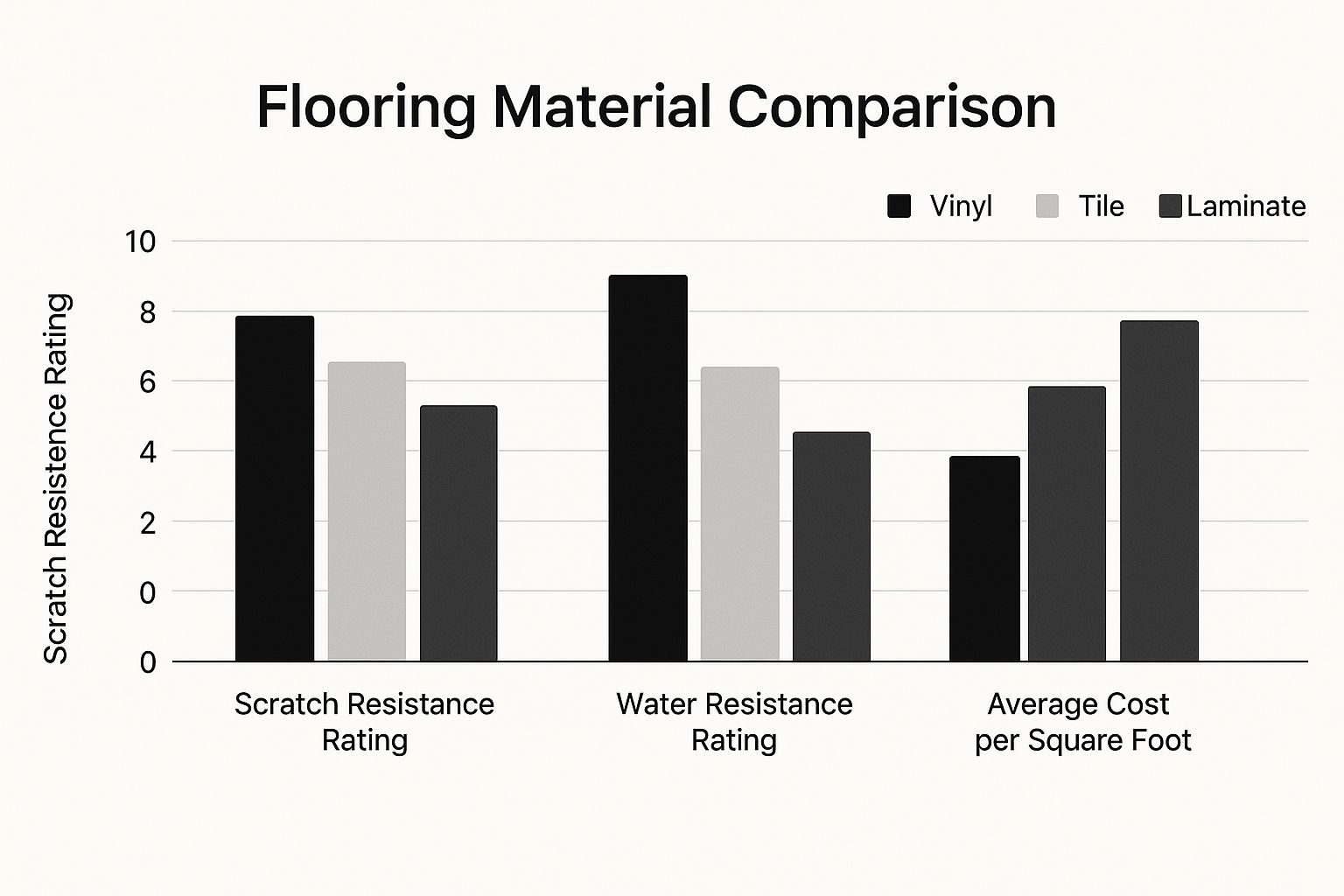
To make things easier, here's a quick side-by-side look at how our top contenders measure up on the most important factors for pet owners.
| Flooring Type | Scratch Resistance | Water Resistance | Average Cost (per sq. ft.) | Best For |
|---|---|---|---|---|
| Luxury Vinyl | High | Excellent (100% waterproof) | $2 – $7 | All-around performance; households with spills and active pets. |
| Laminate | Excellent | Good (water-resistant models) | $2 – $6 | Homes needing maximum scratch protection from large dogs. |
| Tile | Excellent | Excellent (100% waterproof) | $2 – $15 | High-traffic, mess-prone areas like mudrooms and kitchens. |
This table gives you a great starting point. While tile is the king of durability, you can see that luxury vinyl offers a fantastic, well-rounded balance of features at a really accessible price point.
Luxury Vinyl Flooring: The All-Around Champion
There's a reason Luxury Vinyl Plank (LVP) and Luxury Vinyl Tile (LVT) have become the default choice for so many pet owners. This stuff is a true workhorse, checking every box for a busy home with pets.
Its biggest superpower? It’s 100% waterproof. We're not talking "water-resistant" here—it's completely immune to moisture. Tipped-over water bowls, potty training accidents, or muddy paw prints are no problem. The liquid just sits on top until you wipe it away, with zero chance of it seeping into the floor's core.
On top of that, good quality vinyl features a thick, commercial-grade wear layer that holds up beautifully to scratches. This tough topcoat is like a shield for your floor, protecting the gorgeous wood or stone design underneath from claws, toys, and general chaos. If you want to dive deeper, you can explore what makes luxury vinyl plank flooring such a popular option.
It's no fluke that vinyl is so popular. In 2024, the North American market for it covered a massive 335.33 million square meters. Homeowners just keep choosing it for that unbeatable mix of toughness and style. You can discover insights about the vinyl flooring market on imarcgroup.com to see the data for yourself.
Modern Laminate Flooring: The Resilient Contender
Laminate has seriously upped its game over the years. If you remember the old laminate that would swell up at the first sign of moisture, it's time to take another look. Today’s high-end laminate is a totally different product and a solid choice for homes with pets.
Where modern laminate really shines is its incredible scratch resistance. The surface is one of the toughest you can buy, often even outperforming vinyl when it comes to preventing deep gouges from heavy paws or dropped objects.
The catch is that you have to choose a product specifically marked "water-resistant" or "waterproof." These newer versions are built with tight-locking plank systems and moisture-repellent cores, allowing them to stand up to spills for hours. While they aren't quite as foolproof as vinyl, they offer more than enough protection for everyday pet life.
Ceramic and Porcelain Tile: The Indestructible Fortress
When you need pure, uncompromising durability, nothing beats tile. Period. Both ceramic and porcelain tile are practically impossible for a pet to scratch. The hard-fired, glazed surface is completely impervious to claws, making it the ultimate solution for homes with big, high-energy dogs.
Tile is also completely waterproof and a breeze to clean and sanitize. You never have to worry about accidents causing permanent stains or leaving behind lingering odors. This makes it a no-brainer for mudrooms, kitchens, bathrooms, and entryways—anywhere messes are just part of the daily routine.
The trade-offs? Comfort and installation. Tile is a hard, cold surface, which isn't always the coziest place for pets (or people) to nap. You'll also need to seal the grout lines periodically to keep them from getting stained. Still, for a lifetime of worry-free toughness, tile is the undisputed champ of pet proof flooring.
Flooring to Avoid or Use with Caution
While picking the right pet proof flooring can be a game-changer, some of the most popular flooring choices can quickly turn into a source of constant stress. It’s just as important to know which materials will struggle under the pressure of paws and claws as it is to know which ones will shine. This isn't about saying "never," but about going in with your eyes wide open to the trade-offs.
Some floors just aren't cut out for the daily chaos of a life with pets. Let’s take a look at a couple of the usual suspects that often require a lot more maintenance and worry when you’ve got furry family members.
Traditional Solid Hardwood
There's a reason solid hardwood is a timeless classic—it's absolutely beautiful. But that beauty is surprisingly delicate, especially when you introduce a dog's claws into the equation. Softer woods like pine or even some oaks can get scratched up in no time, leaving a permanent reminder of every time your dog got the zoomies.
Even more troubling is its relationship with moisture. A tipped-over water bowl or a potty training accident that isn't wiped up immediately can be disastrous. The liquid seeps into the seams between the planks, causing the wood to warp, swell, and stain in ways that are often impossible to reverse. A good polyurethane finish helps, but it’s more of a rain jacket than a suit of armor.
Have your heart set on real wood? It's not a dealbreaker, but you have to be strategic. Go for incredibly hard species like hickory or Brazilian cherry. Also, choosing a matte or low-sheen finish is a lifesaver—it does a much better job of hiding minor scuffs and scratches than a glossy, reflective surface.
Wall-to-Wall Carpeting
Who doesn't love the soft, cozy feel of carpet? Your pets certainly do. But that plush surface is essentially a magnet for everything you don't want in your home: pet hair, dander, dust, and all sorts of allergens.
The real headache, though, is what happens when accidents occur. Liquids don't just sit on top; they soak deep into the carpet fibers, through the padding, and sometimes right down to the subfloor. You can clean the surface all you want, but that trapped moisture can lead to stubborn odors and even create a breeding ground for mold and mildew.
If you can't live without that softness underfoot, there are smarter ways to do it:
- Modular Carpet Tiles: This is a fantastic workaround. If a tile gets ruined by a bad stain or a clawing cat, you just pop it out and replace that one square. No need to re-carpet the entire room.
- Low-Pile Construction: Think Berber or other loop-style carpets. Their short, dense fibers are much easier to vacuum and don't trap debris as easily as high-pile shag.
- Solution-Dyed Fibers: Look for carpets made from nylon or polyester where the color is part of the fiber itself, not just dyed on the surface. This makes them incredibly resistant to staining and fading, even with frequent, heavy-duty cleaning.
Protecting Your Investment with Smart Maintenance
Choosing the perfect pet proof flooring is a major victory, but the work doesn't stop once it's installed. The real secret to keeping a floor looking brand new for years is a smart, consistent maintenance routine. It’s a lot like owning a new car—it needs regular attention to perform its best, and the right care will protect your investment from the daily chaos of life with pets.
A proactive approach is always better than scrambling to fix damage after it’s already happened. By building a few simple habits into your week, you can head off most common issues, from deep scratches to stubborn stains, and keep your floors looking beautiful.
Create a Proactive Defense Strategy
The best maintenance plan stops problems before they even start. With a few strategic additions to your home, you can dramatically cut down on the amount of dirt and potential damage that ever reaches your floor. It’s all about working smarter, not harder.
- Establish Matting Zones: Place high-quality doormats at every single door leading outside. Think of them as your first line of defense, trapping mud, dirt, and moisture before they get tracked through the house. A good mat can catch over 80% of the debris from paws and shoes.
- Utilize Area Rugs: In high-traffic spots like hallways or the area where your dog loves to play fetch, area rugs add an essential layer of protection. They take the brunt of all that running and skidding, saving the floor underneath from premature wear and tear.
- Protect Feeding Stations: Slide a waterproof mat under your pet’s food and water bowls. This simple move contains all the spills and slobber, preventing water damage and making cleanup a breeze.
The Power of Routine Pet Care
Believe it or not, some of the best floor protection has nothing to do with mops and sprays—it’s all about grooming your pet. Keeping your furry friend well-maintained directly impacts the health and longevity of your floors.
A well-groomed pet is a floor's best friend. Regular nail trims are arguably the single most important thing you can do to prevent scratches. Here's a good rule of thumb: if you can hear your dog's nails clicking on the floor, they're too long.
Keeping those claws trimmed short prevents them from digging into your floor’s surface with every step. On top of that, regular brushing helps manage shedding, which means less pet hair and dander you have to clean up later. For a deeper dive, check out our guide on protecting your floors from pets for more practical tips.
Choosing the Right Cleaning Arsenal
When accidents inevitably happen, having the right tools ready to go makes all the difference. For your daily or weekly cleaning, stick with a pH-neutral cleaner that’s made specifically for your type of flooring. Harsh, acidic, or alkaline chemicals can easily strip away the protective finish, leaving your beautiful floor exposed and vulnerable.
Beyond the right products, simply understanding optimal cleaning frequency can go a long way in extending the life of your floors. Knowing when to sweep, mop, or spot-clean is key to keeping them in top shape without overdoing it.

Got Questions About Pet-Proof Flooring? We've Got Answers.
Making a final decision on flooring is a big deal, and it's totally normal to have a few questions rattling around in your head, even after you’ve compared all the options. You might be wondering how a certain material holds up in your specific situation or what to do about a unique challenge.
Let's clear up some of the most common questions we hear from pet owners. Think of this as the final check-in to make sure you're feeling 100% confident in your choice.
What's the Absolute Best Flooring for Resisting Dog Scratches?
If you're looking for the undisputed, heavyweight champion of scratch resistance, it’s porcelain tile. Hands down. Its surface is fired at extreme temperatures, making it so dense and hard that even the most rambunctious dog's claws won't leave a mark. It's basically the fortress of flooring.
But tile isn't for everyone. If you want something with a warmer, softer feel, your best bet is a high-quality Luxury Vinyl Plank (LVP). The secret here is to look for a thick wear layer—aim for 20 mil or more. That tough, transparent top layer is what takes all the punishment from claws and paws, acting like a powerful shield for the floor beneath.
Is Modern Laminate a Good Choice for Homes with Pets?
It absolutely can be, but you have to know what you're looking for. The surface of a good laminate floor is incredibly tough—in fact, it often beats vinyl when it comes to preventing deep scratches from a big dog or a dropped toy.
The catch with laminate has always been water. In the past, any spill could be a disaster. Today, however, manufacturers have engineered "water-resistant" and even "waterproof" options with sealed edges and moisture-repellent cores. As long as you choose one of these newer products, you'll have a solid window of time to clean up accidents. One more tip: go for a textured finish. It gives your furry friend much better traction and helps prevent slips and slides.
A floor that's safe for your pet is just as important as one that's durable. A little bit of texture can make a world of difference for a young, energetic puppy or an older dog with stiff joints, giving them the stability they need to move around confidently.
How Can I Protect the Hardwood Floors I Already Have?
So, you love your classic hardwood but not what your pet is doing to it? You can't make the wood itself harder, but you can build a strong defense around it. It’s all about being proactive.
Here’s what works best:
- Keep Those Nails Trimmed: This one is non-negotiable. If you hear that familiar click-clack sound when your dog walks across the room, their nails are too long. Each step is essentially sanding down your floor's finish.
- Use Rugs in Key Areas: Throw down some durable area rugs in the "pet highways"—hallways, in front of the couch, and near entryways. Let the rug take the abuse, not your wood.
- Set Up a "Dining" Area: Place a waterproof mat under your pet’s food and water bowls. It’s a simple way to catch all the splashes and spills before they have a chance to warp the wood or stain the finish.
- Clean Up Accidents Instantly: Don't let messes sit. Use a cleaner that's specifically made for hardwood and wipe up any accidents the moment you see them. The longer moisture stays on the wood, the greater the risk of lasting damage.
Ready to find the perfect floor that both you and your pet will love? The team at Flacks Flooring has over 30 years of experience helping homeowners in Cumming and the surrounding areas. Visit our showroom or schedule an in-home consultation to explore our wide selection of beautiful, durable, and truly pet proof flooring solutions. Find your perfect match at https://flacksflooring.com.