
When we talk about a truly pet-safe floor cleaner, we’re not just talking about a watered-down formula. We mean a cleaner made from non-toxic, plant-derived ingredients that does its job without leaving behind a chemical minefield for your pets. For homeowners here in Georgia, that means ditching harsh chemicals like ammonia, bleach, and phthalates, so your floors are safe enough for paws, playtime, and even the occasional curious lick.
Keeping Your Home Clean and Your Pets Safe

If you live in Cumming, Forsyth County, or the surrounding areas, you know that a clean home is a happy home. But when you have pets, it gets a bit more complicated. You’re constantly trying to strike a balance: you need floors that are spotless, but you’d never want to put your four-legged family members at risk. This guide is here to clear up the confusion and show you what actually makes a floor cleaner safe for your furry companions.
Let’s face it, many standard cleaners get the grime up, but they can leave an invisible layer of chemicals behind. Our pets experience the world completely differently than we do. They’re walking around barefoot, lounging on the floor for hours, and then licking their paws clean. Anything on that floor ends up in their system. It’s like the difference between walking across a room in shoes and taking a nap right on the carpet—their exposure is sky-high.
Understanding the Risks and Rewards
The real worry isn't just about an immediate bad reaction. Sure, some chemicals can cause obvious problems like skin irritation or breathing trouble. But others can build up over time and contribute to more serious, long-term health issues. Plus, a dog's sense of smell is up to 100,000 times stronger than ours. That "fresh lemon scent" you love can be an overwhelming chemical assault to them.
Choosing a pet-safe floor cleaner is more than just a cleaning decision; it's a proactive step toward protecting your pet’s long-term health and creating a truly comfortable sanctuary for every member of your family.
Think of this guide as your roadmap to a cleaner, safer home. We're going to dig into the details:
- Decoding labels: We'll teach you how to spot the red flags and harmful ingredients on any cleaner bottle.
- Effective alternatives: You'll discover powerful, non-toxic options for every floor type, from the classic hardwoods in Milton to the popular waterproof vinyl in Johns Creek.
- DIY solutions: We’ll even share some simple, effective recipes you can whip up yourself with stuff you already have in your pantry.
By the time you're done reading, you’ll be able to confidently choose products that keep your home sparkling and your pets thriving. This isn't about scaring you; it's about empowering you. Let’s get started on creating a space that’s as safe as it is beautiful.
What's Hiding in Your Current Floor Cleaner
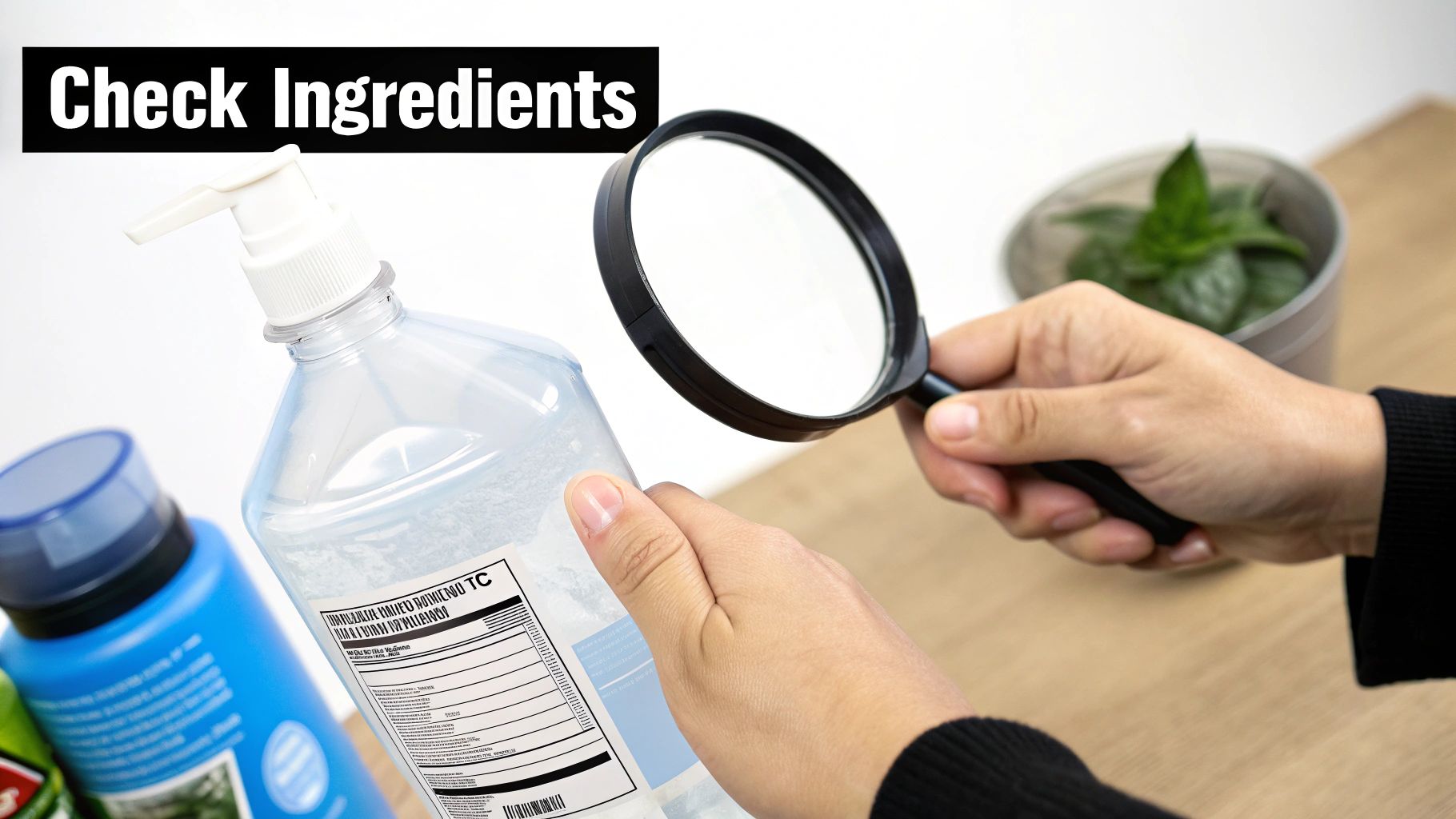
When we clean our floors, we're focused on getting rid of dirt and grime. But what we’re leaving behind is just as important—a thin layer of chemical residue. For us, it’s out of sight, out of mind. For our pets, who spend their lives sniffing, licking, and lying on those very floors, it's a completely different story.
This is where understanding the "why" behind choosing a pet safe floor cleaner really hits home.
Think about the last time you walked into a freshly painted room. The smell can be overwhelming, right? Now, consider this: a dog's sense of smell is up to 100,000 times more powerful than ours. That "pine fresh" or "lemon sparkle" scent from a standard cleaner isn't just a pleasant aroma to them—it can feel like a full-on chemical assault.
Our goal here isn't to cause alarm, but to empower you. Knowing what's really inside that bottle under your sink allows you to make safer choices for your four-legged family members. Many common products, even those convenient floor wipes, can leave behind residues that irritate paws, skin, and even their delicate respiratory systems.
The Most Common Culprits on the Ingredient List
Certain chemicals show up in standard floor cleaners again and again because they're fantastic at cutting through grease and disinfecting surfaces. The problem is, that effectiveness can come at a cost to our pets' health. Let's pull back the curtain on a few of the biggest offenders you’re likely to find on a label.
- Ammonia: It’s a powerhouse cleaner, but it releases harsh fumes that can seriously irritate your pet’s throat, lungs, and eyes.
- Chlorine (Bleach): A go-to disinfectant, but even small, unrinsed amounts can cause chemical burns on sensitive paw pads and in their mouths.
- Phthalates: These are often hidden under the vague term "fragrance." They are linked to hormonal disruptions and can trigger nasty allergic reactions in sensitive animals.
The move toward non-toxic products isn't just a fleeting trend; it’s a fundamental shift toward creating healthier homes. In fact, a whopping 82% of pet owners now actively look for non-toxic cleaning supplies. This conscious choice has helped contribute to a 20% drop in reported pet poisoning cases from cleaners since 2020. It's a clear win for homeowners everywhere, from Milton to Johns Creek.
A Quick Guide to Decoding Labels
Recognizing these harmful ingredients is your first line of defense. This table is your cheat sheet for becoming an expert label-reader on your next shopping trip.
Common Chemicals to Avoid in Pet Households
This quick reference guide highlights harmful ingredients often found in standard floor cleaners and explains the potential risks they pose to your pets.
| Harmful Ingredient | What to Look For on Labels | Potential Risks to Pets |
|---|---|---|
| Ammonia | Ammonium Hydroxide | Respiratory irritation, burning sensation in the throat, nose, and eyes. |
| Chlorine | Sodium Hypochlorite (Bleach) | Skin and paw pad irritation, chemical burns, and respiratory distress if fumes are inhaled. |
| Phenols | Often in pine-scented cleaners | Highly toxic to cats, as their livers cannot process these compounds, potentially leading to liver damage or failure. |
| Glycol Ethers | 2-Methoxyethanol, 2-Ethoxyethanol | Linked to neurological damage, kidney issues, and blood disorders with prolonged exposure. |
| Phthalates | Often listed simply as "Fragrance" or "Parfum" | Can disrupt the endocrine system and trigger allergic reactions or asthma in sensitive animals. |
| Formaldehyde | Formalin, Quaternium-15 | A known carcinogen that can cause severe irritation to the respiratory system. |
By getting familiar with these names, you go from being a regular shopper to a powerful advocate for your pet's well-being. You’ll start to see past the flashy marketing claims of "fresh" and "sparkling" and focus on what truly matters: a cleaner that’s both effective and genuinely safe for everyone in your home.
What Actually Makes a Floor Cleaner Pet-Safe?
When you’re trying to move away from harsh chemicals, it’s easy to get lost in marketing claims. So, what should you actually be looking for? Building a genuinely pet-safe cleaner is a lot like cooking a healthy meal—the quality of the final product depends entirely on the ingredients you choose. It’s all about finding gentle yet effective components that work with your pet’s biology, not against it.
This shift in thinking isn't just happening in a few homes; it's a massive movement. The global market for pet-safe cleaners is on track to jump from $6.6 billion to $8.8 billion by 2031. It’s a trend driven by pet owners like us who are demanding better, non-toxic options. Dog-focused products are leading the charge, holding a 45% market share, and liquid cleaners remain the most popular format, making up over 50% of all sales because they’re just so good at tackling tough floor messes. You can explore the numbers in more detail in this pet safe cleaner market analysis.
It Starts with a Balanced pH
First things first: a truly safe cleaner needs a pH-neutral formula. Remember the pH scale from school? It runs from acidic to alkaline, with pure water sitting right in the middle at a perfect 7. Cleaners that are too acidic (like pure vinegar) or too alkaline (like ammonia or bleach) can wreak havoc on your pet’s sensitive paw pads, leading to dryness, cracking, and painful redness. It’s the same way a harsh soap strips the natural oils from our own skin.
A pH-neutral cleaner is gentle enough to avoid that kind of irritation. As a bonus, it also protects your floors. Extreme pH levels can eat away at the finish on your hardwood or damage the sealant on your tile and vinyl over time.
A pH-neutral solution is the sweet spot. It cleans effectively without disrupting the delicate balance of your pet’s skin or your floor’s protective finish—a clean that’s both powerful and peaceful.
The Power of Plant-Derived Ingredients
Next up, let’s talk about what’s actually doing the cleaning. The best pet-safe formulas swap out harsh synthetic chemicals for ingredients sourced directly from nature. These plant-based surfactants (the compounds that lift away dirt) are incredibly effective but far gentler on paws, noses, and your home’s surfaces.
Look for cleaners built with ingredients like these:
- Coconut-based cleansers: They create a soft lather that lifts grime without aggressive stripping agents.
- Corn- and sugar-derived solvents: These are fantastic at breaking down grease and sticky messes without leaving behind toxic residue.
- Citrus extracts (properly diluted): These offer powerful, natural degreasing properties.
Not only are these ingredients safer for your pet, but they’re also biodegradable and don’t release harmful volatile organic compounds (VOCs) into the air. This means better air quality for everyone in your home, especially for our furry friends with their sensitive respiratory systems. For a closer look at options specifically for wood floors, this pet safe wood floor cleaner guide is a fantastic resource.
Using Enzymes to Erase Pet-Specific Messes
For those uniquely challenging pet messes—urine, vomit, drool—plant-based soaps sometimes need a little help. This is where natural enzymes shine. Think of enzymes as tiny, highly specialized cleaning crews, each one programmed for a very specific job.
Certain enzymes are designed to target and break down the specific proteins found in pet waste. An enzymatic cleaner doesn't just mask the odor or wipe the stain from the surface; it completely dismantles the mess on a molecular level. This process eliminates the stain and the odor-causing bacteria for good. By getting rid of the scent entirely, you also discourage your pet from marking the same spot again. It’s a smarter, more targeted approach that solves the problem permanently.
The Right Cleaning Method for Every Floor Type
Picking out a pet safe floor cleaner is a great start, but even the best product won't do much good without the right technique. A method that works wonders on your waterproof vinyl could be a total disaster for classic hardwood floors. It's all about matching your cleaning strategy to the specific flooring in your home to protect your investment and, most importantly, your furry family members.
Think of it like being a gardener—you wouldn't use the same tools for delicate flowers as you would for hearty shrubs. The same logic applies here. This isn't about making cleaning more complicated; it's about making it smarter. Using the correct approach prevents damage, gets rid of messes way more effectively, and ensures no nasty residues are left behind for curious paws to find.
This simple breakdown shows the core ideas behind any truly pet-safe cleaning routine.

As you can see, it boils down to three key things: a balanced pH that won't irritate paws, plant-based ingredients to skip the harsh chemicals, and an odorless formula that respects your pet's sensitive nose.
Cleaning Hardwood Floors with Care
Hardwood floors bring a lot of beauty to a home, but they’re notoriously fussy, especially when it comes to moisture. When you're cleaning hardwood in a house with pets, the golden rule is always less is more. Water is the ultimate enemy of wood, so your goal is to clean with a barely damp mop—never one that's soaking wet.
First things first, get rid of all the loose debris. A daily sweep or vacuum (with a hard floor attachment) isn't optional. Pet hair, dirt, and stray kibble act just like sandpaper underfoot, slowly scratching away at the finish.
When it's time to mop, here's what to do:
- Mix Your Solution: Grab a commercial pet-safe hardwood cleaner or make your own with one gallon of warm water and a half-cup of white vinegar.
- Dampen, Don't Drench: Dip your mop (microfiber mops are fantastic for this) into the bucket and wring it out until it’s almost dry to the touch. Seriously, wring it out again.
- Mop with the Grain: Clean in the same direction as the wood planks. This little trick helps minimize streaks and lifts dirt from those tiny crevices.
- Dry Immediately: If you see any lingering moisture after a minute or so, wipe it up right away with a clean, dry towel. Never, ever let water sit on hardwood.
A dog's sense of smell is up to 100,000 times more powerful than a human's. What we might register as a mild "clean" scent can feel like an overwhelming chemical assault to them. Fragrance-free is always the kindest choice.
Maintaining Waterproof Vinyl Floors
Waterproof vinyl is a go-to for pet owners in Forsyth County, and for good reason. It’s tough as nails and handles spills like a champ. The catch? Textured surfaces can trap grime, and dirt can build up in the seams over time. The right cleaning routine keeps it looking fresh without leaving behind a dulling film.
Just as you would with hardwood, start by sweeping or vacuuming away all the loose fur and dirt. For a real clean, a pH-neutral cleaner is your best friend. Anything too acidic can slowly eat away at the protective wear layer on your vinyl.
Here’s a simple routine that works every time:
- Use a Gentle Cleaner: A few drops of mild dish soap or a dedicated pet-safe vinyl cleaner mixed into a gallon of warm water is perfect.
- Mop Thoroughly: You can be a bit more generous with the water here than with hardwood. A classic string mop or a modern spray mop will get the job done.
- Rinse for Shine: This is the pro tip everyone misses. To stop that hazy film from building up, go over the floor one more time with a mop dampened with just clean water. It’s the secret to keeping that brand-new luster.
For a deeper dive into vinyl care, you can learn more about mopping vinyl floors and keep them looking great for years.
Deep Cleaning Carpets for Pet Homes
Carpet is cozy, but it’s also a magnet for pet hair, dander, and odors. For the day-to-day stuff, regular vacuuming with a HEPA filter is a must. But for those inevitable accidents and stubborn smells, you need to bring out the big guns: enzymatic cleaners.
These cleaners are pretty incredible. They don't just mask stains; they release special proteins that biologically break down and literally "eat" the organic matter left behind by pet accidents. This process eliminates both the stain and the odor at the source, which is crucial for preventing your pet from returning to the same spot.
When you're faced with a fresh pet stain on the carpet, act fast:
- Blot, Don't Rub: Use a clean, absorbent cloth to blot up as much of the liquid as you can. If you rub, you're just pushing the stain deeper into the carpet fibers.
- Apply the Cleaner: Spray the enzymatic cleaner generously over the spot. You want to make sure it soaks all the way through to the carpet pad underneath, where the real problem lies.
- Let it Dwell: Give the cleaner time to do its job. Let it sit for at least 15-30 minutes (or whatever the bottle says) so the enzymes can work their magic.
- Blot Again: With a fresh, clean cloth, blot the area dry. Resist the urge to scrub!
- Cover and Wait: Place a damp towel over the spot and let it sit for a few hours. This helps wick any remaining stain up and out of the fibers. Once it’s fully dry, give the area a good vacuum.
Crafting Your Own DIY Pet-Safe Cleaners
For homeowners in Cumming and Milton who like a hands-on approach (and saving a little money), making your own pet-safe floor cleaner is a fantastic option. When you’re in charge of the ingredients, you know exactly what’s going on your floors—and what’s getting on your pet’s paws. The best part? You probably have some powerful cleaning agents hiding in your pantry right now.
This isn't just about throwing things in a bucket; there's a simple science to it. Take white vinegar, for example. Its acidity makes it an incredible natural degreaser that cuts right through grime and soap scum. But that same acidity means you have to be careful, as it can slowly eat away at the finish on certain hardwood floors or damage natural stone over time.
A Go-To All-Purpose Cleaner Recipe
Here’s a simple but surprisingly effective recipe that works wonders on most sealed floors, like waterproof vinyl and tile. It gives you the cleaning punch of vinegar without being too harsh for most surfaces.
- Gather Your Ingredients: All you need is one gallon of warm water and one cup of white distilled vinegar. That’s it!
- Combine and Mix: Pour the vinegar into the warm water and give it a quick stir. The warm water really helps to lift dirt off the floor.
- Mop and Dry: Grab your mop, wring it out well, and get to work. Just make sure the floor is completely dry before you let your pets back in the room to avoid any slips.
Powerful Carpet Deodorizer
Carpet is notorious for trapping odors, but you don't need to resort to heavy chemical sprays to freshen things up. Baking soda is a true natural wonder for absorbing and knocking out stubborn smells.
It couldn't be easier: just sprinkle a good amount of baking soda all over your dry carpet. Let it sit for at least 15-30 minutes, or even a few hours if you're dealing with serious odors. Then, vacuum it all up thoroughly. The baking soda crystals literally pull the odor-causing particles out of the fibers, leaving your carpet smelling clean and fresh.
By creating your own cleaning solutions, you gain complete transparency and peace of mind. You’re not just cleaning your home; you’re actively curating a safer, healthier environment for the animals you love.
What to Avoid in Your DIY Cleaners
While plenty of household ingredients are perfectly safe, it’s a dangerous mistake to assume that anything "natural" is automatically pet-friendly. Some common items, especially certain essential oils, are actually highly toxic to pets.
CRITICAL: Never use these ingredients in a DIY pet-safe floor cleaner:
- Tea Tree Oil: This is extremely toxic to both cats and dogs, even in tiny amounts. It can cause serious neurological damage.
- Pine Oil: This can lead to liver damage, particularly in cats, whose bodies can't metabolize the compounds found in pine.
- Citrus Oils (in high concentration): While a very small, diluted amount might be okay, concentrated citrus oils can cause skin irritation and an upset stomach if licked up.
When in doubt, always research an ingredient before you add it to your cleaning mix. For more ideas on building a greener routine, you can explore other natural floor cleaning solutions that keep both your pets and floors happy. Sticking with proven, simple recipes like the vinegar and baking soda ones is always your safest bet.
Your Pet-Friendly Cleaning Routine
Picking out a pet-safe floor cleaner is a fantastic first step, but it's only half the equation. How you clean is just as important as what you clean with, and a few simple tweaks to your routine can make all the difference for your pets' safety.
Think of it this way: you can buy the healthiest organic vegetables, but if you overcook them, you lose a lot of the nutrients. The same principle applies here. Using a great product the right way ensures you’re getting all the safety benefits without any accidental risks for your four-legged family members.
Ventilation and Drying Time Are Your Best Friends
One of the easiest yet most critical habits to get into is ensuring good ventilation. Whenever you pull out the mop, crack open a few windows or switch on a fan. This simple move helps any scents or fumes clear out quickly, which is a big deal for our pets and their super-sensitive noses. A little airflow makes the whole process more comfortable for them.
Just as important is letting your floors dry completely before your pets are allowed back in the room. Even a non-toxic cleaner isn't meant to be ingested, and a curious dog might lick a wet spot or clean their paws after walking on a damp floor.
The "wait until it's dry" rule is your single best defense against accidental ingestion. It keeps your pets safe and prevents paw prints from messing up your sparkling clean floors.
Proactive Habits for a Cleaner Home
A truly effective cleaning strategy is about more than just mopping. Weaving these small, consistent habits into your day-to-day life can seriously cut down on how often you need to do a deep clean, making your home safer all around.
- Sweep or Vacuum Daily: Pet hair, dander, and tracked-in dirt build up surprisingly fast. A quick daily run with a vacuum or microfiber mop grabs all that debris before it has a chance to get ground into your floors.
- Tackle Accidents Immediately: When a spill or a pet accident happens, jump on it right away. This prevents stains from setting in and keeps odors from lingering, which is especially crucial for porous surfaces like hardwood. For targeted advice, check out our guide on how to clean dog pee on hardwood floors.
- Use Doormats: A good doormat at every entrance is like a bouncer for dirt. It stops mud, outdoor chemicals, and other gunk at the door so it doesn't get tracked all over your house.
Making these simple actions part of your daily rhythm creates a consistently cleaner and healthier space for everyone in your family, whether they have two legs or four.
Your Questions About Pet-Safe Floor Cleaners, Answered
When you're trying to do right by your pets, it's natural to have a lot of questions. We hear them all the time from homeowners around Cumming and Forsyth County. Let's clear up some of the most common points of confusion so you can clean with total peace of mind.
Are "Natural" or "Green" Cleaners Automatically Pet-Safe?
This is a huge misconception, and frankly, a dangerous one. Just because a label says "natural" doesn't mean it's safe for your dog or cat. Many well-meaning pet owners get tripped up here.
For instance, certain essential oils like tea tree, pine, and even highly concentrated citrus oils are often found in "green" cleaners, but they can be seriously toxic to pets if they lick or inhale them. You have to look past the marketing buzzwords on the front of the bottle. Always flip it over, read the actual ingredient list, and look for products that are explicitly formulated and labeled as "pet-safe."
How Do I Know if My Pet Is Having a Bad Reaction to a Cleaner?
Your pet can't tell you what's wrong, but they'll often show you. A negative reaction to a floor cleaner can pop up pretty quickly after you've finished mopping, so it’s important to know what to watch for.
Keep an eye out for these potential red flags:
- Skin Problems: Check their paw pads for redness or inflammation. You might also notice them itching or scratching more than usual.
- Breathing Trouble: Any sudden coughing, sneezing fits, or wheezing is a cause for concern.
- Weird Behavior: Are they suddenly sluggish and lethargic? Is there excessive drooling or general signs of distress?
- Stomach Issues: Unexplained vomiting or diarrhea is a classic sign something's wrong.
If you spot any of these symptoms, get your pet into a separate, well-ventilated room with fresh air right away and call your veterinarian.
When it comes to your pet's health, trust your gut. If you have even a small suspicion that a new cleaner is the culprit, stop using it and consult your vet. It's always better to be overly cautious.
Is a Steam Mop a Good Pet-Safe Alternative?
Absolutely! Steam mops are a fantastic chemical-free cleaning method, which makes them inherently pet-safe. They work by using superheated water to clean and sanitize, so there are no chemical residues left on the floor for curious paws or noses to find.
The big "but" here is your flooring type. Steam is great for sealed, non-porous surfaces like ceramic tile and most modern waterproof vinyl. However, it can be a disaster for many hardwood floors, as the intense heat and moisture can warp the wood and ruin the finish. Before you go all-in on steam, double-check your flooring manufacturer's care guide to make sure it can handle the heat.
At Flacks Flooring, we believe the best floors are beautiful, tough, and completely safe for the whole family—pets included. If you’re looking for a flooring upgrade that can handle pet life without compromising their safety, come see our amazing selection of waterproof and hardwood options. Visit our Cumming showroom or schedule a consultation online to find the perfect fit for your home.