
When you're looking for a good pet-safe hardwood floor cleaner, the goal is a pH-neutral, non-toxic formula. You want something that avoids harsh chemicals like ammonia, chlorine, and phenols. The best ones use plant-derived ingredients to cut through dirt and grime without leaving behind dangerous residues that could hurt your pets or ruin your floor's finish.
Why a Pet Safe Cleaner Is a Must for Hardwood Floors
For homeowners with pets, especially in our local communities like Cumming and Johns Creek, choosing the right floor cleaner isn't just about getting a good shine. It's where responsible pet ownership and smart home maintenance meet. Think about it: your pets are in constant contact with your floors. They walk around barefoot, nap right on the wood, and lick their paws clean, which makes them incredibly vulnerable to any chemical residues left behind.
Most standard floor cleaners are packed with ingredients that are great at tackling dirt but can be seriously hazardous for our furry friends. These aggressive chemicals can cause a whole range of problems, from irritating their paw pads to triggering respiratory issues or digestive upset if they lick them up.
The Double-Duty Damage of Harsh Cleaners
The trouble with those conventional cleaners is that they cause a twofold problem. They don't just pose a health risk to your pets; they also wage a silent war on the beauty and longevity of your hardwood floors. The same chemicals that can harm an animal are often incredibly destructive to your floor's protective sealant.
Think of your hardwood's finish as its shield. Harsh ingredients can slowly eat away at this crucial layer, which opens the door to a host of issues:
- Dullness and Lack of Shine: Aggressive cleaners can literally etch the surface, stripping away the luster and leaving your beautiful floors looking flat and lifeless.
- Discoloration: Over time, certain chemicals can actually alter the wood's color, leading to faded spots or unsightly patches.
- Increased Vulnerability: Once that protective finish is gone, the raw wood is exposed to everything—moisture, spills, and scratches. This can lead to expensive repairs or, in worst-case scenarios, a full replacement.
Choosing a pet-safe hardwood floor cleaner is a deliberate decision to protect two of your biggest investments: your four-legged family members and your beautiful floors. It’s really a cornerstone of creating a healthy, happy home.
A Smarter Approach to Cleaning
Switching to a pet-safe cleaner is one of the most proactive things you can do. Just picture your dog relaxing in a patch of sunlight on your Milton living room floor right after you've cleaned. When you use a pet-safe product, you can relax, too, knowing they aren't breathing in or absorbing anything harmful. This is especially critical for puppies, older pets, or animals with health sensitivities who are far more susceptible to toxic chemicals.
At the end of the day, a beautiful home is a safe one. By adopting a pet-friendly cleaning routine, you ensure your hardwood floors remain a stunning feature for years to come, without ever compromising the health of the pets who make your house a home. For more tips on making your flooring and pets coexist peacefully, check out our guide on choosing floors that can handle paws and claws.
Decoding Cleaner Labels for True Pet Safety
Walking down the cleaning aisle can be a sensory overload. Bright bottles all promise a sparkling, perfect floor. But when you have pets, you have to look beyond the marketing slogans. A "pet friendly" sticker doesn't always tell the whole story.
The real truth is on the back of the bottle. Learning to scan the ingredient list for red flags is the single most important thing you can do to protect your pets and your beautiful hardwood floors. It’s a simple shift in habit that pays huge dividends.
What to Avoid: The Usual Suspects
Many common household cleaners contain chemicals that are bad news for pets and wood finishes. When you're shopping, make it a point to check that the formula is completely free from these ingredients:
- Ammonia: The fumes alone are harsh enough to irritate a pet's sensitive respiratory system. For your floors, its high alkalinity can dull the finish and, over time, even strip it away.
- Chlorine (Bleach): This is another aggressive irritant that can affect a pet's eyes, skin, and lungs. If spilled, it can cause chemical burns on paws and will almost certainly discolor your hardwood.
- Phthalates: These are often lurking under the vague term "fragrance." Phthalates are linked to hormonal issues in animals, and the strong synthetic scents can be overwhelming for a dog or cat's powerful sense of smell.
- Phenols: Common in those classic pine-scented cleaners, phenols are particularly toxic to cats. Their livers aren't equipped to process these compounds, which can lead to serious health problems.
It's all about making an informed choice right from the start.

As you can see, the path to a genuinely pet-safe floor cleaner starts with choosing a non-toxic formula specifically made for wood.
What to Look For: The Good Stuff
So, what should you be looking for? The best and safest cleaners use gentle, effective ingredients that don't pose a risk.
Look for products with plant-derived surfactants—these are the agents that lift dirt without harsh chemicals. Natural enzymes are another great ingredient, as they are fantastic at breaking down organic messes like drool or muddy paw prints.
A pH-neutral formula is non-negotiable. This is your guarantee that the cleaner won't eat away at your floor's protective sealant. Understanding what goes into the products you use is a skill that extends beyond just floor care. It's just as important for food and treats, which is why it's so helpful to learn how to read pet product labels like a pro.
Pro Tip: Keep an eye out for third-party certifications. A seal like the EPA Safer Choice logo is a fantastic indicator. It means the product has passed a rigorous scientific review, confirming it meets strict safety standards for both people and pets.
Harmful vs. Safe Hardwood Cleaner Ingredients for Pet Homes
Navigating the ingredient list can be tricky. This table breaks down some of the most common chemicals, showing you exactly what to leave on the shelf and what to put in your cart.
| Ingredient to Avoid | Potential Risk to Pets & Floors | Safe Alternative Ingredient | Benefit for Pets & Floors |
|---|---|---|---|
| Ammonia | Irritates respiratory tract; strips floor finish | Plant-Derived Surfactants | Gently lifts dirt without harsh fumes or damage to the sealant. |
| Chlorine/Bleach | Can cause skin/paw burns and lung irritation; discolors wood | Natural Enzymes | Breaks down organic pet messes (drool, urine) at a molecular level. |
| Phthalates | Hormonal disruptors often hidden in "fragrance"; overwhelming scent | Essential Oils (Diluted) | Provides a light, natural scent that isn't overpowering for pets. |
| Phenols | Highly toxic, especially to cats; can cause liver damage | pH-Neutral Formula | Cleans effectively without damaging the floor’s protective coating. |
By familiarizing yourself with these key ingredients, you can shop with confidence, knowing you're making the best choice for every member of your family—two-legged and four-legged alike.
A Practical Cleaning Routine for Homes with Pets
Let's be honest, keeping hardwood floors clean with pets around is a constant battle. It’s not just about appearances; it's about creating a routine that handles everything from shedding fur to those inevitable muddy paw prints after a rainy day in a Forsyth County backyard. The good news is, it doesn't have to be complicated. Here's a proven process I've shared with countless homeowners that keeps floors looking great without stressing out you or your furry family members.
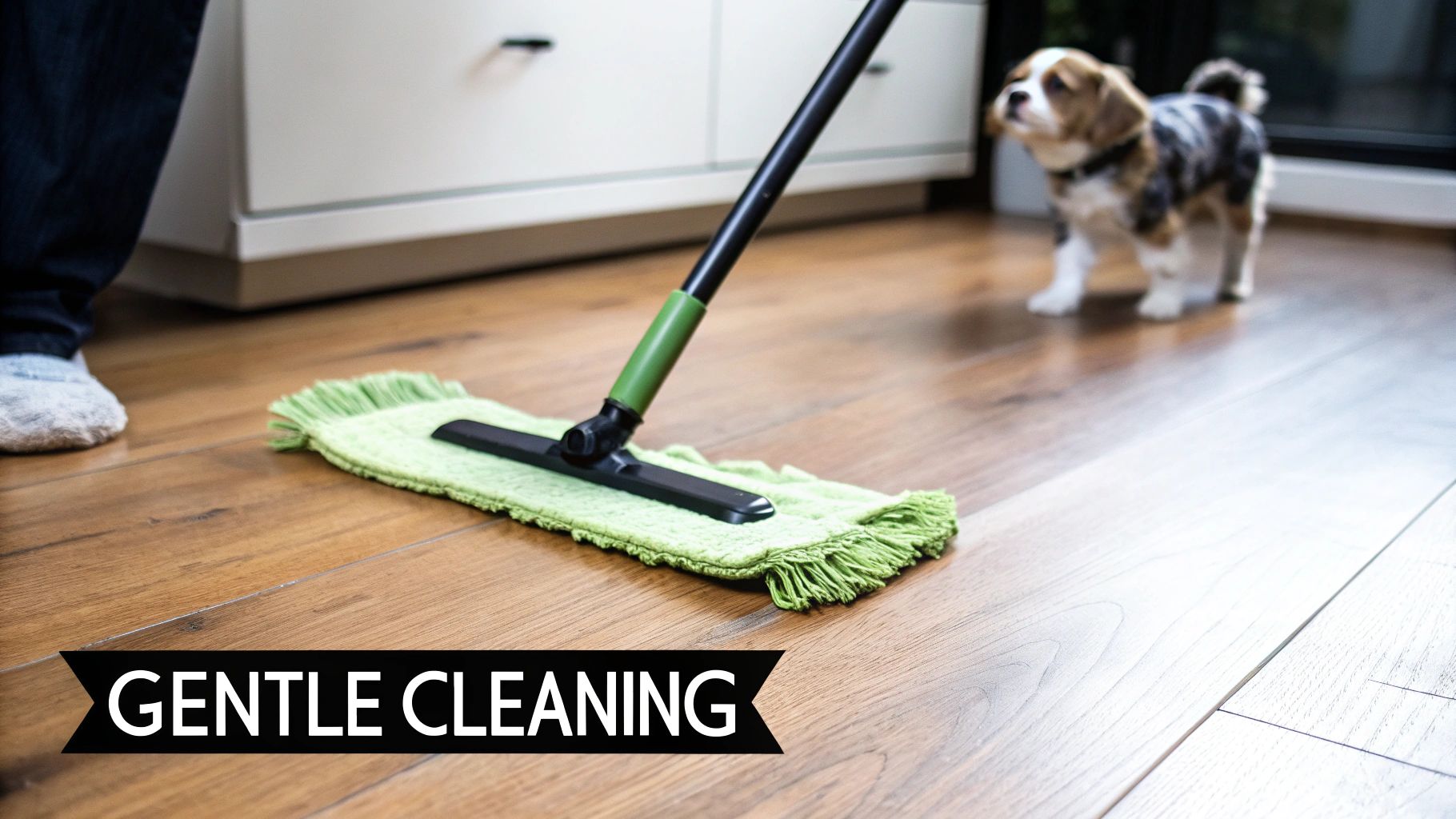
Start with a Dry Sweep or Vacuum
Before a single drop of cleaner touches your floor, you have to get rid of the loose stuff. Pet hair, dander, and whatever they've tracked in from outside will just turn into a soupy, gritty mess if you mop over it. Worse, those tiny particles act like sandpaper under your mop, creating micro-scratches in your floor's finish.
A dry microfiber dust mop is your best friend here. Its natural static charge is amazing at grabbing and holding onto fur. If you're using a vacuum, always use a hard floor attachment with soft bristles to avoid scratching the wood.
And here’s a pro tip: finding effective strategies for reducing dog shedding in the first place can make this whole process a lot easier.
Apply the Cleaner the Right Way
When it comes to wood floors, less is always more. The single biggest mistake I see people make is drenching their floors. Wood and water are not friends, and too much moisture can cause warping, cupping, and permanent discoloration. It all comes down to technique.
Keep these simple but crucial guidelines in mind:
- Never Pour Directly: Don't ever pour cleaner straight onto the floor. It creates puddles that can easily seep between the planks and into the subfloor.
- Dampen Your Mop, Not the Floor: Instead, lightly spray your pet safe hardwood floor cleaner onto a microfiber mop pad. You want it damp, not soaking wet.
- Work in Small Areas: Clean in small, manageable sections at a time. This prevents the cleaner from sitting on the wood for too long.
One of the most common issues we see is damage from standing liquid, whether from a spill or improper cleaning. A lightly dampened mop is your best defense, ensuring you clean the surface without letting moisture penetrate the wood itself.
For those inevitable pet accidents, acting fast is everything. If you're facing a tough spot, our guide on how to clean dog pee on hardwood floors gives you specific, targeted advice to prevent lasting stains and smells. Check it out here: https://flacksflooring.com/how-to-clean-dog-pee-on-hardwood-floors/
The Final Steps: Ventilation and Drying
What you do after mopping is just as important as the mopping itself. Once you've cleaned a section, immediately go over it with a separate, clean, and completely dry microfiber cloth or mop pad. This simple extra step pulls up any leftover moisture and cleaner residue.
Good ventilation is your final ally. Crack open a few windows or switch on a ceiling fan to get the air moving. This helps the floor dry faster and whisks away any faint scents from the cleaner, leaving your home smelling fresh.
Once the floor is 100% dry to the touch, it’s officially safe to let your pets back into their squeaky-clean domain.
Crafting Your Own Simple, Pet-Safe Floor Cleaner
If you're like me and prefer to know exactly what's in your cleaning products, making your own pet-safe hardwood floor cleaner is a fantastic option. It's surprisingly easy, incredibly cost-effective, and you probably already have everything you need right in your pantry. This gives you complete peace of mind, knowing every ingredient is safe for your floors and your furry family members.

The secret to a great homemade cleaner is all about the right balance. A simple, well-diluted mix of white vinegar and water is a classic for a reason—it just works. The key, however, is getting the ratio right to protect your floor’s finish. I always recommend starting with a very gentle solution: just a half-cup of white vinegar to one full gallon of warm water.
This shift toward non-toxic cleaning isn't just a niche trend. The global market for pet-safe hard floor cleaners was already valued at USD 1.28 billion in 2024, which shows just how many homeowners are seeking out these solutions. Here in Forsyth County, where so many of us have beautiful hardwood floors, this is especially true. You can see the full market breakdown on dataintelo.com.
Don't Skip This Crucial Step: The Patch Test
Before you go mopping your entire living room, please, always do a patch test. Pick a hidden spot—think inside a closet, under the sofa, or behind a doorway. Dab a little of your DIY cleaner on the floor with a cloth, let it dry completely, and then look closely for any dulling, discoloration, or damage to the finish. This little five-minute check can save you from a massive flooring disaster.
We get asked all the time about vinegar on wood floors. Its acidity is what makes it a great cleaner, but it can also be too harsh for certain finishes if not diluted properly. This is exactly why testing is non-negotiable with any homemade solution.
If you're curious about the science behind it, our article digging into whether you can use vinegar on hardwood floors is a great resource.
Ingredients to Absolutely Avoid in DIY Cleaners
While going the DIY route gives you control, it also means you have to be careful not to add something harmful. Some common "natural" ingredients are actually quite toxic to pets.
Be sure to leave these out of your cleaning bucket:
- Tea Tree Oil: This is highly toxic to both cats and dogs, even in very small amounts.
- Citrus Oils (Lemon, Orange): They might smell fantastic, but these essential oils can cause stomach upset and skin irritation, and they are especially dangerous for cats.
- Pine Oil: Another popular scent in commercial cleaners, but it's a definite no-go for pet-safe formulas.
My best advice? Stick to the basics. Water and a splash of vinegar have all the cleaning power you really need. This simple recipe gets your floors sparkling without introducing any hidden dangers, keeping your home a safe and happy place for everyone, paws included.
Keeping Your Hardwood Floors Looking Great (Even with Pets)
The best cleaning routine is the one you barely have to do. Rather than constantly fighting messes after they happen, shifting to a more proactive mindset can make a world of difference. This is doubly true when you have four-legged family members running around. A few smart habits can dramatically cut down on deep cleaning sessions, saving you time and keeping your floors in top shape.
It all starts with a few simple, consistent actions. First thing's first: get some good, durable doormats for every entrance. Think of them as your first line of defense, catching all the dirt, mud, and whatever else gets stuck to paws and shoes before it gets a chance to be tracked all over your beautiful hardwood.
Smart Strategies for Scratches and Spills
Let's be honest, the two biggest enemies of hardwood floors in a pet-filled home are claws and spills. Keeping your pet’s nails trimmed is an absolute must. When they get too long, they don't just make that annoying click-clack sound; they act like tiny little razors, slowly etching a network of fine scratches into your floor's finish and making it look dull.
Food and water bowls are another classic trouble spot. We all know how messy those areas can get. A simple waterproof mat placed underneath the bowls is a total game-changer. This small addition will catch all the stray splashes and slobber, preventing that moisture from seeping into the wood and causing ugly dark stains or even warping. You can also use area rugs in high-traffic spots—think hallways or right in front of the couch—to take the brunt of the daily wear and tear.
The "Act Fast" Rule for Accidents
No matter how careful you are, accidents will happen. The key is not to let them turn into permanent fixtures. The golden rule is simple: clean up spills the second you spot them. Whether it’s a knocked-over water bowl or a set of muddy paw prints, acting fast stops moisture from getting past the wood's finish and doing real damage. It’s a good idea to keep a clean, absorbent cloth stashed nearby for these exact moments.
This whole idea of mindful, preventative care isn't just a niche thing anymore. In fact, the global market for pet-safe cleaners is expected to hit USD 6,492.1 million by 2025. That number tells you one thing loud and clear: homeowners everywhere are getting serious about using non-toxic products to protect their families, pets, and their homes. This is especially true for us here in communities like Cumming and Milton, where our pets are a huge part of our lives. You can dive deeper into this trend by checking out the full pet-safe cleaners market report on futuremarketinsights.com.
By working these simple, proactive habits into your routine, you’re doing more than just cleaning. You're actively preserving the life and beauty of your hardwood floors, which means a cleaner, lower-maintenance home for you and your furry companions.
Ultimately, this proactive approach means you won't have to rely so heavily on even the best pet safe hardwood floor cleaner. When you cut down on the daily damage, your cleaning sessions become quick and easy touch-ups instead of massive, time-consuming projects. The result is a home with beautiful, durable floors that are safe for everyone—two-legged and four-legged alike.
Answering Your Top Pet-Safe Floor Cleaning Questions
Even with the best plan in place, you're bound to have questions. Let's tackle some of the most common things I hear from homeowners trying to balance clean hardwood floors with happy, healthy pets.
How Often Should I Clean My Hardwood Floors When I Have Pets?
Finding the right cleaning rhythm is everything. For day-to-day upkeep, a quick run with a dry mop or vacuum every one to two days is a game-changer. This simple habit keeps the constant flow of fur, dander, and tracked-in dirt from getting ground into your floor's finish.
When it comes to a deeper clean with a liquid pet safe hardwood floor cleaner, aim for weekly or bi-weekly. The best frequency really depends on your lifestyle. A family with multiple dogs and a big backyard in Forsyth County will probably need a weekly mop, whereas someone with a single, low-shedding pup in a Milton apartment can likely get away with every other week.
Is It Okay to Use a Steam Mop on My Hardwood?
I get this question all the time, but my answer is almost always a firm "no." Using a steam mop on hardwood floors is a risky move, even if you’re using a pet-safe solution. The problem isn’t the cleaner—it’s the steam.
The high-pressure steam forces hot moisture deep between the wood planks and into the grain itself. Over time, that can lead to irreversible damage like warping, cupping, and a cloudy, discolored finish.
A high-quality microfiber mop is a much safer, and still incredibly effective, alternative. It gives you a thorough clean without putting your beautiful hardwood investment at risk.
What's the Best Way to Get Rid of Pet Urine Odor for Good?
When accidents happen, speed is your best friend. The first thing you need to do is blot the spot immediately with a clean, absorbent cloth to soak up as much of the urine as you can. Whatever you do, don't rub! Rubbing just pushes the liquid deeper into the wood.
Once you've blotted, grab an enzyme-based pet-safe cleaner. These are specifically designed to break down the uric acid crystals that create that stubborn, lingering smell. Standard cleaners, and even old standbys like vinegar, often just cover up the odor temporarily. An enzymatic cleaner actually destroys it at the source, which is also a huge help in preventing your pet from returning to the same spot.
At Flacks Flooring, we know your floors are the foundation of your home life with your pets. For expert advice on choosing, maintaining, or installing the perfect pet-friendly flooring for your home, stop by and see us at https://flacksflooring.com.