
When you get down to the brass tacks of the "SPC vs LVP" debate, it all boils down to what’s at the very heart of the plank. SPC (Stone Plastic Composite) is built around a rigid, limestone-based core, which makes it incredibly tough and stable. On the other hand, traditional LVP (Luxury Vinyl Plank) uses a flexible PVC core, giving it a softer, more forgiving feel underfoot. Your final decision really hinges on what you value more: rock-solid durability or cushioned comfort.
Decoding The SPC vs LVP Difference

When folks in Cumming and Johns Creek start looking at new flooring, they inevitably run into the terms SPC and LVP. They're both technically luxury vinyl and share a lot of the same great features, but the way they're built creates two very different products. Getting a handle on this core difference is the first step to choosing the right floor for your home and how you live in it.
For years, traditional LVP was the go-to choice for its flexibility, comfort, and surprisingly realistic wood visuals. Its PVC core makes it noticeably softer to walk on, which is a big plus in bedrooms or family rooms where you’re on your feet a lot.
But that same flexibility can cause headaches. Traditional LVP demands a perfectly flat, smooth subfloor. If there are any bumps or dips, they’ll eventually push through the surface, creating an uneven look we call "telegraphing." It's also much more likely to get dented by heavy furniture or a dropped can of soup.
The Rise Of Rigid Core Flooring
This is exactly where SPC flooring came in and changed the game. Its core is a super-dense blend of natural limestone powder, PVC, and stabilizers, giving SPC its signature rigidity and incredible strength. It's a true workhorse.
SPC's rigid core is its defining advantage. It provides superior dimensional stability, meaning it won't expand or contract with temperature changes, and it offers exceptional resistance to dents and impacts from daily life.
This built-in toughness makes it the perfect solution for the most demanding parts of your house. It's no surprise that SPC has quickly become the dominant player in the vinyl flooring market, surpassing traditional flexible LVP. That’s all thanks to its bulletproof durability and waterproof construction. The core of an SPC plank is typically about 60% limestone, which gives it phenomenal resistance to dents and heavy static loads—a critical feature if you have hefty furniture or home gym equipment. You can dive deeper into the latest trends in LVP flooring types to see where the industry is heading.
Ultimately, the "best" floor is all about context. For a busy entryway in a Milton home or a moisture-prone basement in Forsyth County, SPC is the hands-down winner. But for a quiet upstairs bedroom where you want extra comfort and a little more sound absorption, traditional LVP can still be a perfectly good choice.
At a Glance SPC vs Traditional LVP
If you need a quick cheat sheet, this table lays out the main differences between SPC and traditional flexible LVP. It's a great way to get a high-level feel for their core attributes before diving into the details.
| Feature | SPC (Stone Plastic Composite) | Traditional LVP (Luxury Vinyl Plank) |
|---|---|---|
| Core Material | Dense, rigid limestone-plastic composite | Flexible PVC (polyvinyl chloride) |
| Durability | Exceptional dent and impact resistance | Good scratch resistance, but prone to dents |
| Feel Underfoot | Firm and solid, similar to laminate | Softer, more cushioned, and flexible |
| Subfloor Needs | More forgiving; can hide minor imperfections | Requires a perfectly smooth, level subfloor |
| Best For | Kitchens, basements, bathrooms, high-traffic areas | Bedrooms, living rooms, low-traffic spaces |
Think of this as your starting point. Now, let’s dig into what these differences really mean for your home, your lifestyle, and your budget.
Taking a Look Inside: The Core Difference in Construction
To really get to the bottom of the SPC vs. LVP debate for your home, you have to look beyond the surface. In a showroom, they can look almost identical, but their internal construction is where you'll find the real differences in performance. Think of it like a car—what's under the hood matters most. Every layer in a plank has a job, from fending off scratches to providing stability, but it’s the core material that truly sets them apart.

Ultimately, the guts of each plank dictate how it feels underfoot, how it holds up over time, and how it handles the daily grind of a busy household. This is what gives each product its unique personality and helps us figure out exactly where it will perform best.
The All-Important Core Layer
This is the backbone of the plank. It provides structure, stability, and that distinct feel when you walk on it. Here’s where SPC and traditional LVP take completely different paths.
-
SPC (Stone Plastic Composite) Core: This stuff is engineered for pure strength. It’s a super-dense, rigid core made from a mix of natural limestone powder, PVC, and stabilizers. The limestone content is often around 60%, which gives SPC its signature weight, rigidity, and fantastic resistance to dents.
-
Traditional LVP Core: On the other hand, traditional LVP has a flexible core made almost entirely from PVC. This makes for a much softer, more forgiving plank that feels more cushioned underfoot. But that flexibility is also its biggest weakness; it's far more likely to show indentations from heavy furniture or "telegraph" bumps from an imperfect subfloor.
It's really like comparing a piece of stone tile to a thick rubber mat. The stone is unyielding and tough, while the rubber is flexible and soft. Understanding this fundamental difference is a great first step when you're exploring what vinyl plank flooring is all about.
The Protective Wear Layer
Sitting right on top is the wear layer, and you could argue it's the most critical piece for keeping your floors looking good long-term. This clear topcoat is the plank’s first line of defense against everything life throws at it.
We measure its thickness in mils (one-thousandth of an inch), and it's simple: the thicker the wear layer, the more durable the floor. More mils mean better protection from scratches, scuffs, and stains.
- Residential Use: A 6 to 12 mil wear layer is fine for low-traffic spots like bedrooms.
- Heavy Residential/Light Commercial: The sweet spot is a 20 mil wear layer. It’s what we recommend for most busy homes, especially if you have kids or pets. It’s perfect for kitchens, hallways, and entryways.
- Commercial Use: These can go up to 28 mil or more for places that see extreme foot traffic.
A thicker wear layer is your best defense against the daily chaos of a busy home. For most homeowners in the Cumming and Milton area, a product with a 20 mil wear layer offers the ideal balance of durability and value, ensuring the floor's beautiful appearance lasts for years.
The Visual and Backing Layers
The last two pieces of the puzzle, the visual and backing layers, are pretty similar for both SPC and LVP.
The visual layer (or print layer) is where the design magic happens. Using incredibly high-definition 3D printing, manufacturers create stunningly realistic images of wood grain, stone patterns, and tile textures. This is what gives luxury vinyl its good looks, so you never have to choose between style and performance.
Finally, the backing layer acts as the foundation for the whole plank. Usually made of cork or foam, it helps absorb sound, adds a little extra cushion, and provides a moisture barrier from the subfloor. A lot of the newer SPC planks come with this underlayment already attached, which makes installation a bit faster and the floor more comfortable right out of the box.
How They Hold Up: A Real-World Look at Durability and Dents
When you're choosing between SPC and LVP, durability is usually where the decision gets made. They're both tough, for sure, but they react very differently to the chaos of a real household. It's not just about handling foot traffic; it’s about how the floor stands up to a dropped pan, a dragged sofa, or kids' toys.
The secret is in the core. SPC has a super-dense core made from a limestone composite, which makes it a heavyweight champion against dents. On the other hand, traditional LVP has a softer, more flexible PVC core. While that makes it a bit more comfortable underfoot, it also makes it much more prone to getting dings and dents. This difference really matters in the high-traffic zones of your house.
The Heavy Furniture Test
Think about moving furniture around in your Johns Creek living room. You've got a heavy oak bookcase you need to slide a few feet. This is where SPC’s static load tolerance really comes into play.
Because its core is so rigid, it spreads the weight out, stopping the furniture legs from leaving permanent divots. Traditional LVP, being more flexible, will squish down under that kind of pressure. You’ll often end up with indentations that just don't bounce back. For any room with heavy, stationary furniture, SPC gives you that extra peace of mind.
The bottom line is this: while both are durable, SPC is engineered to resist impacts and dents, while high-quality LVP's strength is in its flexibility and top-level scratch defense.
When Life Happens: Impact from Dropped Objects
Now, let's move to a busy kitchen in a Milton family home. Someone drops a heavy cast-iron skillet or a can of soup. In this all-too-common scenario, SPC’s rock-solid core is a clear winner. It's far more likely to shrug off that kind of sharp, heavy impact without chipping or denting.
A flexible LVP plank, however, would probably get a deep gouge or a permanent dent from the same accident. This simple reality makes SPC a much more practical choice for kitchens, playrooms, home gyms, or any room where things are likely to get dropped.
Scratch and Scuff Resistance: It’s All About the Wear Layer
While the core handles dents, the wear layer is what protects the floor from everyday scratches and scuffs. This is the clear top coat, and its thickness is measured in mils (one-thousandth of an inch). This layer is the first line of defense against pet claws, sliding chairs, and dirt being tracked in.
Here's how to think about wear layer thickness:
- 12 mil Wear Layer: This is fine for low-traffic spots like a guest bedroom. It offers basic protection but will likely show wear and tear much faster in busier areas.
- 20 mil Wear Layer: For most homes in Forsyth County, this is the sweet spot. It provides fantastic defense against scratches, making it perfect for entryways, hallways, and living rooms—especially if you have kids and pets.
When it comes to scratch resistance, the SPC vs. LVP debate is less about the core and more about the quality of this top layer. A premium LVP with a 20 mil wear layer can be just as scratch-resistant as an SPC plank with the same rating. But when you combine that thick wear layer with SPC's rigid, dent-proof core, you get the toughest flooring combination available. For a deeper dive, you can learn more by understanding high-traffic flooring options.
In the end, it boils down to what your floors will face every day. If you're worried about dents from heavy furniture or impacts from dropped items, SPC's superior dent resistance makes it the obvious choice. If your main concern is surface-level scratches and scuffs, then your focus should be on finding a product with a beefy 20 mil wear layer, no matter which core type you choose.
Waterproof Performance and Climate Stability
If you live in Georgia—especially in Cumming or Forsyth County where humidity is a given—how a floor handles moisture is non-negotiable. Both SPC and LVP are often sold as "100% waterproof," but that term can be a bit of a marketing trap. The surface of the planks will absolutely shed water, but the real test is how their core structure reacts to moisture and our infamous temperature swings. That's where the two start to pull apart.
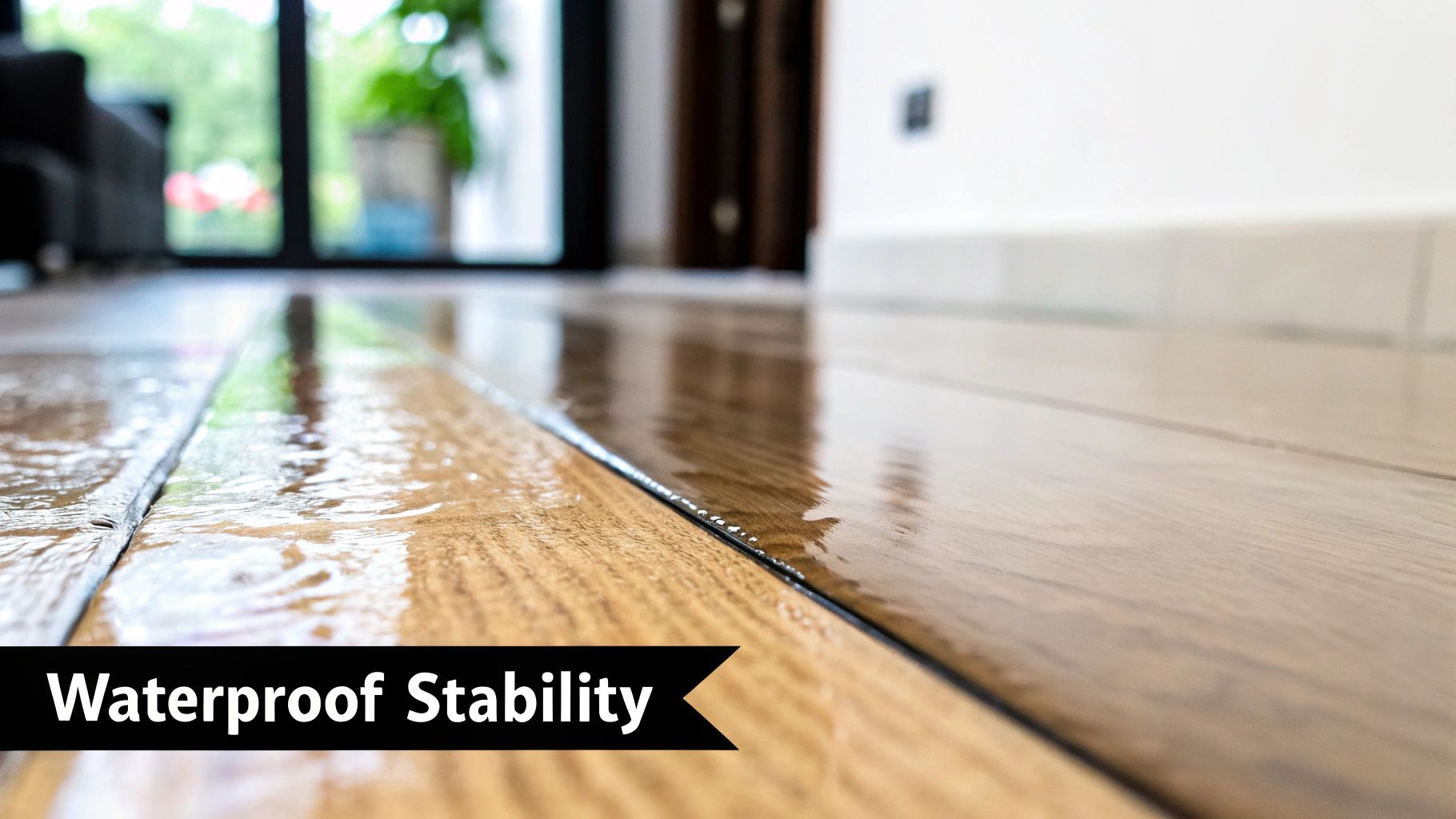
It’s important to remember that "waterproof" refers to the plank itself, not the seams between them. Water can and will find its way through any tiny gap and get to your subfloor. This is precisely where SPC’s construction gives it a serious advantage.
The Advantage of a Rigid Core in Humid Climates
Traditional LVP has a flexible PVC core, which makes it more sensitive to temperature fluctuations. In our hot, humid summers, it can expand. Then, when a cool, dry spell hits in the winter, it contracts. Over a few years, this constant movement can cause planks to pull apart, creating small gaps or even buckling. Once that happens, its water-tightness is compromised.
SPC flooring, on the other hand, has a dense core made with limestone. This makes it incredibly dimensionally stable. It simply doesn't expand or contract much, even with the wild temperature and humidity shifts we see around here. This stability keeps the locking system tight and the seams flush, creating a far more dependable barrier against spills.
The core difference is simple: SPC’s rigid structure maintains its shape and integrity through seasonal changes, providing a consistently tight seal across the entire floor. This makes it the superior choice for any area prone to moisture.
This unmatched stability is why SPC is the clear winner for any challenging environment. It buys you long-term peace of mind, which is a huge part of its value. To dig deeper into this, you can explore our ultimate guide to moisture-resistant flooring options.
Where Waterproof Integrity Matters Most
Think about the places in your Milton or Johns Creek home where water is a constant guest. In these spots, choosing SPC isn't just a preference; it’s a practical necessity.
- Basements: Basements are often damp and below grade, making them the perfect candidate for SPC. Its stability and tight seams help prevent ambient moisture from turning into a real problem.
- Bathrooms and Laundry Rooms: These rooms deal with daily splashes, steam, and the occasional overflow. SPC’s tough construction ensures these little accidents don't cause long-term damage.
- Kitchens: From spilled drinks to a leaky dishwasher, kitchens need a floor that won’t warp or fail when life happens.
When you look at SPC vs. LVP, the decision is less about the upfront price and more about the total cost of ownership and risk management, especially in our climate. A huge reason for its popularity is how it performs when a small leak happens. With SPC's fully waterproof core, a minor appliance leak or pet accident is far less likely to turn into a full floor replacement that could cost thousands. In fact, many commercial-grade SPC floors can last 10–15 years or more, even in high-traffic areas. You can see why this is a growing trend in this comprehensive analysis of the vinyl flooring industry.
Comparing Total Cost and Long-Term Value
When you're weighing SPC against LVP flooring, it's easy to focus on the price per square foot. But that number is just the beginning of the story. The real cost of your new floor is a mix of the materials themselves, the quirks of installation, and what it adds to your home's value down the road.
At first glance, you might find that high-quality SPC and a good mid-range LVP have surprisingly close price tags. The real difference in your final bill often comes from what's happening with your subfloor, and this is where the unique construction of each plank really matters.
Beyond the Price Tag: Installation Variables
The condition of your subfloor is the single biggest wild card in flooring installation costs. Traditional LVP is flexible, which sounds like a good thing, but it means the plank will conform to every single lump, dip, and imperfection underneath. Getting that perfectly smooth surface it needs often means extra time, labor, and materials for leveling, which can quickly inflate your budget.
SPC, on the other hand, is built with a rigid core. This gives it the strength to "bridge" minor imperfections in the subfloor. While you always want the surface to be as clean and flat as possible, SPC is much more forgiving. For a home in Forsyth County with a basement concrete slab that isn't perfectly even, that forgiveness translates directly into savings on subfloor prep.
The decision between SPC and LVP should be viewed as an investment in your property's future. While initial costs might be comparable, SPC’s superior durability and water immunity often result in a lower total cost of ownership over the life of the floor.
This advantage during installation is a huge financial differentiator right from the start. To get a handle on all the moving parts of your project, take a look at the complete cost to install vinyl flooring; it will help you build a much more accurate budget.
Calculating Long-Term Value and ROI
Your flooring is more than just a surface; it's an investment in your home's everyday usability and its future resale price. SPC’s tough-as-nails construction delivers a better return on that investment simply by reducing the risk of future problems. Thanks to its incredible dent resistance and waterproof core, you're far less likely to be spending money on repairs or a full-blown replacement because of a dropped pan or a leaky dishwasher.
This durability isn't just about avoiding repair bills—it's about protecting your home's market value. A beautiful, waterproof, and resilient floor is a massive selling point. For homeowners, understanding which flooring types that enhance property value is key. When potential buyers see an SPC floor in a kitchen, basement, or bathroom, they see a smart, modern upgrade that offers them longevity and peace of mind.
Financial Breakdown SPC vs LVP
To put it all together, let’s look at how the costs and long-term value stack up beyond just the initial material price.
| Cost Factor | SPC Flooring | Traditional LVP Flooring |
|---|---|---|
| Material Cost | Moderate to High | Low to Moderate |
| Subfloor Prep | Often lower; can bridge minor imperfections. | Can be higher; requires a perfectly flat surface. |
| Repair/Replacement Risk | Low due to high dent and water resistance. | Moderate due to susceptibility to dents and gaps. |
| Long-Term Value (ROI) | High; adds durability and appeal to buyers. | Good; an affordable upgrade but with less durability. |
In the end, while flexible LVP might seem like the cheaper option at first glance, SPC often emerges as the smarter financial move for the long haul. This is especially true in the high-traffic, spill-prone areas of a busy family home here in the Cumming and Milton area.
Making the Right Choice for Your Home
So, how do you decide between SPC and LVP flooring? It really boils down to matching the product’s core strengths to what a specific room in your home actually needs. By now, the main takeaway should be clear: SPC is a rigid, tough-as-nails workhorse, while traditional LVP offers a softer, more flexible surface. Once you map those traits to your own home and lifestyle, the right choice usually becomes obvious.
This decision guide helps visualize how your budget, subfloor condition, and daily traffic can point you toward the best fit.

As you can see, when durability is the top priority—especially over a subfloor that isn't perfectly level—SPC often becomes the default choice.
Room-by-Room Recommendations
Let's translate this into practical advice for your home in Cumming or Forsyth County. Some rooms have needs that are simply non-negotiable, making one type of flooring a clear winner.
For any space where moisture, heavy foot traffic, and potential impacts are a daily reality, SPC is the superior choice.
- Kitchens, Bathrooms, and Laundry Rooms: These wet areas demand absolute waterproof integrity and resistance to dents from dropped pots or appliances. SPC’s rigid core and tight-locking system create a nearly impenetrable shield against spills and humidity.
- Basements: Because they are below-grade and prone to dampness, basements are the perfect environment for SPC. Its dimensional stability means it won't warp or buckle with moisture changes.
- Entryways and Mudrooms: These zones are the first line of defense against tracked-in dirt, rainwater, and heavy boots. They need the kind of toughness only SPC can reliably provide.
When Comfort Takes Priority
That said, there are still situations where a high-quality flexible LVP is an excellent, and sometimes better, fit. The softer feel underfoot is a tangible advantage that many homeowners genuinely prefer.
In rooms where comfort and quiet are the main goals, traditional LVP with a quality underlayment creates a softer, more sound-absorbent surface.
Think about second-floor bedrooms, home offices, or kids' playrooms. In these spaces, a warmer feel and better sound dampening might be more important than extreme dent resistance, making flexible LVP a strong contender. Just keep in mind that it absolutely requires a perfectly flat subfloor to perform well and look its best.
Special Use Cases and Final Considerations
For rental properties in Johns Creek or Milton, SPC’s near-indestructible nature offers a huge advantage. It stands up to the wear and tear of multiple tenants, which significantly cuts down on long-term maintenance and replacement costs. Market trends are clearly showing this shift; SPC is now the go-to for almost any project labeled "waterproof flooring," while flexible LVP is finding its place in more niche, comfort-focused roles.
Real estate agents increasingly see rigid-core floors not as an upgrade but as a standard feature in key areas, especially because they handle Georgia’s temperature and humidity swings so well. You can dive deeper into these luxury vinyl flooring market trends to see where the industry is headed.
To lock in your decision, ask yourself these four final questions:
- What’s the room’s main job? High traffic and moisture point directly to SPC.
- What condition is my subfloor in? SPC is much more forgiving of minor imperfections.
- Who uses the space? Homes with pets and active kids will benefit most from SPC’s impact resistance.
- What’s my top priority? Is it unshakeable durability or a softer, cushioned feel?
Answering these honestly will lead you straight to the perfect floor for your home.
Still Have Questions? Let's Clear Things Up.
Even after weighing the pros and cons, you might still be wrestling with a few specific questions. That's perfectly normal. Here are the straight-up answers to the most common queries we get from homeowners here in Cumming, Johns Creek, and the surrounding areas.
Can I Actually Install This Myself?
Look, both floors come with those tempting click-lock systems that scream "easy DIY." But here’s the reality: the success of your project has almost nothing to do with the planks and everything to do with your subfloor.
Flexible LVP is brutally honest—it will show every single bump, dip, or imperfection underneath. This phenomenon, called telegraphing, can make a brand-new floor look terrible. SPC’s rigid nature is a bit more forgiving and can hide minor flaws, but a level surface is still non-negotiable. An uneven subfloor puts constant stress on the locking joints, which can eventually lead to gaps or broken planks. This is why we always recommend having a pro at least look at your subfloor first; it can save you a huge headache and protect your warranty.
Which One Holds Up Better to Kids and Pets?
For a chaotic household full of kids and pets, SPC flooring is the clear winner. It’s not even a close race. The ultra-dense core is a game-changer, providing unmatched resistance to dents from dropped toys, flying sippy cups, or heavy furniture.
Even more importantly, a quality SPC plank with a robust 20 mil wear layer (or thicker) will stand up to the daily abuse of dog claws and dragged chairs. Add in the fact that it's 100% waterproof, and you get total peace of mind against spills and accidents. While a top-tier LVP is certainly tough, SPC’s combination of strengths gives it the definitive advantage for busy family life.
For active families, SPC flooring's rigid core is the ultimate defense against the trifecta of household damage: dents, scratches, and water. It’s an investment in worry-free living.
Is SPC Going to Feel Cold and Hard Like Tile?
I get this question a lot. Because SPC has limestone in its core, it does feel more solid underfoot than the softer, flexible LVP. It can also be a little cooler to the touch, similar to a laminate floor. However, it’s not in the same league as the cold, unforgiving feel of ceramic or porcelain tile.
To combat this, almost all modern SPC planks come with a pre-attached underlayment pad, usually made of foam or cork. This built-in layer does wonders for cushioning, adds a bit of thermal insulation, and really deadens sound. This simple feature makes it far more comfortable than tile and a fantastic choice for any room in the house, not just basements or bathrooms.
What's the Deal with Underlayment?
Underlayment is a must-have, but it plays a slightly different role for each floor. With flexible LVP, you almost always need a separate underlayment to add cushion, absorb sound, and provide a thermal break from a cold subfloor.
With SPC, that underlayment is often already attached. If the product you choose doesn’t have it, adding one is still a great idea to improve sound insulation (it cuts down on that hollow, echoey sound) and add a little extra comfort. Just be sure to check the manufacturer's specs—using the wrong kind or thickness of underlayment is a surefire way to void your warranty.
Ready to see the difference for yourself? The team at Flacks Flooring is here to help you navigate the SPC vs LVP decision with expert advice tailored to your home and lifestyle. Visit our showroom in Cumming, GA, to explore our extensive collection of waterproof flooring options today. https://flacksflooring.com