
Living in a rental often means you're stuck with floors you'd never pick yourself. But what if you could change them? Temporary flooring for renters is the perfect answer, letting you personalize your space with options that won't leave a trace—or put your security deposit at risk.
Upgrade Your Rental Without Risking Your Deposit
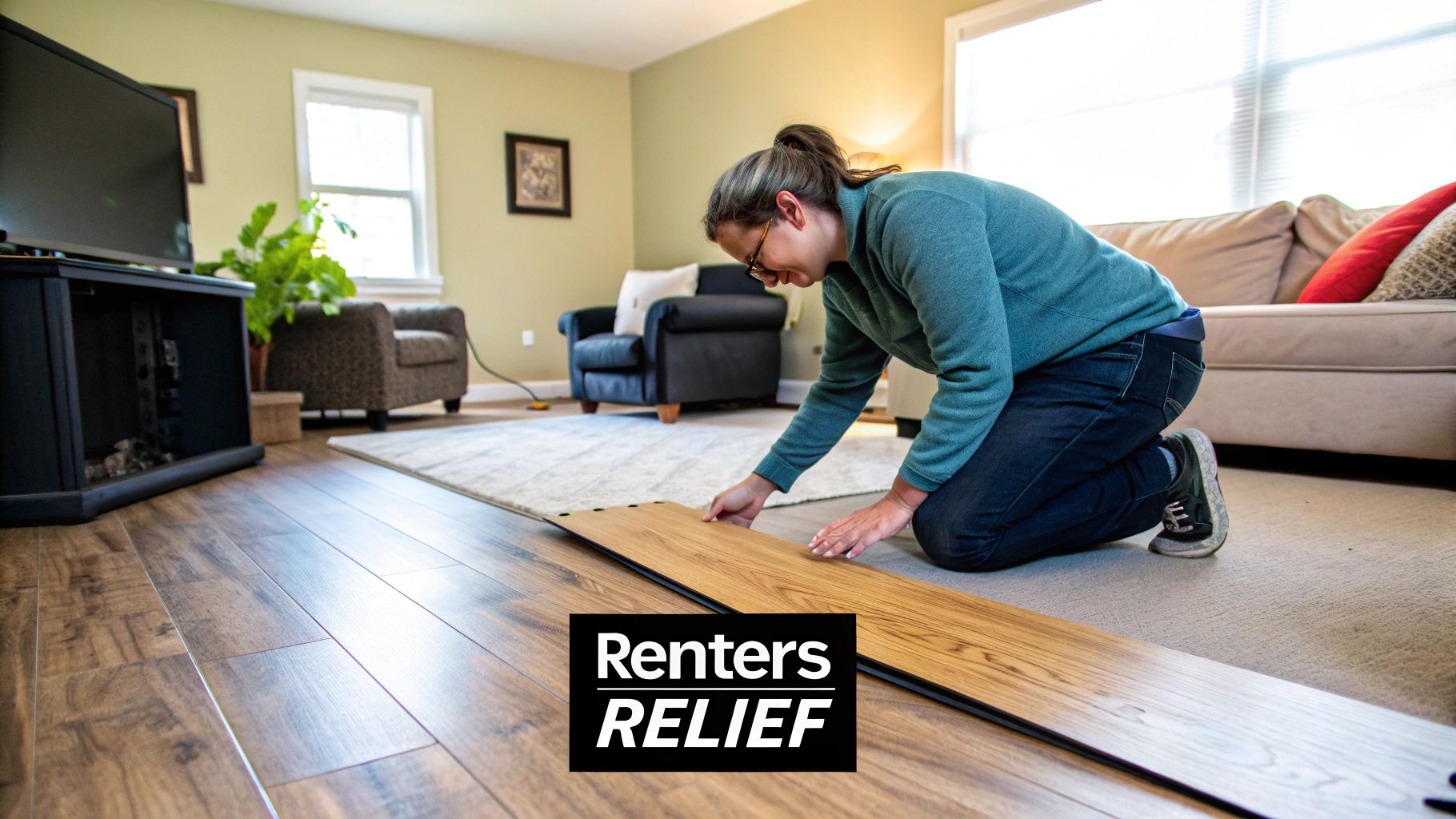
Many renters assume they have to live with worn-out carpets or dated tiles, thinking any real change is forbidden. Think of renter-friendly flooring as a stylish, protective skin for the original floors. When it’s time to move, you just peel it back or pack it up, leaving everything exactly as you found it.
It's a clever way to show off your style and keep the landlord happy at the same time.
It's no surprise these solutions are becoming more popular. With rental markets in major cities growing by over 10% since 2020, more and more people are looking for smart, affordable ways to make their temporary homes feel permanent.
Key Benefits of Temporary Flooring
Opting for a non-permanent floor brings some fantastic perks for anyone living in a rental.
- Damage-Free Customization: Get the beautiful look of hardwood, stone, or brand-new carpet without a single drop of glue or a nail. Your subfloor stays pristine.
- Deposit Protection: By covering up the landlord's original flooring, you’re also shielding it from spills, scuffs, and everyday foot traffic. This is a huge help in getting your full security deposit back.
- A Major Style Boost: Instantly hide ugly or old-fashioned floors and create a space that actually feels like it belongs to you.
Of course, if you're keeping the original carpet, you'll want to protect it just as carefully. It's always a good idea to look into different carpet protection solutions to make sure you have all your bases covered.
So, you're ready to say goodbye to that less-than-lovely rental floor? You've got more options than you might think. The world of temporary flooring for renters is packed with clever solutions that can fit just about any room or style. Best of all, they're designed to go down easy and, crucially, come up clean.
Forget thinking about flooring by material alone. The real magic for renters is in the installation method. Most of these solutions are either peel-and-stick or floating floors. Neither requires messy glues or nails, which means your security deposit stays safe when it’s time to move out.
Whether you're dealing with a high-traffic hallway or a cozy bedroom, there’s a temporary fix that will feel like a permanent upgrade.
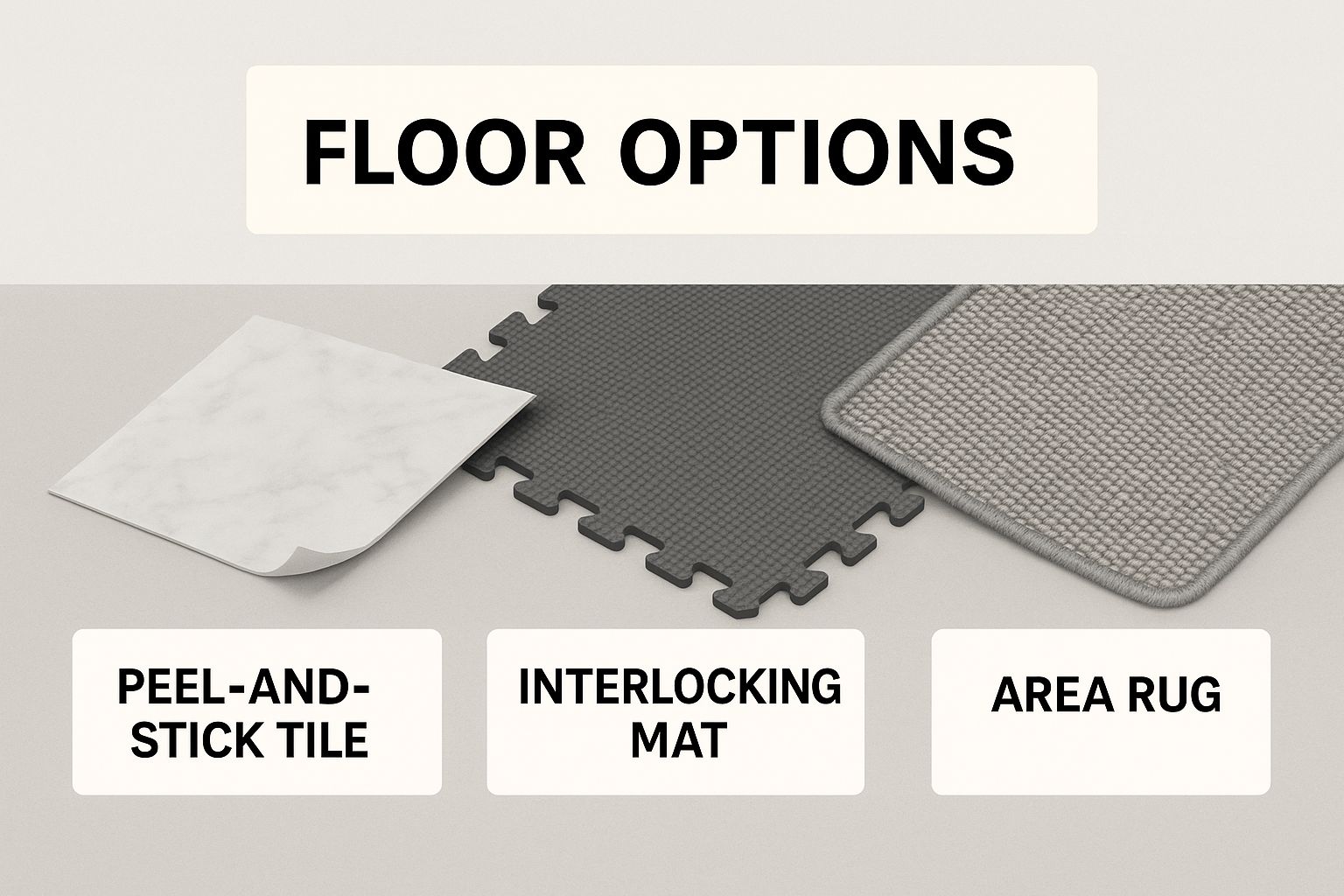
This quick visual guide gives you an idea of just how versatile these temporary options can be, proving renters don't have to settle for floors they don't love.
To help you sort through the choices, here's a quick comparison of the most popular options.
Quick Guide to Renter-Friendly Flooring
| Flooring Type | Best For | Average Cost (per sq. ft.) | Installation Ease | Removability |
|---|---|---|---|---|
| Peel-and-Stick Vinyl | Kitchens, bathrooms, entryways | $1 – $5 | Very Easy | Easy, may need a solvent for residue |
| Carpet Tiles | Bedrooms, living rooms, offices | $2 – $7 | Easy | Very Easy, low risk of residue |
| Luxury Vinyl Plank (LVP) | Any room, high-traffic areas | $3 – $8 | Moderate | Easy, tiles disassemble |
| Interlocking Tiles | Home gyms, playrooms, basements | $2 – $6 | Easy | Very Easy, tiles disassemble |
This table should give you a solid starting point, but let's break down what makes each type unique.
Peel-and-Stick Tiles and Planks
If you've ever used a sticker, you can install peel-and-stick flooring. These products have shaken off their old, flimsy reputation and now feature advanced adhesives that grip tight but release without a fight (or a sticky mess) when you need them to.
- Vinyl Tiles: These are the champs for wet areas like kitchens and bathrooms. Vinyl is tough, water-resistant, and super easy to wipe clean. You can find everything from hyper-realistic wood looks to fun, bold patterns. To get a better handle on the material itself, check out this guide on Polyvinyl Chloride (PVC) flooring.
- Carpet Tiles: Craving a bit of softness underfoot? Peel-and-stick carpet tiles are a game-changer. The best part? If you spill something and create a permanent stain, you just pull up that one tile and replace it—no need to tear out the whole floor.
This approach gives you total creative freedom with almost zero commitment. It’s the perfect formula for a renter who wants to make a space their own.
Interlocking and Floating Floors
Floating floors are exactly what they sound like—they don't actually attach to the subfloor at all. The planks or tiles click or lock into each other, forming a single, solid surface that just sits right on top of your existing floor. When you're ready to leave, you just take it apart.
A huge perk of floating floors is their knack for hiding minor flaws in the original surface. Since they aren't glued down, they can easily bridge small bumps or uneven spots, giving you a smooth, professional-looking result.
Here are a few popular floating options:
- Luxury Vinyl Planks (LVP): This is the go-to for mimicking hardwood floors. LVP planks click together for a tight, secure fit and are more than durable enough to handle kids, pets, and daily life.
- Interlocking Foam or Rubber Tiles: Perfect for creating a cushioned, protective surface in a home gym, a kids' playroom, or a garage workshop.
- Carpet Squares and Remnants: You can find large, interlocking carpet squares that work like LVP. Another great trick is to use a single large carpet remnant to cover an entire room without any adhesive. There are some real https://flacksflooring.com/benefits-of-using-carpet-remnants/ that can give you that cozy, wall-to-wall feel for a fraction of the cost.
How to Choose the Right Temporary Flooring
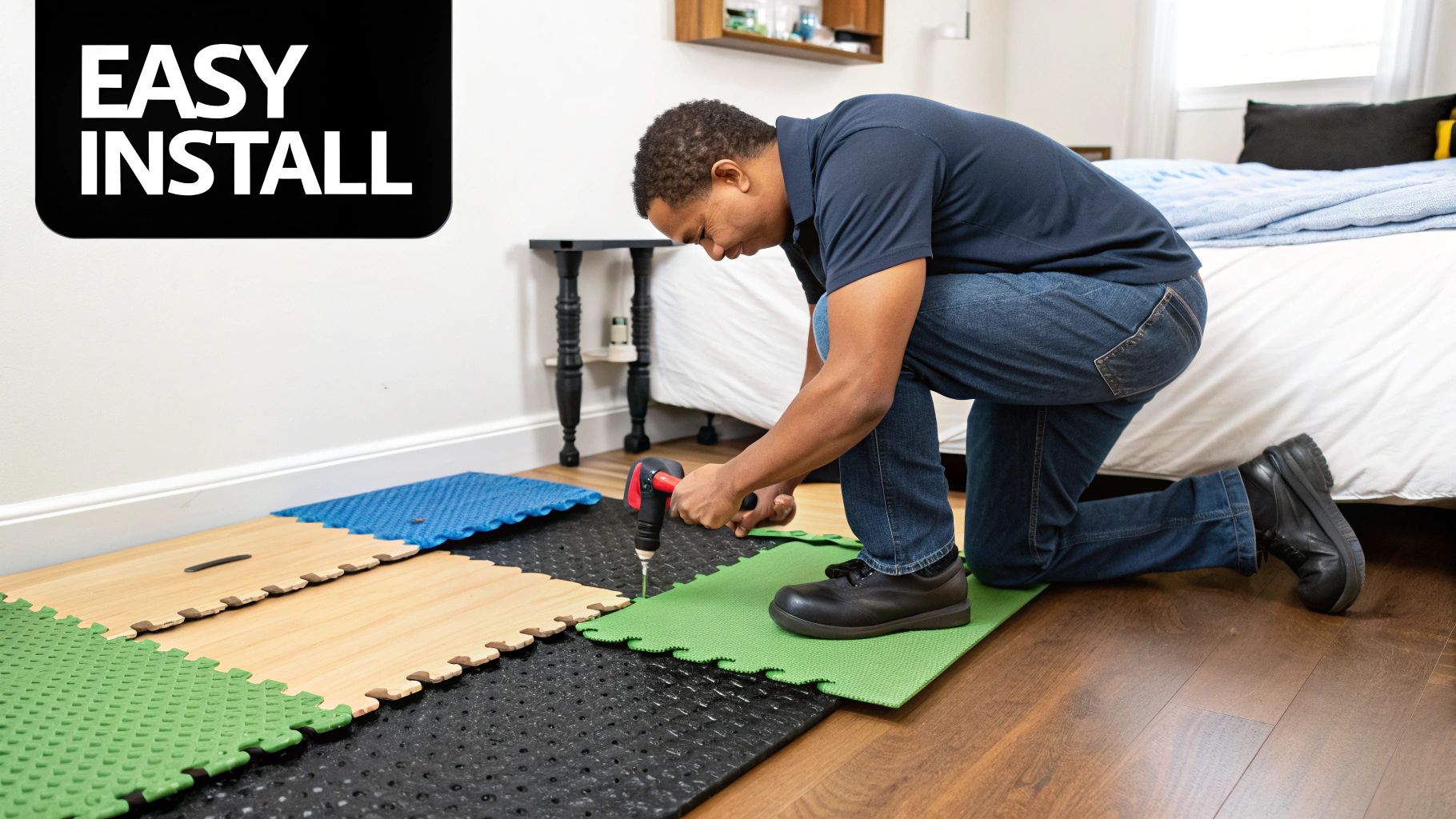
With so many renter-friendly flooring options out there, picking the right one can feel a bit daunting. The trick is to find that sweet spot between the look you want and what your space actually needs. Before you get too excited and start adding things to your cart, let’s walk through a few key questions.
First things first, take a good, hard look at your existing floors. Are they perfectly level, or are there a few bumps and imperfections? Something like peel-and-stick tiles needs a super smooth surface to look its best, whereas thicker floating floors like luxury vinyl plank (LVP) are great at hiding minor flaws.
Assess Your Space and Lifestyle
Think about how you use each room. A busy entryway that sees a ton of foot traffic is going to need something tough and scratch-resistant. On the other hand, you can get away with softer, cozier carpet tiles in a bedroom. And for bathrooms or kitchens? A water-resistant or fully waterproof option isn't just a nice-to-have; it's a must.
Here are the big things to consider:
- Foot Traffic: Will the floor see constant action? For hallways and living areas, you’ll want something that can take a beating, like LVP or sturdy interlocking tiles.
- Moisture Levels: In kitchens, bathrooms, or laundry rooms, go with waterproof vinyl. It’s the best way to guard against spills and humidity.
- Existing Floor Condition: Is your subfloor smooth or a little uneven? Your answer will point you toward either adhesive options or a more forgiving floating floor system.
Pro Tip: Never, ever skip the samples. Colors and textures can look wildly different in your home's lighting than they do online. Get a few, lay them out in the room, and see how you feel about them after a day or two.
Measure Twice, Buy Once
Getting your measurements right is absolutely crucial. Measure the room’s length and width, then multiply those numbers to get your total square footage. Here’s the golden rule: always buy about 10% extra material. This little bit of an overage will save you a massive headache if you make a cutting mistake or have to work around tricky corners.
Luxury vinyl plank, for example, is a huge favorite for its durability and realistic wood look. If that's on your radar, it's worth digging into some in-depth luxury vinyl plank flooring reviews to see how it holds up in real-life rental settings. A bit of research upfront ensures the temporary flooring for renters you choose is a perfect fit.
A Guide to Damage-Free Installation and Removal
The real magic of renter-friendly flooring isn't just how good it looks, but how it disappears without a trace when you move out. Getting your full security deposit back depends entirely on leaving the original floors exactly as you found them. The secret to achieving this starts well before you ever lay down the first plank or tile.
Think of it this way: you have to prep for the end at the beginning. Your original floor needs to be spotlessly clean and completely dry. Any lingering dust, grit, or dampness can mess with how well peel-and-stick products adhere or even create lumps under a floating floor. I always recommend a good sweep, followed by a deep clean with a pH-neutral cleaner. Don't skip this part.
Key Insight: A pristine subfloor is the foundation for success. It allows temporary flooring to stick just enough to stay in place, but not so aggressively that it damages the surface when it's time to pull it up.
Installation Best Practices
Once your surface is prepped and ready, you can get to the fun part. While every product has its own quirks, a few universal tips will help you get a professional-looking result that’s also easy to undo later.
- Create a Protective Barrier: If you're using peel-and-stick tiles over something delicate like original hardwood, do yourself a favor and lay down painter's tape or a removable film first. It acts as a buffer between the tile's adhesive and your landlord's floor.
- Start from the Center: It’s tempting to start in a corner and work your way across, but don't. Find the true center of the room and build your pattern outwards. This guarantees everything looks balanced and you don't end up with weirdly thin, awkward cuts against the most visible wall.
- Use the Right Tools: For peel-and-stick options, a simple J-roller is a game-changer. It helps you apply even pressure across the tile, getting a solid bond without trapping pesky air bubbles underneath.
The Art of a Clean Removal
When your lease is up, take a deep breath and resist the urge to just rip it all up in a hurry. Patience is your most valuable tool here. For peel-and-stick flooring, a hairdryer is your best friend. Gently warming each tile softens the adhesive, letting you lift it slowly and carefully without leaving behind that frustrating sticky gunk.
Floating floors, like luxury vinyl planks, are even easier to handle. You just start along one wall and carefully disassemble the floor, one plank at a time. The growing demand for simple, protective materials like these is a huge market trend. In fact, the global temporary floor protection industry was valued at around $2.5 billion in 2024 and is only expected to grow. You can find more details on this flooring market trend from industry analysts.
Creative Ways to Use Temporary Flooring
Temporary flooring isn't just a band-aid for ugly floors—it's one of the most powerful design tools a renter has. Think of it less as a cover-up and more as a way to completely redefine your space.
This really shines in open-concept apartments where you need to carve out distinct living areas. Imagine using plush, soft carpet tiles to create a cozy living room zone. Then, transition to sleek, durable luxury vinyl planks to mark out your dining space. The shift in texture and color creates a natural, stylish boundary without ever putting up a wall. You can use this same trick to create a dedicated home office nook or a defined play area for the kids.
Thinking Outside the Four Walls
Don't forget about your outdoor spaces! That boring concrete balcony can become a private retreat. Simply lay down some interlocking composite deck tiles or even a patch of temporary artificial turf to create a little green oasis right outside your door. It’s an amazing way to bring some nature into a city apartment.
These kinds of solutions are becoming incredibly popular. In fact, just the global market for turf protection flooring rentals is expected to hit $910 million by 2025. This shows a huge demand for temporary, damage-free surfaces for all sorts of uses, from big events to personal patios. You can read more about the growth of the turf protection market and see just how versatile these products are.
Creative Tip: Grab a few different colors of carpet tiles and design your own custom, large-scale area rug. It’s a brilliant way to get a piece that fits your room's exact dimensions and matches your color scheme perfectly. For more ideas, check out our guide on how to choose the perfect area rug.
Talking to Your Landlord About Flooring
Before you even think about ripping up a box of flooring, there's one crucial first step: have a quick chat with your landlord. Honestly, it's the simplest way to sidestep any future headaches or misunderstandings.
Your first stop should be your lease agreement. Dig it out and read through the clauses on alterations and modifications. Some leases are incredibly specific and strict, while others leave a little more wiggle room for renters to make a place their own.
Once you know what your lease says, it's time to frame the conversation. Think about it from their perspective. You're not asking to make a permanent, risky change; you're proposing a way to protect their investment. Explain that you're looking at temporary flooring for renters as a shield for the original floors, guarding them against the scratches, scuffs, and spills of everyday life.
How to Frame Your Request
The way you present your plan can make or break your landlord’s decision. A well-thought-out email is usually the best way to go, as it gives them time to review everything.
- Get specific: Don't just say "new floors." Tell them exactly what you're planning, like peel-and-stick vinyl tiles or interlocking luxury vinyl planks.
- Stress the "temporary" part: Make it crystal clear that the whole process is 100% reversible and won't leave a single mark. You want to leave the property exactly as you found it.
- Show, don't just tell: Send them a link to the product you're considering. Seeing the product page can demystify the process and show them it’s designed for renters.
Pro Tip: Offer to bring by a small sample of the flooring. When a landlord can actually hold a tile and see the non-damaging adhesive or feel how the interlocking system works, it often calms their fears immediately. It shows you’re serious about protecting their property.
This kind of open, transparent approach proves you're a responsible tenant who respects their home. It makes it much easier for them to say "yes" to your stylish upgrade.
Got Questions? We've Got Answers
Stepping into the world of temporary flooring can bring up a few questions. It's totally normal. Let's tackle some of the most common worries renters have so you can feel good about your decision.
Will Peel-and-Stick Tiles Actually Come Off Without a Fight?
Yes, they really will! Modern peel-and-stick tiles are made with renters in mind, using adhesives that are designed to be temporary. The trick is patience. When it's time to move out, grab a hairdryer. Gently heating the tiles softens the adhesive, letting you lift them up cleanly without leaving that dreaded sticky mess behind.
My Floors Aren't Perfectly Level. What Should I Do?
For floors that have a few lumps and bumps, a "floating" floor is your best friend. Think of options like luxury vinyl planks (LVP) or thicker interlocking tiles. Because they aren't glued down, they can easily glide over minor imperfections, creating a smooth, stable surface.
Pro Tip: Don't underestimate the power of a large area rug with a quality rug pad underneath. It's one of the easiest ways to mask uneven spots while instantly adding a cozy, stylish vibe to the room.
How Much Flooring Should I Buy?
Here’s a rule of thumb I always share with customers: whatever your square footage is, add 10% more to your order. This little bit of overage is a lifesaver. It covers you for any "oops" moments during cutting, tricky corners, or accidental damage during installation. Plus, keeping a few extra planks or tiles stashed away means you're always ready for a quick fix if something gets scuffed or damaged later on.
Ready to find the perfect floor for your rental? The experts at Flacks Flooring can help you explore stylish, damage-free options. Visit us online to see our selection of flooring.