
The big question in the tile vs. hardwood debate really boils down to this: are you prioritizing bulletproof durability and water resistance, or the timeless warmth and character that only wood can offer? Tile is the undisputed champion of resilience, perfect for high-traffic, wet areas. On the other hand, hardwood delivers a classic, inviting feel and adds serious resale value.
It's a significant investment that defines the look and function of your home, so getting it right is crucial.
Making the Right Choice for Your Home
Picking between these two flooring giants is about more than just what looks good on a design blog. It's a practical decision that impacts your daily life, your cleaning routine, and your comfort. You've got to consider things like maintenance, how it feels underfoot, and the long-term cost, all while thinking about your family’s lifestyle and our local Cumming, GA climate.
To help you make a choice you’ll be happy with for years to come, we’re breaking down the real-world differences. We'll look at the key factors:
- Durability and Lifestyle: How does each one stand up to kids, pets, and everyday foot traffic?
- Moisture Resistance: Which one is the obvious winner for kitchens, bathrooms, and basements?
- Aesthetics and Design: What kind of vibe does each material bring to your space?
- Long-Term Value: How does your flooring choice affect your home’s resale value and overall cost of ownership?
For anyone thinking about long-term performance and ROI, it's also worth looking at what works in high-wear situations. The best flooring for rental properties often reveals which materials can truly take a beating and still look great.
The biggest mistake I see homeowners make is falling in love with a look without considering the room's function. That gorgeous solid hardwood you want might be a disaster waiting to happen in a bathroom, just as cool, sleek tile can feel a bit sterile and cold in a cozy bedroom.
Tile vs Hardwood Flooring At a Glance
Let's start with a quick, high-level comparison to frame the conversation. This table cuts right to the chase, highlighting the most important distinctions between tile and hardwood.
| Feature | Tile Flooring | Hardwood Flooring |
|---|---|---|
| Water Resistance | Excellent; virtually waterproof | Poor; susceptible to water damage |
| Durability | Extremely high; resists scratches & dents | Varies by wood type; can scratch |
| Maintenance | Easy to clean; grout may need sealing | Requires specific cleaners; can be refinished |
| Comfort Underfoot | Hard and cold | Warm and comfortable |
| Resale Value | Good, especially in kitchens/baths | Excellent; highly desired by buyers |
Think of this as your cheat sheet. As you can see, each material has clear strengths. Now, let's dig deeper into what these differences mean for your home.
The Timeless Appeal and Value of Hardwood Floors
Hardwood flooring isn’t just something you walk on; it's a foundational piece of your home's character and a serious long-term investment. Its popularity has lasted for centuries for a reason. There's a unique combination of natural beauty, warmth, and an ability to age with grace that few other materials can touch—especially when considering tile vs hardwood flooring. While tile is all about utilitarian strength, hardwood brings a living, breathing element into a room that feels both luxurious and genuinely comforting.
This classic appeal is why homeowners keep coming back to it. The global hardwood flooring market, valued at USD 51.38 billion, is proof of its staying power, and North America makes up a huge 36.5% of that market. This demand isn't just about good looks; it's about durability and the incredible value hardwood offers over its entire lifetime. You can dig deeper into hardwood flooring market trends on imarcgroup.com.
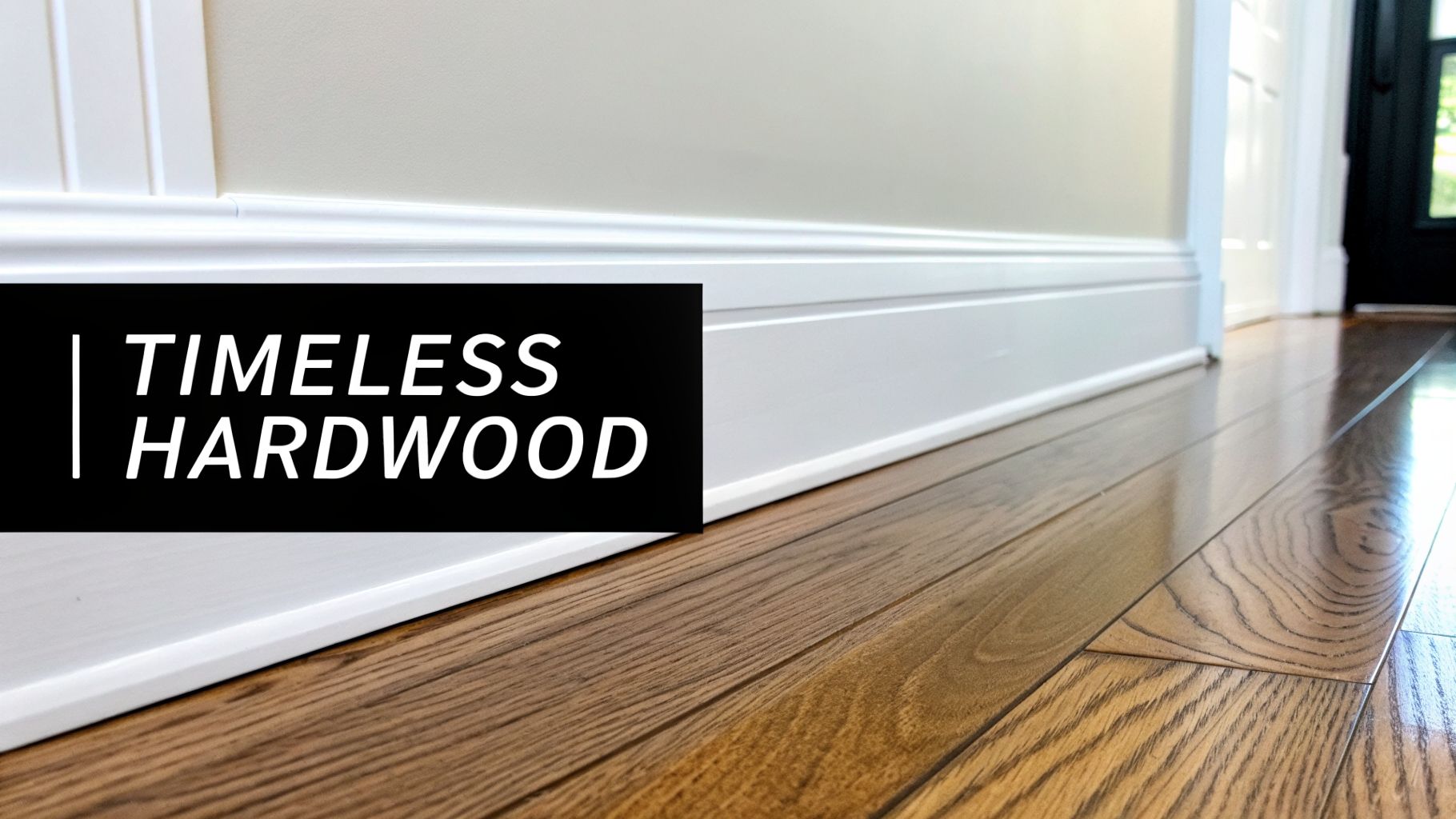
A Floor That Lasts for Generations
Here’s where hardwood really separates itself from the pack: you can refinish it. Unlike materials that have to be torn out and replaced when they get worn, a solid hardwood floor can be sanded down and restained multiple times. This process essentially erases years of scratches, dings, and fading, bringing the floor right back to its original glory.
Think about it this way: a quality hardwood floor installed today could easily still be a beautiful, functional part of your home 50 or even 100 years from now. Each time you refinish it, you not only restore its beauty but also get the chance to update its look with a new stain color if design trends change. This unmatched longevity makes it a smart, sustainable, and cost-effective choice for the long haul.
Understanding Hardness and Durability
Of course, not all hardwoods are the same. This is where the Janka hardness scale becomes your best friend. It’s a straightforward industry standard that measures how much force it takes to dent a particular wood species, giving you a clear idea of how it will hold up to daily life.
- Softer Woods: Species like Pine and American Cherry look beautiful but have lower Janka ratings. They're more likely to show dents from dropped pans or even high heels, so they're often best for low-traffic areas like bedrooms.
- Harder Woods: This is your classic group—think Oak, Maple, and Hickory. They have higher Janka ratings and are built to handle the foot traffic of hallways, kitchens, and living rooms.
- Exotic Woods: Woods like Brazilian Cherry or Ipe are at the top of the scale. They offer incredible durability but usually come with a higher price tag.
Matching the wood species to your lifestyle is crucial. If you have kids and pets tearing through the house, a tough wood like White Oak is a much safer bet than a softer, more delicate Walnut. We get into the details in our guide on how to choose hardwood flooring.
The Challenge of Humidity and Hardwood
If hardwood has an Achilles' heel, it's moisture. Wood is a natural, porous material, which means it expands and contracts with changes in humidity. In a climate like ours here in Cumming, GA, that seasonal humidity swing is a big deal. Without proper management, you can end up with cupping (when the edges of the planks rise up) or gapping (when planks shrink and pull apart).
The single most important thing you can do to protect your hardwood investment is maintain a stable indoor environment, ideally between 35% and 55% relative humidity. A whole-home humidifier or dehumidifier is the best way to prevent costly damage down the road.
The finish on the wood also plays a massive role in protecting it. Modern polyurethane finishes create a tough, water-resistant topcoat that acts as a shield against minor spills and daily wear. For any home in Forsyth County, choosing a high-quality finish and being vigilant about wiping up spills right away is non-negotiable for keeping your hardwood floors looking beautiful for years to come.
Why Tile Is a Versatile and Durable Champion
When it comes to the classic tile vs hardwood flooring debate, if the main event is sheer toughness, tile wins almost every time. It’s built to withstand everything that makes a hardwood floor owner nervous: water, scratches, and constant foot traffic. That’s precisely why it’s become the go-to, and frankly, the smartest choice for the hardest-working areas in a home.
Just think about the high-traffic zones in your house. Kitchens, bathrooms, laundry rooms, and mudrooms are all perfect candidates for tile. Spills, splashes, and muddy paws from a rainy day in Cumming simply aren't a problem. Water just sits on the surface, waiting to be wiped away without any threat of warping or staining.
This real-world resilience is a huge reason tile is such a major player in the flooring world. It accounts for about 32.5% of the entire market share for all flooring types. In a market valued at over USD 385.6 billion, that kind of dominance isn't an accident—it’s earned. You can check out more stats and discover more insights about flooring materials on databridgemarketresearch.com.
The Power Trio of Tile Materials
Not all tile is the same, and knowing the difference between the big three will help you make the right call for your space. Each one brings its own mix of strength, style, and cost to the table.
- Ceramic Tile: This is the familiar, budget-friendly workhorse. It’s made from clay fired at a lower temperature, which makes it durable enough for most homes but a little more porous than porcelain. It’s a great fit for walls or floors in low-moisture areas.
- Porcelain Tile: Think of porcelain as ceramic’s tougher older sibling. It’s created from a finer clay mix and fired at much higher temperatures. The result is a tile that’s incredibly dense, less porous, and exceptionally resistant to water and scratches—perfect for busy kitchens, bathrooms, and even outdoor patios here in Forsyth County.
- Natural Stone: Materials like marble, granite, and slate deliver a beauty that is truly one-of-a-kind. No two pieces are ever alike. While absolutely stunning, they are often more porous and typically need regular sealing to prevent stains. It’s a crucial maintenance step we cover in our guide on whether porcelain tile needs sealing.
For homeowners who want the best all-around blend of durability and easy care, especially in a home full of kids and pets, porcelain is almost always the answer.
Modern Design and Practical Perks
Long gone are the days of boring, basic squares. Today’s tile technology is so advanced that it can convincingly mimic just about any other material, and wood-look porcelain is the undisputed star of the show. You get the warm, inviting look of hardwood without any of its worries about moisture or scratches.
You can now get a flawless transition from a genuine hardwood living room right into an identical-looking oak porcelain tile in the kitchen. It creates a beautiful, cohesive flow while putting the right material in the right place to do its job.
Beyond looks, tile has some serious practical upsides. Its hard, solid surface is a fantastic choice for allergy sufferers because it doesn't trap dust, dander, or pollen like carpet does. And keeping it clean couldn't be easier—a quick sweep and a mop are usually all it takes.
Important Considerations for Tile Flooring
Of course, no flooring is perfect. One of the main things people point out about tile is that it feels cold and hard underfoot. While that can feel amazing during a hot Georgia summer, it’s not always so cozy on a chilly winter morning. Fortunately, a few well-placed area rugs can solve that problem completely.
The other big thing to remember is the installation. Laying tile is a true craft that requires a ton of precision. It’s not a forgiving DIY project. If it’s done wrong, you can end up with uneven edges (called lippage), and bad grout work can crack or stain, ruining the whole look. For a floor that’s going to last, hiring a professional installer is always the best investment you can make.
A Detailed Comparison for Homeowners
When you get down to it, the tile vs hardwood flooring debate isn't about which one is universally "better"—it's about which one is better for you. The right choice really hinges on your family's lifestyle, the room you're renovating, and what you personally value in a floor.
Let's cut through the basic pros and cons and dig into how these two flooring giants actually perform in a real-world home, from handling the chaos of daily life to affecting your property value down the road.
Total Cost of Ownership
Looking at the initial price tag is just the first step. Hardwood often comes with a higher upfront cost for both the materials and the installation. But here's the kicker: its ability to be refinished over and over gives it an incredible lifespan, often lasting a century or more. That longevity can make it the more economical choice in the long run.
Tile, especially ceramic, can be much friendlier to your budget at the start. The potential catch is that if a single tile cracks, finding a perfect match to replace it can be a real headache, particularly if the style has been discontinued. You also have to factor in professional installation; cutting corners here is a recipe for problems later, so it’s a necessary part of the initial investment.
Durability and Scratch Resistance
If your home is a hub of activity with kids, big dogs, and constant foot traffic, you need a floor that can take a beating. This is where tile, particularly porcelain, is the undisputed champion. Its tough, glazed surface is incredibly resistant to scratches, dents, and the daily grind that can wear down other types of flooring.
Hardwood is certainly durable, but it's a softer material and more prone to scratches from pet claws or dragging furniture. The species of wood you choose matters a lot here—its Janka hardness rating is key. Harder woods like oak and hickory will stand up to abuse far better than a softer pine. While you can always sand out scratches during a refinish, tile offers more of that day-to-day, worry-free resilience.
To figure out if tile is the right fit for your home's high-traffic or high-moisture areas, this quick guide can help.
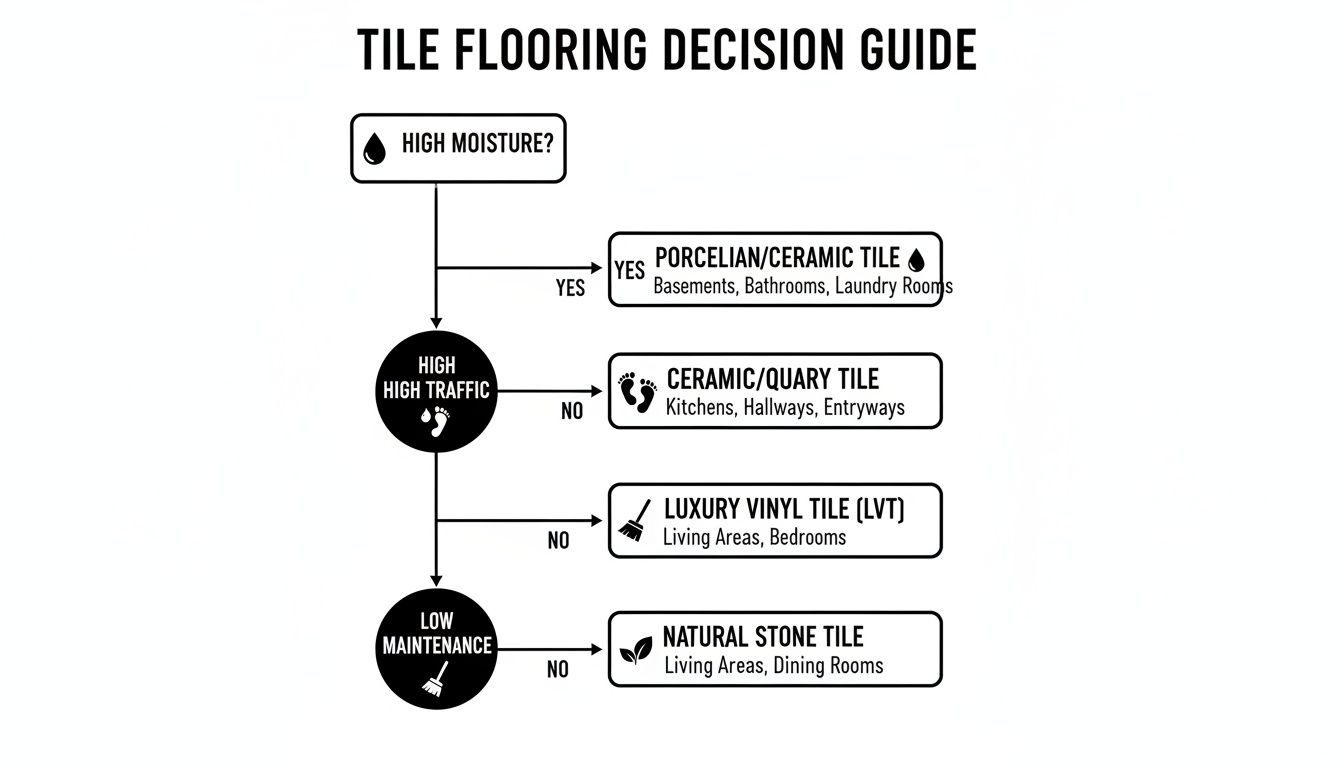
As you can see, if you're nodding "yes" to needing a floor that handles moisture, heavy traffic, and requires minimal upkeep, tile quickly becomes a top contender for your project.
Daily and Long-Term Maintenance
Both floors need regular attention, but their care routines couldn't be more different. Tile is famously easy to clean; a quick sweep and a damp mop are usually all it takes to make it look brand new. The only real long-term chore is to occasionally clean and reseal the grout lines to keep them from getting stained or grimy.
Hardwood, on the other hand, demands more specific care. You'll need to stick to pH-neutral cleaners made for wood and be very careful about using too much water, which can cause serious damage. Its biggest long-term advantage, though, is its superpower: every 10-15 years, you can have it sanded and refinished, which essentially gives you a brand-new floor.
One thing I see homeowners miss all the time is how the floor will interact with other finishes in the room. A classic mistake is picking a busy, patterned tile that fights with a granite countertop. The rule is simple: let one finish be the star. If your countertops have a lot of visual movement, go with a simple, solid-colored floor. And if you want a statement floor, keep the counters quiet.
Moisture and Climate Resistance
For any room where water is a factor, the choice is pretty much made for you. Tile is virtually waterproof, making it the go-to standard for bathrooms, laundry rooms, and basements. It's also a fantastic, worry-free option for kitchens and mudrooms where spills, splashes, and wet shoes are just part of life.
Hardwood and water are natural enemies. Moisture can cause the wood planks to warp, swell, and stain permanently. Here in Cumming, GA, our humid climate adds another challenge. Solid hardwood will naturally expand and contract with the seasons, so maintaining stable indoor humidity is crucial to prevent ugly gaps or buckling.
In-Depth Feature Showdown Tile vs Hardwood
To make the decision clearer, let's break down the key differences side-by-side. This table gives a detailed comparative analysis across the most important factors for homeowners.
| Consideration | Tile Flooring Analysis | Hardwood Flooring Analysis | Which Is Better For |
|---|---|---|---|
| Upfront Cost | Generally lower, $10-$25 per sq. ft. installed. Porcelain is more expensive than ceramic. | Higher initial investment, $15-$30+ per sq. ft. installed. Price varies greatly by wood species. | Budget-conscious projects (ceramic tile). |
| Long-Term Value | Extremely durable, but difficult to repair a single cracked tile. Lifespan is 50+ years. | Can be refinished 3-5 times to look brand new. Can last 100+ years, making it a fantastic long-term investment. | Homeowners planning to stay in their home for decades. |
| Durability | Highly resistant to scratches, dents, and water. Porcelain tile is one of the toughest flooring materials available. | Susceptible to scratches and dents, especially softer woods. Hardness varies by species (Janka rating). | Homes with large pets, active children, and very high foot traffic. |
| Moisture Resistance | Excellent. Non-porous surface makes it ideal for wet areas like bathrooms, kitchens, and basements. | Poor. Highly vulnerable to water damage, warping, and swelling. Not recommended for any moisture-prone areas. | Bathrooms, laundry rooms, mudrooms, and kitchens. |
| Comfort Underfoot | Hard and cold. Can be uncomfortable to stand on for long periods. | Softer, warmer, and more forgiving underfoot. Provides natural insulation. | Living rooms, bedrooms, and family spaces where comfort is a priority. |
| Maintenance | Low-maintenance. Requires simple sweeping and mopping. Grout lines need periodic sealing and cleaning. | Requires specific wood cleaners and caution with water. Needs refinishing every 10-15 years to maintain its look. | Homeowners who want a simple, "set-it-and-forget-it" cleaning routine. |
| Resale Value | Adds significant value, especially in kitchens and bathrooms. Seen as a clean, durable, and modern upgrade. | A top feature for homebuyers. Consistently provides a high return on investment and has timeless, universal appeal. | Homeowners focused on maximizing ROI and broad buyer appeal. |
| Aesthetics | Huge range of styles, from mimicking natural stone and wood to bold, modern patterns. Grout lines are part of the look. | Offers a classic, warm, and natural beauty. Adds timeless character and elegance to any space. | Homeowners seeking maximum design versatility (tile) or timeless warmth (hardwood). |
This showdown highlights that the "best" choice truly depends on the room and your priorities. Tile excels in durability and moisture-prone areas, while hardwood offers unmatched warmth and long-term refinishing potential.
Impact on Home Resale Value
Both flooring types are considered premium upgrades that can definitely boost your home's resale value. Hardwood floors are consistently at the top of homebuyers' wish lists and often deliver an excellent return on investment. Their timeless appeal works with nearly any decor, making them a very safe and valuable choice.
Tile also adds serious value, especially when it's used in the right places like kitchens and bathrooms. A professionally installed, stylish tile floor in these key areas signals to potential buyers that the home is well-maintained and thoughtfully updated, which is a major selling point.
Best Flooring Choices Room by Room
Choosing between tile and hardwood isn't one big decision—it's a series of smaller ones you make for each unique space in your home. The right floor for a cozy bedroom is almost certainly the wrong one for a busy, splash-prone kitchen. A room-by-room strategy is the best way to make sure you get the performance and feel you want, exactly where you need it.
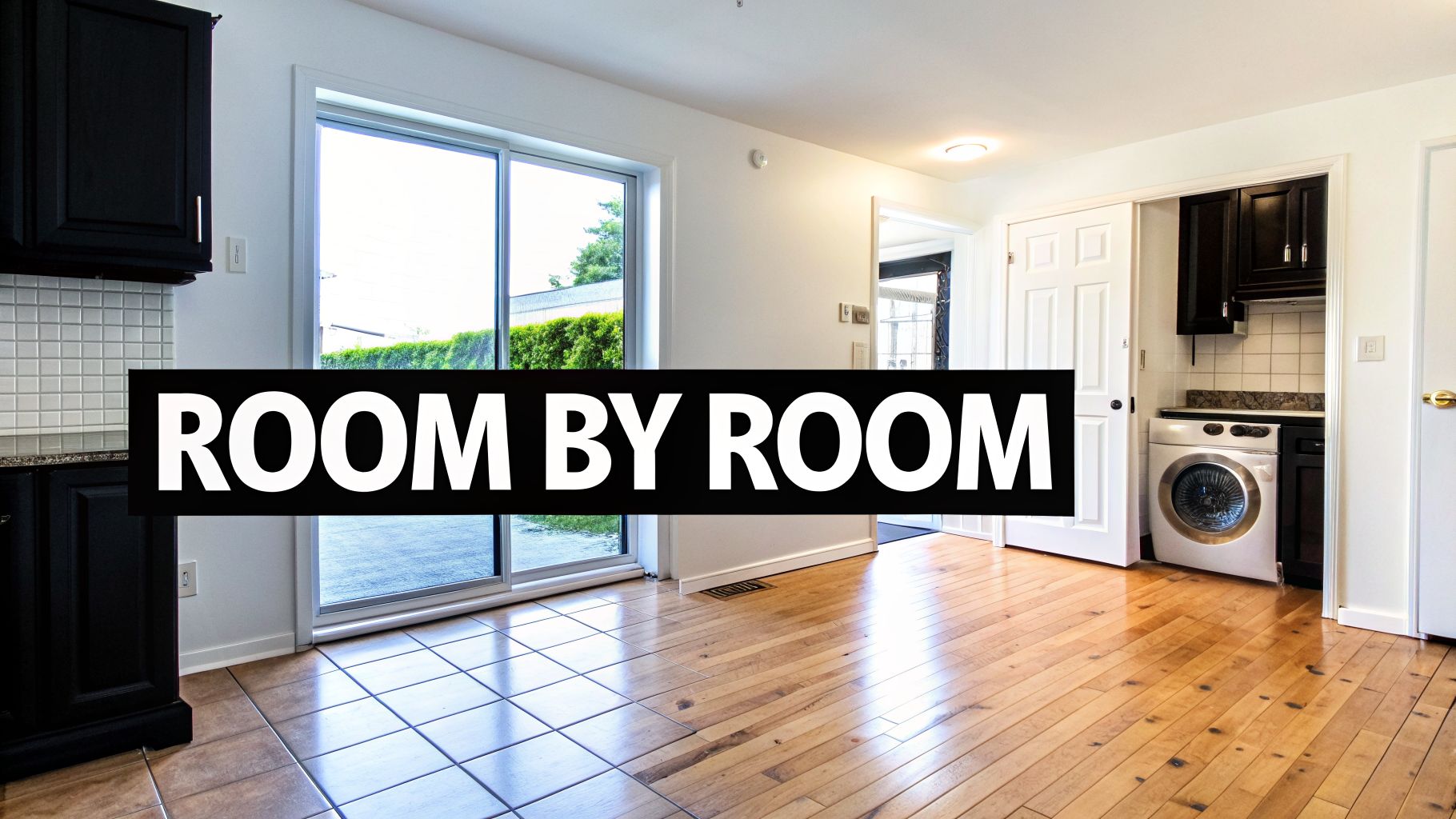
It’s all about matching the material’s natural strengths to how you actually use the room. Let’s walk through the key areas of a typical Forsyth County home and pinpoint the ideal choices.
High-Moisture Zones: Kitchens and Bathrooms
When it comes to rooms where water is a daily reality, the tile vs. hardwood debate is over before it begins. Tile is the undisputed champion for kitchens, bathrooms, laundry rooms, and mudrooms. Its nearly waterproof surface provides a level of protection and peace of mind that hardwood just can't match.
- Kitchens: Think about it—spills from cooking, splashes from the sink, and constant foot traffic make the kitchen a pretty tough environment for wood. A durable porcelain tile can handle it all without warping or staining, making it the most practical and long-lasting choice.
- Bathrooms: Between the constant humidity, steam from showers, and direct water exposure, hardwood is simply not an option here. Tile gives you that clean, waterproof, and easy-to-sanitize surface that is absolutely essential for a bathroom.
Selecting the right material for these critical, hard-working rooms is a huge priority for homeowners. We dive much deeper into this in our guide on the best flooring for kitchens and bathrooms.
Living Spaces: Living Rooms and Bedrooms
For the parts of your home centered on comfort and relaxation, hardwood flooring is almost always the favorite. It brings a natural warmth and a softer feel underfoot that creates an inviting atmosphere that tile, for all its strengths, struggles to replicate. A chilly, hard tile floor is rarely what people envision for a cozy bedroom or a family living room.
Hardwood’s classic beauty also adds a timeless character and elegance. It acts as a stunning, neutral foundation that works with almost any decor style, from traditional to ultra-modern. This is where hardwood really shines, setting the tone for the heart of your home.
A great design strategy we often use is creating a seamless visual flow in open-concept layouts. You can install a high-quality wood-look tile in the kitchen that perfectly matches the color and plank size of the real hardwood in the adjoining living room. This gives you a gorgeous, cohesive look while still using the most practical material for each zone.
High-Traffic and Transitional Areas
Entryways, hallways, and basements each have their own unique challenges. They demand serious durability but also need to flow nicely with the rest of your home's design.
- Entryways and Mudrooms: These areas are your home's first line of defense against outside dirt, mud, and moisture. A tough porcelain tile is the clear winner here, as it’s a breeze to clean and won't get scratched up by tracked-in debris.
- Basements: Basements, especially around the Cumming area, can be prone to dampness. Tile is an excellent choice because it’s completely impervious to moisture and won't support mold or mildew growth.
- Dining Rooms: This space is a bit of a toss-up. Hardwood offers that classic, formal look, but a beautiful tile can be a lifesaver for families with young kids. It makes cleaning up inevitable food and drink spills so much less stressful.
By thinking through how you use each room every day, you can make a smart, informed decision that balances beautiful aesthetics with the practical demands of your life. The goal is to get floors that not only look fantastic but also perform perfectly for years to come.
Taking a Look at Modern Flooring Alternatives
The age-old tile vs. hardwood flooring debate can feel a bit limiting. What if you want the look of one but need the performance of the other? Luckily, there's a whole category of modern flooring options that smartly bridge that gap. These materials are engineered to give you the best of both worlds, which is a huge advantage for homeowners here in Forsyth County, where both humidity and busy family life are always part of the equation.
Instead of feeling stuck choosing between the ironclad water resistance of tile and the classic warmth of wood, you can now find products that expertly blend those traits. These alternatives solve some of the most common flooring headaches, giving you far more flexibility with your design, your lifestyle, and your budget.
Engineered Hardwood: The Best of Both Worlds
Engineered hardwood has been a total game-changer, especially for our Georgia climate. From the surface, it’s indistinguishable from solid hardwood because the top layer is 100% real wood. You get that authentic grain, rich texture, and timeless beauty of oak, hickory, or whatever species you love.
The real magic is what’s underneath. The core is built from multiple layers of plywood or high-density fiberboard, all stacked in a cross-grain pattern. This construction makes the plank incredibly stable and drastically reduces its tendency to expand and contract with humidity swings. That makes it a much safer bet for installations over concrete slabs or in potentially damp areas like basements.
Wood-Look Porcelain Tile: The Indestructible Lookalike
If you absolutely love the aesthetic of hardwood but need something tough enough to handle anything, wood-look porcelain tile is your answer. Thanks to incredible advances in high-definition printing, these tiles are now virtually identical to real wood planks. They capture every nuance, from the intricate grain patterns and color variations to the hand-scraped textures of popular wood species.
This is your ticket to getting the timeless beauty of wood in places solid hardwood would never survive.
- Bathrooms: Create that seamless, spa-like wood vibe without a single worry about water damage.
- Kitchens: Enjoy the visual warmth of wood on a surface that’s completely immune to spills, splashes, and pet claws.
- Basements: It's the perfect solution for below-grade spaces where moisture is a constant battle.
The real beauty of wood-look tile is achieving a cohesive design throughout your entire home. You can run what looks like the same "hardwood" floor from the family room straight into the kitchen and laundry room, blending beautiful design with room-by-room practicality.
Waterproof Flooring: The LVP Revolution
Luxury Vinyl Plank, or LVP, has absolutely exploded in popularity, and it's easy to see why. This multi-layered synthetic flooring is designed from the ground up to be 100% waterproof, making it a fantastic choice for literally any room in the house—basements and bathrooms included.
Modern LVP delivers stunningly realistic wood and stone visuals. Its tough-as-nails wear layer shrugs off the scratches, stains, and scuffs that come with everyday life. On top of that, it’s warmer and softer underfoot than tile, providing a more comfortable surface for living rooms and play areas. For many homeowners, LVP hits that perfect sweet spot between style, durability, and value, offering a high-end look without the high-maintenance headache.
So, How Do You Make the Final Call?
You've waded through the pros and cons, compared costs, and pictured both tile and hardwood in your home. Now it's time to pull it all together and make a choice you feel great about. Forget the specs for a moment—this decision boils down to what fits your family, your budget, and the reality of your day-to-day life.
To cut through the noise, ask yourself three simple questions:
- Where is this floor going? For bathrooms, kitchens, or mudrooms where water is a given, tile is almost always the smarter, safer bet.
- How much traffic will it see? If your home is a hub of activity with kids and pets, the nearly indestructible nature of porcelain tile can save you a lot of stress.
- What feeling am I trying to create? Sometimes it's less about practicality and more about feel. Hardwood brings a warmth and timeless appeal that many find more comfortable, especially in living rooms and bedrooms, and it often boosts resale value.
Finding an Installer You Can Trust
Let’s be honest: the world’s best flooring can look terrible if it’s installed poorly. The installer is just as important as the material itself, because a flawless installation is what guarantees your floor will look amazing and last for decades. Cutting corners here can lead to frustrating and expensive problems down the road, like uneven tiles or unsightly gaps in your hardwood.
When you're looking for a pro, focus on a few key things:
- A Solid Track Record: Don't just take their word for it. Ask to see pictures of their previous tile and hardwood projects.
- No-Surprise Pricing: A trustworthy installer will give you a clear, detailed quote breaking down all the costs—materials, labor, and any prep work needed for your subfloor.
- A Good Local Name: Check out their online reviews and ask for references from homeowners right here in the Cumming or Forsyth County area.
Once you know which flooring you want, finding the right team is the next logical step. You might want to explore professional flooring services to see what expert installation looks like.
Setting Your Project Up for Success
Before any work starts, sit down with your installer and get on the same page. A quick chat about the timeline, what to expect, and how to prep the room (like moving furniture) can prevent a lot of headaches. A true professional will handle the crucial subfloor inspection and preparation—that's the foundation of a floor that will last.
By being thoughtful about your material and your installer, you’re not just buying a new floor. You’re making an investment that will pay off in beauty and durability for years to come.
At Flacks Flooring, we get it—the right floor really does change everything. If you're ready to see your options up close and get some friendly, expert advice, stop by our Cumming, GA showroom or schedule an in-home consultation with us today.