
When you're looking for the best types of flooring for basements, you've got to think differently. The winners are almost always materials that can stand up to moisture, like luxury vinyl plank (LVP), porcelain or ceramic tile, and tough epoxy coatings. Basements are a whole different ballgame compared to the rest of your house, demanding a floor that can handle dampness, temperature shifts, and direct contact with concrete without buckling under pressure.
Why Basement Flooring Requires a Different Approach
Picking out flooring for your basement isn't like redecorating your living room. It's more like outfitting the hull of a ship. This unique, below-grade space is in a constant fight against forces that the rest of your home never has to deal with. Getting a handle on these challenges is the first step to a successful renovation that will actually last.
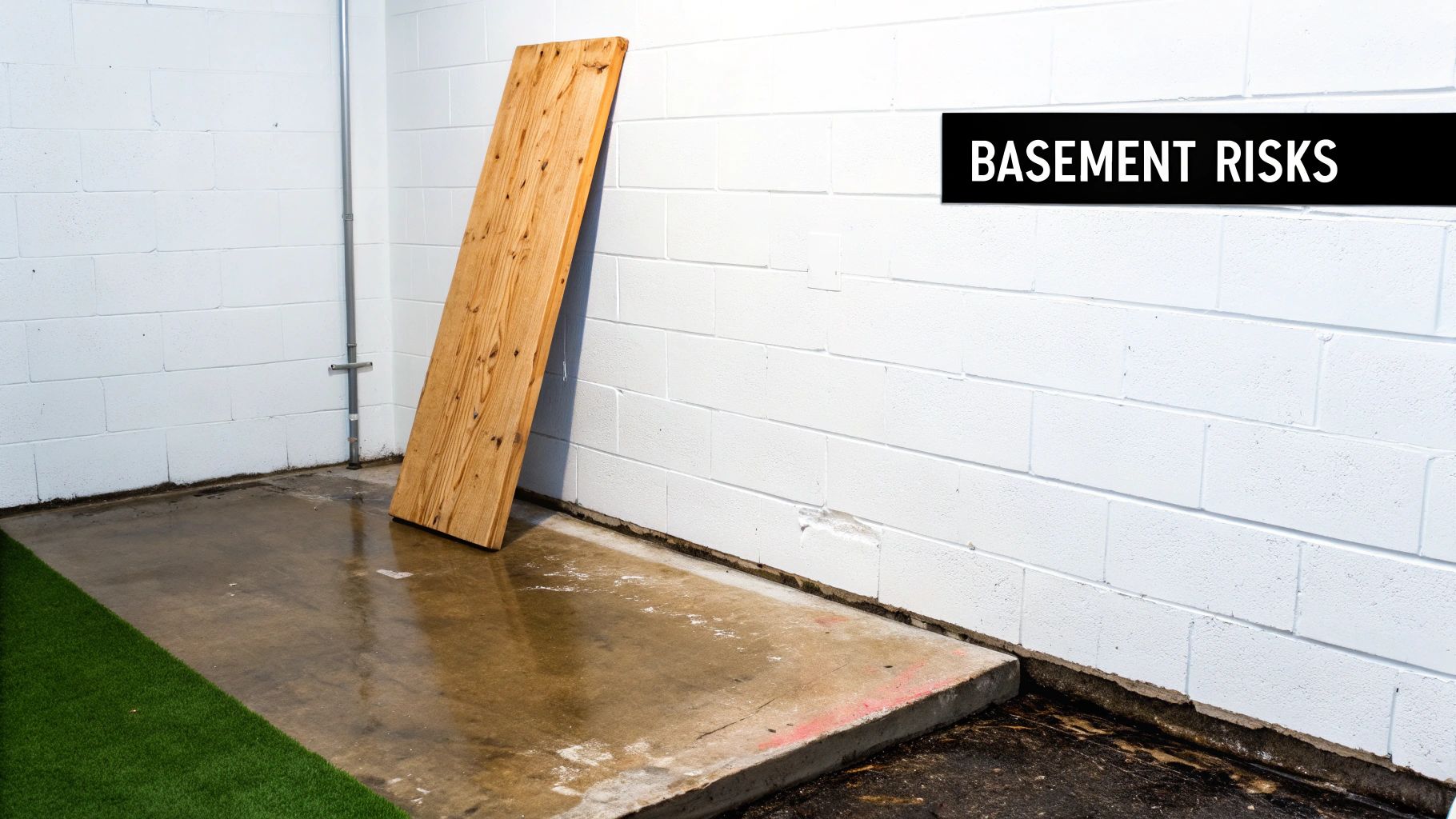
The number one enemy in any basement is moisture. Because it’s literally surrounded by earth, water vapor has a nasty habit of seeping through the porous concrete foundation, creating a perpetually damp environment. We're not just talking about big floods or obvious leaks; even a little bit of constant humidity can ruin the wrong kind of flooring from the ground up.
The Science of Below-Grade Spaces
Materials that work beautifully on the main floor can become a massive headache downstairs. Take solid hardwood, for example. It’s a gorgeous, natural material, but it's also porous and acts just like a sponge. Introduce it to the damp reality of a basement, and it will inevitably swell, warp, and cup. That’s a costly and heartbreaking mistake.
The same goes for traditional wall-to-wall carpet with a standard foam pad. It’s a perfect recipe for trapping moisture right against the concrete slab. Before you know it, you've created an ideal breeding ground for mold, mildew, and musty smells, which is not only unpleasant but can also pose health risks. Understanding the importance of keeping your basement dry and moisture-free is absolutely crucial before you lay down a single plank or tile.
Your basement floor isn't just a surface; it's a barrier. It must be able to manage temperature fluctuations, potential hydrostatic pressure from groundwater, and direct contact with a concrete slab that is often cooler and damper than the air above it.
Making a Smart and Durable Choice
Because of this unique environment, the best flooring options are almost always inorganic—meaning they aren't derived from natural materials that rot or absorb water. You want something that is completely waterproof or at least highly water-resistant. The goal is to choose a material that will stay stable and won't break down, no matter what your basement throws at it.
Here are the key factors that set basements apart:
- Subterranean Moisture: There's constant exposure to ground moisture migrating right through the concrete.
- Temperature Swings: Cold concrete slabs can cause condensation when warm, humid air hits them, creating moisture out of thin air.
- Hydrostatic Pressure: In some homes, groundwater can actually push upwards against the slab, forcing moisture into your living space.
Once you recognize these fundamental differences, you can avoid the common pitfalls and make a smart choice. For a deeper dive, check out this expert guide on https://flacksflooring.com/choosing-a-basement-floor/ for more insights. It’ll help ensure your new floor not only looks fantastic but performs flawlessly for years to come.
When it comes to picking out the best flooring for a basement, the game changes entirely. We're not just looking for something that looks good; we need materials built from the ground up to handle moisture. Forget what you might install upstairs—down here, it's all about specialized solutions designed to thrive below ground.
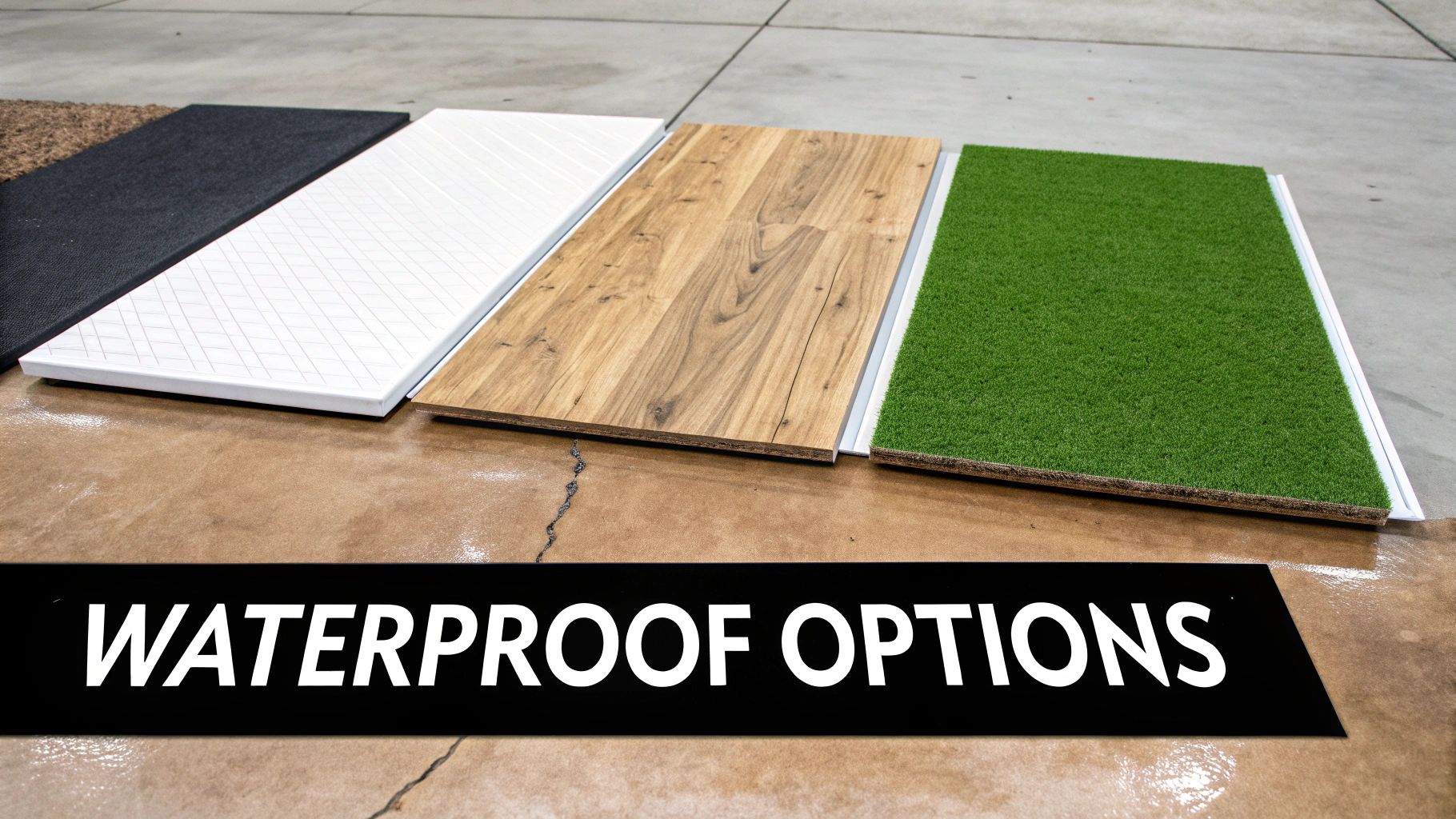
The top three contenders I always recommend are Luxury Vinyl Plank (LVP), Porcelain or Ceramic Tile, and Epoxy Coatings. Each one brings a unique combination of durability, style, and—most importantly—peace of mind to the table. Let's dig into what makes each one such a solid choice for your basement project.
Luxury Vinyl Plank: The All-Around Champion
There's a good reason Luxury Vinyl Plank, or LVP, has become the go-to for basement renovations. It brilliantly mimics the gorgeous look of natural hardwood or stone, but it’s crafted from materials that are 100% waterproof. The secret is its layered construction, featuring a rigid core that provides incredible stability and stops water in its tracks.
This multi-layer build is its superpower. A tough-as-nails wear layer on top shrugs off scratches, while the design layer underneath delivers the aesthetics. But the real hero is the core—usually a Stone Plastic Composite (SPC) or Wood Plastic Composite (WPC)—which is completely immune to water. If you get a small leak or even a burst pipe, the planks simply won't swell, buckle, or delaminate like wood-based floors would.
Plus, LVP is typically installed as a "floating floor." The planks just click together and lay over the subfloor without any messy glue, making it a great DIY project. This method is also super forgiving on concrete that isn't perfectly level and lets the floor breathe as temperatures fluctuate, which is a big deal in any basement.
Porcelain and Ceramic Tile: The Unbeatable Fortress
For absolute, bulletproof water protection, you really can't do better than porcelain or ceramic tile. These materials are essentially super-heated clay, baked into a non-porous surface that water simply cannot penetrate. Think of it this way: if your basement were a ship, tile would be like welding a steel plate to the hull. Water just isn't getting through.
Porcelain is a bit denser and fired at even higher temperatures than ceramic, which makes it incredibly durable and even less porous. For hardworking basement zones like a laundry room, bathroom, or mudroom, this level of protection is priceless.
The only spot where moisture might stand a chance is the grout lines. But if you use a quality sealed grout or, even better, an epoxy-based grout, you can create a seamless waterproof barrier from wall to wall. Tile also stands up to just about anything—heavy foot traffic, dropped items, and furniture—making it a fantastic long-term investment.
Pro Tip: Tile is tough, but it can feel pretty chilly underfoot, especially on a concrete slab.
Epoxy Coatings: The Seamless Industrial Shield
Planning to use your basement as a home gym, workshop, or a serious utility space? An epoxy floor coating is an incredible option. This is way more than just a coat of paint. It’s a two-part resin that, when mixed, chemically bonds directly with the concrete slab. As it cures, it forms a thick, ultra-durable, and completely seamless surface.
That seamless nature is its biggest selling point. With no cracks, gaps, or grout lines, there's absolutely nowhere for water, dirt, or bacteria to hide. An epoxy coating seals the concrete, preventing moisture from migrating up from the ground and giving you a surface that's a breeze to clean.
Modern epoxy systems are also surprisingly versatile in their design. You can go with a sleek solid color or mix in decorative flakes for a high-end terrazzo or granite look. For workshops or gyms, you can even add an anti-slip aggregate to the topcoat for extra grip and safety.
Comparing the Best Basement Flooring Options
To make your decision a little easier, I've put together a quick comparison of these top contenders. Each one excels in different scenarios, so matching the flooring to how you'll actually use your basement is the key to getting it right.
| Flooring Type | Water Resistance | Durability | Avg. Cost per Sq. Ft. | Best For |
|---|---|---|---|---|
| Luxury Vinyl Plank (LVP) | Excellent (100% waterproof planks) | High | $3 – $7 | Living areas, playrooms, home offices |
| Porcelain/Ceramic Tile | Excellent (100% waterproof tile) | Very High | $5 – $15+ | Bathrooms, laundry rooms, kitchens |
| Epoxy Coating | Excellent (seamless & waterproof) | Very High | $4 – $9 | Gyms, workshops, utility spaces |
These materials don't just work well; they're dominating the market for good reason. The global flooring market was recently valued at around $360.7 billion, and vinyl products are seeing massive growth, largely because of residential demand. Vinyl flooring now accounts for over 50% of the revenue share in homes, with its waterproof qualities making it a natural fit for basements. According to Grandview Research, the Asia Pacific region is leading the charge, making up 65.4% of total revenue, driven by new construction where functional basements are a priority.
Ultimately, choosing the right flooring comes down to your personal balance of function, style, and budget. Whether you love the warm, wood-like look of LVP, the timeless strength of tile, or the industrial vibe of epoxy, you can move forward confidently knowing these solutions are built to last. For an even deeper dive, check out our ultimate guide to moisture-resistant flooring options to find the perfect match for your home.
Flooring Materials You Must Avoid in Basements
While it’s fun to dream about the perfect flooring for your new basement space, it’s just as important—if not more so—to know what not to install. Choosing the wrong material for a below-grade room isn't just a design misstep. It's a setup for expensive repairs, constant headaches, and even potential health issues down the road.
Think of it this way: your basement has its own unique climate. It's naturally more humid and in direct contact with the cool, damp earth. Materials that look fantastic and perform perfectly upstairs simply can't stand up to these conditions.
The Problem with Solid Hardwood
Solid hardwood is a classic for a reason—it’s gorgeous and adds timeless value to a home. But in a basement? It's one of the worst choices you can make. Wood is a natural material, and like a sponge, it soaks up any moisture it can find, whether from the air or wicking up through the concrete slab.
Once that moisture gets in, the wood fibers swell, and a whole slew of irreversible problems begin:
- Warping and Cupping: The edges of the planks will start to curl up, creating an ugly, uneven surface.
- Buckling: As the planks expand with moisture, they have nowhere to go but up, literally pushing themselves off the subfloor.
- Mold and Rot: All that trapped moisture is an open invitation for mold and mildew, which can eventually cause the wood to decay and rot away completely.
Even if you put down a vapor barrier, the constant moisture vapor rising from the concrete will find a way to get to the wood. It’s a fight that beautiful solid hardwood is guaranteed to lose every time.
Why Wall-to-Wall Carpet is a Risky Choice
I get the appeal. Who wouldn't want a soft, warm carpet underfoot in a potentially chilly basement? Unfortunately, traditional wall-to-wall carpet is a huge gamble. The carpet, and especially its thick pad, acts like a giant blanket, trapping any moisture coming up from the slab.
This creates the perfect dark, damp environment for all sorts of nasty things to grow.
- That Musty Basement Smell: Ever wonder where that classic "damp basement" odor comes from? It's often mildew growing in the carpet and pad.
- Hidden Mold Growth: You might not even see it, but mold can thrive underneath the carpet, pumping spores into the air and tanking your home's air quality.
- A Nightmare to Clean: If you have even a minor leak, getting a wall-to-wall carpet and its padding completely dry is next to impossible. More often than not, it means tearing the whole thing out.
While some modern carpet tiles with waterproof backings can work, you should steer clear of traditional broadloom carpet. The risk just isn't worth it.
Debunking Common Flooring Myths
There's a persistent myth that you can make any flooring work in a basement as long as you put down a plastic sheet or a good vapor barrier. While a vapor barrier is an absolutely essential first step for any basement floor, it's not a magic fix. It slows down moisture, but it can't stop it completely, and it offers zero protection against an actual leak or flood.
A vapor barrier is a shield, not an impenetrable forcefield. It reduces the rate of moisture transfer but cannot eliminate the fundamental incompatibility of certain materials with a damp, below-grade environment.
Another common mistake is assuming all laminate flooring is a safe bet. The problem is that most standard laminate is made with a fiberboard core. The top wear layer might resist a spill, but once water finds its way into the seams—and it always does—that core will swell up like a loaf of bread, ruining the floor for good.
If you're considering laminate, make sure you're looking at products explicitly labeled as "100% waterproof" that are made with a rigid composite core, not fiberboard.
By understanding what doesn't work and why, you're already halfway to a successful project. Crossing these options off your list is the first critical step toward a basement floor that will look great and last for years.
The Hidden Importance of Subfloor Preparation
So, you’ve picked out the perfect waterproof flooring. That’s great, but it's only half the battle. The real secret to a successful basement flooring project isn't about the beautiful planks or tiles on top; it's about the careful work that happens underneath.
Think of it this way: your concrete slab is the foundation for your new floor. If that foundation is cracked, uneven, or damp, anything you put on it is doomed to fail. A flawless vinyl installation can quickly turn into a disaster if the concrete isn't properly prepped. Skipping this step is hands-down one of the most common—and costly—mistakes homeowners make.
Assessing Your Concrete Slab
Before you even dream of laying down that new floor, you need to play detective with your concrete. Your first mission? Hunt for moisture.
There’s a simple trick for this called the plastic sheet test. Just tape a 2×2 foot square of plastic sheeting to the floor, making sure to seal all four sides. Leave it for 24-48 hours. When you come back, peel it up and check for condensation underneath. If you see water droplets, you’ve got a moisture issue that needs to be solved first.
Next up, check if the floor is level. Most flooring manufacturers are pretty strict about this, requiring the subfloor to be flat within 3/16 of an inch over a 10-foot span. An uneven surface is a recipe for problems—it can cause vinyl planks to pull apart at the seams or tiles to crack under pressure. If you find high and low spots, our guide on how to level uneven floors walks you through exactly how to fix them.
Finally, give the slab a good visual inspection for cracks and damage. Small hairline cracks are usually no big deal, but you'll want to fill any larger ones with a concrete patch or epoxy filler to get that smooth, stable surface you need.
The infographic below shows some common flooring mistakes people make in basements, and you'll notice many of them trace back to poor subfloor prep.
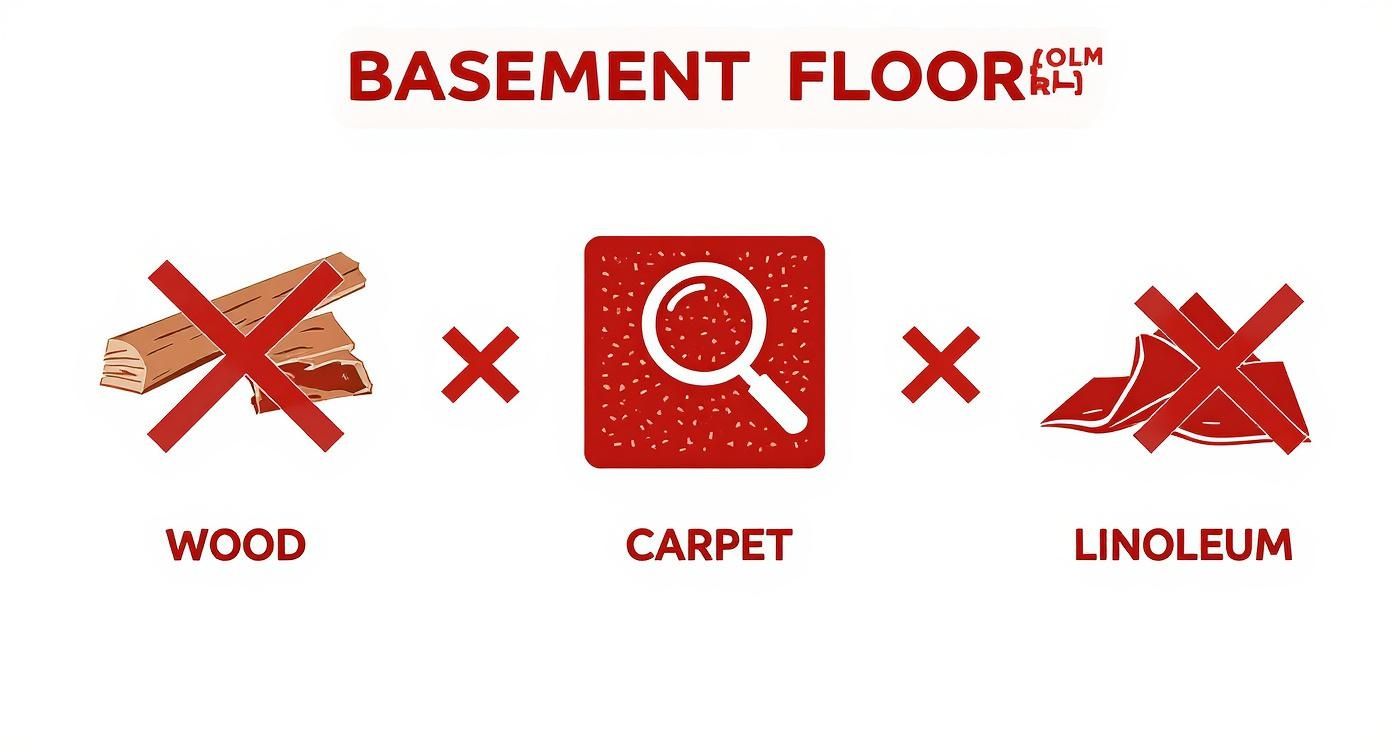
This visual really drives home why materials like solid wood or traditional carpet just don't work below grade, reinforcing why a well-prepared and sealed subfloor is so critical.
Elevating Your Floor With a Subfloor System
For the ultimate defense against moisture and cold, you might want to consider a modern subflooring system. We're not talking about old-school plywood here. These are specially designed panels that create a vital barrier between your finished floor and the concrete slab.
A good subfloor system gives you two huge advantages:
- An Air Gap: The panels usually have a dimpled pattern on the bottom, which creates a small space for air to circulate. This lets any moisture vapor from the concrete evaporate harmlessly instead of getting trapped under your beautiful new floor.
- A Thermal Break: This layer of insulation stops the cold from the concrete from seeping through, making the floor much warmer underfoot. It completely changes how comfortable the room feels.
Subflooring systems like DRIcore are a game-changer for basement renovations. They effectively decouple your floor from the concrete slab, creating a healthier, warmer, and more durable surface that allows the entire assembly to breathe.
These systems are part of a huge shift toward more resilient flooring options built for tough spots like basements. The global resilient flooring market, already valued at over USD 36.2 billion, is set to grow by 5.9% annually through 2034. A big driver for this is the demand for moisture-proof surfaces, with waterproof flooring expected to see a growth rate of around 9.4%.
Whether you go with a simple seal-and-level approach or a full subfloor system, don't even think about skipping this foundational work. It’s what ensures your investment pays off, giving you a beautiful, healthy, and long-lasting space for years to come.
Installation Tips for a Basement Floor That Lasts
Picking the right flooring for your basement is a big win, but the installation is where the real magic happens. A great installation is the difference between a floor that looks fantastic for decades and one that starts peeling, buckling, or showing gaps in a year or two. Getting the details right from the start is how you protect your investment.
Think of your new flooring as a living, breathing material. Before it can be installed, it needs to get comfortable in its new home. This step is called acclimation, and it’s one of the most common corners people cut—usually to their regret.
If you bring boxes of vinyl plank straight from a delivery truck into your cool, damp basement and start laying them down, you're asking for trouble. The material needs time—often 48 to 72 hours—to adjust to the room's specific temperature and humidity. Skipping this step means the planks will expand or contract after they're locked together, causing those ugly gaps or annoying buckles.
Nailing the Installation Checklist
Beyond letting the material acclimate, a few other critical steps separate a pro-level finish from a DIY disaster. Getting the subfloor perfectly prepped is ground zero, but the work doesn't stop there.
Here are the details the experts never miss:
- Get on the Level: Your concrete slab has to be flat. Grab a long level and check the whole floor for dips and high spots. A self-leveling compound is an amazing tool for creating a perfectly smooth canvas before you lay the first plank.
- Use the Right Glue: If your flooring needs an adhesive, don’t just grab any old tub of glue. You need a product specifically designed for high-moisture, below-grade environments. The wrong adhesive will eventually give up, and so will your floor.
- Mind the Gap: For floating floors like LVP or laminate, always leave a small expansion gap (usually about ¼-inch) around the entire edge of the room. This gives the floor room to breathe as temperatures change. Don't worry, your baseboards will hide it completely.
For trickier floors or if you just want peace of mind, it’s always a smart move to look into professional flooring sales and installation. An expert eye can prevent a lot of headaches and costly do-overs.
Why Hard Surfaces Rule the Basement
There’s a good reason you see hard surfaces everywhere in modern basements. The global market for hard surface flooring is valued at an estimated USD 5.3 billion and is expected to hit USD 7.3 billion by 2035.
Why the boom? Materials like vinyl, porcelain, and ceramic tile are tough, a breeze to clean, and stand up to moisture—all non-negotiables for a below-grade space. Plus, today's manufacturing is so good that these materials can perfectly mimic the look of natural wood or stone, so you don't have to sacrifice style for performance. You can dig deeper into these trends in the full hard surface flooring report from futuremarketinsights.com.
The true test of a great installation isn't how it looks the day it's done, but how it holds up years later. Meticulous prep work, patient acclimation, and an eye for the small details are what create a floor that truly lasts.
By sticking to these core principles, you’re doing more than just putting down flooring—you’re building a stable, durable, and beautiful foundation for your entire basement. Whether you hire it out or do it yourself, getting it right the first time is what counts.
Common Questions About Basement Flooring
Even after weighing all the options, it's natural to have a few questions rattling around. Basements are tricky spaces, and the details really do matter if you want a floor that looks great and lasts for years. Let's dig into some of the most common questions we hear from homeowners to help you feel confident in your choice.
Do I Need an Underlayment with Vinyl Plank Flooring?
This one comes up all the time. The answer really hinges on the specific vinyl plank you've picked out. A lot of today's Luxury Vinyl Plank (LVP) flooring is made with a pre-attached underlayment—that little layer of padding on the back. It’s designed to add some cushion, quiet things down, and create a small thermal break from the chilly concrete.
If your LVP has that backing built right in, then you almost certainly do not need another underlayment. In fact, adding a second layer can create too much bounce, putting stress on the click-lock system and potentially causing it to fail.
On the other hand, if you fall in love with a vinyl plank that doesn't have an attached pad, an underlayment is a very good idea. For a basement, make sure you choose one with a built-in vapor barrier. Think of it as an extra layer of insurance against any moisture trying to sneak up from the slab.
Key Takeaway: The manufacturer's instructions are your bible here. They’ll tell you exactly what’s needed—or what to avoid—to keep your warranty intact and ensure your floor performs the way it was engineered to.
How Can I Make Tile Floors Warmer in a Basement?
Tile is a champion when it comes to handling moisture, but let's be honest, it can feel like an ice rink underfoot. Luckily, you don't have to sacrifice warmth for durability.
- Subfloor Systems: Insulated subfloor panels, like those from DRIcore, create a physical air gap between the tile and the concrete. This thermal break stops the cold from seeping through, making the floor feel much closer to room temperature.
- Strategic Area Rugs: Never underestimate the power of a good rug! Placing large, plush area rugs over the main living and walking areas provides instant warmth and softness exactly where it counts.
A little planning goes a long way. You can absolutely get the bomb-proof durability of tile without a permanent case of cold feet.
Can I Install Flooring on an Uneven Concrete Slab?
Let me be direct: absolutely not. Laying any floor over an uneven slab is just asking for trouble down the road. An imperfect surface creates voids and pressure points that will compromise nearly every type of flooring material.
Here’s a quick rundown of what you can expect:
- Luxury Vinyl Plank (LVP): The locking joints that hold the planks together will be under constant strain. Every time you walk over a low spot, they'll flex until they eventually snap, causing the planks to pull apart.
- Ceramic or Porcelain Tile: Unsupported tiles are incredibly vulnerable. A dropped dish or even a heavy footstep in the wrong spot can easily lead to a crack.
- Engineered Hardwood: You’ll notice unsightly gaps forming between the boards. The floor will also likely feel spongy and make creaking noises as you walk across it.
Your concrete subfloor has to be flat before you do anything else. The industry standard is a tolerance of no more than 3/16 of an inch over a 10-foot span. The best way to achieve this is with a self-leveling compound, which pours like a liquid and cures into a perfectly smooth, flat surface. Skipping this prep work is a surefire way to end up with a failed floor and a much bigger repair bill later on.
Ready to find the perfect waterproof floor for your basement? The experts at Flacks Flooring have been helping homeowners in Cumming, GA, for over 30 years. Explore our incredible selection and get personalized advice by visiting us at https://flacksflooring.com.