
You’ve picked out the perfect vinyl plank flooring, and you’re ready to go. But hold on—there’s one more piece to the puzzle that can make or break your entire project: the underlayment for vinyl plank. This isn’t just some flimsy add-on your installer tries to sell you. It’s the hidden hero that makes sure your new floor looks incredible, feels great underfoot, and lasts for the long haul.
The Unseen Layer That Does the Heavy Lifting
Think about building a house. You wouldn’t just throw up walls on a patch of uneven dirt, right? You’d pour a solid, level concrete foundation first. Underlayment does the exact same job for your floors. It’s a thin but mighty layer that goes between the subfloor—the structural base of your house—and your beautiful new vinyl planks.
Now, you might have noticed that a lot of today’s vinyl plank flooring comes with a pad already attached. While that’s a great feature, it’s not always enough to handle the specific needs of every home. A dedicated underlayment is the pro’s choice for solving problems an attached pad just can’t, turning a good installation into a truly exceptional one.
Why Underlayment is So Much More Than an “Extra”
At its core, underlayment is all about boosting the performance and lifespan of your floor. It’s not just about making it feel a bit softer; it’s about creating the perfect environment for your vinyl planks to perform at their best. Especially for homeowners here in Cumming, GA, and across Forsyth County, dealing with our local humidity and different types of home construction requires a smart flooring strategy.
The right underlayment completely changes how a floor feels, sounds, and wears over time. It elevates the project from just laying down planks to engineering a complete flooring system that tackles moisture, noise, and comfort.
A quality underlayment for vinyl plank serves a few key purposes:
- Moisture Control: It creates a vapor barrier, which is non-negotiable when you’re installing over a concrete subfloor in a basement or on a slab. This simple layer stops moisture from creeping up and wrecking your floor from below.
- Sound Dampening: Underlayment absorbs impact noise, getting rid of that hollow, echoey sound you sometimes hear with hard-surface floors. This is a game-changer for second-story rooms, condos, and busy, open-plan homes.
- Added Comfort: That little bit of cushion makes a huge difference in how the floor feels to walk and stand on. Your feet and back will thank you, especially in rooms where you’re on your feet a lot, like the kitchen.
- Hiding Minor Flaws: It helps smooth over small imperfections in the subfloor, like tiny cracks or bumps. Without it, those little flaws can eventually “telegraph” through, showing up as dents on the surface of your new floor.
A Smart Investment, Not an Upsell
Choosing to add a separate underlayment is really about protecting your investment and guaranteeing the best possible result. If you’re still exploring the flooring material itself, you can get a great overview of what vinyl plank flooring is and see why it’s become so popular. By understanding both the floor and the foundation it needs, you can make a decision that adds real, tangible value to your home.
Comparing Underlayment Materials For Your Project
Choosing the right underlayment for your vinyl plank flooring isn’t just a minor detail—it’s like pouring the foundation for a house. The material you put between the subfloor and your beautiful new vinyl planks has a huge impact on how the floor feels, sounds, and lasts over the long haul.
Think of it this way: different situations call for different tools. You wouldn’t use the same underlayment in a dry, second-story bedroom as you would in a concrete basement. Let’s break down the most common materials to see which one is the right fit for your project.
This simple decision tree can help you figure out if you even need a separate underlayment to begin with.
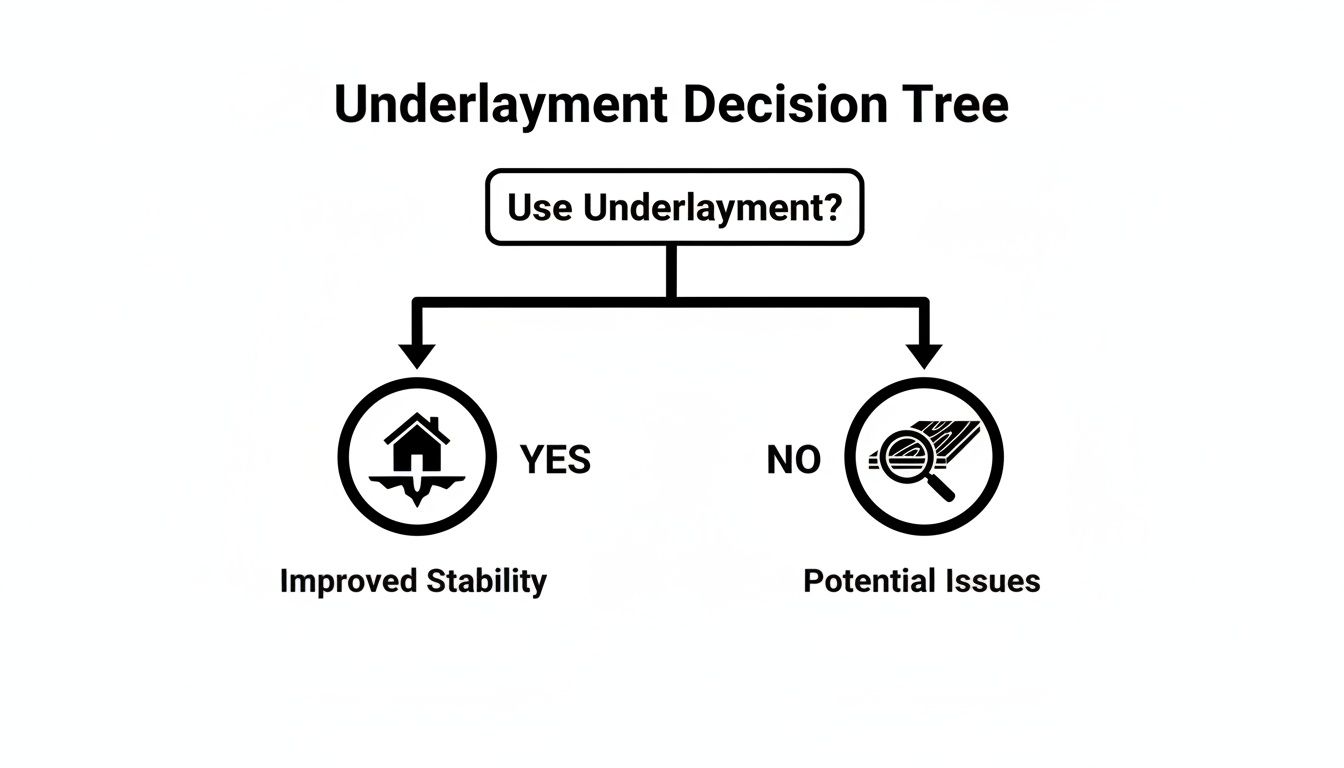
As you can see, adding the right underlayment creates a stable, high-performing floor system. If you skip it, you’re relying entirely on the plank’s built-in features, which might not be enough for your specific subfloor.
To help you navigate the options, here’s a quick overview of the most common underlayment materials we work with every day.
Underlayment Material Comparison For Vinyl Plank
This table gives a quick, side-by-side look at how different materials stack up based on what they do best.
| Material Type | Key Benefit | Best For | Sound Reduction | Moisture Barrier |
|---|---|---|---|---|
| Foam | Affordability & Basic Cushion | Budget-conscious projects, upper floors over plywood | Good | No (unless a combo product) |
| Cork | Superior Sound & Thermal Insulation | Condos, multi-level homes, anyone wanting peace & quiet | Excellent | No (requires separate barrier) |
| Felt | Hides Minor Subfloor Imperfections | Slightly uneven subfloors, high-traffic areas | Very Good | No (requires separate barrier) |
| Combination | All-in-One Moisture Protection | Concrete slabs, basements, any moisture-prone area | Good-Very Good | Yes (built-in) |
Now that you have the big picture, let’s dive into the specifics of each material to understand their unique advantages.
Foam: The Versatile Go-To
When most people think of underlayment, they’re probably picturing a roll of foam. It’s easily the most common and budget-friendly choice, providing a solid baseline of performance for many standard installations.
Foam’s main job is to add a little bit of cushioning, which takes the hard, unforgiving edge off a concrete or plywood subfloor. It also does a decent job of muffling the hollow “clicking” sound that footsteps can make on a floating floor.
- Best For: Upper-level rooms over plywood subfloors and projects where basic comfort and sound reduction are the main goals without breaking the bank.
- Keep in Mind: Standard foam is not a moisture barrier. It’s like a sponge. So, if you’re installing over concrete, you’ll absolutely need a combination product that has a vapor-blocking film attached.
Cork: The Premium Sound Blocker
If your number one goal is creating a quiet, peaceful home, cork is the undisputed champion. It’s a natural, eco-friendly material harvested from the bark of cork oak trees, and its unique honeycomb-like structure is incredible at absorbing sound and vibrations.
Cork underlayment is an exceptional choice for multi-level homes, condos, or any space where reducing noise transmission between floors is essential. It’s the ultimate upgrade for peace and quiet.
Beyond its amazing acoustic properties, cork is also a great thermal insulator. This means it helps your floors feel a little warmer in the winter and cooler in the summer. It’s also naturally antimicrobial, which helps resist mold and mildew. While we’re focused on vinyl here, these same principles apply elsewhere; you can learn more in our guide on the best underlay for wood flooring.
Felt: The Subfloor Smoother
Made from recycled fibers, felt underlayment is impressively dense and strong. While it offers good sound dampening, its real superpower is its ability to smooth over minor subfloor imperfections.
If your subfloor has small cracks, old nail holes, or isn’t perfectly flat, a dense felt underlayment acts like a buffer, preventing those little flaws from telegraphing through your vinyl planks over time. It’s also incredibly resistant to being crushed, making it a great pick for busy, high-traffic areas. This kind of long-term thinking is becoming more common; the global floor underlayment market was valued at USD 1.5 billion in 2024 and is expected to hit USD 1.9 billion by 2031.
Combination: The All-In-One Solution
For any installation over a concrete slab, a combination underlayment isn’t just a good idea—it’s a necessity. These products are the smart solution, merging a cushioning material like foam or felt with a built-in vapor barrier film.
This all-in-one design saves you a step during installation while providing the critical protection needed to stop moisture from wicking up from the concrete. For any basement or on-grade slab foundation here in areas like Johns Creek or Milton, using an underlayment with an integrated moisture barrier is the single most important thing you can do to prevent mold, mildew, and total flooring failure down the road.
What a Separate Underlayment Really Does for Your Vinyl Plank Floors
Lots of vinyl plank flooring today comes with a pad already attached. It’s a convenient feature, but that thin, built-in layer is really a one-size-fits-all solution. Think of it like the basic tires that come with a new car—they work just fine.
But choosing a separate, high-quality underlayment for vinyl plank is like upgrading to premium tires. It’s a deliberate choice to solve specific problems and seriously elevate the performance of your floor, making it quieter, more comfortable, and longer-lasting. Let’s break down exactly what you’re getting with that upgrade.
Quieting Your Home and Dampening Sound
Ever notice that hollow, click-clack sound when you walk across a floating floor? That’s impact noise. Without a good buffer between the vinyl and the subfloor, everyday sounds—footsteps, a dropped toy, even your dog’s nails—can echo through the room and bleed into the floor below.
This is where a dedicated underlayment shines. It’s an acoustic workhorse. Materials like dense cork, felt, and certain foams are engineered to soak up those vibrations on the spot. For anyone living in a condo, apartment, or a two-story house, this is a massive quality-of-life improvement.
You’re not just putting down a floor; you’re soundproofing your space. It’s the difference between hearing every footstep from the upstairs home office and enjoying peace and quiet in your living room.
Enhancing Comfort Underfoot
You can literally feel the difference a good underlayment makes. Laying vinyl planks directly over concrete can feel rock-solid and unforgiving, and standing on it for a while can leave your feet and back aching.
A separate underlayment adds just enough give to absorb the shock of each step. It’s not a squishy, unstable feeling. It’s a firm but gentle resilience that provides real ergonomic benefits, especially in rooms where you’re always on your feet.
- Kitchens: It takes the edge off standing while you’re prepping a meal or washing dishes.
- Home Offices: A must-have for anyone with a standing desk.
- Playrooms: Provides a slightly softer surface for kids to tumble around on.
This subtle cushioning makes daily life more comfortable without ever messing with the stability of the floor’s locking system.
Creating Superior Moisture Protection
Moisture is the ultimate enemy of any floor. This is especially true when you’re installing over a concrete subfloor. Concrete is like a sponge; it constantly pulls moisture up from the ground through a process called vapor transmission. If that moisture gets trapped under your new floor, you’re asking for mold, mildew, and costly damage.
Even though most vinyl plank is waterproof, the seams between the planks aren’t airtight. A separate underlayment with an integrated vapor barrier is your best line of defense. This is usually a thin sheet of plastic (6-mil polyethylene is the standard) that completely stops moisture in its tracks.
For homes here in Cumming and across Forsyth County, particularly those with basements or concrete slab foundations, this isn’t just a nice-to-have feature. It’s an absolute must to protect your investment and keep your home healthy.
Forgiving Minor Subfloor Imperfections
Let’s be honest, no subfloor is perfectly flat. You’ll always find small cracks, leftover nail heads, or slightly uneven spots. Over time, these little flaws can start to “telegraph” through to the surface of the vinyl, showing up as little bumps or dips.
A good, dense underlayment acts as a forgiving buffer, smoothing over these minor imperfections. It bridges the tiny gaps and eases the transitions over small ridges, giving you a perfectly flat, professional-looking finish. This little bit of grace ensures that small subfloor issues don’t become big visual headaches down the road.
Don’t Let These Common Mistakes Derail Your Installation
You can pick the perfect vinyl plank and the best underlayment on the market, but if the installation goes wrong, none of it matters. A few common, and frankly, very avoidable mistakes can completely undermine your beautiful new floor. Knowing what not to do is just as important as knowing what to do.
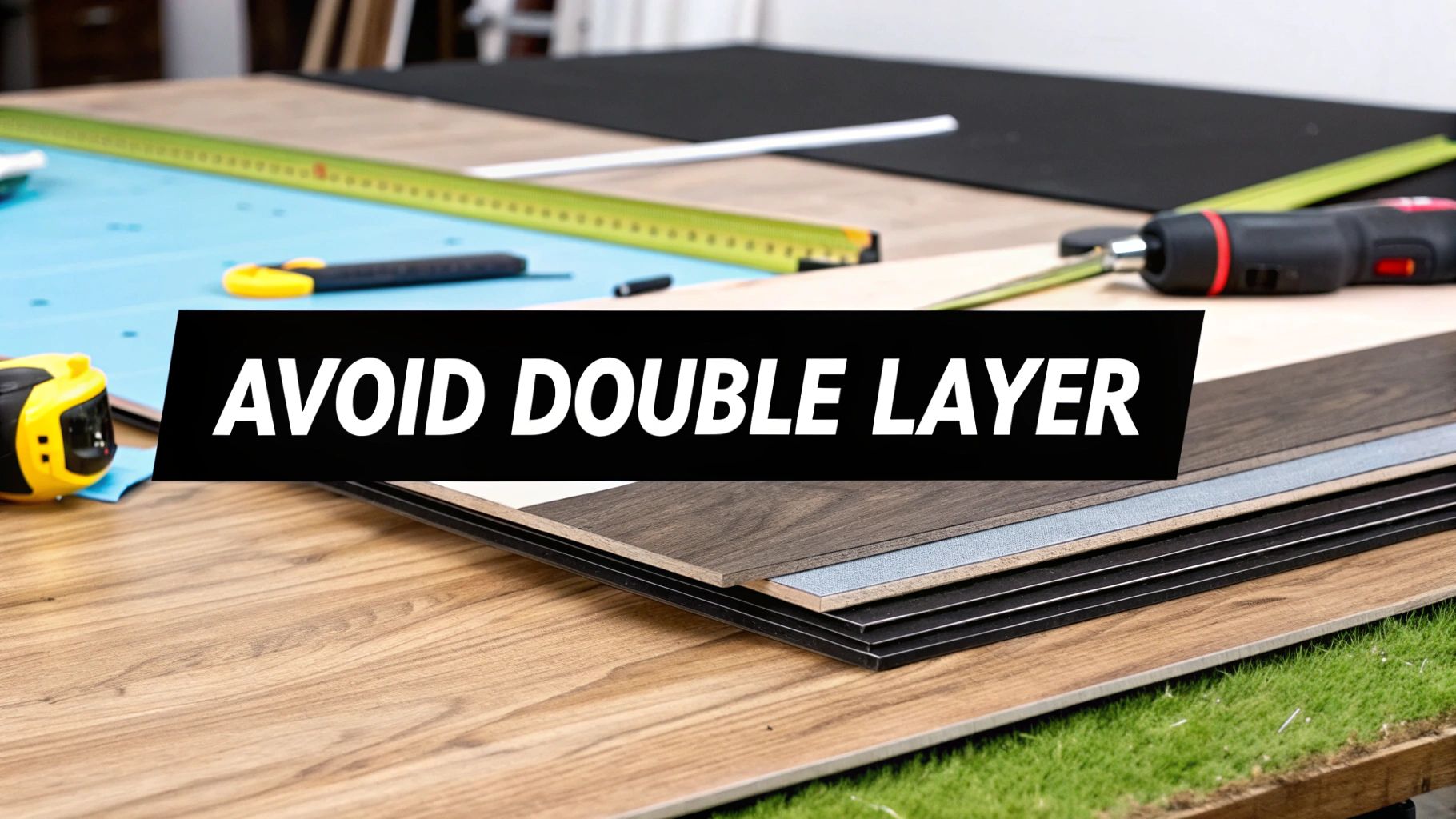
The biggest offender we see time and time again is thinking that more is better. When vinyl plank already has that foam or cork pad attached to the back, it’s tempting to add another layer of underlayment for extra cushion. It seems logical, but in reality, it creates a disaster waiting to happen.
The Problem with Double Padding
Think about it this way: a floating floor needs a firm, stable base to rest on. By stacking a second cushioned underlayment, you’re essentially building your floor on a mattress. It’s soft, spongy, and way too unstable.
Every time you walk across the floor, the planks will sink and rebound. This constant up-and-down movement puts a ton of stress on those little click-lock joints that hold everything together. Sooner or later, they’ll give out. You’ll start seeing gaps open up between your planks, or the edges will pop up.
Warranty Warning: Doubling up on underlayment is a cardinal sin in the flooring world. Nearly every manufacturer explicitly forbids it in their installation guides. Making this one mistake can instantly void your flooring warranty, leaving you on the hook for any repairs.
Know Your Installation Type: Floating vs. Glue-Down
Another mix-up that causes big problems is not understanding the difference between floating floors and glue-down floors. They are two completely different animals, and their rules for underlayment are not interchangeable.
- Floating Floors: These are your classic “click-lock” planks. They aren’t nailed or glued to the subfloor; they just float on top, held together by their interlocking edges. This is the only installation type where a separate underlayment is even a possibility, and that’s only if the planks don’t already have a pad attached.
- Glue-Down Floors: Just like it sounds, every single plank is bonded directly to the subfloor with a strong adhesive. The entire point is to create a rock-solid, permanent connection.
You should never, ever put a soft, cushioned underlayment under a glue-down floor. The adhesive is designed to grab onto a solid, rigid surface. Putting a layer of foam or cork in between is like trying to glue two things together with a sponge in the middle—it just won’t work. The planks will shift, bubble up, and eventually come loose.
A Solid Foundation is Non-Negotiable
Finally, remember that no underlayment, no matter how amazing, can magically fix a bad subfloor. Before you even think about rolling out that first layer, your subfloor has to be perfectly clean, totally dry, and, most importantly, flat.
Leftover debris, dust, or any hint of moisture will cause problems. Dips and humps in the subfloor will eventually show right through to the surface of your new vinyl, creating an uneven look and feel. Prep work isn’t the fun part, but it’s the mandatory first step for a floor that lasts.
This focus on getting the foundation right is a big reason why Luxury Vinyl Plank is projected to see a 6.79% CAGR through 2031. Homeowners want floors that look great and perform for the long haul. You can learn more about the growth of rigid-core flooring technology and its impact.
When in doubt, always read the box. Your flooring manufacturer’s guidelines will tell you everything you need to know about approved underlayments and thickness limits. Following their rules is the only sure way to get a secure, beautiful floor that you’ll love for years.
Special Considerations for Your Home’s Environment
Picking the right underlayment isn’t just about the flooring you chose; it’s about where your home is and how it’s built. The specific environment in and around your house presents its own set of challenges, and the right underlayment for vinyl plank is your first and best defense.
Take a basement in a humid climate, for instance. That concrete slab is in constant contact with the ground, which is naturally full of moisture. Without a proper barrier, moisture vapor will inevitably work its way up through the concrete and get trapped right under your new LVP.
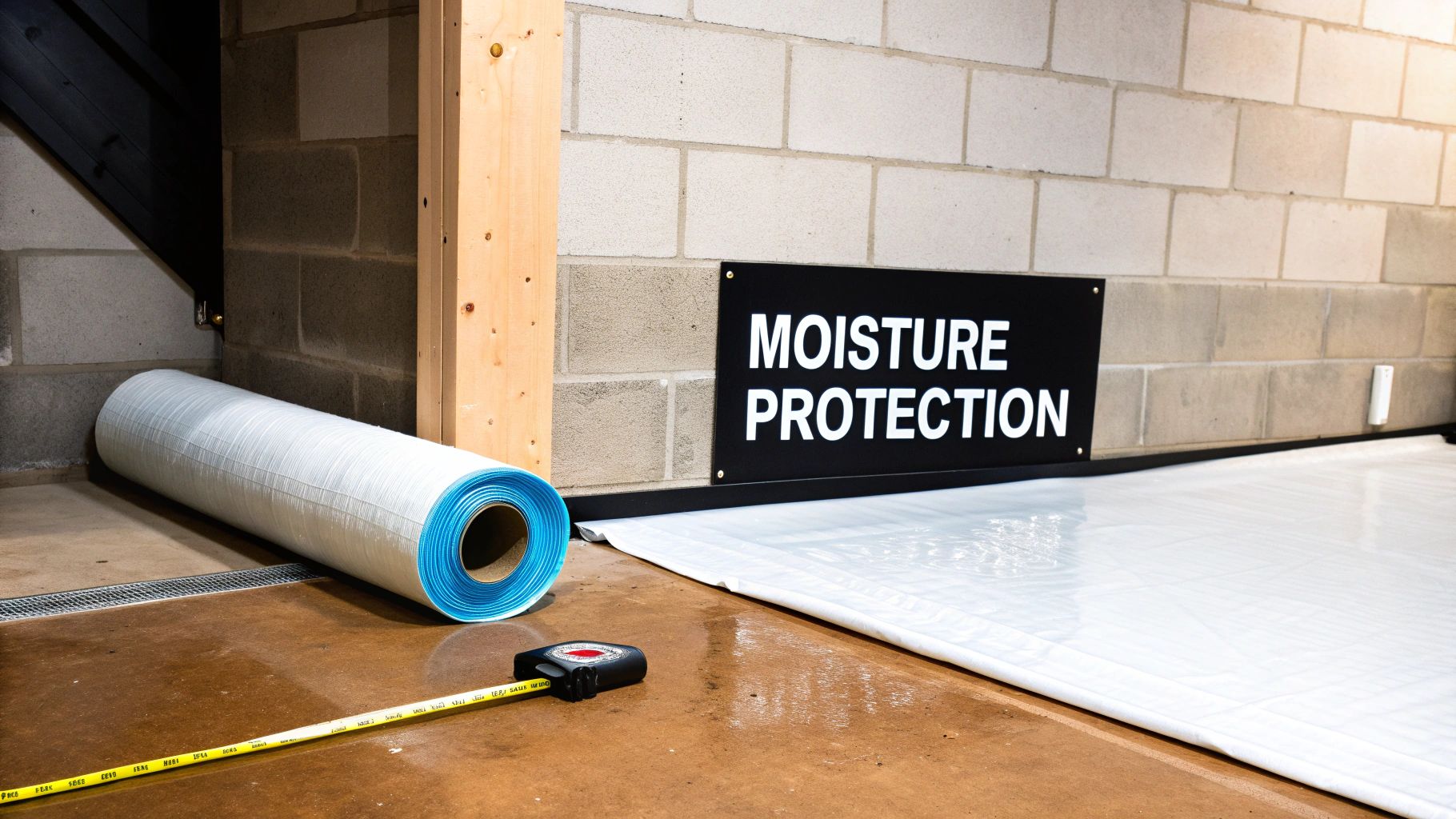
This is precisely why a dedicated vapor barrier isn’t optional—it’s a must-have for any vinyl plank installation over concrete. This is especially true for basements and on-grade slab homes common in places like Milton and Johns Creek. For these trickier spots, it’s also smart to explore the best flooring options for basements to see how different materials stand up to the unique conditions.
Protecting Against Moisture and Humidity
Here in Forsyth County, our high-humidity climate cranks up the risk of moisture-related damage. Choosing a combination underlayment with an integrated vapor barrier isn’t just a good idea; it’s critical for protecting your investment from mold, mildew, and warping. That small extra cost upfront can prevent a complete flooring failure later on.
Think of it this way: an underlayment with moisture protection is like a raincoat for your subfloor. It lets your waterproof vinyl planks handle spills from above while it takes care of the invisible threat rising from below.
Not sure how much moisture your concrete slab is holding? It’s always best to check. Our guide on how to test concrete for moisture walks you through the steps to make sure you’re starting on a solid, dry foundation.
Managing Sound in Multi-Level and Open Layouts
The layout of your home also plays a huge role in your underlayment choice. If you live in a multi-level house or have a modern open-concept floor plan, sound travel can become a real headache. The sharp click of footsteps or the noise from an upstairs playroom can echo throughout the house without some acoustic insulation.
This is where a quality sound-dampening underlayment made from cork or dense felt truly shines. It absorbs impact noise right where it happens, creating a much quieter, more peaceful home for everyone. This kind of attention to detail is a big reason why the global vinyl flooring market was valued at a massive USD 38.94 billion in 2024 and is expected to climb to USD 82.85 billion by 2032.
Your Underlayment Questions Answered
Even after getting the basics down, a few key questions always pop up when you’re planning a new vinyl plank floor. Our team at Flacks Flooring fields these all the time from folks in Cumming, Johns Creek, and the surrounding areas. Here are some straightforward, practical answers to help you get it right.
Can I Install Vinyl Plank Flooring Directly on Concrete?
Technically, you can, but it’s a big gamble you really don’t want to take. Think of a concrete slab as a giant, hard sponge. It naturally pulls moisture up from the ground through a process called vapor transmission, even if it feels bone dry to the touch.
If you trap that invisible moisture under your beautiful new floor, you’re creating a perfect environment for mold and mildew. Over time, it can even cause the planks themselves to fail. We see this a lot in basements and slab-on-grade homes throughout Forsyth County.
The simple fix is a 6-mil polyethylene film. This thin plastic sheet acts as a shield, completely blocking that moisture and protecting your investment. As an added bonus, it creates a thermal break, so the floor won’t feel so shockingly cold on your feet. A combination underlayment with a built-in vapor barrier works just as well.
Do I Need Underlayment If My Vinyl Plank Has an Attached Pad?
This is a huge one. In almost every case, the answer is a firm no. You should not add another cushioned underlayment if your vinyl planks already have a pad attached. It’s easy to think “more cushion is better,” but doing so actually creates a serious structural problem.
The attached pad is engineered to work perfectly with the plank’s locking system. When you add a second soft layer underneath, you create too much give, or “deflection,” with every footstep. This constant up-and-down movement puts a ton of stress on the joints, causing them to flex, weaken, and eventually break apart.
Stacking underlayments is the number one cause of gapping and peaking in floating floors. This common installation error will almost always void your manufacturer’s warranty, leaving you responsible for any repairs.
The only exception? If you’re installing over concrete. In that situation, you would put down a thin, non-cushioned moisture barrier film first. This protects against moisture without adding the instability that a second cushioned layer would.
What Is the Best Underlayment for Soundproofing?
If you’re trying to quiet things down, nothing beats high-density materials like cork and rubber. They are the clear winners for dampening the two types of noise that drive people crazy in multi-level homes and condos.
- Impact Noise: This is the sound of footsteps, a dropped toy, or your dog’s claws clicking across the floor. Dense materials absorb these vibrations right where they happen, stopping the noise from traveling to the room below.
- Airborne Noise: This is the sound of voices, music, or the TV. While flooring isn’t the primary defense here, dense underlayments absolutely help muffle these sounds, too.
When you’re comparing products, look for two ratings on the packaging:
- IIC (Impact Insulation Class): Rates how well it blocks impact sounds.
- STC (Sound Transmission Class): Rates how well it blocks airborne sounds.
For both ratings, the higher the number, the better the performance. While some premium foams do a decent job, dense cork and rubber consistently deliver the quietest floors, making them perfect for bedrooms, home offices, and any room on a second story.
Should I Use Plywood as an Underlayment for Vinyl Plank?
This question usually comes from a bit of confusion over the terminology. Plywood isn’t the same as the foam, cork, or felt we’ve been talking about. It isn’t a comfort or moisture layer—it’s a structural material used to fix the subfloor itself.
Here’s a better way to think about it: if your original subfloor is uneven, damaged, or made of something unsuitable for vinyl plank (like old particleboard), you’ll need to create a new, perfect surface. You do this by screwing down a thin layer of “underlayment-grade” plywood over the old subfloor. This gives you a smooth, stable, and clean foundation to work with.
Once that new plywood surface is down, you’re back to square one. You still have to decide if you need a moisture barrier or another type of underlayment between the new plywood and your vinyl planks. In short, using plywood is about repairing the foundation, not adding the mattress.
Feeling more confident about your project? The right underlayment makes all the difference, and the team at Flacks Flooring is here to help you get it right. Explore our wide selection of waterproof flooring and get expert advice tailored to your Cumming, GA home by visiting us online at https://flacksflooring.com.