
What if you could have the beautiful, classic look of ceramic tile without the cold, hard feel and the risk of it cracking? That's exactly what luxury vinyl tile (LVT) offers. It delivers a stunningly realistic ceramic look but with far more comfort, durability, and a much simpler installation process.
It’s like comparing a high-quality giclée art print to an original oil painting. Both look fantastic on the wall, but one is a lot more practical and accessible for everyday living.
Why Vinyl is the Smart Choice for a Ceramic Look
For years, homeowners here in Cumming and Johns Creek have chosen ceramic for its timeless appeal. But they've always had to accept its downsides: it's cold underfoot, hard on your joints, and can easily crack if you drop something heavy. Not to mention, the installation is a messy, drawn-out affair.
This is where vinyl flooring that looks like ceramic tile completely changes the conversation.
Thanks to incredible leaps in manufacturing technology, vinyl is no longer just a basic, functional flooring. It's a design-forward material that can elevate any space. In fact, luxury vinyl tile (LVT) is taking the market by storm, projected to capture a massive 61% share by 2025. This boom is all thanks to high-resolution digital printing that can mimic the intricate patterns and textures of real stone and ceramic perfectly, but at a much better price point. You can learn more about these market shifts and see what's driving the growth of vinyl flooring.
Vinyl Tile vs Ceramic Tile At a Glance
So, how do the two really stack up? For homeowners in Forsyth County and Milton, the practical differences are what truly matter. This quick table breaks it down.
| Feature | Vinyl Flooring (LVT) | Ceramic Tile |
|---|---|---|
| Comfort | Warmer and softer underfoot, providing more cushion. | Cold, hard, and unforgiving on joints. |
| Durability | Resists cracks, chips, and scratches effectively. | Prone to cracking from impacts and can chip easily. |
| Installation | DIY-friendly click-lock systems; professional glue-down. | Requires mortar, grout, and professional expertise. |
| Maintenance | Simple sweeping and mopping; no sealing required. | Grout lines require periodic sealing and can stain. |
| Cost | More affordable materials and lower installation costs. | Higher material cost and more expensive professional labor. |
The real win with LVT is that it solves the practical problems of ceramic without forcing you to compromise on style. You get the high-end look you want with the everyday livability your family needs, making it a perfect fit for any room in your home.
Of course, it’s always smart to know your options. Before you decide, it can be helpful to understand the nuances of traditional ceramic tile options for bathrooms. Getting that background knowledge helps you fully appreciate just how far modern vinyl has come and why it’s such a compelling choice today.
How LVT Perfectly Mimics Ceramic Tile
Ever walked on a floor you swore was ceramic tile, only to find out it was vinyl? It's a common experience these days, and it's no accident. The secret behind vinyl flooring that looks like ceramic tile isn't just a simple picture; it's a sophisticated, multi-layered construction where every single piece has a job to do.
Think of it like this: the core of the illusion is the high-definition photographic print layer. This isn't your average printer at work. Manufacturers use incredibly advanced digital imaging to capture the authentic details of real stone—every subtle vein in a piece of marble, the tiny speckles in travertine, or the rough, earthy texture of slate. The resolution is so sharp that it perfectly replicates the natural color shifts and imperfections that make ceramic and stone so beautiful.
But a great picture is useless if it gets scratched up. That's where the crucial wear layer comes in. It’s a transparent, tough-as-nails coating that sits on top, acting like a screen protector for your floor. It’s what stands up to daily life—foot traffic, spills, and scuffs—to keep the beautiful image underneath looking brand new for years.
The Technology Behind the Authentic Feel
Seeing the look is one thing, but what really sells the illusion is the feel. This is where the most advanced Luxury Vinyl Tile (LVT) really shines, thanks to a technology called embossed in register (EIR). Honestly, this is where the magic happens.
EIR is a manufacturing technique that perfectly aligns the surface texture of the vinyl with the image printed below it. So, when you run your hand over what looks like a grout line, you actually feel a slight indentation. When you see the characteristic clefts of a slate tile, you can feel them under your feet.
The Bottom Line: Embossed in register (EIR) technology syncs the visual pattern with the physical texture. This creates an incredibly authentic feel that moves LVT from being a simple copycat to a true sensory experience.
This meticulous attention to detail is what separates premium LVT from basic vinyl. It adds a tactile dimension that tricks your senses into believing the floor is genuine stone or ceramic, closing that final gap between looking real and feeling real. To get a better handle on the basics, you can explore more about what luxury vinyl plank flooring is in our deeper guide.
Why Everyone Is Choosing LVT
This incredible realism is exactly why LVT's popularity has exploded. It’s no longer a niche product; Luxury Vinyl Tile is a major player, holding a massive 68.34% market share of all vinyl flooring sold in the U.S. in 2024. And it's not slowing down. People want floors that are beautiful, practical, and often, something they can install themselves—and LVT checks all those boxes.
This chart really breaks down the core decision homeowners are making when they want that classic tile aesthetic.
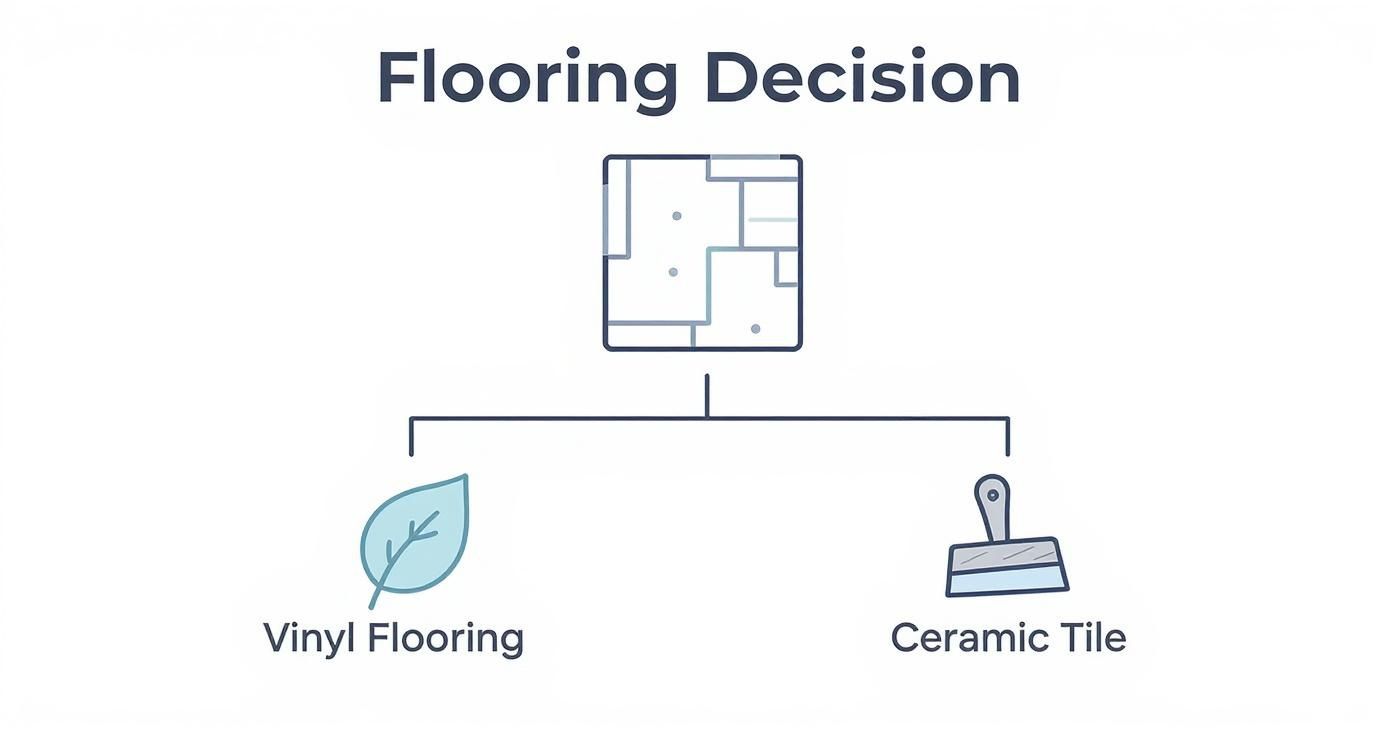
As you can see, both traditional ceramic and modern LVT are legitimate paths to the same goal. It just highlights how vinyl has become a go-to alternative for achieving that timeless look.
Choosing Your Grout and Edge Styles
The high-definition printing and realistic textures get you 90% of the way to a convincing tile floor, but it's the little details that truly sell the look. The most important detail? The seams. How each individual vinyl tile meets the next is what makes or breaks the illusion of real ceramic.
When it comes to vinyl flooring that looks like ceramic tile, you're really looking at two main options for the edges. Each one creates a totally different vibe and comes with its own practical pros and cons. It all boils down to a choice between ultimate realism and streamlined simplicity.
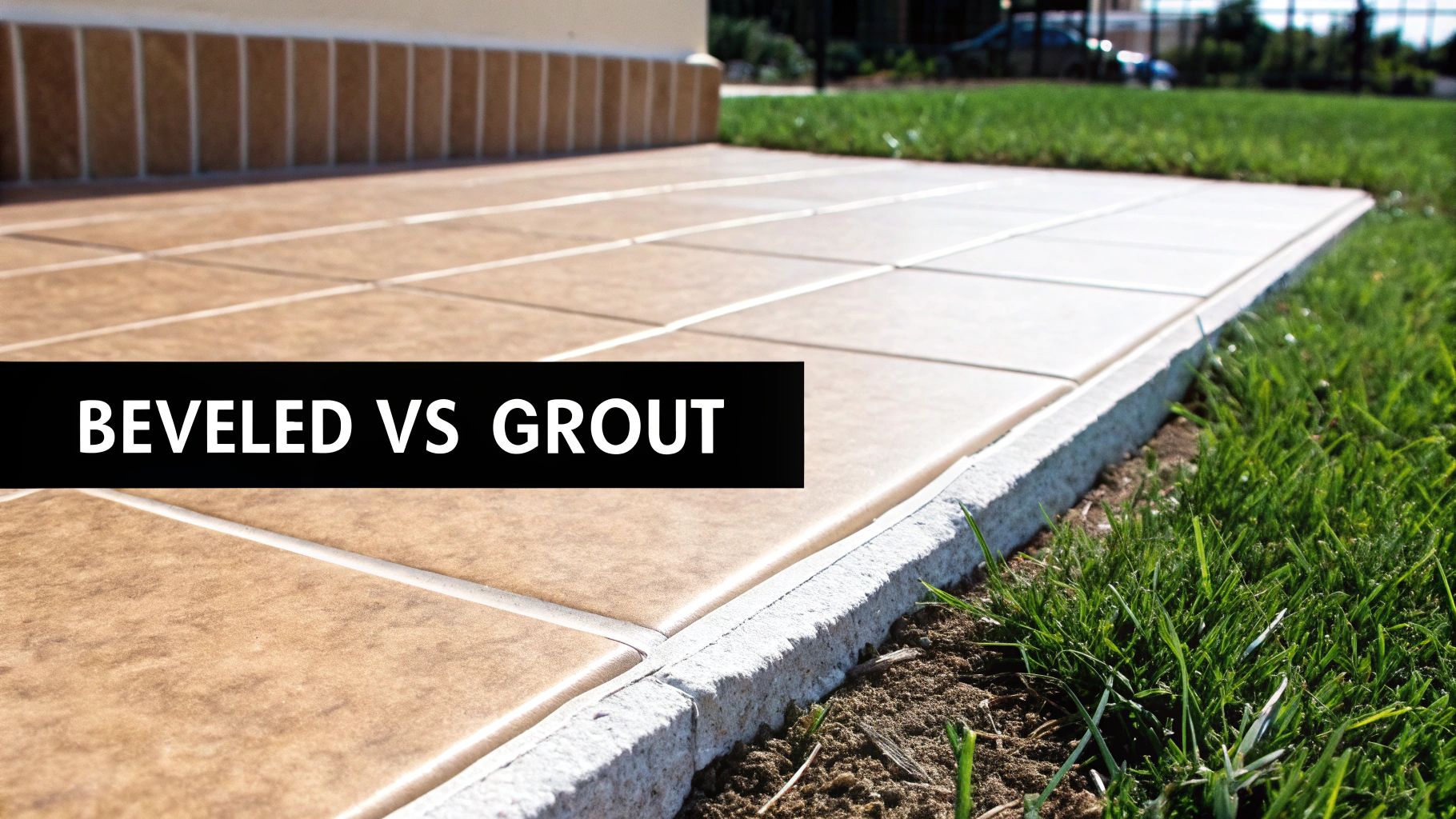
The Clean Look of Beveled Edges
A lot of luxury vinyl tiles are made with beveled or micro-beveled edges. All this means is that the top edge of each tile is cut at a tiny angle. When two tiles are clicked together, this creates a subtle groove that defines the shape of each tile, giving it depth and dimension just like you'd see on a real ceramic floor.
For busy households in places like Cumming and Milton, this approach is a game-changer.
- Easy Maintenance: No grout lines, no problem. You never have to worry about scrubbing or sealing porous grout. A quick sweep and mop is all it takes.
- Modern Aesthetic: The clean, defined lines from beveled edges look fantastic in contemporary, minimalist, or transitional homes.
- Faster Installation: These are almost always floating floors. The tiles just click together, which means no messy grouting step, and your project gets done much faster.
Beveled edges give you a beautiful floor that strongly suggests the look of ceramic tile without any of the traditional upkeep.
The Ultimate Realism of Grout-able Vinyl Tile
If you're after a look so authentic that even a pro would have to look twice, then grout-able luxury vinyl tile is your answer. These tiles are designed specifically to be spaced slightly apart, leaving a channel that you fill with actual grout—just like you would with porcelain or ceramic.
But this isn't your grandfather's cement-based grout.
Key Takeaway: Grout-able LVT uses a special, flexible acrylic grout. This stuff is engineered to move with the vinyl as it expands and contracts, so it won't crack or fall apart like old-school grout would. Better yet, it often comes pre-mixed, is stain-resistant, and never needs to be sealed.
This method really is the best of both worlds. You get that classic, professionally installed look that only real grout can deliver, but you keep all the benefits of vinyl—it’s warmer, softer underfoot, and incredibly durable.
Going with grout also opens up a ton of design options. You can pick a contrasting grout color to make each tile pop or a color that blends in for a more seamless, uniform look. This is how you really dial in your design, making sure every detail from the floor to the trim is perfect. Speaking of trim, understanding your options is key to a finished look; you can explore the different types of floor molding for 2025 in our guide to learn more.
In the end, whether you choose the sleek simplicity of a beveled edge or the undeniable authenticity of a grouted finish, today's LVT gives you everything you need to create a stunning floor that captures the timeless appeal of ceramic tile.
Of course. Here is the rewritten section with a more natural, human-expert tone.
Practical Benefits of Choosing Vinyl Over Ceramic
The amazing realism of modern vinyl is what first turns heads, but it’s the practical, day-to-day advantages that really seal the deal for homeowners here in Cumming. It's one thing for a floor to look good, but it's another for it to stand up to real life. When you get past the aesthetics, you find that vinyl offers some serious real-world wins that just make more sense for a busy household.
Let's get into what makes luxury vinyl such a smart choice for so many homes in our area.
Unbeatable Comfort Underfoot
The first thing you'll feel—literally—is the comfort. We all know that feeling of stepping onto a cold, hard ceramic tile floor on a chilly Georgia morning. It’s jarring. And standing on that surface for hours while cooking or doing dishes can be brutal on your back and joints.
Vinyl is a whole different story. It has a natural give and is so much warmer to the touch, making it a dream to walk on barefoot. That little bit of softness underfoot makes a huge difference, reducing physical strain and making your kitchen, bathroom, or basement a genuinely more comfortable place to be.
The Durability You Need for Real Life
Life happens. A pot gets dropped in the kitchen, a can of soup slips off the counter, or someone scrapes a chair leg across the floor. With ceramic tile, those everyday mishaps can easily lead to a permanent crack or chip, and fixing a single tile is a real headache.
Luxury vinyl tile, on the other hand, is built to be more forgiving. Its layered design is engineered to absorb impact, so it's incredibly resistant to the dents, cracks, and chips that would ruin a ceramic floor. This is a huge relief for families with active kids and pets. You can finally stop cringing every time something hits the floor.
The Durability Difference: Don't confuse hardness with strength. Ceramic tile is hard, but it's also brittle. Vinyl's flexibility allows it to absorb impacts that would shatter traditional tile, making it a much more practical choice for the high-traffic, accident-prone areas of your home.
This built-in resilience means your floors will keep looking fantastic for years, even with all the chaos of daily life.
Superior Water Resistance and Low Maintenance
Both ceramic and vinyl are go-to options for wet areas like bathrooms and laundry rooms. But ceramic has an Achilles' heel: the grout. Traditional cement grout is porous, so it soaks up water and stains like a sponge unless you diligently seal it year after year. Skip that chore, and you’re looking at stained, grimy grout lines that can harbor mildew.
Most luxury vinyl tiles click together so tightly they leave almost no seams for water to seep through. Even the new "grout-able" vinyl options use a special acrylic grout that’s stain-resistant and never needs sealing. This translates to less time on your hands and knees scrubbing grout and more time enjoying your home. A quick sweep and the occasional mop is all it takes—a major perk for busy homeowners in Forsyth County and Johns Creek.
Simplified and Cleaner Installation
Putting in a ceramic tile floor is a major production. It’s a messy, labor-intensive job that involves mortar, loud tile saws, and days of waiting for grout to cure. It’s almost always a job for the pros, and it’s not quick.
By comparison, installing vinyl flooring is a breeze. Many of today’s click-lock or "floating floor" systems are so user-friendly that a handy homeowner can knock out a room over a weekend. Not only does this save a ton of money on labor, but it also means way less disruption to your daily life.
The market is clearly taking notice of these practical advantages. While ceramic has been a go-to for decades, recent data shows a shift. U.S. ceramic tile consumption is projected to fall to its lowest level since 2014, in part because people are looking for more cost-effective and practical materials for their remodels. You can read more about these industry trends in ceramic tile consumption. This trend tells us that homeowners are looking beyond just looks and choosing floors that offer both beauty and everyday convenience.
Finding the Right Vinyl Style for Every Room
Choosing the perfect vinyl flooring that looks like ceramic tile is about more than just finding a color you love. It’s about strategy. You have to match the floor's capabilities to the real-world demands of each room in your home. After all, the floor that works beautifully in a quiet guest room won’t last a week in a chaotic, spill-prone kitchen.
Let's walk through the most important areas of your home here in Cumming and Forsyth County and pinpoint the best choices for each.
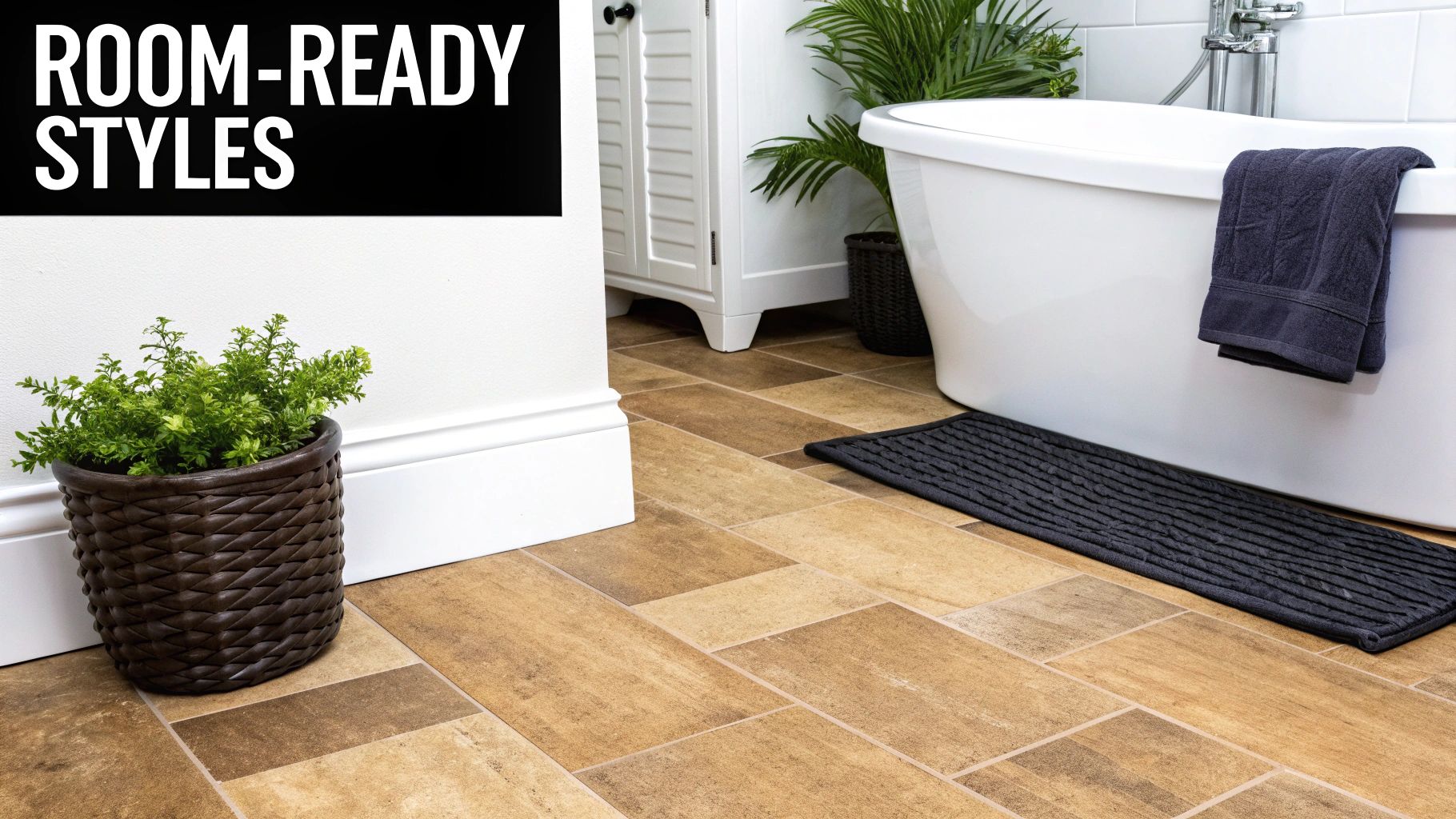
For Kitchens Where Life Happens
The kitchen is the command center of the modern home, and it takes a beating every single day. We're talking dropped pans, splattered sauces, and constant foot traffic. Kitchen flooring needs to be tough, a breeze to clean, and comfortable enough for those long holiday cooking sessions.
- Stain Resistance is Key: Focus on LVT with a substantial wear layer and a quality protective top coat. This powerful combo is your best defense against common kitchen culprits like tomato sauce, wine, and coffee, turning a potential disaster into a simple wipe-down.
- Comfort Underfoot: The subtle give in vinyl flooring is a lifesaver for your feet and back, a difference you’ll really feel compared to standing on rock-hard ceramic for hours. A large-format travertine or limestone-look LVT can make the space feel bright and expansive while keeping you comfortable.
For Bathrooms and High-Moisture Areas
Water is the enemy of most floors, and the bathroom is its home turf. This makes a 100% waterproof material an absolute must. Vinyl tile is a fantastic choice here because there are no porous grout lines to scrub or seal.
For extra peace of mind, I always suggest vinyl tiles with a bit of texture. This gives you some much-needed slip resistance, a critical safety feature in wet environments. As you think about the look you want, it helps to understand the basics of how to choose bathroom tiles for a space you'll love for years to come.
Expert Tip: In a bathroom, great style and safety should go hand-in-hand. A slate-look LVT is a perfect example. It provides a sophisticated, spa-like vibe, and its natural-looking clefts and texture offer a much better grip for wet feet.
For Entryways and Mudrooms That Welcome Everyone
Your entryway or mudroom is the frontline of your home's defense. It has to stand up to everything—muddy boots, dripping umbrellas, and the constant traffic of family and guests. This is where the thickness of the wear layer is non-negotiable.
For these high-traffic zones, don't settle for anything less than a 20 mil wear layer. This beefy protective coating gives you superior resistance to scratches, scuffs, and dents, ensuring your floor still looks fantastic years from now. A durable, dark slate or concrete-look tile works wonders for hiding dirt between cleanings.
For Basements Prone to Dampness
Basements are tricky. Because they are "below-grade," they’re often prone to moisture seeping up from the concrete slab, making flooring like real hardwood a huge gamble. This is exactly where vinyl shines.
Since it’s completely waterproof, LVT won’t warp, swell, or fall apart when exposed to the ambient moisture common in basements. By installing it as a floating floor, you even allow for a bit of air to circulate underneath. It’s simply the best choice for finishing a basement in Johns Creek or Milton and creating a comfortable, usable living space for your family.
Installation and What to Expect on Your Invoice
You've found the perfect vinyl tile that captures that classic ceramic look. Fantastic! Now, let's talk about the two paths to getting it installed and how to budget for the project. Making the right choice here is just as important as picking the right color.
When it comes to vinyl flooring that looks like ceramic tile, you're generally looking at two main installation methods. The best one for you will depend on the room, the state of your subfloor, and whether you're a seasoned DIYer or prefer to leave it to the pros.
Glue-Down vs. Click-Lock Systems
Think of it like this: are you building with interlocking bricks or are you using a powerful adhesive for a permanent bond? That's the core difference here.
-
Glue-Down Installation: This is the old-school, rock-solid method. Each tile is meticulously glued directly to the subfloor with a strong adhesive. The result is an incredibly stable floor that won’t budge, which is why it's the go-to for commercial spaces or high-traffic areas in a busy home. The catch? It demands a perfectly level, clean subfloor and is not very forgiving, making it a job best left to a professional.
-
Click-Lock (Floating) Installation: This is the system that has really taken over residential projects in Cumming and Forsyth County, and for good reason. The planks or tiles have a clever tongue-and-groove system that just clicks together. The whole floor then "floats" over your subfloor. It's faster, creates less mess, and is genuinely DIY-friendly if you're handy.
Why We Often Recommend Floating Floors: For most homes, the click-lock floating system is the clear winner. A huge advantage is that it can often be installed right over your old, existing hard flooring (like that dated ceramic tile), saving you from the dusty, expensive headache of demolition.
Breaking Down Your Project Budget
When you’re planning your budget, you’re really looking at two main line items: the cost of the vinyl itself and the cost for a professional crew to install it.
Material Costs
Luxury vinyl is priced by the square foot, and the cost will move up or down based on the brand, the thickness of the all-important wear layer, and the quality of the design.
- Entry-Level LVT: You'll find options in the $2.50 to $4.00 per square foot range. These are solid choices for spaces without a ton of foot traffic, like a guest bedroom.
- Mid-Range LVT: This is the sweet spot for most homeowners, running from $4.00 to $6.00 per square foot. You get a great mix of durability, style, and value that holds up beautifully in main living areas.
- Premium LVT: At $6.00+ per square foot, you're getting the best of the best. Think maximum durability with the thickest wear layers, incredibly realistic textures, and warranties that last a lifetime.
Installation Labor Costs
Bringing in a pro installer is almost always worth it for that perfect, long-lasting finish. Here in the Johns Creek and Milton area, you can generally expect installation costs to be between $1.50 and $4.00 per square foot. Of course, this can shift depending on the complexity of your room and the prep work needed.
For a much more detailed look at what goes into labor pricing, check out our guide on the cost to install vinyl flooring. It will give you a clear picture of what to expect for a project in our area.
Answering Your Questions About Ceramic-Look Vinyl
It's smart to have questions before you commit to a new floor. I get it. Over the years, I've heard just about every concern from homeowners here in Cumming and Johns Creek. Let's walk through the most common ones so you can feel completely confident in your choice.
Can I Install Vinyl Tile Over My Existing Ceramic Floor?
In most cases, yes! This is actually one of the biggest advantages of choosing modern LVT. As long as your current ceramic tile is in decent shape—meaning it's level, firmly in place, and doesn't have any major cracks—you can often install a floating click-lock vinyl tile right on top.
Now, if you have deep or really wide grout lines, it's a good idea to skim-coat the floor with a self-leveling compound first. It’s a quick step that creates a perfectly smooth surface for the new vinyl, and it saves you a ton of time, money, and mess compared to a full tear-out.
How Do I Clean Grouted Luxury Vinyl Tile?
This is the easy part. Cleaning grouted LVT is a breeze compared to traditional tile. A simple routine of sweeping or vacuuming (just make sure to turn off the beater bar) and occasional mopping with a pH-neutral cleaner is all you need.
The special acrylic grout we use with vinyl is a game-changer. It’s built to resist stains and mildew, and unlike old-school cement grout, it never needs to be sealed. Just steer clear of harsh chemicals, steam mops, or anything too abrasive, and that protective wear layer will keep your floors looking great for years.
Will Vinyl Flooring Look Cheap Compared to Real Ceramic?
That's a fair question, and it usually comes from people who remember the flimsy, peeling sheet vinyl from decades ago. I can assure you, today's Luxury Vinyl Tile (LVT) is in a completely different league. Thanks to high-definition printing and texturing techniques like embossing, the realism is just incredible.
Honestly, most people can't tell the difference between a quality LVT and real ceramic or stone without getting down on their hands and knees. You get that high-end look without any of the classic tile headaches.
Is Vinyl Flooring a Good Investment for My Home Value?
Without a doubt. A high-quality LVT is durable, waterproof, and stylish—all things that today's homebuyers are looking for. Its toughness and easy upkeep are huge selling points, especially for busy spaces like kitchens, bathrooms, and entryways.
Real estate agents will tell you that updated, practical finishes make a home sell faster. In fact, about 26% of sellers upgrade their bathrooms before listing just to stay competitive. Putting in a floor like LVT is a smart move that adds real appeal and function, boosting your home's overall value on the market.
Ready to see how Flacks Flooring can transform your home with the perfect ceramic-look vinyl? Explore our waterproof flooring options and schedule your in-home consultation today!