
The choice between vinyl flooring vs hardwood flooring really boils down to one thing: classic authenticity or modern practicality. Hardwood brings a natural, timeless beauty that can significantly boost your home's resale value. On the other hand, luxury vinyl delivers incredible water resistance, durability, and a much friendlier price point.
Ultimately, your decision hinges on what you value most. Are you drawn to the irreplaceable character of real wood, or do you need the versatile, worry-free performance of a high-tech alternative?
The Definitive Flooring Comparison: Vinyl vs. Hardwood
Picking the right floor does more than just update a room; it sets the tone for your entire home. It impacts everything from your daily cleaning routine to your property's long-term value. For homeowners here in Cumming, Johns Creek, and across Forsyth County, this decision is about more than just looks—it's a practical investment that has to stand up to Georgia's humidity, busy family life, and your budget.
This guide is designed to go beyond the surface. We'll dig into the real trade-offs between the authentic charm of solid hardwood and the impressive resilience of modern luxury vinyl. Getting these differences straight is the first step to making a flooring choice you'll be happy with for years to come. For a wider view on this, our complete guide on how to choose flooring is a great resource.
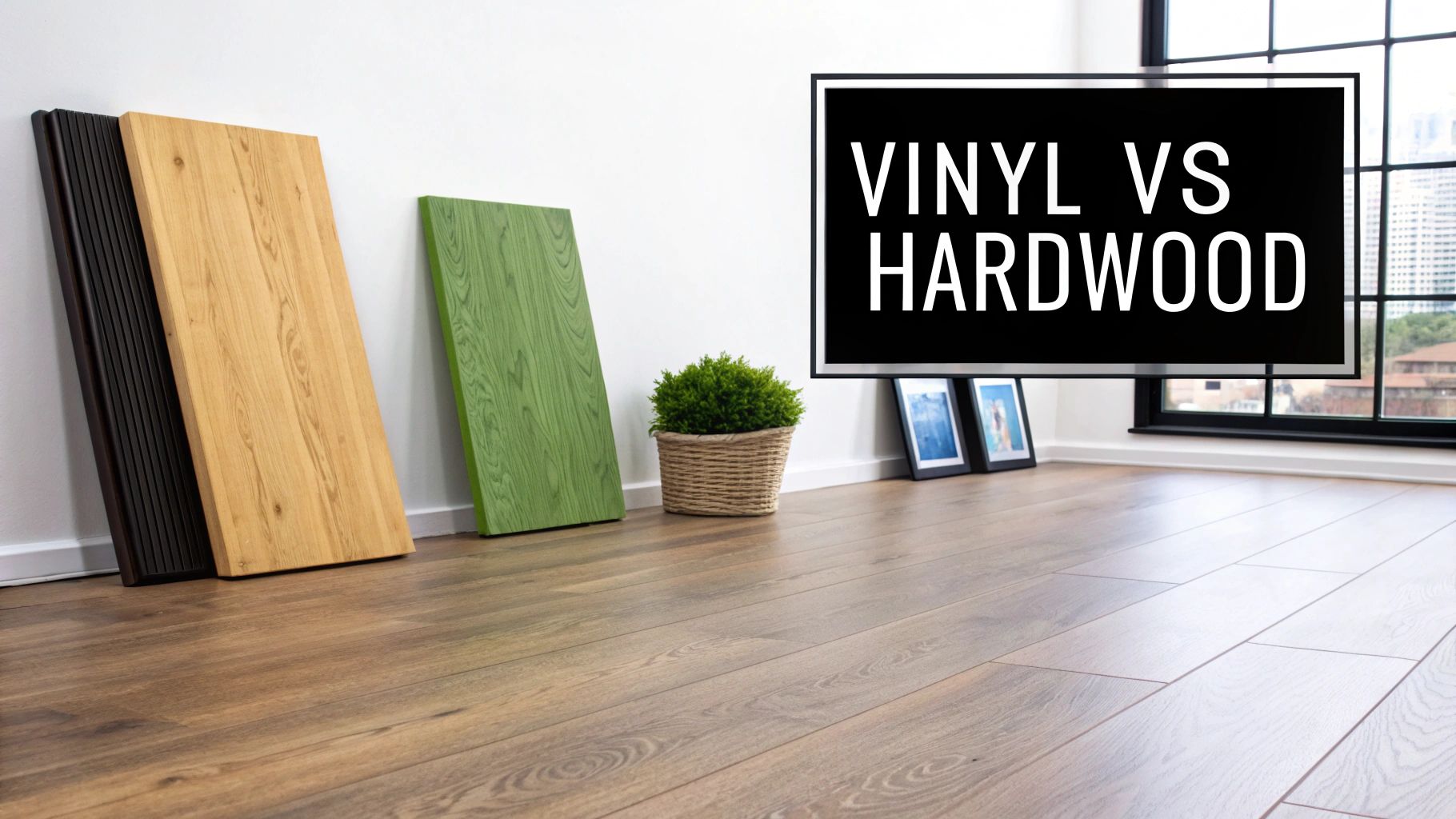
Key Factors for Georgia Homeowners
Living in our part of the country brings a few unique challenges to the table for any flooring material.
- Moisture Resistance: Georgia's humidity is no joke. It can make natural wood swell, cup, or warp over time. Vinyl, being completely waterproof, has a huge advantage here, especially for basements, kitchens, and bathrooms.
- Lifestyle Demands: If you have kids, pets, or just a lot of foot traffic, you need a floor that can handle the chaos. The tough protective wear layer on luxury vinyl often holds up better against scratches, spills, and daily abuse than many hardwoods.
- Budget and Resale Value: There's no getting around it—hardwood is a bigger upfront investment. But it’s an investment that consistently pays off by increasing a home’s resale value. Vinyl gives you that high-end look for a fraction of the cost, saving you money on both the initial purchase and long-term upkeep.
To make things simple, the table below gives you a quick snapshot of these key differences. It's a great starting point to see which material lines up best with your priorities before we get into the finer details.
Quick Comparison: Vinyl vs. Hardwood Flooring
This at-a-glance table breaks down the most critical differences, helping you quickly see how these two fantastic flooring options stack up against each other.
| Feature | Luxury Vinyl Flooring | Solid Hardwood Flooring |
|---|---|---|
| Material Composition | Synthetic (PVC with multiple layers) | Natural, solid wood from harvested trees |
| Water Resistance | 100% Waterproof (ideal for all rooms) | Susceptible to moisture, warping, and stains |
| Durability | Highly resistant to scratches, dents, and scuffs | Can scratch and dent; requires more care |
| Average Cost (Installed) | $4 – $10 per square foot | $10 – $25+ per square foot |
| Maintenance | Simple sweeping and mopping | Requires specific cleaners; periodic refinishing |
| Lifespan | 15-25 years | 100+ years (with proper care) |
| Resale Value | Moderate impact | High impact, considered a premium feature |
| Installation | DIY-friendly (click-lock systems) | Professional installation recommended |
This summary makes it clear: your choice depends on balancing long-term value and natural appeal with everyday durability and budget. Both are excellent choices, but for very different reasons.
Durability and Performance in Georgia's Humid Climate
Here in Georgia, humidity isn't just a weather report talking point; it's a year-round reality that directly impacts how your floors perform. When you're weighing vinyl flooring vs hardwood flooring, you have to think beyond simple durability. The real question is how each material will hold up to the persistent dampness in the air, especially in places like Cumming and Forsyth County.
The core difference is in their DNA. Hardwood is a natural, porous material. Think of it like a sponge—it soaks up moisture from the air, causing the wood fibers to swell. As humidity levels drop, the wood contracts. This constant cycle of expansion and contraction is what leads to serious problems like cupping, crowning, and those dreaded gaps between the planks.
Luxury vinyl plank (LVP), on the other hand, is a completely different animal. It's engineered from synthetic materials like PVC, making it totally waterproof from the core out. That means a spilled drink, a pet accident, or a muggy summer day in Johns Creek won’t touch its structural integrity.
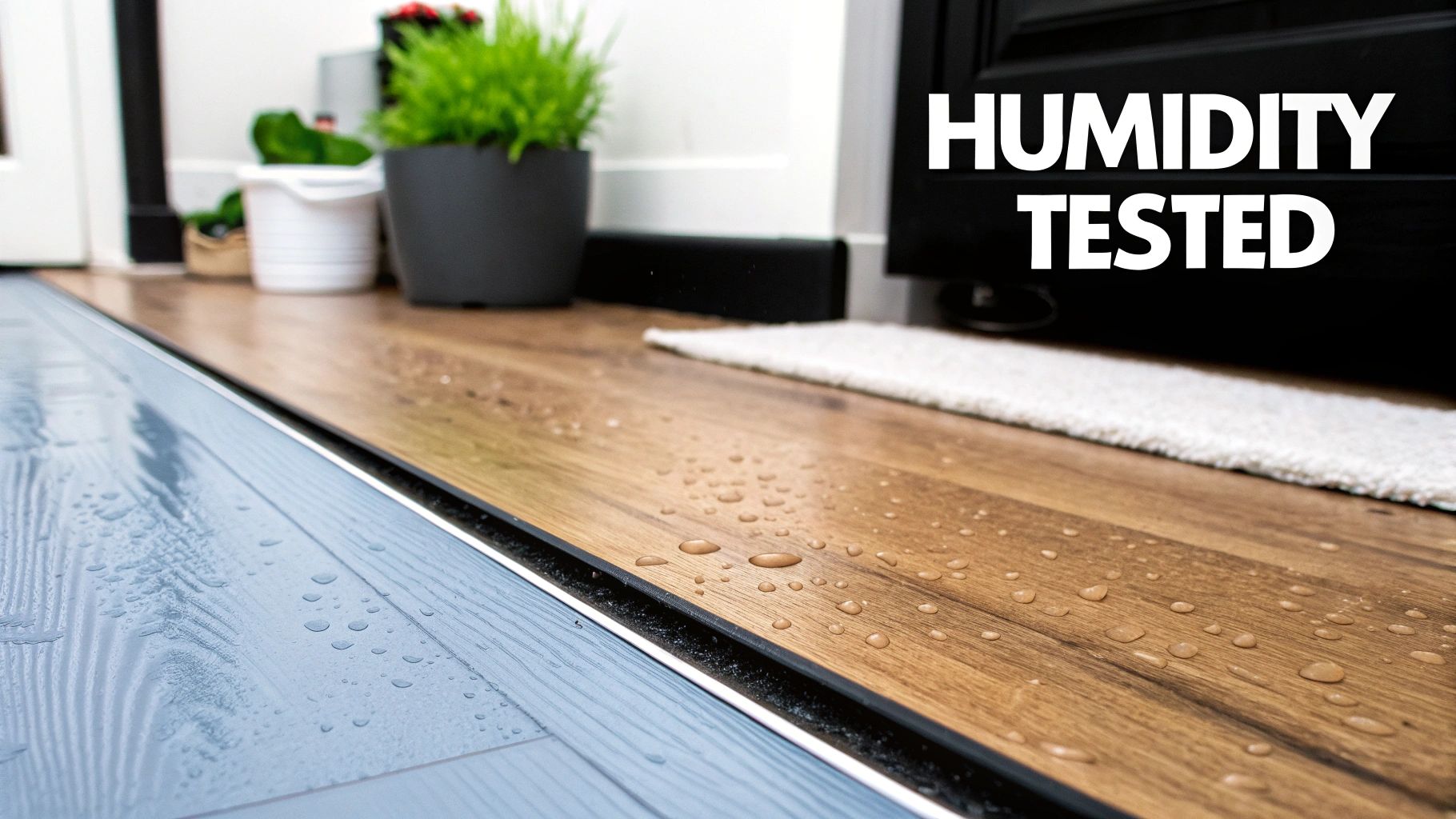
Where Moisture Resistance Really Matters: Real-World Scenarios
To get a clear picture of what this means for your daily life, let’s look at a few common situations where this difference becomes a game-changer.
- Kitchen Spills and Splashes: A tipped glass of water or a minor dishwasher leak on a vinyl floor is a simple cleanup job. On hardwood, that same spill can be a disaster. If you don't catch it immediately, the water can seep in, leading to dark stains and permanent warping.
- High-Humidity Summer Days: We all know those sweltering Georgia summers where the air feels thick. Your hardwood floors feel it too, absorbing that moisture and swelling against each other. Vinyl remains completely stable, totally unfazed by the atmospheric shift.
- Basements and Bathrooms: Putting solid hardwood in a basement or a full bathroom is a huge gamble. The high moisture levels make it a non-starter for most flooring pros. Waterproof vinyl, however, is the perfect solution for these areas, giving you the classic wood look without any of the risk.
For Georgia homeowners, vinyl's waterproof nature isn't just a feature—it's a critical performance advantage. It eliminates the constant worry about humidity-related damage, offering peace of mind that hardwood simply cannot match in moisture-prone areas.
The Impact on Longevity and Upkeep
This fundamental difference in moisture tolerance has a direct effect on long-term durability and how much work you have to put in. A beautifully maintained hardwood floor can last a lifetime, but it demands a controlled environment. Homeowners often find themselves running dehumidifiers constantly to keep indoor humidity within the 30-50% range that hardwood requires.
With vinyl, that constant vigilance just isn't necessary. Its resilience to moisture is a big reason it's become so popular. Homeowners get that premium look but slash long-term costs and headaches—no need for expensive sealants or panicked repairs after a spill. Plus, top-tier vinyl products are 100% waterproof, and wear far better than basic hardwood.
Of course, if your heart is set on real wood, there are smarter choices for our climate. Engineered hardwood offers better stability against humidity. To learn more, check out our guide on the best engineered hardwood flooring.
No matter what flooring you choose, managing your home’s environment is smart. To get the most out of your investment, it's always a good idea to incorporate effective strategies for reducing indoor humidity. But at the end of the day, vinyl offers a kind of "set-it-and-forget-it" durability that’s perfectly matched to the demands of our local weather.
Analyzing the True Cost of Ownership
When you're weighing vinyl flooring vs hardwood flooring, the price tag you see in the store is just the tip of the iceberg. To really understand the financial picture, you have to look at the total cost of ownership. That means factoring in everything—the initial purchase, the installation, long-term maintenance, and even what happens down the road when it needs to be replaced.
Let's be clear: hardwood is a premium product, and its upfront cost shows it. You're typically looking at $8 to $15 per square foot just for the materials. Tack on professional installation, and you've got a significant initial investment. Of course, many homeowners see this as a worthwhile expense that can boost their home's resale value.
On the other hand, luxury vinyl plank (LVP) delivers a high-end look for a much more palatable price. The material itself usually runs between $3 and $7 per square foot. For the handy homeowner, the DIY-friendly installation can slash labor costs to zero. Even if you hire a pro, the total price tag is almost always going to be substantially lower than hardwood.
Beyond the Initial Purchase Price
The real financial story unfolds over the years. Hardwood floors are tough, but they aren't bulletproof. To keep them looking great, they need to be refinished every 5 to 10 years. That's not a small job—it can cost thousands of dollars and turn your home into a construction zone for a few days.
This is where vinyl really starts to shine. It never needs sanding, refinishing, or special waxes. That tough wear layer is engineered to handle years of kids, pets, and dropped pots with nothing more than a simple sweep and mop.
The true cost of flooring isn’t just what you pay at the store; it’s the sum of every dollar spent over its entire lifespan. Vinyl’s minimal upkeep translates into predictable, low long-term expenses, while hardwood's maintenance needs introduce significant recurring costs.
Think about a 1,000-square-foot kitchen in a Milton home. A new vinyl floor might cost around $5,000 installed. That same floor in hardwood could easily push $15,000 or more. Now, add a $2,000+ refinishing bill for the hardwood every decade. The financial gap just keeps getting wider. These real-world savings are a huge reason why so many homeowners in places like Johns Creek and Cumming are making the switch to luxury vinyl.
Installation Costs and Complexity
Installation is another big piece of the cost puzzle. Putting in a hardwood floor is a craft. It involves nailing or gluing planks, which requires a perfectly prepped subfloor, specialized tools, and a ton of precision. It’s definitely a job for the pros, and their labor adds a hefty sum to your final bill. Our guide on the cost to install vinyl flooring offers a more detailed breakdown of these expenses.
Vinyl, especially the modern click-lock styles, is a whole different ballgame. It's far more forgiving, and many homeowners can confidently install it themselves over a weekend. That alone represents a massive cost saving. The process is also faster and cleaner, which means less disruption to your life.
Resale Value and Return on Investment
For decades, hardwood has been the gold standard in real estate. It’s one of those features that genuinely adds to a home's bottom line. No doubt about it, a beautiful hardwood floor is a powerful selling point that can help you command a higher asking price.
But the game is changing. Today's high-quality LVP looks so convincingly like real wood that it’s now seen as a smart, desirable upgrade. Its waterproof nature and incredible durability are huge selling points for buyers, especially families with kids or pets. Agents in competitive markets will tell you that homes with modern, well-installed LVP often sell faster because they signal a move-in-ready, low-maintenance lifestyle. While it might not add the same raw dollar value as perfect hardwood, it absolutely boosts a home's appeal and marketability, giving you a different, but equally valuable, return on your investment.
Comparing Design Versatility and Aesthetic Appeal
The flooring you choose is more than just a surface; it's the visual foundation of your home, setting the tone for every other design choice. When it comes to vinyl flooring vs hardwood flooring, the conversation boils down to natural authenticity versus modern innovation. Each material offers a completely different aesthetic experience, and understanding the nuances is the key to creating a space that feels right.
The Undeniable Warmth of Real Hardwood
Solid hardwood has a timeless appeal that's tough to beat. Its beauty is organic—every single plank tells a story with its unique grain, knots, and subtle color shifts. You just can't fake that. Oak, for instance, brings a classic, traditional warmth to a room, while something like maple can feel clean and modern.
Beyond the wood species itself, you have tremendous control over the final look. Hardwood can be stained in countless shades, from a deep, rich espresso to a light, airy natural finish. The sheen you choose—whether a high-gloss polish or a contemporary matte—also dramatically changes its personality. This natural elegance is exactly why hardwood has been the go-to for creating an upscale, high-value feel for centuries.
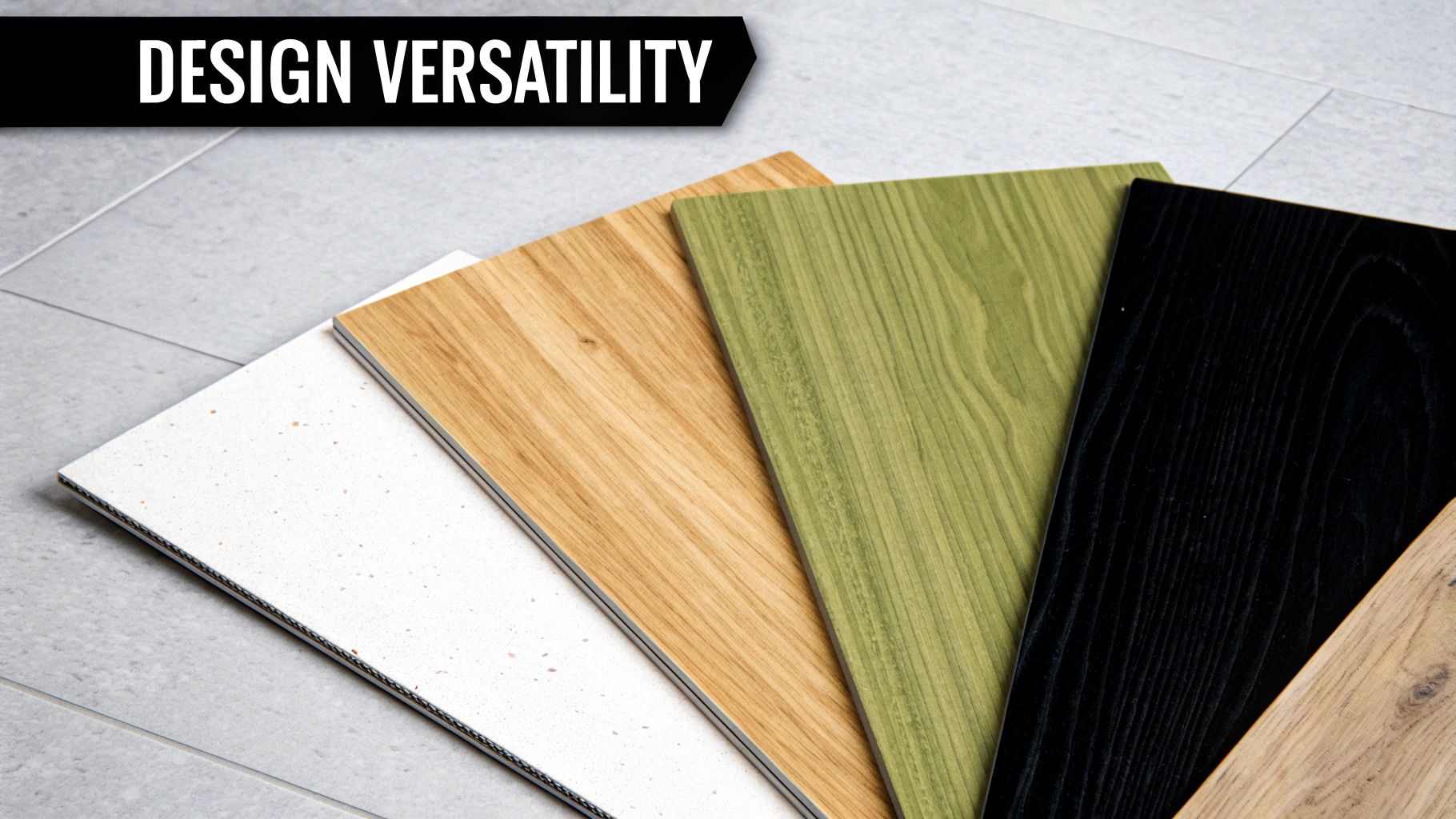
The Rise of Hyper-Realistic Vinyl
While hardwood is all about authenticity, luxury vinyl flooring is the champion of versatility. The technology has gotten incredibly good in recent years, making the visual gap between synthetic and natural materials smaller than ever.
Forget the sheet vinyl of your grandmother's kitchen. Today's luxury vinyl plank (LVP) is a different beast entirely, thanks to some sophisticated design features:
- Embossed in Register (EIR) Texturing: This is a game-changer. The surface texture is precisely aligned with the printed wood grain image below, so you can actually feel the knots and grain. It adds a layer of realism that simply wasn't possible before.
- Micro-Beveled Edges: Tiny, subtle bevels on the edges of each plank make them look like individual boards, perfectly mimicking a real wood installation.
- A World of Styles: Vinyl opens up a nearly limitless catalog of looks. It can replicate rare, exotic, or reclaimed woods that would be incredibly expensive or impractical to source. It also does a fantastic job of imitating stone, slate, and even polished concrete.
This design freedom is a massive advantage for homeowners in places like Milton and Johns Creek. You can get that rustic, wide-plank farmhouse look or a sleek Scandinavian style without worrying about the cost or practical limitations of the real thing.
Hardwood offers a depth and uniqueness that only nature can provide, developing a beautiful, rich patina over time. Vinyl delivers endless design possibilities, perfectly capturing a specific look and holding it consistently for years without aging.
Which Flooring Fits Your Home's Style?
The right choice comes down to the story you want your home to tell. Your personal style and the architecture of your house should be your primary guides.
You Should Lean Towards Hardwood If:
- You're aiming for a traditional, classic, or formal aesthetic.
- You value authentic, natural materials and see your floors as a long-term investment that will age gracefully with your home.
- You love the idea of being able to sand and refinish the floors down the road to completely change the look.
Luxury Vinyl Might Be a Better Fit If:
- You're chasing a specific, trend-forward style, like a whitewashed coastal vibe or an industrial concrete look, that's tough or costly to get with natural materials.
- You want a seamless, consistent look that can flow from the living room into high-moisture areas like kitchens, bathrooms, and laundry rooms.
- You prefer a floor that looks the exact same on day one as it will in year ten, without the patina or wear patterns of natural wood.
For example, a historic home in Cumming would feel right at home with the timeless elegance of solid oak hardwood. On the other hand, a busy family in a modern Forsyth County home might be better served by a light-colored, wide-plank LVP that can run uninterrupted from the front door through the kitchen. It’s not just about what's real versus what's not; it's about picking the material that best brings your design vision to life.
Understanding Installation and Long-Term Maintenance
What will it actually be like to live with your new floors day in and day out? The answer really boils down to two things: the installation process and the upkeep required. It's here, in the practical realities of installation and care, that the vinyl flooring vs hardwood flooring debate gets very real. These aren't just details on a spec sheet—they impact your wallet, your time, and your sanity.
Putting down a real hardwood floor is a craft. It’s not a weekend warrior project. Traditional solid wood planks have to be nailed or glued to a subfloor that has been prepped to perfection, a process that can be messy, noisy, and disruptive. Before a single board is laid, the wood has to sit in your home for several days to acclimate to the humidity, which is a critical step to prevent ugly gaps or buckling down the road.
Vinyl plank, on the other hand, is built for speed and simplicity. Most modern luxury vinyl plank (LVP) uses a click-lock system. The planks literally snap together and "float" right over your existing subfloor. That means no nails, no smelly adhesives, and a lot less prep work. This design makes vinyl a fantastic DIY-friendly option, and doing it yourself can save you a significant chunk of change on labor costs.
Comparing Installation Realities
The installation method directly shapes the project's timeline, total cost, and overall headache factor. One is a meticulous, skill-intensive job, while the other is engineered for pure efficiency. If you're weighing your options, you have to think about what the installation will demand. For homeowners who want a guaranteed professional result, there are always professional flooring sales and installation services to handle the job from start to finish.
Let's break down what you're really signing up for:
- Hardwood Installation: Think of this as a multi-day operation. It involves serious subfloor prep, that non-negotiable acclimation period, and careful work with professional tools like nail guns and miter saws. It’s a real investment in both time and money, but the payoff is that unmistakable, authentic result.
- Vinyl Plank Installation: This is a much faster game. An average homeowner with a few basic tools can often knock out a room in a single day. The "floating floor" method is also much more forgiving of minor subfloor imperfections, making it a far more accessible and less disruptive choice.
The choice really comes down to this: do you want the old-world craftsmanship of a professionally installed hardwood floor, or the modern efficiency of a click-and-lock vinyl installation? Your budget, timeline, and appetite for a DIY project will guide your answer.
A Guide to Long-Term Care
Once the dust settles and your new floors are in, the mission changes to keeping them looking pristine. This is where your lifestyle really comes into play, because hardwood and vinyl could not be more different in what they ask of you.
Hardwood is beautiful, no question, but it’s also a bit needy. You have to use special pH-neutral cleaners, be careful with water, and wipe up every spill the second it happens. Felt pads on furniture are a must to avoid scratches, and you’ll likely want area rugs to protect high-traffic zones. And the big one: every 5 to 10 years, you'll need to have the floor professionally sanded and refinished to erase the signs of life and bring back its original glow. That's a recurring expense to factor in.
Vinyl is the polar opposite—it’s built for the chaos of real life. Thanks to its waterproof nature and tough-as-nails wear layer, it shrugs off spills, stains, and scuffs. A quick sweep and a damp mop with a simple, mild cleaner are all it takes. No waxing, no polishing, and absolutely no refinishing, ever. For busy households in Forsyth County, especially those with kids and pets, this "set-it-and-forget-it" quality makes vinyl an incredibly practical choice.
Making the Right Choice for Your Home
So, after all the back-and-forth on vinyl flooring vs hardwood flooring, how do you actually make a choice? It really boils down to one thing: matching the material to your home, your family, and your life. Now that we’ve broken down the differences in durability, cost, and style, it’s time to put that knowledge to work and make a decision you'll feel great about for years.
Certain rooms make the choice pretty simple. For any space that sees a lot of water—think kitchens, bathrooms, laundry rooms, and basements—waterproof luxury vinyl is the hands-down winner. You just can’t beat the peace of mind that comes from knowing spills and humidity won’t cause your floors to warp or buckle. Hardwood just wasn't built for those environments.
On the other hand, hardwood still reigns supreme in rooms where you want to create a warm, classic atmosphere. For living rooms, dining rooms, and bedrooms, nothing quite matches the authentic, premium feel of real wood. It has a way of elevating a space that’s hard to replicate.
A Checklist for Your Flooring Decision
To cut through the noise, let’s think about what you really want to achieve. Your priorities will point you in the right direction, whether you're settling into your forever home or looking for a quick, effective solution for a project.
- For the Renovating Homeowner: Are you playing the long game? If you want timeless beauty and a floor you can refinish for decades to come, hardwood is a true investment in your home's value. But if your day-to-day involves kids, pets, and the occasional spilled drink, and you need a floor that can take a beating without constant worry, then vinyl is your practical hero.
- For the Contractor or Flipper: Time is money, and so is the budget. Vinyl's quick, DIY-friendly installation and wallet-friendly price make it a no-brainer for projects needing broad appeal and a fast turnaround. For luxury properties where buyers expect top-tier finishes, hardwood remains the gold standard that can command a higher price.
This decision tree helps map out the key considerations, from installation and maintenance to how the floor fits your lifestyle.
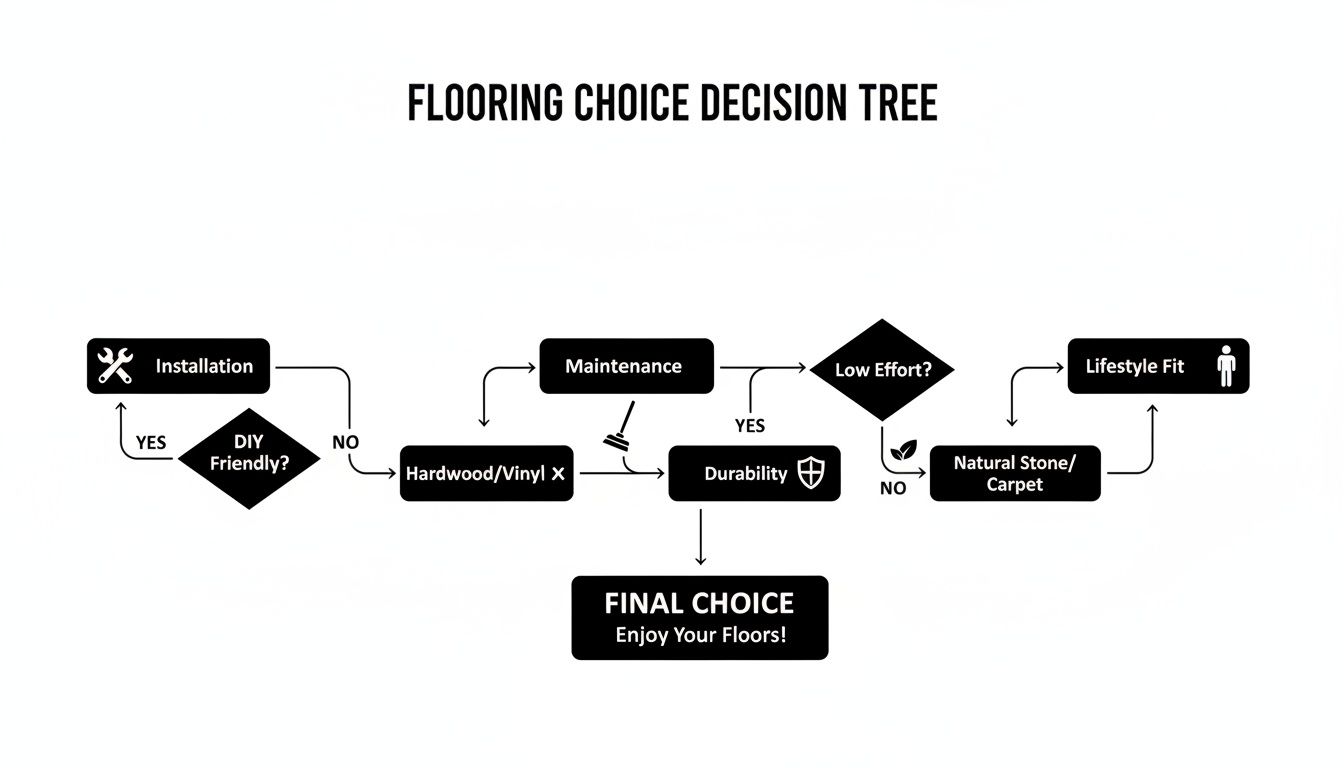
As the chart shows, practical needs like a simple installation process or minimal upkeep often lead people to vinyl. A focus on long-term value and classic aesthetics, however, almost always points back to hardwood.
Your perfect floor is the one that best resolves the tension between your aesthetic desires and your daily realities. Be honest about how you live—this will guide you to a choice you won't regret.
In the end, there's no single "best" floor—just the one that's best for you. By weighing the undeniable practicality of vinyl against the timeless character of hardwood, you can find a floor that not only looks incredible but also works perfectly for your life here in your Cumming or Forsyth County home.
Frequently Asked Questions
When you're trying to decide between vinyl and hardwood flooring, a lot of the same questions tend to pop up. We get these all the time from homeowners in Cumming, Johns Creek, and the surrounding towns, so we've put together some straightforward answers to help you out.
Can I Install Vinyl Plank Over My Old Tile Floor?
Most of the time, yes. This is one of the biggest perks of luxury vinyl. It's often installed as a "floating floor," which means it can go right on top of many existing hard surfaces like ceramic tile.
The key is that your old floor needs to be flat, clean, and in decent shape. If your tile grout lines are particularly deep or wide, you might need to fill them in first to create a smooth base for the new vinyl. Doing this saves a ton of time, money, and mess since you don't have to tear out the old tile.
Which Floor Is Better for a Home with Pets?
For a house with cats or dogs, luxury vinyl is almost always the more practical choice. It's built with a tough, commercial-grade wear layer that does an excellent job resisting scratches from claws.
Even better, vinyl is 100% waterproof. This means pet accidents, spilled water bowls, and muddy paw prints are no big deal. You can clean them up without worrying about moisture seeping in and causing damage, which is a constant concern with hardwood. While beautiful, hardwood scratches easily and liquids can cause permanent stains or warping if not wiped up immediately.
For active households with pets, vinyl flooring provides a durable, worry-free surface that stands up to daily wear and tear. It delivers the look of wood without the high-maintenance demands, making it a stress-free option for pet owners.
Will Hardwood Floors Increase My Home's Resale Value?
Absolutely. There's no question about it. Solid hardwood flooring has always been seen as a premium feature that adds real, tangible value to a home. Homebuyers and real estate agents consistently view it as a major plus.
You can often expect a return on investment of 70% to 80% when you sell. While high-quality luxury vinyl is definitely seen as a modern and desirable upgrade, it just doesn't carry the same long-term equity boost as authentic hardwood. If your main goal is maximizing property value, hardwood is still the gold standard.
Is All Vinyl Flooring Waterproof?
This is an important distinction to make. Modern luxury vinyl plank (LVP) and luxury vinyl tile (LVT) are specifically engineered to be 100% waterproof—the core, the top, all of it.
However, older forms of sheet vinyl or some cheaper products might only be water-resistant on the surface. For rooms that see a lot of moisture, like basements, bathrooms, and kitchens, you should always look for a product that is explicitly labeled as 100% waterproof. That way, you know you're getting full protection.
Ready to see how these options look in your home? The team at Flacks Flooring is here to provide personalized guidance and help you find the perfect floor. Explore our selection and get a free in-home estimate by visiting us at https://flacksflooring.com.