
When you're weighing vinyl against wood flooring, the conversation really boils down to one simple trade-off. Luxury vinyl brings incredible durability and total water resistance to the table, making it a workhorse for modern, busy lives. On the other hand, genuine wood offers that classic, timeless beauty that nothing else can quite replicate, and it's a proven way to boost your home's value.
The choice isn't about which one is "better" overall, but which one is better for you—your daily life, your long-term goals, and your home's specific needs.
Choosing the Right Foundation for Your Home
Picking the right floor is one of the biggest decisions you'll make for your home, especially here in Cumming and the surrounding North Georgia communities. It’s so much more than just a surface to walk on; it’s the canvas for your home’s entire look and feel. This guide is designed to cut through the noise and give you a straight-up comparison between the authentic character of real hardwood and the resilient, modern practicality of luxury vinyl.
Forget a generic pro-and-con list. We’re going to dig into the factors that really matter to homeowners in our area, focusing on a framework that fits your lifestyle, our local climate, and your budget.
Here are the key questions we'll tackle:
- Moisture Resistance: How does each option stand up to Georgia's notorious humidity, especially in places like basements, kitchens, and bathrooms?
- Durability and Lifestyle: Which floor can truly handle the daily chaos of a busy family with kids and pets in active neighborhoods like Milton and Johns Creek?
- Long-Term Value: In a hot real estate market like Forsyth County, what’s the real impact on your home’s resale value?
Our goal is to give you a clear, practical roadmap so you can feel confident about your investment. If you're already leaning toward wood, remember that the whole system matters; our guide on the best underlay for wood flooring is a great next step to ensure you build a solid foundation.
The best choice isn't universal; it's personal. It depends entirely on which material's strengths align with the specific demands of your household and the unique environment of your home.
This comparison will help you see where each material truly shines.
| Feature Comparison | Luxury Vinyl Flooring | Wooden Flooring |
|---|---|---|
| Primary Advantage | Waterproof & Scratch-Resistant | Authentic Beauty & Resale Value |
| Best For | Kitchens, Bathrooms, Basements | Living Rooms, Bedrooms, Dining Areas |
| Maintenance Level | Low (Simple Mopping) | Moderate (Requires Refinishing) |
| Cost | Lower Upfront Cost | Higher Initial Investment |
| Feel Underfoot | Softer and Quieter | Solid and Traditional |
A Detailed Comparison for Modern Lifestyles
Choosing between vinyl and wood flooring isn't just a design decision—it's a lifestyle choice. You're comparing a masterpiece of modern engineering with a timeless natural classic. To find the right fit for your home in Cumming or Johns Creek, you have to look beyond the surface and see how each material handles the realities of your daily life. Let's break down the core differences that will shape your home's look, feel, and function for years to come.
This guide helps you zero in on what truly matters: your lifestyle, your local climate, and your budget.
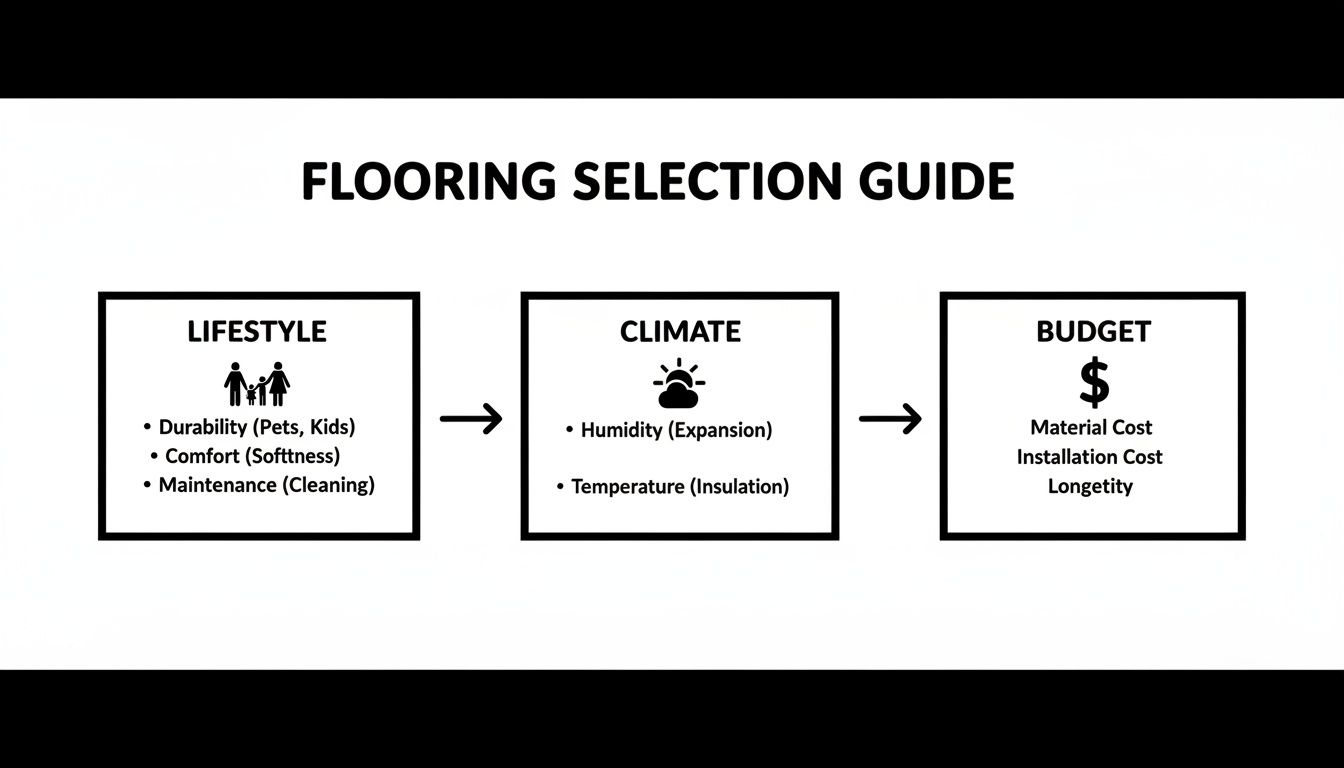
The best flooring is always found where your family's daily routine, our Georgia environment, and your financial planning meet.
Appearance and Authenticity
The look of your floor sets the tone for your entire home. Hardwood’s biggest draw is its unmatched authenticity. Every single plank of oak, hickory, or maple is one-of-a-kind, with its own grain, knots, and color nuances. This natural character brings a warmth and timeless elegance that is genuinely hard to duplicate.
But don't count vinyl out. Luxury vinyl plank (LVP) has come an incredibly long way, using high-definition 3D printing to create a photographic layer that looks shockingly like real wood. The best products even have embossed textures that line up with the printed grain, adding a tactile feel that sells the illusion. While a trained eye might spot the difference up close, today's high-quality LVP offers a stunningly close approximation of wood's beauty.
The core difference comes down to uniqueness versus uniformity. Hardwood gives you an organic, varied surface with one-of-a-kind planks. Vinyl provides a consistent, predictable, and highly realistic wood look.
Durability and Daily Life
In a busy household, especially with kids and pets, durability is everything. This is where the practical side of vinyl really shines. LVP is built with a tough protective top layer—the wear layer—that stands up remarkably well to scratches, scuffs, and dents. It's a true workhorse, perfect for high-traffic zones like hallways, kitchens, and living rooms.
Hardwood, while certainly durable, is a softer, natural material that will inevitably show signs of life. Dropped toys can cause dings, pet claws can leave scratches, and heavy furniture can create indentations. Some people love this "patina" as part of the floor's story, but for others, it's a source of stress. The hardness varies by wood species (oak is much tougher than pine, for example), but no wood is invincible.
Water Resistance and Moisture Management
Here in Georgia, humidity is a fact of life, and moisture is a constant enemy of floors. This is a clear win for vinyl. It's 100% waterproof. Made from synthetic PVC, it simply doesn't react to water—it won't swell, buckle, or degrade. That makes it the hands-down champion for any space where moisture is a concern:
- Basements
- Bathrooms
- Kitchens
- Laundry rooms
Wooden flooring, on the other hand, is extremely vulnerable to water. Spills, leaks, or even persistently high humidity can cause planks to warp, cup, or stain for good. While engineered hardwood is more dimensionally stable than solid wood, it’s still not waterproof. This inherent weakness makes real wood a risky choice for any area prone to moisture.
Maintenance and Upkeep
How much time do you want to spend cleaning your floors? In the vinyl vs. wood debate, this is a major lifestyle question. Vinyl is as low-maintenance as it gets. A quick sweep and an occasional mop with a pH-neutral cleaner are all it takes. Its non-porous surface means spills wipe right up without staining.
Wooden floors demand a bit more attention. Daily sweeping is key to keep grit from scratching the finish. It's crucial to understand the best practices for maintaining engineered and real hardwood floors to protect your investment. Over time, wood floors also need to be refinished—a process of sanding down the surface and applying a fresh protective coat—to bring them back to life, typically every 7-10 years.
For a quick overview, this table summarizes the key differences at a glance.
Quick Comparison Vinyl vs Wood Flooring
| Feature | Luxury Vinyl Flooring | Wooden Flooring |
|---|---|---|
| Appearance | Highly realistic wood look with consistent patterns. | Authentic, unique grain in every plank. Timeless and classic appeal. |
| Durability | Excellent resistance to scratches, dents, and stains. | Prone to scratches and dents; hardness varies by wood species. |
| Water Resistance | 100% waterproof, ideal for all rooms. | Highly susceptible to water damage; not recommended for wet areas. |
| Maintenance | Very low; simple sweeping and mopping. | Requires specific cleaners, and periodic refinishing (every 7-10 years). |
| Lifespan | 15-25 years; cannot be refinished. | Can last 100+ years with proper care; can be refinished multiple times. |
| Installation Cost | Lower; often DIY-friendly with click-lock systems. | Higher; typically requires professional installation for best results. |
| Feel Underfoot | Softer and warmer than wood. | Solid, classic feel; can be cold underfoot. |
| Resale Value Impact | Neutral to positive impact. | Consistently adds significant value to a home. |
This table offers a snapshot, but the best choice always depends on your specific room, budget, and lifestyle.
Lifespan and Longevity
Hardwood flooring is a true long-term investment. With the right care, a solid wood floor can literally last for generations. It can be sanded and refinished multiple times over its life, essentially giving you a brand-new surface every decade or so. This incredible longevity—potentially 100 years or more—is a huge part of its long-term value.
Luxury vinyl flooring has a more defined lifespan, usually between 15 and 25 years. The lifespan depends heavily on the quality of the product and the thickness of that all-important wear layer. While it's extremely durable during that time, it can't be refinished. Once it's worn out, the only option is a full replacement.
The Installation Process
The way these floors get into your home is completely different, impacting time, complexity, and cost.
- Vinyl Flooring: LVP is usually installed as a "floating floor" with a simple click-lock mechanism. This makes it a very popular DIY project. As long as your subfloor is level, it can often go right on top of the old floor, which saves a ton of prep work.
- Wooden Flooring: Putting in a hardwood floor is a true craft. It requires specialized tools to nail or glue the planks down, and real expertise to manage the expansion gaps that allow the wood to breathe with the seasons. To get a result that lasts, professional installation is almost always the way to go.
Understanding the True Cost of Ownership
When you’re staring at flooring samples, it’s easy to get fixated on the price tag per square foot. But that’s just the first chapter of the story. To really understand the financial impact of your choice, you have to look at the total cost of ownership—what you’ll spend over the entire life of the floor.
This bigger picture includes the initial purchase and installation, the day-to-day upkeep, and what happens when the floor reaches the end of its life. Thinking this way is just as important for a budget-conscious family in Cumming as it is for a property investor in Johns Creek focused on long-term value.
Let’s break down the three financial stages you need to consider.
The Upfront Investment
This is the cost everyone sees first: materials and professional installation. Right out of the gate, luxury vinyl flooring is typically the more budget-friendly option. Not only is the material itself less expensive, but the installation is usually quicker and requires less specialized labor, which helps keep those initial costs in check.
Hardwood, on the other hand, is a bigger upfront commitment. The price for solid or high-quality engineered wood is significantly higher. On top of that, the installation is a more intricate, time-consuming process that requires a skilled hand, adding to the overall initial bill.
A common mistake we see is people choosing a floor based only on the material cost. Installation labor can be a huge part of the final budget, and that's often where the cost gap between vinyl and wood really widens.
Ongoing Maintenance Expenses
Here’s where the long-term financial differences really start to show up. Over a 10 or 15-year span, the money you spend on upkeep can vary wildly between these two flooring types.
Luxury vinyl is the undisputed champion of low-maintenance living. Its needs are incredibly simple:
- Cleaning Supplies: A basic, pH-neutral cleaner is all you need. No fancy, expensive products required.
- Repairs: Forget about refinishing. If a plank gets badly damaged, you can often just replace that single piece.
- Professional Services: There's no need for periodic professional treatments, which saves you a nice chunk of change year after year.
Hardwood floors are stunning, but they do require a bigger maintenance budget. You'll need specific wood-safe cleaners, and more importantly, you have to plan for refinishing. A solid hardwood floor typically needs to be professionally sanded and refinished every 7-10 years to buff out scratches and bring back its original glow. This can run you several dollars per square foot—a major recurring expense that vinyl owners simply don't have.
Long-Term Lifecycle Value
Finally, think about how long the floor will actually last. A good quality luxury vinyl floor has a lifespan of 15 to 25 years. After that, it’s time for a full replacement, which means you’ll be facing that cost all over again. For a closer look at what that entails, check out our guide on the cost to install vinyl flooring.
Wooden flooring, however, is playing the long game. A solid hardwood floor that’s well cared for can last for a century—or even longer. Because it can be refinished multiple times, you aren't really replacing it; you're just renewing it. While each refinishing comes with a price tag, it’s a fraction of the cost of a full tear-out and replacement. This incredible longevity is what makes its higher upfront cost a smart, strategic investment for the future of your home.
How Flooring Impacts Your Home's Resale Value
Thinking about selling your home down the line? Your choice of flooring isn't just about looks—it's a serious financial decision that can make a real difference in its market appeal and final sale price. In competitive areas like Forsyth County, Johns Creek, and Milton, the floors underfoot can quickly become a key feature for potential buyers.
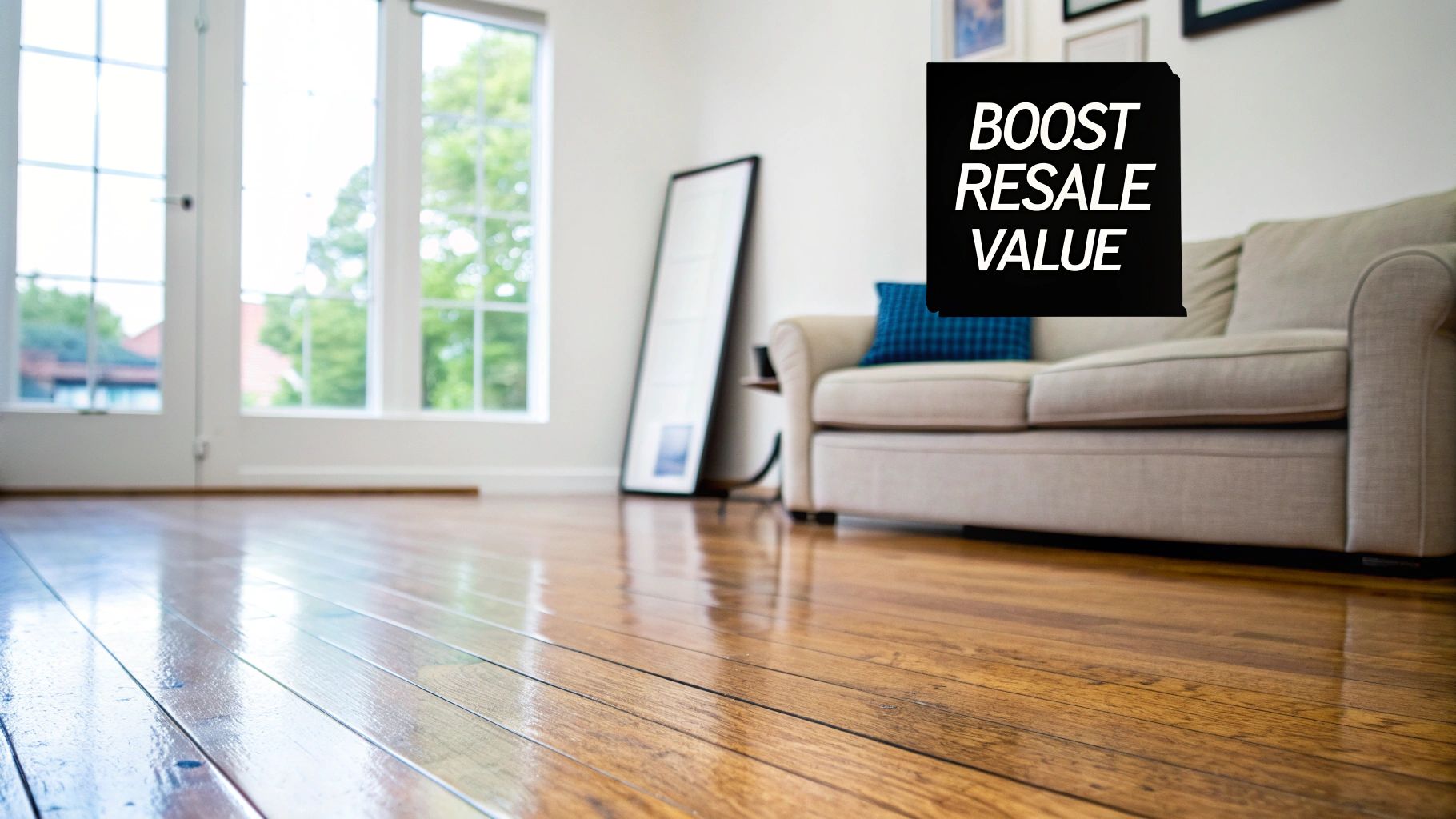
Understanding how your choice in the vinyl vs. wood debate translates at closing time is crucial for getting the best return on your investment.
The Lasting Power of Hardwood
Let's be honest: hardwood floors have been the gold standard in real estate for as long as most of us can remember. They consistently top "must-have" lists for homebuyers, and real estate agents will tell you they command a premium. There's just an emotional connection to the natural warmth and character of genuine wood that speaks to buyers looking for quality and permanence.
This isn't just a feeling; the numbers back it up. Even with all the fantastic new materials out there, hardwood remains a powerful long-term value driver. Market data consistently shows that installing wood floors delivers a strong return on investment, often recouping 70% to 80% of the cost at resale. Buyers are simply willing to pay more for that authentic foundation.
The Strategic Advantage of Luxury Vinyl
While hardwood has the prestige, modern luxury vinyl plank (LVP) has become a major selling point in its own right. Today's buyers are just as focused on practicality as they are on aesthetics, and LVP’s waterproof guarantee is a huge draw.
Imagine a home in Cumming with brand-new, waterproof LVP throughout the basement, kitchen, and bathrooms. A potential buyer doesn't see that as a compromise; they see it as a smart, durable solution that saves them from future headaches and the costs of potential water damage. This practical edge can make your home the clear winner against the competition.
For many buyers, seeing new, high-quality LVP in moisture-prone areas is a signal of a well-maintained and thoughtfully updated home. It removes a major worry from their list and adds immediate, practical value.
Real estate agents use a real estate comparative market analysis (CMA) to pin down a home's value, and believe me, updated flooring is a significant factor in that calculation. The right choice can seriously strengthen your negotiating position when it's time to sell.
Making the Right Choice for Your Sale
So, what's the better bet for resale? It really depends on your home's price point and who you're trying to sell it to.
- For High-End Homes: In luxury areas like Milton, buyers often expect genuine hardwood. It reinforces the premium quality of the home and aligns with their desire for classic, high-end finishes.
- For Family-Focused Homes: In many family-oriented neighborhoods, the sheer durability and waterproof nature of LVP can be a much stronger selling point, appealing directly to people who want a beautiful home without the fuss.
Both flooring types can boost your home's value when you choose them strategically. To learn more, check out our guide on how floors can increase the value of your home.
Where Each Flooring Type Shines: A Room-by-Room Guide
Deciding between vinyl and wooden flooring isn't a one-size-fits-all call. The reality is, the right choice often changes from room to room, depending entirely on how you live in that space. A smart approach means matching the material's strengths to the room's specific demands. This way, you get the best performance, look, and long-term value throughout your home.

Think of this as a strategic breakdown of where each flooring type truly excels. It’s about making a savvy investment, putting each material where it makes the most sense.
Moisture-Prone Zones: The Clear Winner Is Vinyl
In rooms where water and humidity are constant factors, the vinyl flooring vs wooden flooring debate isn't much of a debate at all. For bathrooms, laundry rooms, and basements—a common feature in North Georgia homes—luxury vinyl is the undisputed champ.
Its 100% waterproof core means it simply won’t swell, warp, or fall apart when faced with spills, leaks, or that dampness rising from a concrete slab. Putting solid hardwood in these areas is a recipe for disaster; moisture will cause catastrophic damage. And while engineered wood is more stable, it’s still not waterproof, making vinyl the only genuinely worry-free option for these tough environments.
High-Traffic Hubs: Durability Under Pressure
Now let's talk about the busiest parts of your house: the entryway, the main hallways, and the kitchen. These spots take a constant beating from foot traffic, dropped keys, pet claws, and dragged furniture. Here, the choice becomes a bit more nuanced, balancing resilience with how much upkeep you're willing to do.
- Luxury Vinyl Flooring: Modern LVP comes with a commercial-grade wear layer that offers superior protection against scratches and scuffs. It's the perfect floor for a busy family that needs something to handle daily chaos without constant stress.
- Engineered Hardwood: This is a fantastic middle-ground. You get the authentic look of real wood with a more stable, durable core. The top layer is still real wood and can scratch, but it holds up much better than softer solid woods.
When it comes to pure, rugged durability in high-traffic zones, high-quality vinyl usually has the edge.
The decision for high-traffic areas really comes down to aesthetics versus practicality. If you're set on the look of real wood, choose a hard species like oak in an engineered format. If you prioritize minimal maintenance and top-tier scratch resistance, a quality LVP is the smarter pick.
Heart of the Home: Warmth and Character
In living rooms, dining rooms, and bedrooms, the conversation shifts from pure utility to comfort, style, and feel. These are the places where you relax and entertain, and the flooring plays a massive role in setting the tone.
This is where genuine hardwood flooring truly comes into its own. The natural warmth, the one-of-a-kind grain patterns, and the timeless character create an inviting and elevated look that synthetic materials just can't perfectly replicate. Those slight imperfections and variations from plank to plank add an authenticity that makes a space feel grounded and luxurious.
While today's LVP offers an incredibly realistic wood look, genuine wood delivers an unmatched sensory experience and adds proven resale value to these central living areas. This isn't just an opinion; market data shows that while vinyl is gaining ground for its practicality, hardwood remains the premium choice for high-value applications where character is king. You can learn more about how market trends support a mixed-flooring strategy.
The Hybrid Flooring Strategy
The best part? You don’t have to pick just one. A "hybrid flooring" approach is often the most intelligent solution for a whole-home project. It’s all about using each material where it performs best.
For instance, you could install beautiful solid hardwood in your living room and bedrooms for that classic elegance, then create a seamless transition to a coordinating luxury vinyl plank in the kitchen, bathrooms, and basement. This strategy optimizes your budget, maximizes durability exactly where you need it, and ensures you get the right look and feel in every part of your home.
Making the Final Call with Confidence
Alright, you've waded through all the details—appearance, cost, durability. Now it's time to make the final call. The truth is, the "best" flooring doesn't exist in a vacuum. It all comes down to what you truly value for your home and your lifestyle.
Think of it less as just picking a floor and more as choosing the right foundation for your daily life. To make this last step easier, let's see which of these homeowner scenarios sounds most like you.
Finding Your Perfect Match
-
The Busy Family: Is your house ground zero for kids, pets, and the beautiful chaos that comes with them? If so, you need something that can take a beating. Durability, scratch resistance, and no-fuss cleanup are your top priorities. In this matchup, luxury vinyl is the hands-down champion. It’s waterproof, tough, and lets you live your life without constantly worrying about spills and messes.
-
The Design-Conscious Homeowner: If your goal is to create a space with timeless elegance and that authentic, natural feel, nothing quite beats the real thing. Genuine hardwood brings a warmth and character to a room that vinyl can only imitate. For creating that truly high-end, inviting atmosphere in a living room or master bedroom, wood is the clear choice.
-
The Budget-Focused Renovator: When the bottom line is the main driver, your decision really hinges on your timeline. For a lower upfront cost, luxury vinyl is tough to beat. You get a great look for less, both in materials and installation. But if you're playing the long game, hardwood is a powerful investment. It adds significant, lasting resale value that vinyl simply can't match over the decades.
The heart of the vinyl vs. wooden flooring debate really boils down to a single trade-off: Are you after the unmatched practicality and waterproof peace of mind of vinyl, or the timeless character and proven long-term value of real wood?
Once you answer that question, you'll know exactly which floor is right for you. You'll have a surface that not only looks fantastic but also works for your life, giving you complete confidence in your decision for years to come.
Frequently Asked Questions
After weighing all the pros and cons, you might still have a few lingering questions. It's totally normal. Here are the most common ones we hear from homeowners in Cumming, Johns Creek, and Milton as they get ready to make that final call between vinyl and wood.
Which Flooring Is Better For Homes With Pets And Children?
If you have a busy household with kids and pets, luxury vinyl flooring is almost always the more practical, stress-free choice. Its rugged, multi-layer design is built to withstand scratches and dents from everything—pet claws, dropped toys, you name it.
But the real game-changer is that it’s 100% waterproof. Spills, muddy paws, or pet accidents are no big deal. Hardwood looks beautiful, but it's much more vulnerable to scratches and can be permanently damaged by water, which can be a constant source of worry in an active family home.
How Does Georgia's Humidity Affect These Floors?
You can't talk about home improvements in North Georgia without talking about the humidity. It’s a huge factor. Wood is a natural material, and it will expand and contract with the moisture in the air. If it isn't properly acclimated and installed by a true pro, you can end up with ugly gaps or warped planks. Engineered hardwood handles it better than solid wood, but it's not totally immune.
On the other hand, vinyl is made from synthetic materials, so it couldn't care less about humidity. It won't swell, shrink, or warp. That stability makes it an incredibly reliable choice for our climate, especially in tricky spots like basements where moisture is always a concern.
Can I Install These Flooring Types Myself?
This is a big one, and it directly hits your budget and timeline. Luxury vinyl plank (LVP) is famous for being DIY-friendly. Most brands use a simple click-lock system, letting the planks "float" over the existing subfloor without needing any messy glue or nails. For a homeowner with some basic skills, it's a very doable weekend project.
Installing hardwood flooring is a different story entirely. It's a job that requires specialized tools, precision cuts, and a real understanding of how to leave the right amount of space for seasonal expansion. Honestly, to protect such a big investment and get a result that looks and performs perfectly for decades, you should always leave hardwood installation to the professionals.
Is One Option More Eco-Friendly Than The Other?
The "green" angle is complicated, with valid points on both sides. Hardwood is a natural, renewable resource, and a lot of it comes from responsibly managed forests. Plus, at the end of its incredibly long life, it's biodegradable. The catch is the carbon footprint from finishing, transportation, and manufacturing.
Vinyl is made from petroleum, which isn't a renewable resource. However, its major environmental advantage is its longevity—it lasts so long that you're replacing it far less often, which means less waste over time. Many newer vinyl floors also include recycled materials and can be recycled themselves, which definitely helps improve their standing.
Ready to see how these options look and feel in person? The expert team at Flacks Flooring is here to guide you through our extensive collection of waterproof vinyl and beautiful hardwood floors. Visit our Cumming showroom or schedule a personalized consultation to find the perfect foundation for your home. Learn more at https://flacksflooring.com.