
Deciding between vinyl plank and hardwood flooring isn't just about looks—it's about matching the material to your life. The right choice really hinges on your budget, your family's lifestyle, and the room you're renovating.
If you've got a busy home with kids and pets running around, or you're finishing a moisture-prone space like a kitchen or basement, vinyl plank is often the most practical pick. It's built for durability and won't break the bank. On the other hand, if you're after that timeless, authentic character and a boost to your home's long-term value, nothing quite beats genuine hardwood.
A High-Level Flooring Comparison
Choosing your floor means weighing factors that will affect your home—and your wallet—for decades. The vinyl-versus-hardwood debate often comes down to a simple trade-off: do you prioritize modern, engineered resilience or classic, natural authenticity? Each one has its own clear strengths, and getting a handle on them is the key to making a choice you'll be happy with.
To kick things off, let's look at the big three: cost, durability, and the effort required to keep it looking good. This quick visual breaks down where each material stands.
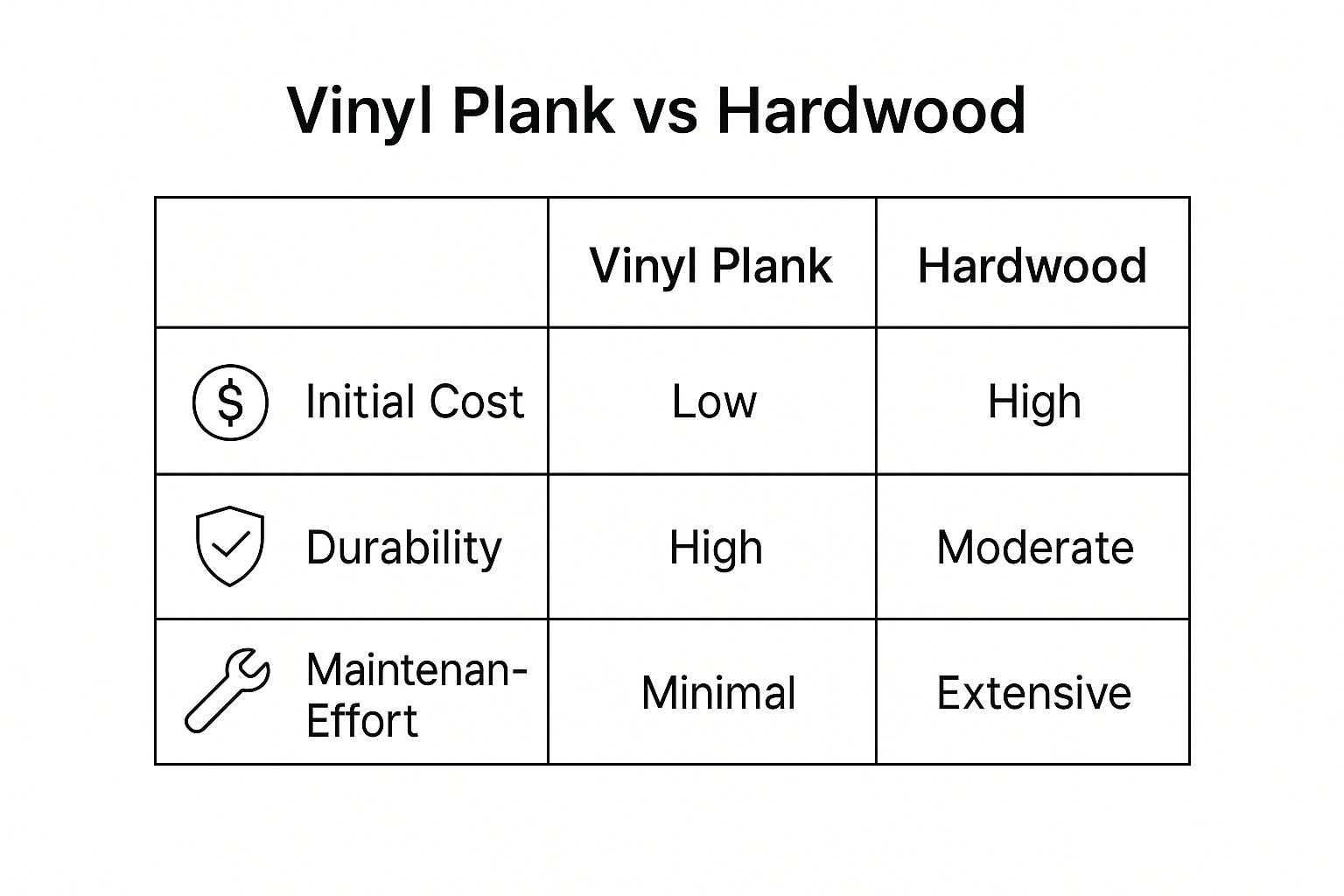
As you can see, vinyl plank is the clear winner for a low-cost, low-maintenance, and highly durable floor. Hardwood asks for a bigger investment upfront and more care over its lifetime, but the payoff is in its longevity and timeless appeal.
Quick Look Vinyl Plank vs Hardwood Flooring
Before we get into the nitty-gritty details, this table gives you a straightforward, at-a-glance comparison of the most important factors when you're standing at this crossroads.
| Decision Factor | Vinyl Plank Flooring | Hardwood Flooring |
|---|---|---|
| Initial Cost | $2 – $7 per square foot. A budget-friendly choice for both materials and installation. | $8 – $25+ per square foot. A significant upfront investment in your home. |
| Durability | Excellent. It's waterproof, scratch-resistant, and dent-proof, making it perfect for high-traffic zones. | Good to Excellent. Prone to scratches and water damage but can last for generations if cared for. |
| Maintenance | Low. A simple sweep and an occasional mop with a pH-neutral cleaner are all it takes. | Moderate to High. Requires regular cleaning, careful moisture control, and refinishing every decade or so. |
| Resale Value | Neutral. Won't necessarily add a ton of value, but buyers see it as a durable, modern feature. | High. A major selling point that consistently adds significant value to a home. |
| Lifespan | 15-25 years. Top-tier vinyl can last even longer, but once it's worn out, it needs to be replaced. | 100+ years. Can be sanded and refinished multiple times to look brand new again. |
This side-by-side view makes the core differences pretty clear. Vinyl offers incredible performance for its price point, while hardwood is a long-term investment in beauty and value that can literally last a lifetime.
Understanding What Your Floor Is Actually Made Of
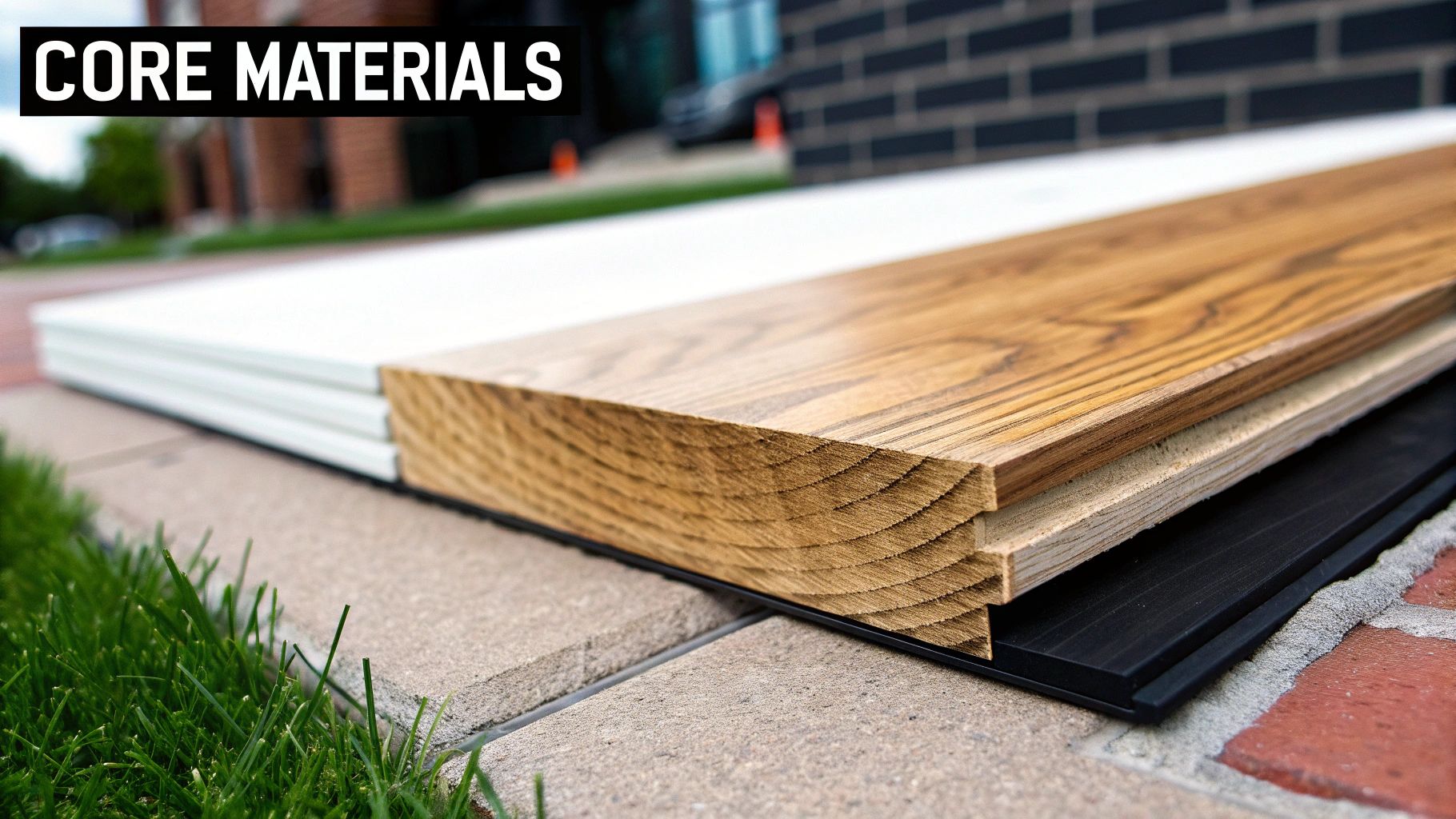
Before we even talk about looks or price, let's get down to brass tacks: what are these floors really made of? The answer to that question dictates everything—how they feel underfoot, how they hold up to daily life, and where they’ll work best in your home. It’s the difference between a natural product and a feat of modern engineering.
Vinyl plank is a totally manufactured product, built in layers like a high-tech sandwich. Each layer has a specific job, from protecting the surface to providing stability. It’s a very intentional design. We dive deeper into this in our guide to luxury vinyl plank flooring.
At the top, you have a transparent wear layer that fends off scratches and spills. Right below that sits a high-resolution printed image that gives the plank its convincing wood look. But the real workhorse is the rigid core, which gives the plank its strength and structure.
Vinyl vs. Wood: The Core Difference
When you're looking at vinyl, the core is the most important part of the equation. There are two main types you'll run into, and they offer very different benefits.
- WPC (Wood Plastic Composite): This core is infused with wood pulp and foaming agents, which makes it feel a bit softer and warmer underfoot. It’s also great at dampening sound, a real plus for upstairs bedrooms or apartments.
- SPC (Stone Plastic Composite): Made with a limestone composite, this core is dense, rigid, and tough as nails. SPC is the champion of dent resistance, making it perfect for busy entryways, kitchens, or anywhere you have heavy furniture.
Key Takeaway: Choosing between WPC and SPC is a classic trade-off. WPC gives you comfort and quiet, while SPC delivers brute strength. You get to pick the core that matches the demands of the room.
Hardwood, on the other hand, is a natural product straight from the forest. It’s milled from a single piece of timber, and that organic origin is what gives it that unmatched, one-of-a-kind beauty. But being natural also means it has its own set of rules and limitations.
Exploring the Two Types of Hardwood
Hardwood flooring generally comes in two forms. The way they're constructed dramatically impacts where and how you can install them, especially when moisture is a concern.
Solid Hardwood is the classic choice—a single, solid piece of wood all the way through. It's built to last a lifetime and can be sanded and refinished over and over again. The catch? It breathes. Solid wood expands and contracts with every shift in humidity, so it's not a great fit for basements or bathrooms.
Engineered Hardwood is built more like plywood. It has a top layer of beautiful, real hardwood, but it’s bonded to a core of multiple wood layers stacked in opposite directions. This cross-layered construction makes it far more stable and resistant to moisture fluctuations. This resilience is a big reason why it now dominates the market, accounting for 72.37% of all hardwood flooring sold and continuing to grow. You can see the full breakdown of these market trends in hardwood flooring.
Comparing Design Realism and Authentic Style
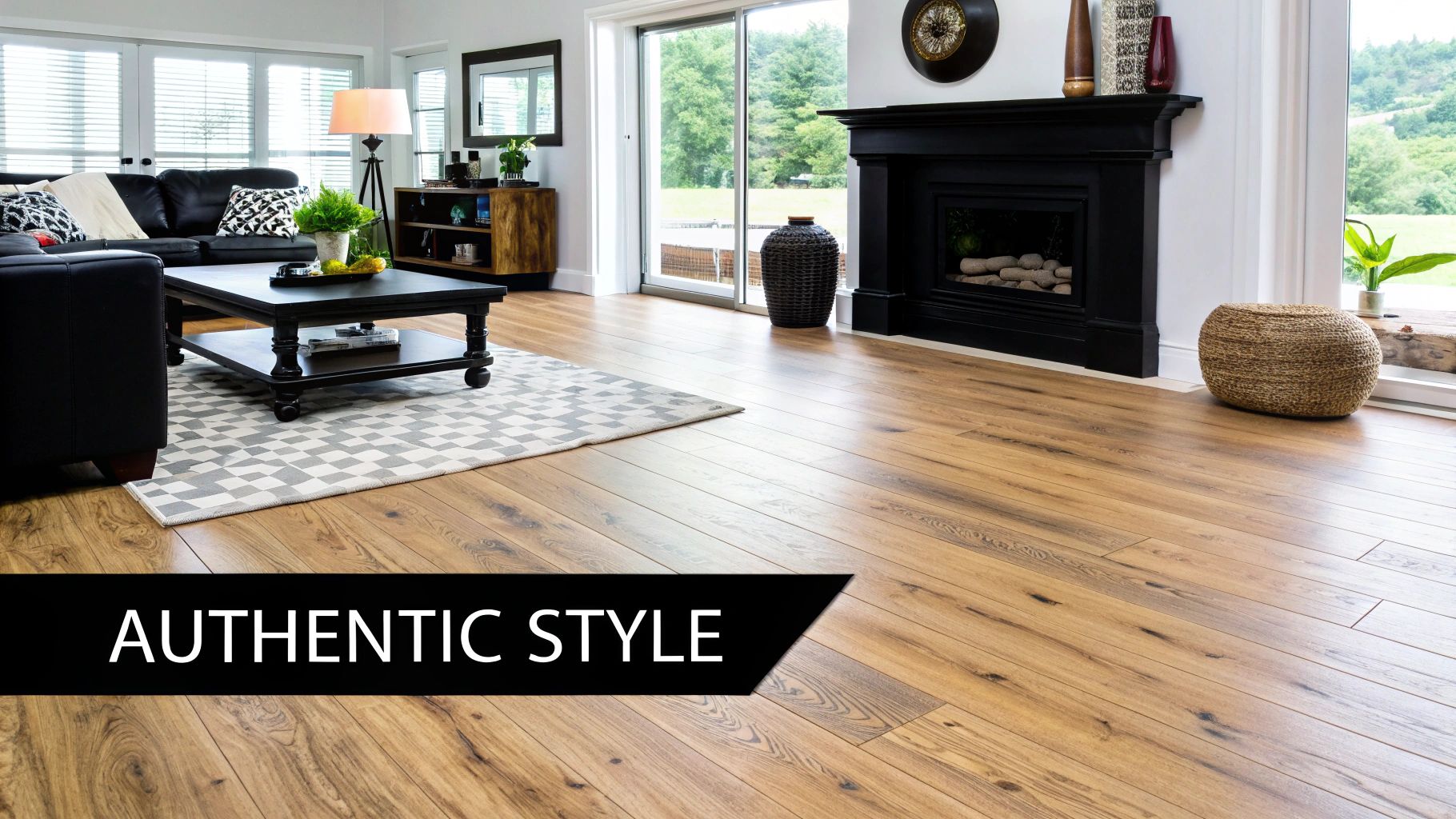
When it comes to vinyl plank flooring vs hardwood, the discussion almost always lands on one question: are you looking for engineered perfection or natural, one-of-a-kind beauty? Both options can create a breathtaking room, but they get there from completely different places. This choice shapes not just the look but the entire character and feel of your space.
Modern luxury vinyl plank (LVP) has come a long, long way. Thanks to high-definition printing, the visual layer that mimics wood grain is now stunningly detailed and convincing, especially at a glance. The best products even use a technique called Embossed in Register (EIR), where the physical texture of the plank is perfectly aligned with the printed grain. This adds a level of tactile realism that truly blurs the lines.
But even the most sophisticated LVP runs into one unavoidable issue: pattern repetition. To keep costs reasonable, manufacturers produce a limited number of unique plank designs. Over a large floor, you’ll eventually start to spot the duplicates, which can give away the fact that it isn't real wood.
The Unmatched Authenticity of Hardwood
Hardwood floors deliver something that a factory simply can't mass-produce: true, unadulterated uniqueness. Since it’s a natural product, every single plank has its own history. Each board tells a story through its grain patterns, knots, mineral streaks, and subtle color shifts.
This organic variation gives hardwood a depth and warmth that feels completely genuine and timeless. It doesn't just look like wood; it is wood. That authenticity adds a layer of character to a home that’s hard to put into words but easy to feel underfoot. The species you choose also makes a huge difference, which you can learn more about in our guide to hardwood species.
Hardwood offers an irreplaceable, organic aesthetic. Its natural imperfections and unique grain in every plank create a sense of timeless warmth and character that engineered designs can only imitate.
Matching the Style to Your Space
So, which one is right for you? The best choice really comes down to your design vision and lifestyle.
High-quality vinyl plank is a fantastic solution if you're aiming for a specific modern, rustic, or minimalist aesthetic where consistency and worry-free durability are top priorities. It gives you a clean, predictable look that fits perfectly with many contemporary design schemes.
On the other hand, hardwood is the undisputed champion for spaces that demand classic elegance, traditional comfort, or a high-end, natural vibe. Its ability to be stained and finished in countless ways means it can be tailored to any style, from a dark, moody dining room to a bright, airy living space. LVP is great at mimicking a look, but hardwood truly defines it with its own inherent and lasting beauty.
Durability and Maintenance: A Practical Analysis
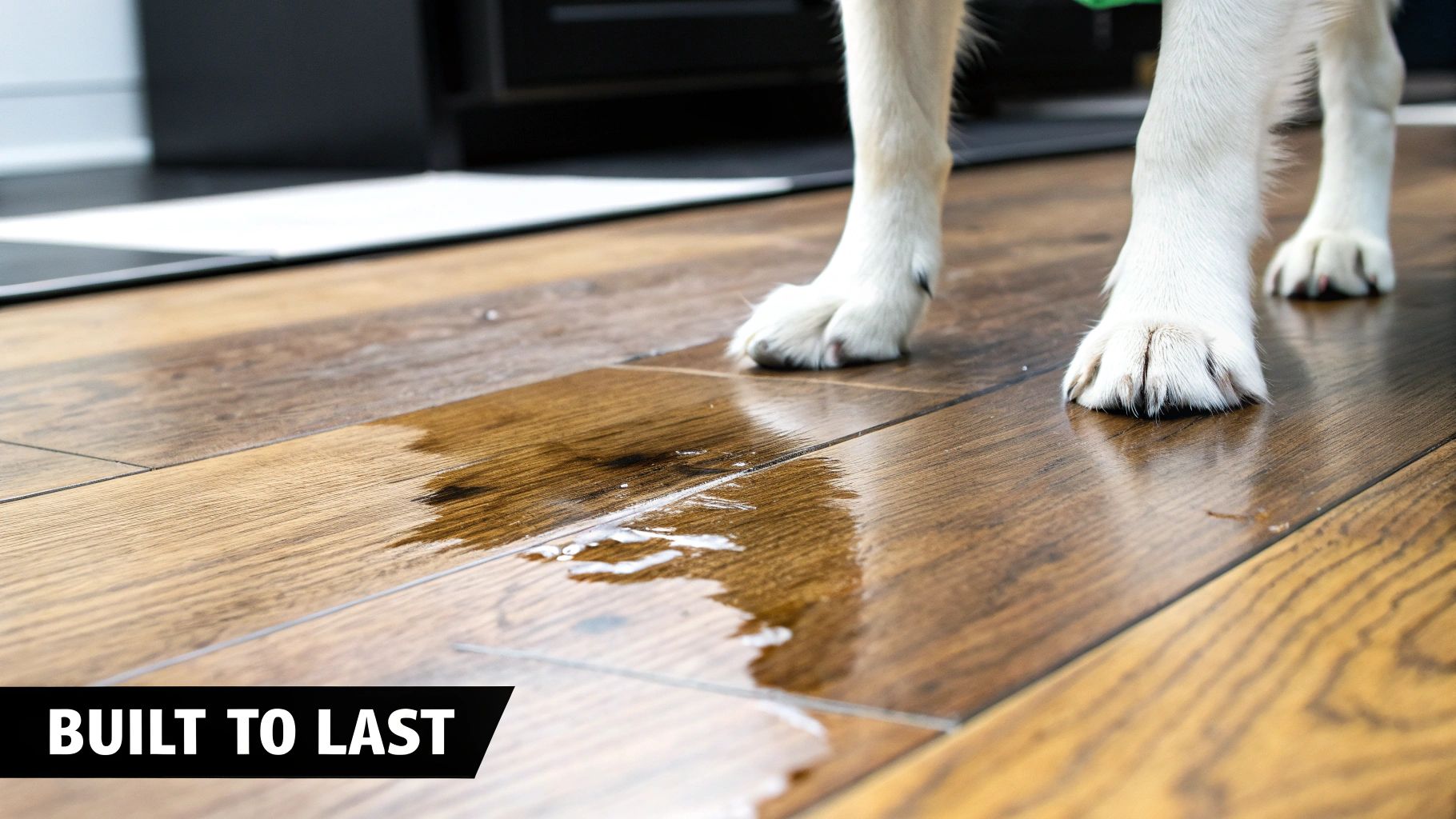
When you're choosing between vinyl plank flooring vs hardwood, durability isn't just a technical spec—it's about how a floor survives real life. A floor's true test is how it handles spilled juice, scrambling pet paws, and the daily grind of a busy household. This is where the practical differences between vinyl and hardwood really shine through.
Vinyl plank is engineered from its core to be tough. Thanks to its non-porous surface and a robust protective wear layer, it stands up brilliantly to everyday accidents. It's incredibly resistant to scratches, scuffs, and dents, making it a huge win for families with active kids and pets.
Even more importantly, vinyl plank is practically immune to moisture. This quality alone makes it the go-to choice for rooms where you'd never dream of putting hardwood—think kitchens, bathrooms, and basements. We dive deeper into this topic in our guide explaining why vinyl plank is waterproof, which breaks down its unique construction.
Hardwood's Unique Resilience
Hardwood is durable, but in a very different way. As a natural product, it's more susceptible to surface damage. Pet claws can leave their mark, a dropped can might cause a dent, and any significant moisture can lead to warping or staining. It simply asks for a bit more mindfulness in your day-to-day.
But here’s hardwood’s trump card: its incredible lifespan and the ability to be completely renewed. This is a game-changer in the durability debate.
While vinyl is a champion at resisting daily wear, solid hardwood is the master of long-term restoration. Its ability to be sanded down and refinished multiple times means it can last for generations, literally erasing decades of wear and tear.
A hardwood floor that looks tired after 20 years can be brought back to its original, breathtaking glory. That's a trick vinyl just can't pull off.
A Tale of Two Maintenance Routines
The upkeep for vinyl and hardwood couldn't be more different, and it all comes down to what they're made of. Each flooring demands its own routine to stay looking great for the long haul.
Vinyl Plank Maintenance:
- Daily Care: A quick sweep or vacuum is usually all you need to handle dust and debris.
- Cleaning: A simple mop with a pH-neutral cleaner every so often keeps it looking fresh. No special waxes or polishes are ever needed.
- Repairs: If a plank gets seriously damaged, you can often replace just that one piece, although matching the color on an older floor can sometimes be tricky.
Hardwood Maintenance:
- Daily Care: Frequent sweeping is a must to get rid of abrasive grit that can scratch the finish.
- Cleaning: You'll need a cleaner made specifically for hardwood and a lightly dampened microfiber mop. Water is not its friend.
- Long-Term Care: This is the big one. Hardwood needs to be refinished every 10-15 years to restore its protective layer and beauty. This involves sanding down the entire surface and applying fresh coats of finish.
In the end, vinyl offers a low-effort, "set-it-and-forget-it" experience. Hardwood, on the other hand, is more of a long-term relationship, rewarding consistent care with a lifespan that can outlast the house itself. The right choice depends on whether you value frontline defense against daily messes or the timeless potential for complete renewal.
Breaking Down the True Cost and Long-Term Value
When you’re weighing vinyl plank flooring vs hardwood, the sticker price is just the tip of the iceberg. To really understand the financial picture, you need to look at the total cost of ownership—from the day you buy it to its impact on your home's value down the road. This is where you see two completely different investment philosophies emerge.
Vinyl plank is the clear winner on upfront costs. The material is simply cheaper to produce, and installation is usually a much quicker, less fussy job, which slashes your labor bill. This makes it a fantastic option if you're on a tight budget or just want a fast, high-impact upgrade without draining your savings.
Hardwood, on the other hand, demands a much bigger initial investment. You're paying for a premium natural material, and installing it correctly is a true craft that requires a skilled pro, bumping up the total cost. It can feel like a steep price to pay, but it's more accurate to see it as an investment directly into your home's equity.
Analyzing the Lifetime Financial Impact
The long-term math is where these two floors really start to diverge. Vinyl’s biggest financial advantage over its lifespan is its incredibly low maintenance. Other than regular cleaning, you won't be spending money on special waxes, professional treatments, or sanding. It’s tough enough that you'll likely spend less on repairs from daily life, too.
The catch? When a vinyl floor hits the end of its 15-25 year lifespan, that's it. Your only real option is to tear it out and start over, putting you right back at square one financially.
Hardwood follows a very different financial path. Yes, you’ll need to have it professionally refinished every decade or so, which isn't free. But that process completely revitalizes the floor, making it look brand new. You're not replacing it; you're just renewing it for a fraction of what a new installation would cost.
Hardwood flooring is an asset that grows with your home. Because it can be refinished again and again, it can easily last over a century, offering a return on investment that vinyl simply can’t touch.
Market Trends and Resale Value
The market really tells this story. Vinyl plank has exploded in popularity because it’s so practical, and that has put some pressure on hardwood sales. In fact, recent industry data showed that U.S. hardwood sales dropped by 9% in revenue, a dip largely thanks to the rise of great-looking, affordable alternatives like LVP. You can dig into more of these flooring industry stats on FCNews.net.
Ultimately, the right choice really hinges on your financial strategy. Vinyl plank gives you immediate savings and a predictable, low-cost experience, making it a smart, practical choice for many situations. Hardwood costs more today but acts as a long-term investment that adds real, lasting value to your property—something that can pay you back handsomely when it's time to sell.
So, Which Floor Is Right for You?
Choosing between vinyl plank and hardwood really boils down to what you value most. There's no single "best" floor—only the one that fits your home, your lifestyle, and your wallet. Let's walk through the final decision-making process to make sure you land on a floor you'll love for years to come.
Ultimately, you're deciding between everyday resilience and timeless, natural authenticity. Each has its moment to shine, and knowing where those moments are is the key to choosing with confidence.
When Vinyl Plank Is the Smartest Move
Vinyl plank is the undisputed champion for homeowners who need a floor that can keep up with a chaotic life without demanding constant attention. It’s the go-to, practical choice in a few key scenarios:
- You're Renovating on a Budget: If you're after a dramatic visual upgrade without the steep price tag of natural wood, vinyl delivers a beautiful look for a fraction of the cost.
- It's for a Rental Property: For landlords, vinyl plank is a no-brainer. Its incredible durability, coupled with its resistance to water and scratches, makes it a low-risk, high-reward option for tenant-occupied homes.
- You Have a Busy Family with Pets: In a house filled with high foot traffic, energetic kids, and four-legged friends, the worry-free, tough-as-nails nature of vinyl is simply unbeatable.
When to Go with Classic Hardwood
Hardwood continues to be the premier choice for those who see their floors as a foundational investment in their home’s soul and market value. It's the right call in these situations:
- Authentic Beauty Is Your Top Priority: If your design vision calls for the unmatched warmth, unique grain, and genuine character of a natural material, nothing compares to real wood.
- You're Focused on Maximizing Property Value: Hardwood is a proven asset. It consistently adds significant resale value, making it a savvy investment for anyone planning to stay in their home for the long haul.
- You Want a Floor That Lasts a Lifetime (or More): The ability to sand and refinish hardwood gives it an incredible lifespan of 100 years or more. It’s not just a floor; it’s a permanent feature of your home that can be passed down through generations.
Flooring FAQs: Your Questions Answered
Even after comparing the big picture, you probably still have a few specific questions. When it comes to vinyl plank flooring vs. hardwood, the final decision often hinges on the small, day-to-day realities of living with your choice. Here are some straight answers to the most common things we get asked by homeowners in Cumming, GA.
These are the practical details—like what happens when a plank gets damaged or which option is better for the planet—that will help you make a choice you’ll be happy with for years.
How Do Repairs Work for Each Type?
The way you fix vinyl and hardwood couldn't be more different. With vinyl plank, if a piece gets a deep scratch or gouge, the fix is usually localized. A good installer can carefully pop out the single damaged plank and click a new one into its place, and you'd never know the difference.
Hardwood repairs are a bit more of a project. You can touch up minor surface scratches with a stain pen, but deeper damage often means sanding down and refinishing the entire floor to get a perfectly even look. It's a bigger job, but the upside is that it makes the whole surface look brand new again.
Key Insight: Vinyl plank repairs are like targeted surgery—you replace only what's broken. Hardwood refinishing is a full-scale renewal, erasing all signs of wear and tear across the entire room.
Which Flooring Is More Eco-Friendly?
The environmental story for each flooring is nuanced. Hardwood is a natural, renewable resource, especially when it comes from forests managed with sustainability in mind. Look for certifications from groups like the Forest Stewardship Council (FSC) to ensure the wood was harvested responsibly.
On the other hand, vinyl is a synthetic, petroleum-based product, which relies on a non-renewable resource. However, manufacturers have come a long way in making greener options, such as planks made with recycled materials and those with low-VOC (volatile organic compound) ratings, which is better for your indoor air quality.
What About Comfort and Sound Underfoot?
The feel and sound of a floor really shape the character of a room. Vinyl plank flooring, especially styles with a built-in WPC (Wood Plastic Composite) core, feels noticeably softer and warmer when you walk on it. It also tends to absorb sound, which can make a room feel a little quieter and cozier.
Hardwood is, well, hard. It's a solid, firm surface that gives you that classic, sturdy feel. It can be a bit louder with footsteps and create more of an echo, but that’s nothing a few well-placed area rugs can't solve. It really boils down to whether you prefer a softer, quieter step or the timeless, solid feel of real wood.
Ready to explore the perfect flooring for your home in Cumming, Forsyth County, or Johns Creek? The team at Flacks Flooring is here to provide expert guidance and a stunning selection of waterproof flooring and hardwoods. Visit our showroom or schedule a consultation on flacksflooring.com to find a floor that fits your life.