
Choosing between vinyl and carpet really boils down to one simple question: do you want practical performance or cozy comfort? It's a classic trade-off. Vinyl gives you incredible durability and moisture resistance, perfect for busy, spill-prone areas. On the other hand, carpet delivers a level of warmth and softness underfoot that vinyl just can't match, making it a go-to for bedrooms and family rooms.
Your final decision hinges on which of those benefits you value more for a specific room.
Setting The Foundation For Your Flooring Decision
Picking the right flooring is a huge deal. It’s not just a surface you walk on; it sets the tone for a room's entire look and feel, and you'll live with it for years. For those of us here in Cumming, GA, and the rest of Forsyth County, our active lives and humid climate add another layer to the decision. Before we get into the nitty-gritty, let’s start with a clear, side-by-side look at these two flooring giants.
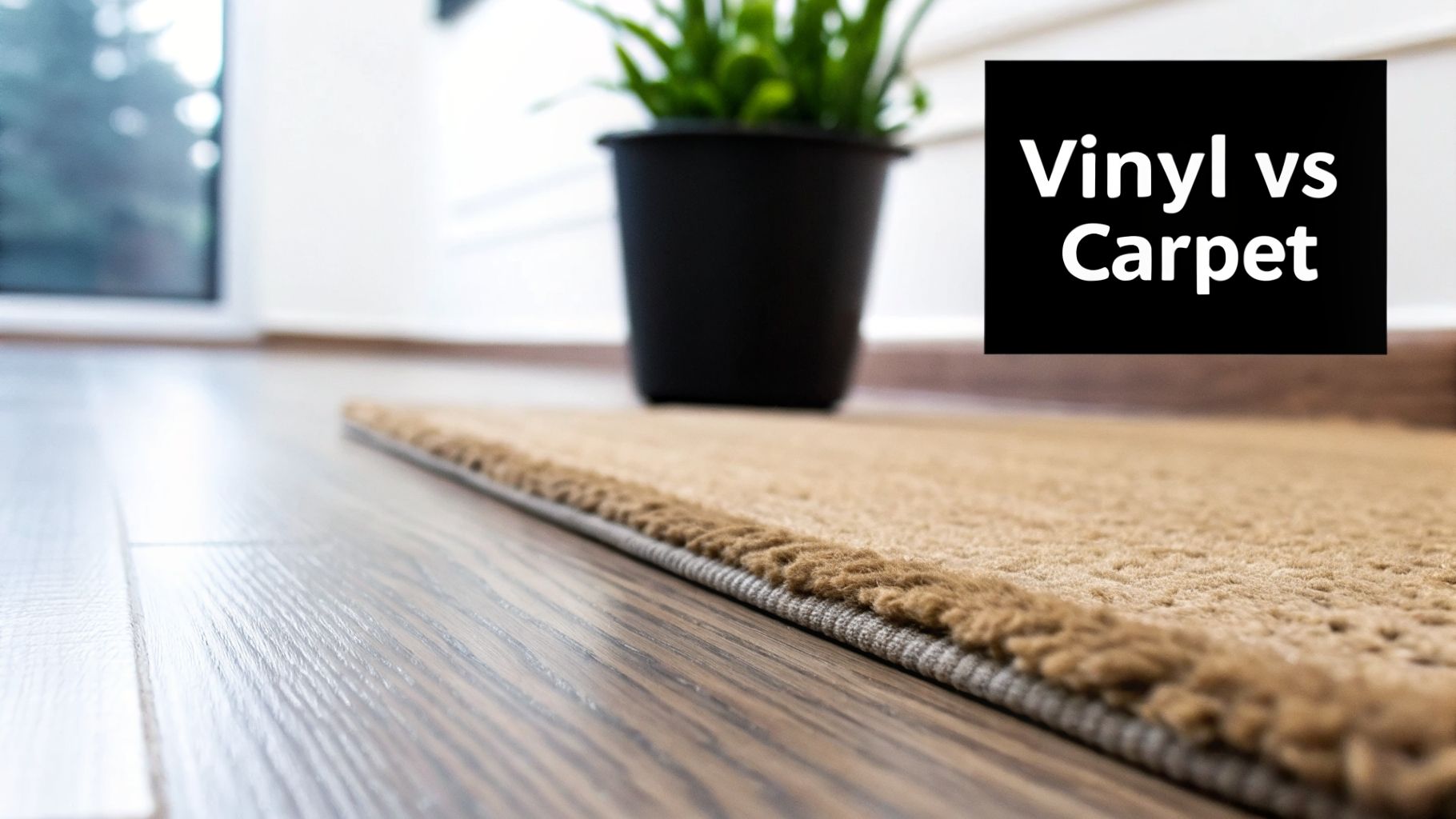
Quick Look Vinyl vs Carpet Key Differences
If you just want the highlights, this table cuts straight to the chase, comparing the most important factors for any homeowner.
| Feature | Vinyl Flooring | Carpet Flooring |
|---|---|---|
| Best For | Kitchens, bathrooms, basements, high-traffic areas | Bedrooms, living rooms, playrooms, quiet spaces |
| Durability | High; resistant to scratches, dents, and stains | Varies; susceptible to stains, matting, and wear |
| Water Resistance | Excellent; most options are 100% waterproof | Poor; absorbs moisture, prone to mold and mildew |
| Maintenance | Low; easy to sweep, mop, and clean spills | High; requires regular vacuuming and deep cleaning |
| Comfort | Firm but comfortable, can feel cool underfoot | Very high; soft, plush, and provides insulation |
| Cost | $2 – $12 per square foot installed | $2 – $10 per square foot installed |
| Lifespan | 10 – 25+ years | 5 – 15 years |
As you can see, they serve very different purposes. Vinyl is the workhorse built for life's messes, while carpet is all about creating a comfortable, quiet retreat.
The Shifting Tastes Of Modern Homeowners
For decades, carpet was the default choice for comfort. But tastes are changing, and it's a trend worth watching, especially if you're planning a renovation in Milton or Johns Creek with resale value in mind.
The numbers tell a compelling story. The global vinyl flooring market is expected to explode from USD 41.94 billion in 2025 to USD 77.33 billion by 2034. That’s a massive 7.00% compound annual growth rate. Carpet, meanwhile, is growing at a much slower pace. This signals a clear consumer shift toward the durability and easy-care lifestyle that vinyl offers. If you want to dive deeper into the market data, you can check out this comprehensive vinyl flooring market report.
This isn't just some abstract global trend; it’s a reflection of what we see happening right here in our own neighborhoods, influencing everything from our daily lives to the long-term value of our homes.
Let's Talk Performance: How Vinyl and Carpet Really Stack Up
When you're choosing between vinyl and carpet, you're doing more than just picking a color. You're making a long-term decision about performance. How will your floor handle the daily chaos of family life—from spilled juice and muddy paws to the constant shuffle of foot traffic? This is where the practical, real-world differences between these two flooring giants truly come to light.
We're going to dive into how vinyl and carpet perform across the categories that matter most, giving you the kind of context that helps homeowners in places like Cumming and Milton make the right call.
Durability and Lifespan
Let's face it, nobody wants to replace their floors every few years. Modern Luxury Vinyl Plank (LVP) is built like a tank. It’s engineered with a tough-as-nails protective wear layer that shrugs off scratches, scuffs, and dents from dropped toys or shifting furniture. This resilience makes it a clear winner for the high-traffic arteries of your home—think hallways, kitchens, and entryways.
A well-cared-for LVP floor can easily last 10 to 25 years, and it often looks almost brand new for most of that time. Because it's a solid material, you won't see the wear patterns or flattening that plague other flooring types.
Carpet's durability is a different story; it really depends on the specific material, pile, and density you choose. A high-quality nylon carpet can certainly hold its own against heavy foot traffic for a while. But even the best carpet will eventually start to show its age through matting and wear in high-use areas. Most carpets have a realistic lifespan of 5 to 15 years before they begin looking tired and you start thinking about a replacement.
Waterproofing and Moisture Resistance
In our humid Georgia climate, moisture resistance isn’t just a nice-to-have feature—it’s a necessity. This is vinyl's home run. The overwhelming majority of LVP and LVT products on the market today are 100% waterproof.
What does that mean for you? Spills, splashes, or pet accidents simply pool on the surface. They can't seep into the core of the plank or reach your subfloor, which prevents water damage, mold, and mildew. It’s why vinyl is the undisputed champion for:
- Basements: Which are naturally prone to dampness.
- Bathrooms: Where humidity and water are a daily occurrence.
- Kitchens: The epicenter of spills and messes in any home.
Carpet is the polar opposite. It's essentially a sponge. Once moisture soaks past the fibers and into the padding, getting it completely dry is a serious challenge. This creates the perfect environment for mold and mildew, leading to musty odors and even potential health concerns.
For anyone in Forsyth County who knows our summer humidity all too well, choosing a waterproof flooring like vinyl for bathrooms, basements, and kitchens isn't just a smart move—it’s crucial peace of mind that protects your home's structure.
Maintenance and Daily Cleaning
Think about how much time you want to spend cleaning your floors. Vinyl flooring is the definition of low-maintenance. A quick sweep or a pass with a dry dust mop handles daily dirt, and a damp mop takes care of bigger messes in minutes. Because the surface isn't porous, grime has nowhere to hide, making cleanup incredibly simple.
Carpet, on the other hand, requires a more committed relationship. You have to vacuum it frequently to pull out the embedded dirt, dust, and pet dander that get trapped in the fibers. Spills are a "drop everything and act now" situation to avoid permanent stains. On top of that, you should really get a professional deep cleaning every 12 to 18 months to remove the deep-seated gunk and allergens. That's a recurring cost and time commitment you just don't have with vinyl.
Comfort and Feel Underfoot
While vinyl wins handily on the practical front, carpet is still the undisputed king of comfort. Nothing beats the warm, soft, plush feel of a thick-pile carpet when you step out of bed on a chilly morning. Carpet also acts as a natural insulator, making rooms feel cozier and retaining heat better.
It's also a fantastic sound absorber. The soft surface deadens echoes and minimizes noise transfer between floors, which is why it's such a popular pick for bedrooms, family rooms, and playrooms—anywhere a quiet, comfortable atmosphere is the goal.
Vinyl is, by nature, a harder surface. That said, modern LVP has come a long way. Many products now come with an attached underlayment that provides a surprising amount of cushion and helps dampen sound. While it will never feel like a plush carpet, it’s a world away from the cold, hard feel of old-school tile.
Aesthetics and Style Options
Years ago, this might have been an easy win for carpet, but not anymore. Both flooring types offer an incredible array of styles to fit any design vision. Carpet brings a nearly endless palette of colors, patterns, and textures to the table. You can go with a low-pile Berber for a clean, contemporary look or a deep, high-pile plush for a touch of luxury.
At the same time, vinyl—specifically LVP—has exploded in popularity precisely because of its stunningly realistic looks. Thanks to high-definition imaging, today's LVP can mimic the grain, texture, and color of natural hardwood, stone, and ceramic tile with uncanny accuracy. This lets you have the elegant look of oak or slate without the maintenance headaches or water worries, a perfect match for the transitional and modern farmhouse styles so common in Johns Creek and Milton homes.
Analyzing The True Cost of New Floors
When you’re comparing flooring, that initial price tag is just the tip of the iceberg. To really get a handle on the budget, you need to look at the total cost of ownership over the floor’s entire life. We're talking about everything—from the initial purchase and installation to the ongoing cleaning bills and eventual replacement costs.
It's easy to be tempted by the lower upfront cost of carpet. But those seemingly small long-term expenses can really catch homeowners by surprise down the road.
Breaking Down The Upfront Investment
Your initial investment covers two things: the materials themselves and the labor to get them installed correctly. Both vinyl and carpet come in a huge range of styles, from budget-friendly options to high-end luxury lines.
- Material Costs: On average, you might find that mid-grade carpet material is a bit less expensive per square foot than a comparable Luxury Vinyl Plank (LVP). But once you get into premium territory, a high-end LVP can definitely cost more than a top-tier carpet.
- Installation Expenses: You need a pro for both, but the jobs are different. Installing carpet is a specialized skill that involves stretching, seaming, and tack strips. Vinyl plank, especially the click-lock kind, is often a more direct process, which can sometimes translate to lower labor costs. You can learn more about what goes into the cost to install vinyl flooring in our detailed guide.
Even though some vinyl products are pitched for DIY projects, we always recommend professional installation. It’s the only way to ensure your subfloor is properly prepped and your warranty stays valid.
Lifetime Value And Long-Term Expenses
This is where the financial differences between vinyl and carpet really start to show. The true value of a floor isn't obvious on day one; it's revealed over 10, 15, or even 20 years of everyday life.
Carpet demands consistent, and often costly, upkeep. To keep it looking good and feeling fresh, you're looking at frequent vacuuming and mandatory professional deep cleaning every 12-18 months. These services can run anywhere from $0.20 to $0.50 per square foot, an expense that adds up fast over the years.
Vinyl, on the other hand, is incredibly low-maintenance. A quick sweep and an occasional mop are all it takes. There are no recurring professional service fees just to keep it looking new.
The Bottom Line: A floor’s true cost isn't just what you pay today, but what you invest over its entire lifespan. When you factor in cleaning and replacement cycles, a durable, low-maintenance option often delivers far superior long-term financial value.
The Replacement Cycle: A Critical Cost Factor
The biggest long-term expense by far is replacement. Even with diligent care, carpet in a busy home typically needs to be replaced every 5 to 10 years due to stains, wear, or matting. In stark contrast, quality vinyl flooring can last 20 to 30 years. That means you might replace your carpet two, or even three, times in the same period you'd own a single vinyl floor.
This remarkable longevity gives vinyl a powerful return on investment. Let's put this into perspective with a breakdown of what a 15-year ownership period might look like for a 1,000 sq. ft. space.
15-Year Cost of Ownership Vinyl vs Carpet (1,000 sq. ft.)
| Cost Factor | Vinyl Flooring (LVP) | Carpet (Mid-Grade) |
|---|---|---|
| Initial Material & Install | $7,500 ($7.50/sq. ft.) | $5,000 ($5.00/sq. ft.) |
| Professional Cleaning (Annual) | $0 | $350 ($0.35/sq. ft.) |
| 15-Year Cleaning Total | $0 | $5,250 |
| Replacements in 15 Years | 0 | 1 (at year 8) |
| Replacement Cost (Material & Install) | $0 | $5,500 (cost increase) |
| 15-Year Total Cost of Ownership | $7,500 | $15,750 |
As you can see, the initial savings on carpet are quickly overshadowed by the costs of cleaning and a full replacement. Over a 15-year period, the carpet ends up costing more than double the initial LVP investment.
This long-term financial picture makes a compelling case for choosing durability from the start.
Choosing The Best Flooring For Every Room
The right flooring is never a one-size-fits-all answer. The material that works wonders in a quiet bedroom could be a total headache in a busy, moisture-prone kitchen. This is why taking a strategic, room-by-room approach to the vinyl versus carpet debate is so important for building a home that's as functional as it is beautiful.
Thinking about the unique demands of each space—from foot traffic and moisture to comfort and sound—lets you create a smart, cohesive flooring plan. This way, every room gets the performance it needs without you having to compromise on style.
Living Rooms and Family Rooms: The Hub of the Home
The living room is where life happens. It’s the spot for relaxing, entertaining, and just hanging out with family, so the flooring needs to be just as versatile. This is often where the toughest vinyl vs. carpet decision is made.
For active households, Luxury Vinyl Plank (LVP) is a fantastic contender. It’s built to handle heavy foot traffic, and its stain resistance means a spilled drink during movie night isn't cause for alarm. Plus, today's LVP offers stunningly realistic wood visuals that can create a sophisticated, continuous look from your entryway right into the main living area.
On the other hand, there’s a reason carpet is the classic choice here. It offers a warmth and coziness that vinyl just can't match. If your family loves sprawling out on the floor for game nights or watching movies, the plush comfort of a soft carpet is simply unbeatable. Carpet also does an incredible job of dampening sound, which helps create a quieter, more peaceful atmosphere.
Bedrooms: A Private Sanctuary
In the bedroom, comfort and quiet almost always top the list of priorities. This is where carpet truly shines. There’s a simple luxury to stepping out of bed onto a soft, warm surface to start your day.
Carpet's sound-absorbing nature is another huge plus for bedrooms, muffling footsteps and creating the serene environment you need for a good night's rest. While vinyl is certainly a functional option, most people find its harder, cooler surface less inviting for a space designed for relaxation.
Expert Insight: It really boils down to personal preference, but if your main goal is to create a warm, quiet retreat, carpet is still the undisputed champion for bedrooms.
Kitchens and Bathrooms: The High-Moisture Zones
When you get to kitchens and bathrooms, the choice becomes much clearer. These rooms face daily onslaughts of water, steam, and spills, making moisture resistance an absolute must-have. This is vinyl's home turf, no question.
Because LVP is 100% waterproof, it gives you a worry-free surface that protects your subfloor from moisture damage, mold, and mildew. A tipped-over glass of water or a splash from the tub is just a simple wipe-up, not a potential catastrophe. Carpet, with its absorbent fibers and padding, is fundamentally the wrong material for any high-moisture space. To really grasp how essential this feature is, check out our guide explaining the waterproof properties of vinyl plank flooring.
Basements and Laundry Rooms: Below-Grade Challenges
Much like bathrooms, basements and laundry rooms present their own unique challenges. Basements are naturally prone to dampness and the occasional moisture problem, which makes waterproof flooring non-negotiable. Vinyl is the perfect solution here, offering a durable and resilient barrier that’s built to handle the specific conditions found in a below-grade space.
We strongly advise against putting carpet in a basement. Even if you use a vapor barrier, the risk of moisture getting trapped in the padding and encouraging mold growth is just too high to ignore.
Hallways, Entryways, and Stairs: High-Traffic Corridors
Think of your hallways, stairs, and entryways as the workhorses of your home's flooring. They put up with constant foot traffic, tracked-in dirt, and the general wear and tear of daily life.
Durability is key, which makes vinyl an excellent choice. Its tough wear layer stands up to scuffs, scratches, and the abuse that comes with being a busy thoroughfare. That said, a low-pile, high-density carpet can also be a great, and sometimes surprising, option—especially for stairs. It provides much better traction than a hard surface, reducing the risk of slips and falls while also quieting the noise of people constantly going up and down the staircase.
Matching Your Flooring To Your Family's Lifestyle
Great-looking floors are one thing, but the real test is how they hold up to your daily life. When it comes to the vinyl versus carpet debate, the best answer always comes down to how your family actually lives in your home. The goal is to find a floor that makes your life easier, not one that adds to your to-do list.
Think about your unique situation. Are you navigating the happy chaos of kids and pets? Keeping a close eye on your budget? Or perhaps you're thinking ahead to your home's future resale value? Your lifestyle is the single most important compass guiding this decision.
This quick decision tree can help you match your needs to the right flooring for different rooms.
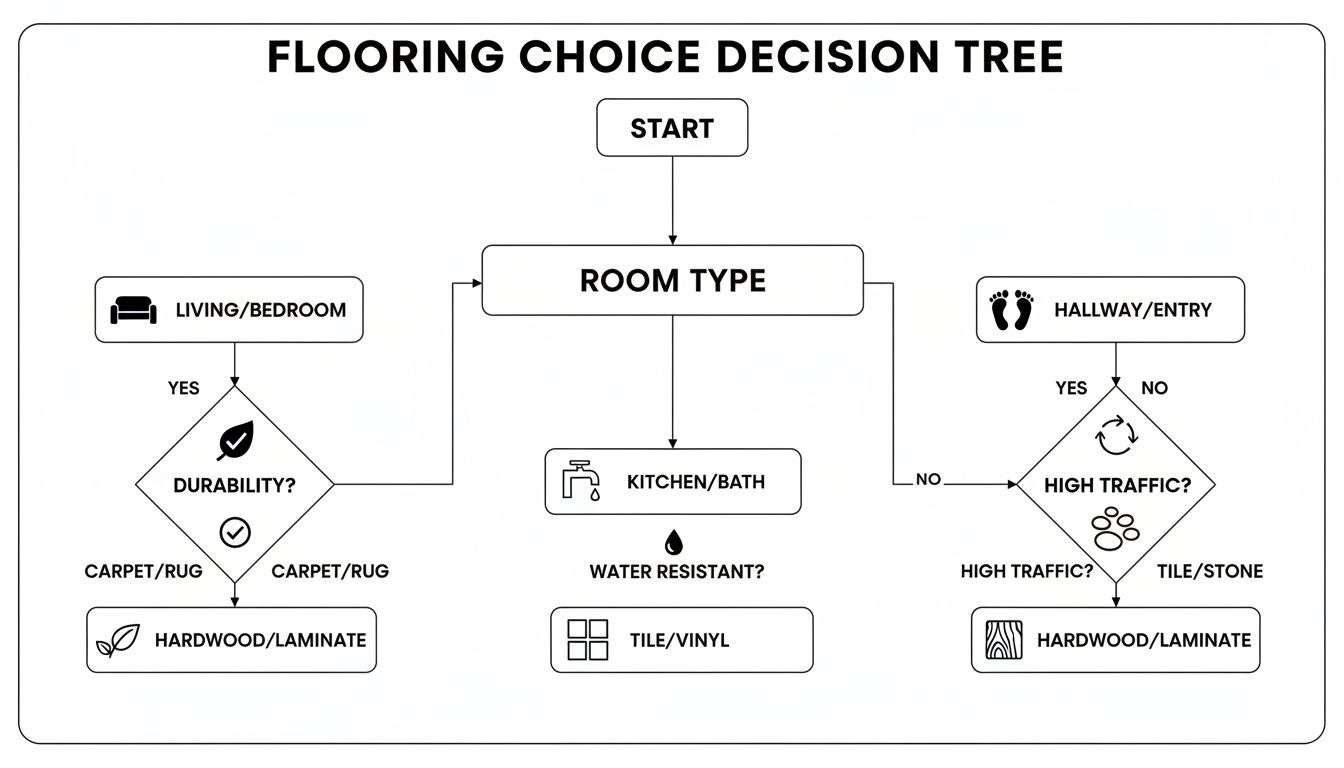
As you can see, priorities shift from room to room. Comfort might win out in a quiet living room, but moisture resistance is king in a kitchen—and that's what steers you toward one choice over the other.
For Households With Kids and Pets
If you have kids tearing through the hallways and a four-legged friend or two, your flooring needs to be tough. Durability and easy cleanups are everything, and this is where Luxury Vinyl Plank (LVP) really shines. Its tough-as-nails wear layer stands up to scratches from pet claws, scuffs from toy trucks, and just the general wear-and-tear of a full house.
Even more crucial? Vinyl is waterproof. Spilled juice, muddy paw prints, and pet accidents are no big deal. You just wipe them away. With carpet, those same little mishaps can soak through to the padding, leaving behind stubborn stains and odors that are almost impossible to get rid of.
When you have a busy family, the peace of mind that comes from a floor that can handle anything is priceless. Vinyl gives you a resilient, worry-free surface that lets your kids and pets be themselves.
For Allergy Sufferers
Your family's health is paramount, and the wrong floor can make a huge difference in your home's air quality. Carpet fibers are notorious for trapping dust, dander, pollen, and other allergens. Even with diligent vacuuming, they can become a reservoir for irritants, which is a real problem for anyone with asthma or allergies.
Vinyl, on the other hand, is a much better choice for creating a healthier home. Its solid, non-porous surface gives allergens nowhere to hide. A quick sweep or mop removes them completely. It’s a simple switch that can dramatically improve the air you breathe every day.
For Budget-Conscious Homeowners
It’s tempting to look at the initial price tag, where carpet often seems like the cheaper option. But you have to think about the long-term value. As we broke down earlier, carpet requires professional deep cleanings and has a much shorter lifespan, meaning you’ll be paying for it again in just a handful of years.
Vinyl might be a bigger investment upfront, but it pays for itself over time. With a lifespan that can exceed 20 years and virtually no maintenance costs, it offers much better financial predictability. You won't be surprised by a massive replacement expense down the road.
For Maximizing Resale Value
In a competitive market like Forsyth County or Johns Creek, what buyers want matters. Today’s homebuyers are often looking for durable, modern hard-surface flooring. Seeing a beautiful LVP floor tells them the home is updated and move-in ready—no immediate projects required.
While a fresh, neutral carpet certainly has its appeal, especially in bedrooms, some buyers will see it and immediately start calculating how much it will cost to replace. When you're weighing vinyl vs. carpet for resale, the durability and waterproof qualities of vinyl often give it an undeniable edge. If you're still leaning toward carpet for its comfort, our guide on how to choose a good carpet for your home can help you pick a style with timeless appeal.
Getting it Right: Installation and Long-Term Care
Picking the right flooring is half the battle; getting it installed correctly and keeping it looking fresh is the other half. Whether you land on vinyl or carpet, professional installation is your best bet for protecting that investment. It's the difference between a floor you love for years and one that causes headaches down the road.
A perfect finish always starts with the foundation. For both vinyl and carpet, the subfloor needs to be clean, level, and completely dry. Any little bumps or dips will eventually show through, leading to uneven wear and a look that’s anything but polished.
Why You Shouldn't Skip the Pros
Even though some click-and-lock vinyl planks seem like a weekend DIY project, calling in a certified pro is almost always the smarter move. They have the experience and specialized tools to navigate tricky cuts around door frames, vents, and odd-shaped rooms. More importantly, a professional installation is often required to keep your product warranty valid.
Carpet installation is a true craft. It's not just about laying it down; it's about using power stretchers to get it perfectly taut, creating seams that are virtually invisible, and securing it properly. Bad installations lead to wrinkles, ripples, and faster wear and tear—all expensive problems to fix later.
Key Insight: Think of professional installation as insurance for your new floor. It’s not just about saving time; it's about guaranteeing a flawless result and ensuring your warranty holds up. Trying to save a little here can cost you a lot more in the long run.
The Day-to-Day: Maintenance and Upkeep
How you'll live with your floor day-in and day-out is a huge factor. The maintenance routines for vinyl and carpet are completely different, and this will impact your time and budget over the years.
Vinyl Flooring Care:
- Daily: A quick once-over with a broom or microfiber mop is usually all it takes to handle dust and crumbs.
- Weekly: For a deeper clean, a damp mop with a simple pH-neutral cleaner will lift scuffs and grime, keeping it looking brand new.
- Long-Term: Vinyl is incredibly low-maintenance. There are no required professional cleanings, making it a very wallet-friendly option over its lifespan.
Carpet Flooring Care:
- Daily: Regular vacuuming is non-negotiable. You need to get the dirt and grit out before it gets pushed deep into the carpet fibers.
- Spills: Act fast! Blotting spills immediately is the only way to prevent them from becoming permanent stains.
- Long-Term: To keep carpet looking and feeling its best, you'll need to plan for periodic professional carpet shampooing. This isn't just a suggestion; it's essential for the carpet's health. A deep clean every 12-18 months is recommended to pull out the embedded dirt, allergens, and oils that your vacuum leaves behind. Think of this as a recurring cost of ownership that keeps your carpet vibrant and extends its life.
Your Top Flooring Questions, Answered
You’ve weighed the pros and cons, looked at samples, and crunched the numbers, but a few questions might still be swirling. Choosing between vinyl and carpet often comes down to those practical, real-world concerns specific to your life and your home. We've compiled the questions we hear most often from homeowners right here in Forsyth County to give you straight answers and help you make that final decision.
These are the details that matter when the time comes to actually renovate, and getting them right is key to a choice you'll love for years.
Which Flooring Is Better For My Home's Resale Value?
In hot real estate markets like Cumming and Johns Creek, both flooring types have their place, but Luxury Vinyl Plank (LVP) generally has the edge. Today’s buyers are looking for homes that are durable, easy to care for, and move-in ready. A new vinyl floor sends a clear signal: this home is updated, modern, and won't require immediate work.
Carpet is definitely still a big selling point in bedrooms, where comfort is king. The catch is that some buyers see carpet as a highly personal style choice they might want to change anyway, and they may factor that replacement cost into their offer. A clean, new vinyl floor that runs seamlessly through the main living areas, on the other hand, is almost always viewed as a finished upgrade.
Can Vinyl Flooring Feel As Warm and Comfortable As Carpet?
Let's be clear: carpet is the undisputed champ when it comes to a plush, soft-underfoot feel. Nothing quite matches sinking your toes into a high-pile carpet. That said, modern vinyl has come a very long way and is no longer the cold, hard surface you might remember.
Many premium vinyl products now come with an attached underlayment. This built-in pad adds a surprising amount of cushion and helps to muffle sound, making the whole room feel quieter and more solid.
Is Professional Installation Really Necessary For Vinyl?
While it’s true that many click-together vinyl planks are marketed for DIY projects, professional installation is almost always worth the investment. A pro does so much more than just lay down planks. Their most important job is ensuring the subfloor is perfectly level and prepared—the single most critical step for a floor that will last. During a pro install, you'll need to clear the room, and looking into flexible furniture storage solutions can be a lifesaver to keep everything out of the way and protected.
A certified installer knows how to handle tricky cuts, complex room layouts, and unexpected issues without a hitch. More importantly, using a professional protects your product warranty. It ensures the job is done right the first time, saving you from the headache and expense of future repairs and turning a good product into a fantastic, long-lasting floor.
At Flacks Flooring, we believe the perfect floor is the heart of a home you love. If you’re ready to see how a stunning new vinyl or cozy carpet can transform your space, our team is here to guide you. Explore our flooring options and schedule your free in-home consultation today.