
When you're standing at the crossroads of vinyl vs laminate vs hardwood, the "best" choice really comes down to what you value most. If you're after that timeless, authentic beauty that adds serious value to your home, hardwood is a classic for a reason—but it comes with a higher price tag and a strong dislike for moisture.
On the other hand, luxury vinyl is the practical champion. It’s completely waterproof and built to withstand the chaos of a busy home, making it a go-to for pretty much any room. Then there's laminate, a fantastic budget-friendly option that gives you a convincing wood look and impressive scratch resistance, though it's not quite as tough against water as vinyl.
Choosing Your Ideal Flooring
Picking out new floors is about more than just what looks good. It's a real investment in how your home feels, functions, and holds its value over time. For those of us here in Cumming, Johns Creek, and Forsyth County, that means finding the sweet spot between beautiful design, the demands of a family, our humid Georgia climate, and what the budget allows.
Each of these flooring types has its own unique personality and strengths. Getting to know them is the first step to making a decision you'll be happy with for years to come.
To kick things off, let's look at the big picture. This table boils down the key differences to help you see which material might be the right fit for your lifestyle.
Flooring at a Glance Vinyl Vs Laminate Vs Hardwood
This table provides a quick, high-level overview of the key characteristics of each flooring type to help homeowners make an initial assessment.
| Feature | Luxury Vinyl Plank (LVP) | Laminate | Solid Hardwood |
|---|---|---|---|
| Water Resistance | 100% Waterproof | Water-Resistant Core | Highly Susceptible to Moisture |
| Durability | Excellent against dents & scratches | Very good scratch resistance | Scratches and dents easily |
| Best For | Kitchens, basements, any room | Living areas, bedrooms, hallways | Living rooms, dining rooms |
| Feel Underfoot | Softer and warmer | Rigid, similar to wood | Firm, authentic wood feel |
This quick comparison helps frame the conversation, but it's also interesting to see how these materials stack up in the broader market.
The numbers tell a story. The global market for wood and laminate flooring reached a massive USD 68.69 billion in 2024, with laminate’s incredibly realistic designs making it a homeowner favorite. Hardwood, of course, maintains its top-tier status, with a market projected to hit USD 55.46 billion by 2026.
But vinyl is the one really shaking things up. The entire resilient flooring category, which includes LVP, is expected to surge from USD 36.2 billion in 2024 to an incredible USD 64 billion by 2034. Why the boom? Its unbeatable waterproof performance is a game-changer for modern homes.
The right floor is a foundation for your life at home. It needs to withstand spills from kids, claws from pets, and the daily hustle of a modern family, all while looking beautiful.
So, what does this all mean for you? If you're finishing a basement that could get damp, vinyl is almost certainly the way to go. If you need a tough-as-nails surface for a high-traffic living room but are watching your wallet, laminate is a fantastic contender. And if you're aiming to add lasting character and boost the resale value of your Milton home, hardwood remains the undisputed champion.
To explore this further, you can dive into our complete guide on how to choose flooring for your home.
An In-Depth Material And Durability Comparison
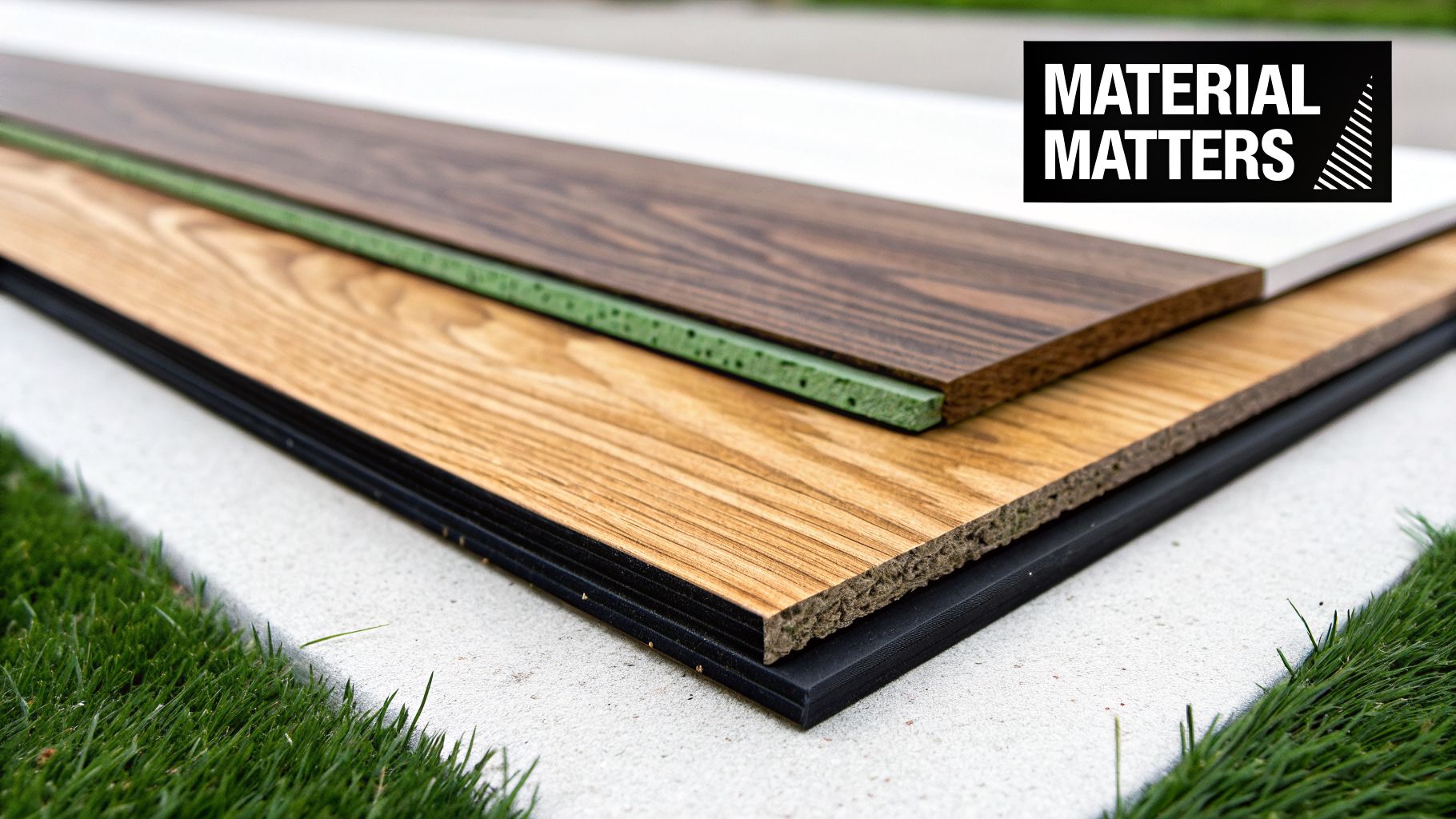
When you’re weighing vinyl vs laminate vs hardwood, what’s inside the plank truly matters most. The core of a floor dictates how it performs, how long it lasts, and where it can realistically be installed in your home. Getting this right is the secret to choosing a floor that won’t just look great when it's new but will actually hold up to your family's lifestyle for years to come.
Solid hardwood is the most traditional of the three. Each plank is exactly what it sounds like: one solid piece of wood, milled from a species like oak, maple, or hickory. This gives it that authentic, timeless beauty and the unique ability to be sanded down and refinished multiple times, literally giving it a fresh life every decade or so.
Laminate and vinyl, on the other hand, are engineered products built in layers. It’s this multi-layer construction that gives them their unique strengths—and their specific weaknesses.
A Look Inside Each Plank
Laminate flooring is built around a core of high-density fiberboard (HDF), which is essentially wood fibers and resins compressed under immense heat and pressure. On top of that core sits a highly detailed photograph of wood grain, which is then sealed under a tough, transparent wear layer. This is what makes laminate so surprisingly good at resisting scratches and fading from sunlight.
Luxury vinyl plank (LVP) is a different beast altogether, typically made from 100% synthetic materials. Its core is usually a solid polymer composite. In the most durable versions, this core is infused with stone dust, creating what we call Stone Plastic Composite (SPC) flooring. This waterproof core is precisely why LVP has become the go-to for so many tricky spaces.
The most critical distinction is right there in the core material. Hardwood is beautiful but hygroscopic—it absorbs moisture. Laminate’s HDF core is tough but will swell and bubble if water gets into the seams. Vinyl’s polymer core is completely unfazed by water.
This fundamental difference has a huge impact on how each floor handles the real world, especially in Georgia's humid climate.
Durability And The Daily Grind
"Durability" isn't a single thing; it’s a mix of how well a floor resists scratches, dents, and, of course, water. Each of these materials shines in a different way.
Scratch Resistance
Believe it or not, laminate often wins this category. Its tough aluminum oxide topcoat is specifically engineered to fend off scratches from dog claws, scooted chairs, and general foot traffic. It's a fantastic option for high-traffic homes with active pets and kids.
- Hardwood: Its scratch resistance depends heavily on the wood species (measured on the Janka hardness scale), but it generally scratches more easily than the engineered options. The good news is that minor scratches can be repaired, and deeper ones can eventually be sanded out during a full refinish.
- Vinyl: A quality LVP has a very good wear layer that resists scuffs and light scratches well. However, a deep gouge from something sharp can be permanent damage.
Dent Resistance
Here, vinyl—especially rigid core SPC vinyl—pulls ahead. That dense, stone-composite core is incredibly resistant to dents from a dropped can of soup or the weight of heavy furniture.
- Laminate: The HDF core is strong, but a heavy impact can leave a dent. Unlike hardwood, you can’t sand it out.
- Hardwood: Softer woods like pine will dent if you look at them wrong, while harder species like hickory or Brazilian cherry offer much better resistance.
The Deciding Factor: Water And Humidity
For homeowners in Forsyth County, Johns Creek, and the surrounding areas, this is often the most important conversation. Understanding the difference between "water-resistant" and "waterproof" is where the vinyl vs laminate vs hardwood debate often finds a clear winner for specific rooms.
1. Luxury Vinyl Plank (Waterproof)
LVP is genuinely 100% waterproof. Spills, muddy paws, or a leaky dishwasher won't damage the planks themselves. This makes it the undisputed champion for kitchens, bathrooms, laundry rooms, and especially our humid basements.
2. Laminate Flooring (Water-Resistant)
Modern laminate has improved dramatically with water-resistant coatings and tight-locking joints. It can handle a glass of spilled water just fine if you wipe it up in a reasonable amount of time. The danger is when water sits and seeps between the planks, reaching that HDF core. Once those wood fibers get soaked, they swell and warp, and the damage is permanent.
3. Solid Hardwood (Highly Vulnerable)
Hardwood is the most sensitive to moisture. It’s a natural material that will readily absorb water, leading to cupping (edges curling up), warping, and discoloration. Even high humidity can cause the planks to expand and buckle over time, which is why it's a very risky choice for basements or bathrooms. To live happily with hardwood, you need to maintain consistent climate control inside your home.
Comparing The True Cost And Long-Term Value
Once you get past the look and feel, the money side of things is where the vinyl vs laminate vs hardwood decision really starts to crystallize. It’s not just about the price per square foot you see on the sticker. It's about the total cost of ownership and the real, long-term value each option adds to your home. A new floor is a serious investment, and you need the full picture to make a choice that works for your budget now and down the road.
That initial price tag is just the beginning. To get a realistic budget, you have to account for the materials, any needed underlayment, professional installation, and sometimes, subfloor preparation. For homeowners here in areas like Johns Creek and Cumming, installation fees can fluctuate, so getting a detailed, all-inclusive quote is essential.
Breaking Down The Total Cost Of Ownership
Most people focus on the bill for materials and installation, but that’s only one part of the equation. You also have to think about the long-term costs—what it takes to maintain the floor, the price of potential repairs, and when you might have to replace it. All of that adds up to the true cost of ownership.
Here’s a practical look at how the three stack up financially:
- Luxury Vinyl Plank (LVP): LVP materials often cost a little more than laminate but are almost always more affordable than hardwood. The real win with vinyl comes from its incredible durability and waterproof design. You're just not likely to be shelling out cash for water damage repairs later.
- Laminate Flooring: This is usually the most budget-friendly choice right out of the gate. The material itself is less expensive, and installation costs are generally lower than both LVP and hardwood. It’s a fantastic way to get that wood look without the premium price.
- Solid Hardwood: No surprises here—hardwood is the biggest initial investment. The material costs more, and the specialized labor needed for a perfect installation comes at a premium. The trade-off, however, is that its incredible longevity can make that cost worthwhile over many decades.
Return On Investment And Resale Value
Beyond your own costs, it's smart to think about how your new floors will affect your home's resale value. This is a huge factor for many homeowners and where the long-term value of each flooring type really comes into focus. Real estate agents will tell you that genuine hardwood floors are a major selling point.
The best advice is to balance initial cost with longevity and low maintenance for the best return. Laminate, for instance, can cut your upfront costs by 50-70% compared to hardwood while still giving you a similarly elegant look. Vinyl offers 100% waterproofing, which is invaluable in kitchens and basements. Meanwhile, industry stats show that solid hardwood can boost a home’s resale value by 3-5%.
This balanced view helps you make smart choices that improve your home’s appeal without overspending. For most people, a personal consultation is the best way to match the right material to a room’s foot traffic and style, setting you up for decades of satisfaction and growing equity. For a deeper dive, check out our article on how floors can increase the value of your home.
Hardwood is a direct investment in your property's equity. Vinyl is an investment in peace of mind and damage prevention. Laminate is an investment in achieving a high-end look for a practical price.
Ultimately, the smartest financial move comes down to your personal goals. If you're planning to sell your Milton home in the next few years, the ROI from hardwood might be well worth the upfront expense. But if you’re settled in your forever home with a busy family, the sheer durability and low maintenance of LVP provide amazing long-term value by heading off costly replacements. Laminate hits a great middle ground, giving you a beautiful, tough floor while leaving more in your budget for other projects.
How Each Flooring Performs In Georgia Homes
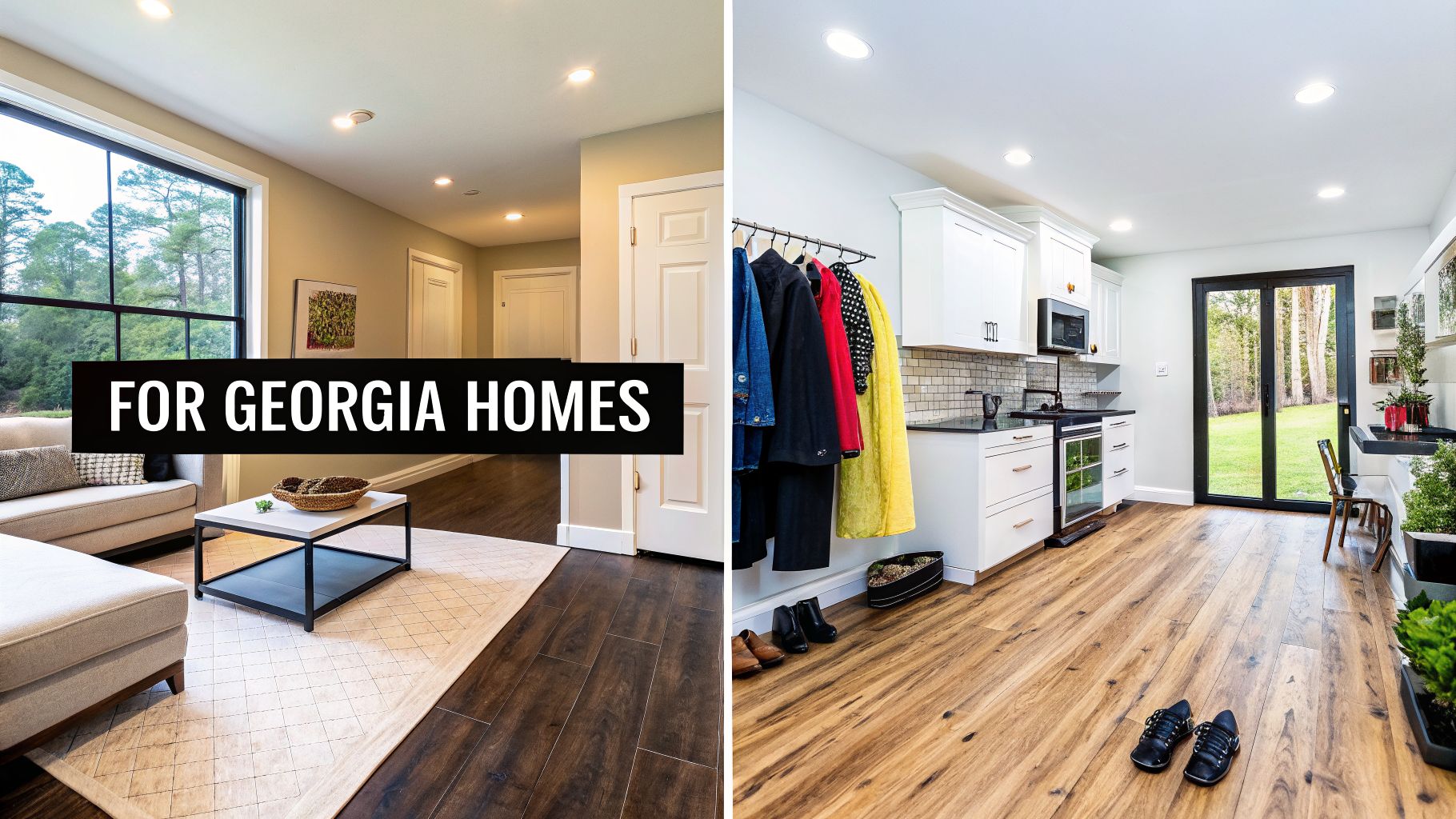
The spec sheets are one thing, but how a floor actually lives and breathes in your home day-to-day is what really counts. For those of us in Forsyth County and Milton, our blend of humidity, active families, and beautiful homes means the choice between vinyl vs laminate vs hardwood comes down to real-world performance. Let's get past the technical jargon and see how these floors really hold up in situations you'll definitely recognize.
The Busy Family Home Challenge
Picture a typical afternoon in a Cumming household. Kids are tracking mud in from the backyard, the dog’s water bowl just got knocked over (again), and someone is dragging a toy bin across the living room. This is where a floor’s true character comes out.
In this kind of high-action environment, luxury vinyl plank (LVP) is an absolute workhorse. Its 100% waterproof construction means spilled drinks, wet paws, and muddy shoes are no big deal. The tough wear layer holds up incredibly well against scratches from pet nails and the general chaos of family life, making it a clear winner for entryways, kitchens, and main hallways.
Modern laminate also puts up a good fight here, boasting exceptional scratch resistance. Its topcoat is often tougher against scuffs than many other surfaces. The catch? Its water-resistant core still means you need to clean up spills quickly to avoid any potential damage. And while beautiful, hardwood is the most vulnerable in this scenario. It scratches relatively easily and is highly susceptible to water damage, making it a tough choice for the busiest parts of a family home.
The Unforgiving Georgia Basement
Basements around here present their own unique challenge, thanks to our good friend, humidity. Choosing the wrong flooring for a space below ground can lead to a world of expensive problems like mold, mildew, and warping.
This is where LVP's superiority is undeniable. Since it's made from synthetic materials, it’s completely inert to moisture and can be installed right on top of a concrete slab without a second thought. It can turn a damp, cold basement into a warm, inviting living space where other flooring types would simply fail.
Laminate and solid hardwood, on the other hand, are generally not recommended for basements. The moisture vapor that naturally comes up from concrete can make laminate’s fiberboard core swell and cause solid hardwood planks to cup or buckle over time. You can dig deeper into these material differences in our detailed comparison of luxury vinyl plank vs laminate.
Your floor should reduce your stress, not add to it. For high-moisture or high-traffic areas like kitchens, basements, and entryways, choosing a material designed for that specific challenge—like LVP—is the key to long-term satisfaction.
Elegance In The Formal Living Room
Now, let's shift gears to a space where looks and ambiance are the top priority—a formal living room or dining room in a classic Johns Creek home. This is where the debate gets a lot more interesting.
Solid hardwood is still the undisputed champion for creating a timeless, elegant atmosphere. The natural warmth, authenticity, and one-of-a-kind grain patterns in each plank add a level of character and real resale value that is hard to match. It’s a luxury that feels earned and authentic.
That said, high-end laminate and LVP have made incredible strides in realism. With textures that are embossed to perfectly match the visual wood grain, they can offer a stunningly convincing alternative at a much more accessible price. Laminate, in particular, can provide a clean, uniform look that’s perfect for modern design schemes, all while giving you peace of mind with its durability.
The true benefits of each material are also reflected in their market resilience and specific strengths. While the flooring market saw a slight dip in 2023, laminate is poised to lead the recovery with a projected growth of over 6% CAGR through 2026. This is largely driven by its scratch resistance and easy-click installs that can cut labor time by 20-30%. Hardwood continues to rule the premium segment, with engineered versions that have nearly eliminated expansion issues common in humid Milton homes. And vinyl’s core advantage? Incredible strength. Modern LVT can withstand rolling loads of over 1,000 pounds, far surpassing what laminate can handle.
This just goes to show that each material holds a strong position in the market for very different reasons, proving there really is a perfect fit for every room and every homeowner’s priority.
Installation And Long-Term Maintenance Insights
The final look and feel of your floor have as much to do with the installation and upkeep as the material you choose. How you get from a box of planks to a finished floor—and how you keep it looking great—differs wildly between vinyl, laminate, and hardwood. Getting this right is the key to protecting your investment for the long haul.
Luxury vinyl and laminate are both famous for their DIY-friendly click-lock systems. They're designed as "floating floors," meaning the planks just snap together without needing any glue or nails. This makes them a tempting weekend project for homeowners looking to save on labor costs.
Still, bringing in a professional is almost always a smart move. An expert installer will make sure your subfloor is perfectly level, a critical step that DIYers often miss. Skipping this can lead to planks separating or developing soft spots underfoot. A pro also handles tricky cuts around doorways and cabinets flawlessly and, most importantly, keeps your product warranty intact—something a DIY job can easily void.
The Complexity Of Hardwood Installation
Installing solid hardwood is a whole different ballgame. This isn't a DIY job; it's a genuine craft that demands special tools and deep expertise to work with wood's natural tendency to expand and contract.
Getting it right involves a few non-negotiable steps:
- Acclimation: Hardwood planks have to sit inside your home for several days. This lets them get used to your home's unique temperature and humidity, which is crucial for preventing gaps or warping down the line.
- Subfloor Preparation: The subfloor has to be perfectly clean, dry, and flat. There's no room for error here.
- Nail-Down Method: Professionals use a specialized flooring nailer to fasten each plank to the subfloor with precision, creating a bond that will last for decades.
This level of complexity is exactly why professional installation is the only way to go for hardwood. Think of it as an investment in a job done right the first time.
Daily Care And Long-Term Upkeep
Once your new floor is down, the day-to-day routine is all about the material you chose.
Luxury Vinyl Plank (LVP)
When it comes to low-maintenance living, vinyl is the hands-down winner. Its completely waterproof and tough surface makes cleanup a breeze.
- Daily: A quick pass with a broom or vacuum is all it takes.
- Weekly: A simple damp mop with a pH-neutral cleaner will do the trick. Just stay away from abrasive pads or harsh chemicals.
Laminate Flooring
Laminate is also simple to maintain, but you have to be careful with water.
- Daily: Sweep or vacuum often to get rid of any grit that could scratch the finish.
- Weekly: Use a damp—not wet—mop and a cleaner made specifically for laminate. Water is the biggest threat to its fiberboard core.
The real fork in the road for maintenance is repairability. You can sand and refinish hardwood multiple times, essentially getting a brand-new floor every decade or so. With vinyl and laminate, a deep gouge means you're replacing that specific plank.
Solid Hardwood
Hardwood demands the most attention, but it pays you back with incredible longevity.
- Daily: Stick to a soft-bristle broom or a vacuum with the beater bar turned off.
- Weekly: Use a microfiber mop with a cleaner formulated for hardwood. Never use water, vinegar, or steam cleaners—they will ruin the finish and damage the wood itself.
- Long-Term: Here’s where hardwood truly shines. It can be completely refinished every 10-15 years. The process sands away an entire decade of scratches and wear, giving you a fresh surface that you can even re-stain for a totally new look. This is why a well-maintained hardwood floor can last a lifetime.
Making Your Final Decision With Confidence
It's easy to get lost in the details when comparing vinyl, laminate, and hardwood. But at the end of the day, the right choice simply comes down to matching your lifestyle and priorities with the material that best handles them. Moving from online research to a confident decision means creating a plan that’s tailored specifically for your home.
This is where having an experienced local team makes all the difference. Working with a pro like Flacks Flooring takes the guesswork out of the equation. We help you sort through the subtle but important differences, ensuring your choice is perfect for your specific needs—whether it’s for a busy family room in Cumming, a damp basement in Johns Creek, or an elegant living space in Milton. We literally bring the showroom to you, so you can see and touch real samples in your home's unique lighting.
Clarifying Your Next Steps
The next move is all about taking clear, practical action. We make it simple by providing transparent, all-inclusive pricing that covers every last detail, from the flooring and underlayment to the full professional installation. You won't find any hidden fees—just a straightforward path to the beautiful, durable floor you’ve been wanting.
The most important flooring decisions aren't made under the fluorescent lights of a big box store. They're made in your living room, with expert advice and actual samples in hand, guaranteeing the final result is one you'll absolutely love.
This flowchart breaks down the typical maintenance routine for each flooring type, giving you a quick visual of what to expect long-term.
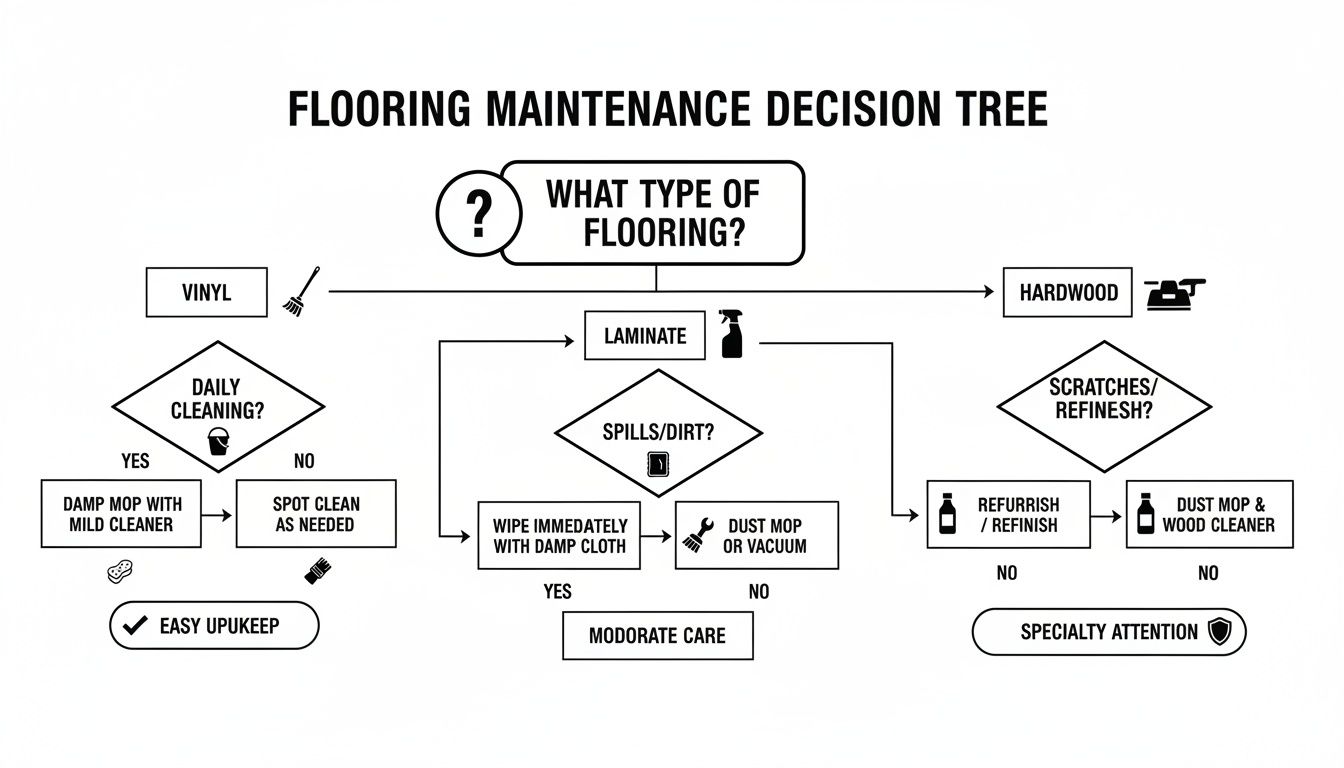
As you can see, vinyl is the undisputed winner for low-maintenance ease. Hardwood, on the other hand, offers the incredible long-term value of being refinished. Laminate falls right in between, needing just a bit of mindful cleaning to keep its core safe and sound.
Honestly, the best way to feel 100% sure about your choice is to see the options in person. Scheduling an in-home consultation is the most critical step you can take. Let our team at Flacks Flooring give you the clarity and confidence you need to make an investment you’ll be proud of for years.
Your Flooring Questions, Answered
Even after weighing the pros and cons, you probably still have a few specific questions swirling around. That’s completely normal. Let's tackle some of the most common things we hear from homeowners in the Cumming area to help you finalize your decision with total confidence.
What's Genuinely the Best Flooring for a House with Pets and Kids?
If your home is the center of activity for kids and four-legged family members, you need flooring that can stand up to the beautiful chaos. In this matchup, Luxury Vinyl Plank (LVP) is the hands-down winner. Because it's 100% waterproof, you can breathe easy about spilled juice boxes, muddy paws, or pet accidents. On top of that, its commercial-grade wear layer is incredibly tough, fending off scratches from dog claws and dents from dropped toys.
Laminate is a very close second, and its scratch resistance is often even better than LVP's. The catch? Its wood-based core is still susceptible to moisture damage if spills aren't wiped up right away. Solid hardwood, as beautiful as it is, is the most vulnerable option here; it scratches and dents far more easily under the stress of a busy family.
Can I Put New Floors Right Over My Old Tile?
Absolutely, this is a very common renovation scenario. The short answer is yes, but it comes with some critical "ifs." Both vinyl and laminate flooring can typically be "floated" right over an existing ceramic or porcelain tile floor, saving you a ton of time and mess—as long as the tile is in solid shape.
For this to work, you have to check a few boxes:
- A Level Playing Field: Your existing tile needs to be flat and stable. Any loose, cracked, or "lipped" tiles will cause major problems down the road.
- Mind the Grout Lines: If you have deep grout lines, they must be filled in with a floor leveling compound first. If not, you'll eventually see the outline of the old tile telegraphing through your new floor.
- Check Your Clearances: Remember, you're adding height. This can affect how your doors swing and whether your dishwasher can still slide out from under the countertop.
Solid hardwood is a no-go here. It has to be nailed down to a proper wood subfloor, so installing it over tile is not an option.
The success of any new floor hinges entirely on the condition of what's underneath it. Laying beautiful new planks over a flawed or uneven surface is a recipe for disaster and will almost certainly void your warranty.
How Much Does Our Georgia Humidity Really Matter?
Here in Forsyth County, from Cumming to Johns Creek and Milton, you know our humidity is no joke. That moisture in the air can wreak havoc on certain flooring materials, causing them to expand and contract throughout the year.
- Hardwood: Being a natural, porous material, hardwood is the most reactive to humidity. It swells in our muggy summers and shrinks back in the drier winter months. To keep it stable, you have to be vigilant about running your HVAC system to maintain a consistent indoor environment.
- Laminate: That high-density fiberboard (HDF) core is still made of wood particles. This makes it vulnerable to swelling if moisture gets into the seams, especially in a persistently humid space.
- Vinyl: As a synthetic polymer, LVP is completely immune to humidity. It won't swell, buckle, or warp, period. This makes it an exceptionally stable and worry-free choice for our climate, particularly in basements or homes built over a crawl space.
Ready to stop guessing and start seeing? Flacks Flooring brings the showroom to you with personalized, in-home consultations and actual samples. Seeing them in your home's light is the only way to make the perfect choice. Schedule your free consultation today!