
That feeling of dread when you spot a puddle on your floor is universal. Whether it's from a leaky dishwasher in your Cumming kitchen or a burst pipe in a Johns Creek subdivision, your first moves are the most important. The key is to stop the water source immediately and get the drying process started right away. If you're dealing with water damage, call our local Cumming team at (470) 606-4860 for an immediate assessment.
Why This Matters in Cumming
Here in Cumming, GA, our high North Georgia humidity is a major factor. It can accelerate mold growth, which often begins within just 24 hours. Acting fast isn't just a good idea—it's the only way to head off much bigger, more expensive problems down the road, especially with our wet winters and spring pollen season trapping moisture indoors.
This initial phase isn't about fixing the floor itself. It's all about damage control. For a deeper dive, you can always review the complete water damage restoration process, but it all boils down to these first critical actions.
Cut the Water and Prioritize Safety
First things first: shut off the water. If an appliance is the culprit, look for a local shutoff valve on the supply line, usually right behind it. For a more serious leak from a pipe, you’ll need to find your home's main water valve and turn it completely off.
With the water stopped, turn your attention to electrical hazards. If water is anywhere near outlets or power cords, head to your circuit breaker panel and kill the power to that entire area. Never, ever step into standing water if there's even a chance of a live electrical current. Your safety is paramount.
Document Everything for Your Insurance Claim
Before you touch, move, or clean a single thing, pull out your phone. Take extensive photos and videos of the entire scene. You need to capture the source of the leak, how far the water has spread, and every single thing it has touched—floors, baseboards, furniture, you name it.
A Pro Tip for Forsyth County Homeowners: Detailed visual evidence is your best friend when filing a homeowner's insurance claim. Make sure to note the date and time you found the damage. A clear, documented timeline makes the entire claims process go much more smoothly for families in Cumming, Alpharetta, and Buford.
To help you decide what to do next, you can use a quick comparison table or a visual guide.
To quickly assess the water damage in your Cumming home, this table can help you decide if it's a small DIY task or if you need to call a local expert immediately.
Quick Guide to Water Damage Severity
| Damage Level | Visual Signs | Affected Area | Recommended Action |
|---|---|---|---|
| Minor | Small puddle, damp spot, no visible swelling. | Less than 10 sq. ft., surface-level only. | DIY Possible: Stop the source, dry with towels, use fans. Monitor closely. |
| Moderate | Visible pooling, slight cupping/warping, wet baseboards. | A single room, water may have seeped under flooring. | Call a Pro Recommended: Subfloor may be wet. Professional drying is needed. |
| Severe | Standing water, significant buckling/warping, discoloration. | Multiple rooms, water has wicked up walls. | Call a Pro Immediately: Structural risk, extensive drying and restoration required. |
| Catastrophic | Saturated floors and walls, ceiling damage from above. | An entire level of the home or more. | Emergency Services Required: Call 24/7 restoration experts. Do not enter if unsafe. |
This quick guide gives you a starting point for understanding the scope of your problem and what kind of response is necessary.
This decision tree also helps visualize the immediate steps after discovering water damage.
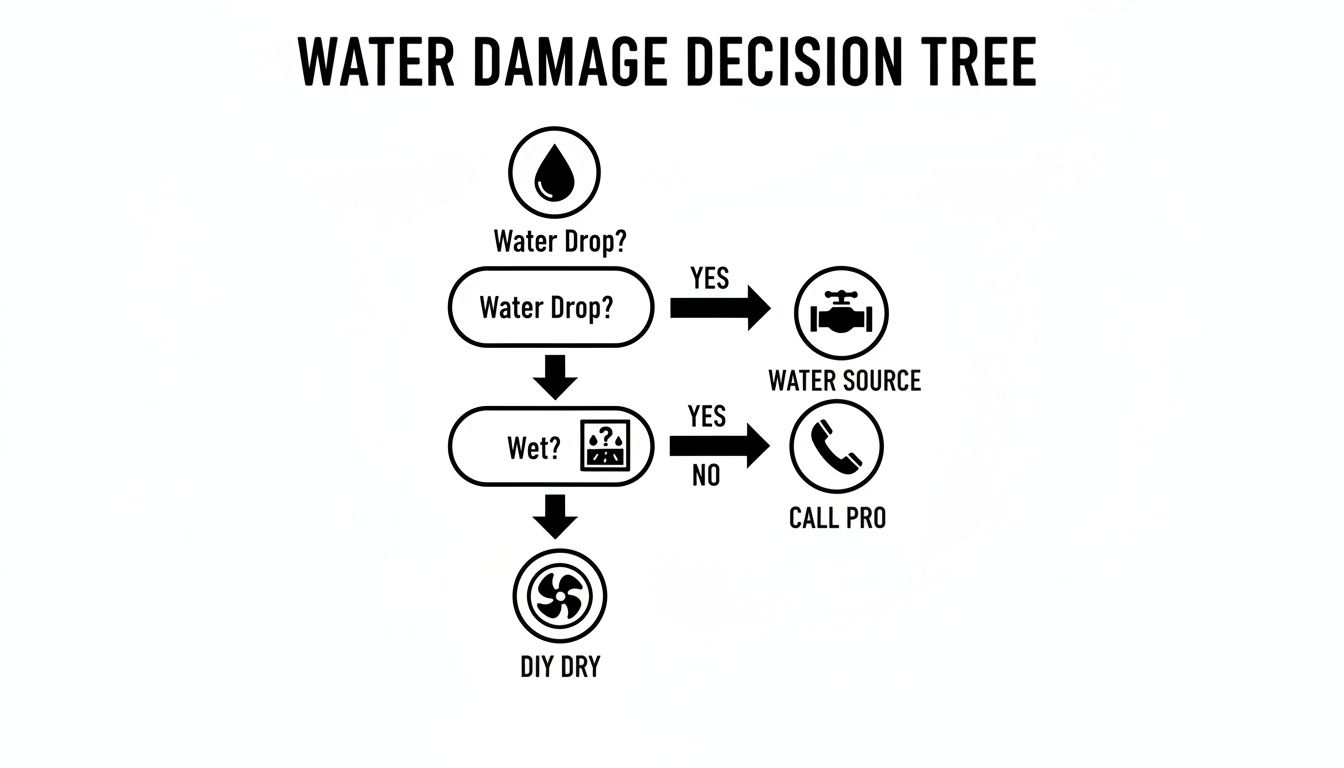
As you can see, the theme is assessing the situation quickly and knowing when you're out of your depth and need to bring in a professional.
Start the Drying Process Now
Once you've documented the scene, it's time to get rid of as much standing water as you can. A wet-dry shop vacuum is ideal, but mops and old towels will work in a pinch. Your goal is to get the bulk of the water off the surface of your flooring.
Next, get the air moving. If it isn't humid outside, open your windows. Set up every fan you own to create cross-breezes across the wet area. A dehumidifier is your most valuable tool here; it will immediately start pulling all that extra moisture out of the air—a critical step in our humid North Georgia climate. Tackling water damage within the first 24-48 hours is proven to prevent the vast majority of secondary issues, especially the mold growth that can turn a simple repair into a major headache.
How to Properly Assess Floor Damage: A Forsyth County Perspective
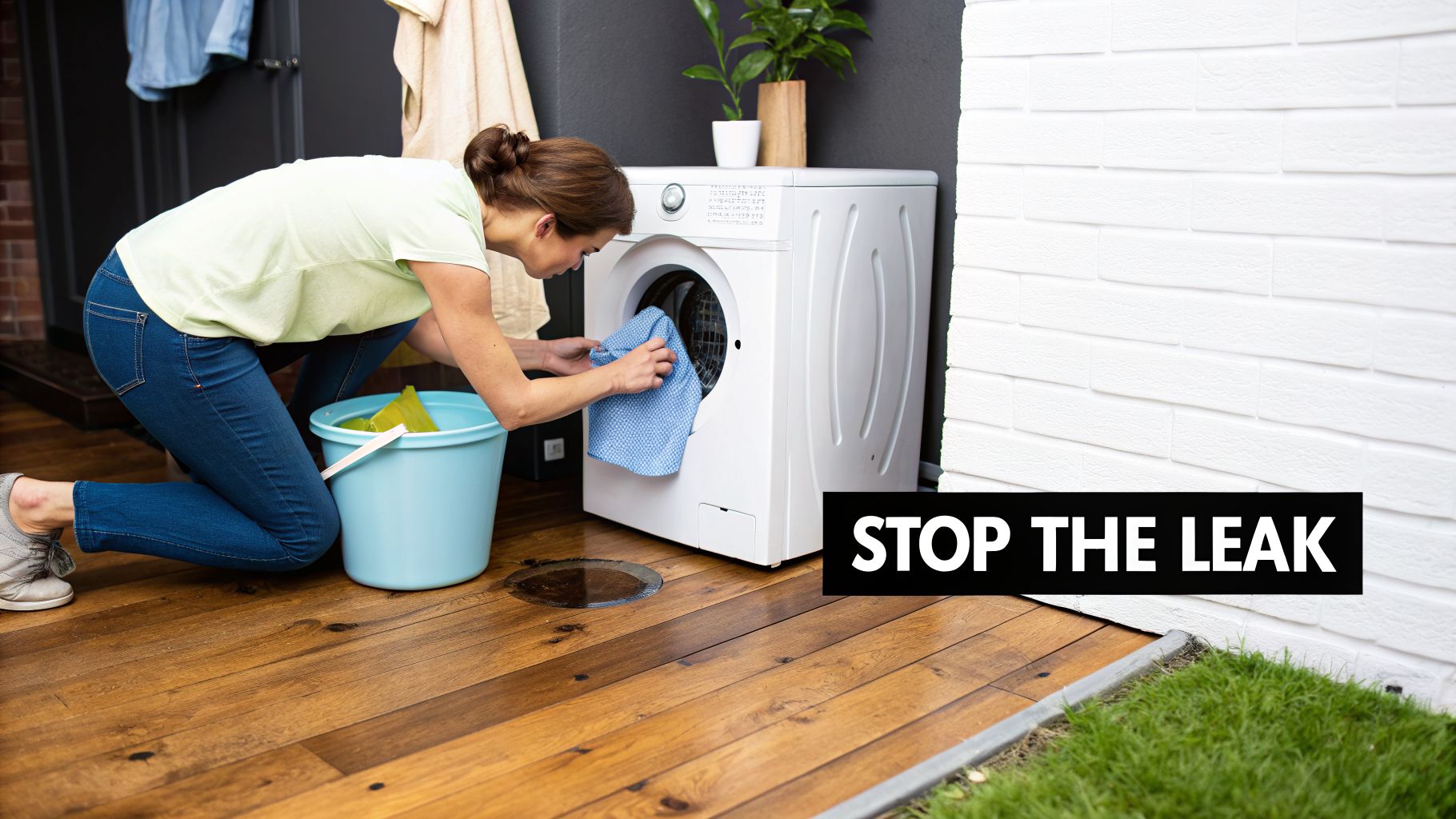
Okay, you've stopped the leak and mopped up the standing water. Now for the tough part: figuring out how bad the damage really is. Around here in Forsyth County, it’s not just about what you can see. Our notorious Georgia humidity is an expert at hiding moisture, which can lead to much bigger headaches like mold and rot if you don't track it down.
Taking the time to do a thorough assessment is everything. It's what tells you if you’re looking at a simple weekend fix or a full-blown replacement. For any homeowner from Johns Creek to Dawsonville, a proper inspection is the difference between a lasting repair and a temporary patch that will fail in a few months.
A Floor-by-Floor Damage Inspection Guide for Cumming
Different floors handle water in completely different ways. What might be a minor issue for tile could spell disaster for hardwood or laminate. Here’s what we at Flacks Flooring have learned to look for in the most common floors we see in Cumming, Alpharetta, and Suwanee homes.
For Hardwood Floors:
- Cupping and Crowning: Look for boards where the edges are raised higher than the center (cupping) or the middle is puffed up higher than the edges (crowning). This is a classic sign of a moisture imbalance in the wood—a constant battle given our local climate.
- Discoloration: Are you seeing dark stains or black spots? That means water sat there for a while, and you could be looking at the beginnings of mold.
- Warping: Run your hand flat across the floor. If it feels wavy or uneven, the boards have soaked up a significant amount of water.
For Laminate Floors:
- Swollen Seams: Check where the planks meet. Any swelling or peeling at the edges is a bad sign. Laminate's core is usually fiberboard, and it basically acts like a sponge. Once it swells, it almost never goes back to its original shape.
- Bubbling Surface: The top wear layer might start separating from the core, creating visible bubbles or a weird, squishy feeling when you walk on it.
- Soft Spots: Press down firmly on the planks. If the floor feels spongy, that’s a dead giveaway the core is shot and water is trapped underneath.
For Luxury Vinyl Plank (LVP) and Tile:
- Grout and Seams: Check for darkened, stained grout on your tile. For LVP, look for any water seeping up from the seams. While the flooring itself is waterproof, water can absolutely get trapped underneath.
- Hollow Sounds: Gently tap on your tiles. A hollow sound often means the adhesive has failed because of moisture, and the tile is no longer bonded to the subfloor.
For our neighbors here in Cumming, GA, remember this: Laminate almost never recovers from significant water exposure. Once that core swells, replacement is the only reliable path forward. Trying to save it is a recipe for mold and subfloor problems down the road.
The Most Important Step: Checking the Subfloor
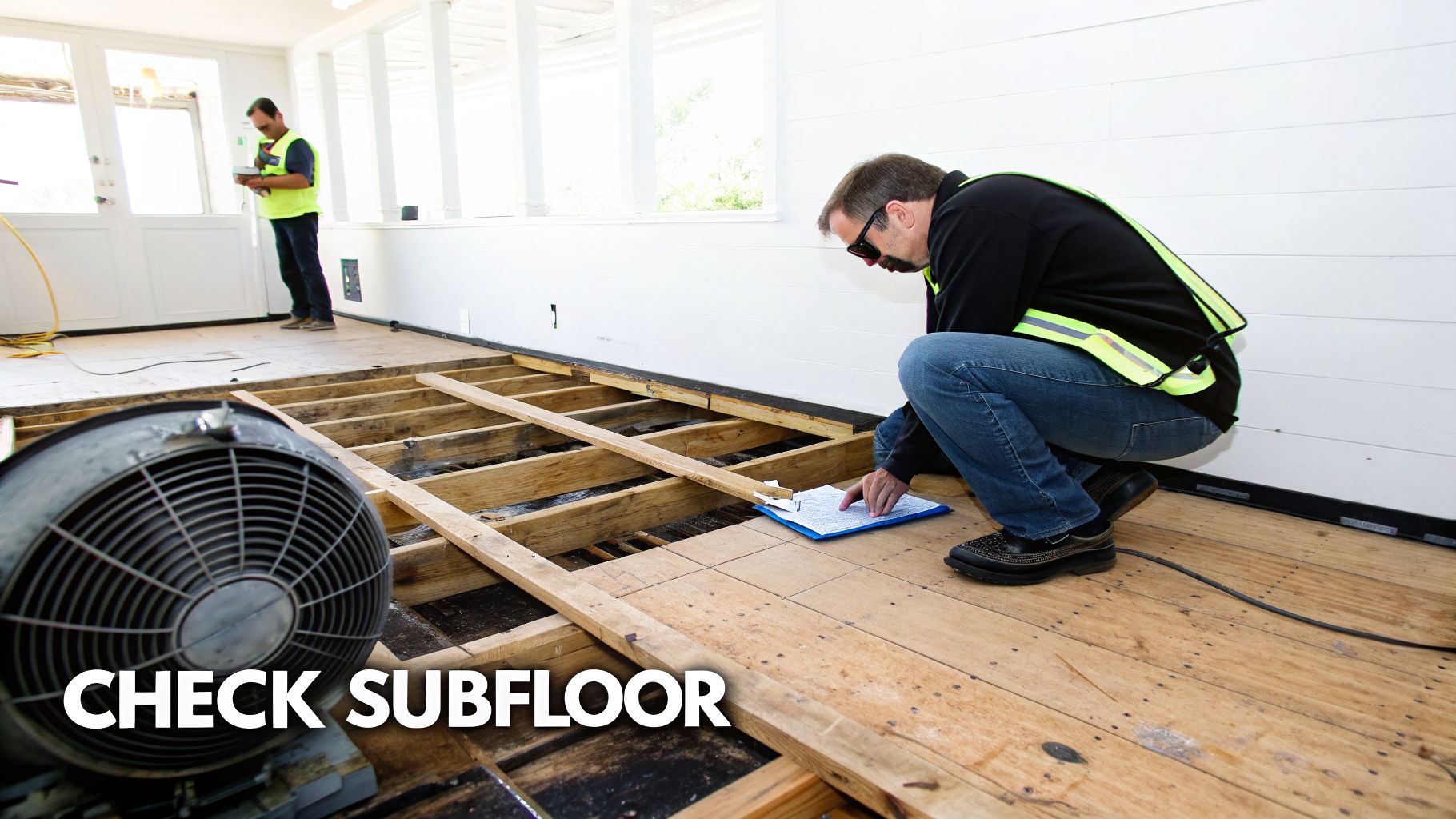
No matter what kind of flooring you have, the subfloor is its foundation. Any water damage repair is a waste of money if you don't confirm the subfloor is sound. This is especially true for the concrete slabs in newer Forsyth County communities and the plywood subfloors in older homes around Canton and Woodstock.
You'll have to pull up a section of the damaged flooring to check it—try a spot in a closet or a corner. On plywood, you're looking for dampness, dark stains, or soft, punky spots. On a concrete slab, look for dark patches or a powdery white residue called efflorescence, which is a sign of moisture pushing through the concrete.
Ignoring a damp subfloor is the single biggest mistake you can make. It’s a guarantee that any new floor you install will eventually fail.
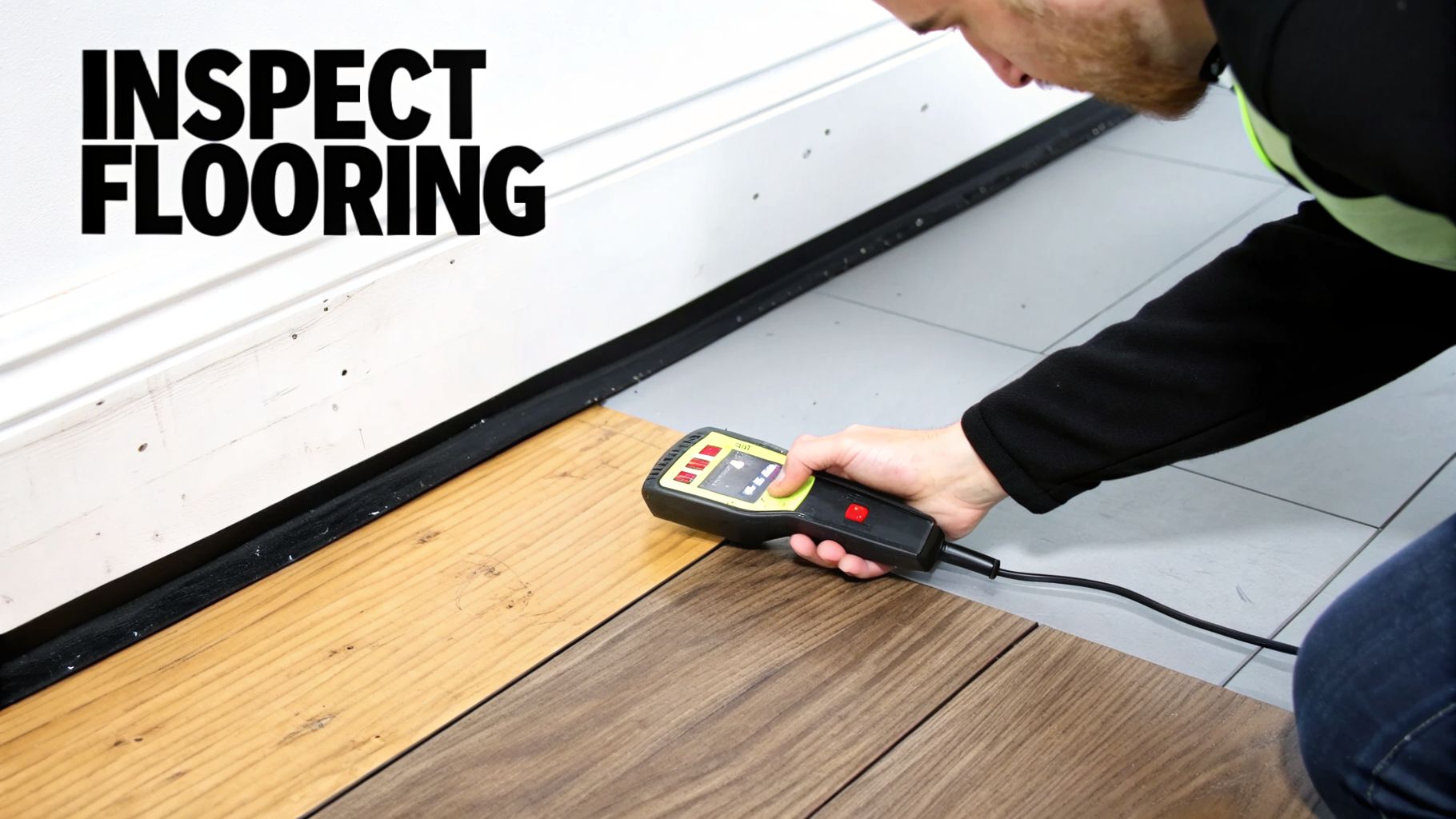
Before you make a single repair decision, the subfloor must be 100% dry and structurally sound. Don't guess. The only way to know for certain is with a professional inspection using a moisture meter.
Call Flacks Flooring today to schedule a free, no-obligation consultation. We’ll give you an honest assessment and a clear plan to restore your floors and your peace of mind.
Repair Options for Different Flooring Types in North Georgia
Fixing a water-damaged floor is never a simple patch job. The right repair strategy depends entirely on the type of flooring you have, and a fix that saves a hardwood floor could completely ruin laminate. Here in North Georgia, we see it all—from plumbing failures in Canton to storm damage in Buford.
As a family-owned flooring store in Cumming with over 30 years of hands-on experience, we've repaired countless floors. We know which methods actually last versus those that are just a temporary fix. Let's walk through the realistic repair options for the most common floors we see in Forsyth County.
Water Damaged Hardwood Floor Repair in Cumming
Hardwood looks tough, but it soaks up moisture like a sponge, which is a constant battle given our local humidity. When a hardwood floor gets wet, you really only have two ways forward: refinishing or replacing the boards.
Sanding and Refinishing
If you caught the leak early and the damage is just on the surface, sanding and refinishing might save the floor. This is only an option if the boards have dried completely and aren't badly cupped, crowned, or buckled. A pro can sand away the damaged finish and a whisper-thin layer of the wood itself, then blend it all back together with a new stain and polyurethane coat.
Board Replacement
But if the water sat for a while, causing deep stains, warping, or gaps between the planks, you’re looking at replacement. There’s no sanding that away. The job involves meticulously removing the damaged boards, making absolutely sure the subfloor is dry and stable, and then lacing in new boards that match the existing floor.
Key Takeaway for Local Homeowners: With solid hardwood, patience is key. The wood has to dry and acclimate before you make a call. We rely on professional moisture meters to tell us whether refinishing is even possible or if board replacement is the only sound choice for a stable, long-lasting floor in your Cumming home.
Laminate Floor Water Damage Repair in Forsyth County
Laminate and water just don't get along. The core of a laminate plank is usually made of high-density fiberboard (HDF), and when it gets wet, it swells up like a biscuit in gravy.
Here's the critical part: once that HDF core swells, it never returns to its original shape. You're left with bubbling, peeling, and puffy seams that you can't sand or fix.
For laminate, the only real water damage repair is complete replacement of the affected planks. You have to pull out every damaged piece, get the subfloor bone-dry to head off any mold, and then install new flooring. Trying to salvage waterlogged laminate is just asking for musty smells and a rotted subfloor down the road. It’s a common mistake we see in homes from Johns Creek to Sugar Hill.
Resilient Flooring Repair for LVP and Tile in North Georgia
Luxury vinyl plank (LVP) and tile are fantastic choices for areas that see a lot of moisture, like basements, kitchens, and the beautiful homes surrounding Lake Lanier. The flooring material itself is waterproof, but that doesn't mean you're in the clear after a leak.
How Water Affects LVP and Tile
The real danger isn't to the vinyl or tile—it's to what’s underneath. Water can sneak through the seams and get trapped on the subfloor. For LVP, this can kill the adhesive holding it down. For tile, it can stain the grout and eventually loosen the tiles from the mortar.
The Repair Process
- Individual Plank/Tile Replacement: One of the best things about these floors is that you can often replace just the damaged spots instead of the whole room.
- Subfloor Drying: This is the most important step, hands down. We have to ensure the subfloor is 100% dry before laying anything new. Skipping this guarantees more problems.
- Re-installation: Once dry, new planks are clicked in, or new tiles are set with fresh mortar and grout to complete the repair.
For homeowners in Alpharetta or Dawsonville weighing their options, LVP provides a durable, stylish, and genuinely waterproof solution. You can check out some of the best styles available by learning more about our luxury vinyl flooring options.
No matter what type of floor you have, a successful repair always starts with an honest, expert assessment. If you’re dealing with water damage, don't leave it to guesswork. Contact Flacks Flooring for a free consultation. We’ll help you figure out the extent of the damage and find the right path forward for your home.
Why Subfloor Integrity Is Critical for Water Damage Repair in Cumming
When you see water damage on your floor, your eyes naturally go to the cupped hardwood or peeling vinyl. But after years of helping homeowners across Cumming and North Atlanta, we can tell you the single biggest mistake we see is focusing only on the surface.
What really matters is what lies beneath. Your subfloor is the foundation for everything, and if it's compromised, any repair you do on top is just a temporary fix on a ticking time bomb. A wet subfloor is a silent problem that quickly snowballs into a major one, becoming a breeding ground for mold and the root cause of new floors failing just months after installation.
For any water damage repair in Forsyth County to last, addressing the subfloor isn't just a step—it's the most important step.
Identifying a Damaged Subfloor in Your Cumming Home
You can't know the real extent of the damage until you see the subfloor. This means pulling up some of the affected flooring, usually starting in a less visible area like a corner or a closet. Whether your home in a Milton subdivision has a classic plywood subfloor or you're on a concrete slab in a newer Dawsonville community, you need to know the warning signs.
Once you have it exposed, here’s what to look for:
- Plywood Subfloors: Look for dark, stained patches that signal long-term water exposure. Get down and physically press on the wood. Does it feel soft, spongy, or "punky"? If it crumbles under pressure or you see the layers of plywood separating (a sign called delamination), its structural integrity is shot.
- Concrete Slabs: Damp, dark spots are the most obvious sign. You might also spot a white, chalky residue on the surface, which is a mineral deposit called efflorescence. This is a dead giveaway that moisture is actively wicking up through the concrete.
We see it all the time in homes from Woodstock to Buford: people install a beautiful new floor over a subfloor that "feels" dry to the touch. This is a critical mistake. Moisture can be trapped deep inside, only to emerge later and ruin your brand-new floor.
The Dangers of a Compromised Subfloor
Ignoring a damp or rotten subfloor isn't just a bad investment; it's a genuine risk to your home and your family's health.
The first and most immediate danger is hidden mold and mildew. In North Georgia's humid climate, mold can explode on a dark, damp subfloor in as little as 24-48 hours. This can create persistent musty odors and seriously impact your home's indoor air quality.
Next comes the structural risk. A waterlogged plywood subfloor loses its strength. The nails and screws holding it down can rust and pull loose, while the wood itself rots away. This creates dangerous soft spots and eliminates the stable base your flooring needs.
Finally, laying new flooring over a wet subfloor is a guaranteed failure. Trapped moisture will always try to escape, pushing upward and causing hardwood to cup, laminate to swell, and vinyl adhesives to let go. All the money you invested in a new floor will be completely wasted.
Our Installation Process for a Lasting Repair
Making sure a subfloor is truly dry and structurally sound isn't a job for a box fan and a little guesswork. As professionals, we use specialized equipment to do it right. This always involves a combination of high-velocity air movers to push dry air across the surface and commercial-grade dehumidifiers that aggressively pull moisture out of the surrounding air and the materials themselves.
With concrete, a proper fix might mean grinding the surface to remove old adhesives or sealers and then applying a professional moisture barrier before any new flooring goes down. We never guess—we confirm dryness with calibrated moisture meters. In fact, you can see our full process in this guide on how to test concrete for moisture.
The need for this work is growing. With over 65% homeownership in the U.S. and an estimated 14,000 basements flooding daily, getting subfloor repairs right is more critical than ever. The restoration industry is a huge part of this, and we believe a solid foundation is the non-negotiable first step of any water damage repair. You can explore more market insights about the flooring repair services industry to see these trends for yourself.
If you even suspect your subfloor might be compromised, don't leave it to chance. Call Flacks Flooring for an honest, expert assessment.
Why Choose Flacks Flooring in Cumming?
When you're staring at a water-damaged floor, the last thing you want is the runaround from a big-box store or a national chain that treats you like a number. You need a trusted partner right here in Cumming—someone who will show up, give you a straight answer, and actually stand behind their work.
For over 30 years, Flacks Flooring has been that partner for families all over Forsyth County and North Atlanta. We're a family-owned business, not some faceless corporation. We live here, we work here, and we’ve spent decades building our reputation one job at a time, from the initial damage assessment to the finished floor.
This isn't just a business transaction for us; it’s about restoring your home and your peace of mind. We believe a successful water damage repair is one that looks great and is built to last, preventing future issues.
The Flacks Flooring Difference for Cumming Repairs
When you call us for a water damaged floor repair in Cumming, you won't get caught in a confusing web of subcontractors and different points of contact. You get us. We manage the entire project ourselves, which means we’re accountable for the quality from start to finish.
Our process is refreshingly straightforward:
- A Real Assessment, Not a Guess: We start with a thorough inspection, using professional moisture meters to find out exactly how far the water has gone.
- Clear, Upfront Estimates: You’ll get a detailed quote that explains exactly what needs to be done and why. No surprises, no hidden fees.
- Expert Subfloor Correction: We never, ever cover up a problem. If your subfloor is damp or damaged, we have the skills to properly dry, repair, or replace it.
- A Professional Installation: Our experienced team installs your new flooring with the precision it deserves, ensuring it looks and performs beautifully for years.
We’ve handled repairs in historic homes in Milton, new builds in Alpharetta, and lake houses on Lanier. We know exactly how North Georgia humidity affects hardwood and why waterproof LVP is so often the right call for basements in Suwanee and Johns Creek.
We Know North Georgia Homes
A flooring company from out of state just doesn't understand the unique challenges we face here. They won't get the seasonal expansion and contraction of wood floors in our climate or the specific needs of homes in busy family communities from Canton to Dawsonville.
We do. We've seen firsthand how a badly managed repair can quickly turn into a nightmare of mold and rot. The disaster restoration industry is massive, and there's a reason water damage makes up a dominant 38.56% market share. It's a serious issue, especially for homeowners in Cumming. Southeastern states like ours see insurance claims for water damage that top $13 billion every year, a statistic you can explore further in the global water damage restoration market report.
Because we’re your neighbors, we’re deeply invested in getting the job done right. Understanding the nuances of flooring materials is just one part of our commitment, and you can see more of our insights on how to find local flooring companies near you.
More Than a Store—We're Your Local Flooring Experts
Choosing a partner for your water damaged floor repair in Buford or Cumming is a big decision. You need a team that’s providing a complete, lasting solution, not just selling you a product. We stand behind our work because we treat every home like it's our own.
Don't let water damage get worse. Let our family help yours.
Call Flacks Flooring today at (470) 606-4860 or stop by our Cumming showroom to schedule your free, no-pressure consultation and get a clear plan to restore your floors.
Frequently Asked Questions About Water Damaged Floor Repair in Cumming, GA
When your floors are underwater, you have questions—and fast. Over the years, we've heard just about all of them from homeowners here in Cumming and across Forsyth County. Here are some honest answers to the questions we get asked the most.
Q: Can my water damaged hardwood floor be saved in Cumming?
A: Sometimes, yes. A successful repair on a hardwood floor in Cumming depends on how quickly you acted. If a leak is caught early, professional drying and refinishing can often save the floor. However, if water has sat for too long, causing boards to cup, warp, or stain, replacement is the safer, more reliable option for a stable, long-lasting floor in our humid Georgia climate.
Q: How much does water damaged floor repair cost in Cumming, GA?
A: The cost for a water damage repair in Cumming varies based on the flooring type, the size of the area, and the subfloor's condition. A small laminate repair in a Milton laundry room is much different from refinishing a hardwood floor in Alpharetta. The biggest factor is the subfloor; if it's rotten and needs replacement, the project cost will increase. We provide a clear, detailed estimate after a full inspection.
Q: Is mold a major concern with wet floors in North Georgia?
A: Yes, it’s a huge concern. In North Georgia’s humid climate, mold can grow on a damp subfloor in as little as 24-48 hours. This is why professional drying with commercial-grade equipment is critical. Simply using fans isn’t enough. A "dry to the touch" floor can still hold enough moisture to cause serious mold problems down the road for homeowners in Forsyth County.
Q: What is the best replacement flooring after water damage near me?
A: For areas prone to moisture like basements, kitchens, or bathrooms in Cumming, we almost always recommend luxury vinyl plank (LVP) or tile. These materials are 100% waterproof, so a future leak won't ruin the floor itself. They are also incredibly durable and perfect for active families with kids and pets in communities from Suwanee to Dawsonville.
Q: Can I file an insurance claim for my water damaged floor?
A: Often, yes. Standard homeowner's insurance in Georgia typically covers "sudden and accidental" events like a burst pipe or overflowing appliance. It usually doesn't cover slow leaks or groundwater flooding. We recommend getting a professional assessment from us first. We can provide the detailed documentation you’ll need to file a strong claim and get the coverage you deserve.
Don't let water damage put your home's safety and value at risk. For an honest opinion and expert repair work, you can count on the local family here at Flacks Flooring.
Visit our Cumming showroom or schedule your free in-home consultation today!