
When you start looking through reviews for the best waterproof laminate flooring, you'll see a few names pop up again and again: Pergo, Mohawk, and AquaGuard. These brands consistently earn top marks for their incredible durability and stunningly realistic wood visuals. They've cracked the code by combining a tough-as-nails wear layer, a high-density waterproof core, and innovative locking systems to keep spills on the surface where they belong.
This makes them a fantastic choice for tricky areas like kitchens and bathrooms.
What Does Waterproof Laminate Really Mean?
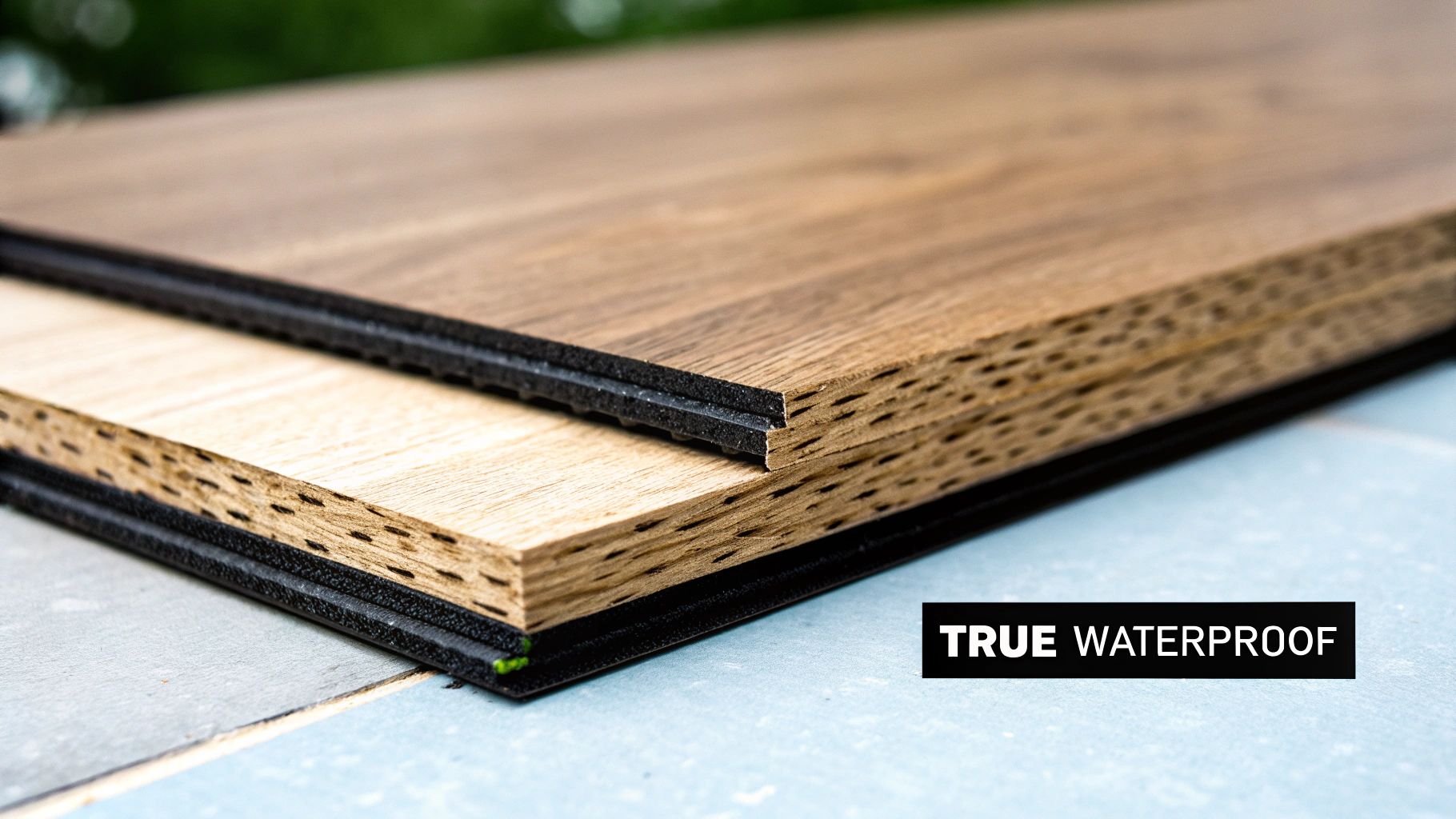
Before we jump into specific product reviews, let's clear up what "waterproof" actually means in the world of laminate. It can be a bit of a misnomer. We're not talking about flooring that can survive a flood, but rather something that offers incredible protection against the everyday spills and moisture that are a part of life. This technology has been a game-changer, turning laminate from a risky choice for damp rooms into a go-to solution for kitchens, bathrooms, and even basements.
The secret is in the layered construction. Old-school laminate would puff up and warp if you so much as looked at it with a wet towel. Today's waterproof versions are built differently from the ground up.
- High-Density Fiberboard (HDF) Core: The core of the plank is made with special water-repellent resins. This prevents it from acting like a sponge and soaking up liquids.
- Advanced Locking Systems: The planks don't just sit next to each other; they feature tight, interlocking joints that click together to form a highly effective seal. This stops water from working its way through the seams and down to your subfloor.
- Protective Top Layer: The surface has a tough, transparent wear layer that serves as the first line of defense, causing spills to bead up for a quick and easy cleanup.
Separating Fact From Fiction
It's really important to know the difference between "water-resistant" and truly "waterproof" flooring. A water-resistant floor might buy you a few minutes to clean up a small spill. Waterproof laminate, on the other hand, is built to hold that moisture at bay for much longer—often 24 to 72 hours, depending on the brand.
But here’s the key: this protection is for topical moisture only. It's designed for spills on top of the floor. It won't save your floor from a major plumbing leak that soaks it from below. This is one of the biggest points of confusion, and you can dive deeper into some common myths about laminate flooring.
There's no denying how popular this technology has become. The global laminate flooring market is expected to grow from around $11.505 billion in 2024 to nearly $19.856 billion by 2032, and these advancements in water protection are a huge reason why.
Expert Insight from Flacks Flooring: "We always tell our clients to think of waterproof laminate as a shield against life's little accidents, not a submarine. It’s fantastic for stopping pet messes or kitchen spills from causing damage, but you absolutely cannot skip proper installation and perimeter sealing. Those steps are crucial for its long-term performance."
Ultimately, the goal is moisture control. A waterproof floor is a huge step in preventing the kind of dampness that can lead to bigger problems like mould. Learning how to prevent mould in bathrooms and other damp areas is key, and choosing the right flooring makes that job a whole lot easier.
The Metrics That Matter in a Waterproof Floor
When you're sifting through waterproof laminate flooring reviews, it's easy to get bogged down by brand names and flashy marketing. To make a smart choice, you have to look beyond the surface and really understand what makes a floor perform. The truth is, not all waterproof laminates are built the same, and knowing these key metrics is the first step toward a floor you'll love for years.
These criteria give you a solid framework for comparison, helping you see which products are truly engineered for the real-life chaos of kitchens, bathrooms, and basements. If you focus on these elements, you can confidently size up any option that comes your way.
Core Composition and Density
The heart of any laminate plank is its core, which is usually made from high-density fiberboard (HDF). This isn't your standard particleboard; it's a specially engineered material packed with water-repellent resins. The density here is everything—a denser core is less porous and does a much better job resisting swelling when it gets wet.
As you compare products, look for details on core density or any proprietary core technologies. Brands often give their advanced cores special names, which is usually a good sign that they've invested in a higher level of water-repellent treatment. This is what truly separates a genuinely waterproof product from one that’s just "water-resistant."
The Locking Mechanism Design
A plank's locking system is its frontline defense against spills. A flimsy or poorly designed lock leaves tiny gaps where water can sneak through and ruin the whole floor. The best systems, on the other hand, create an incredibly tight seal that locks the planks together on all four sides.
Look for features like:
- Waxed or Sealed Edges: Top-tier brands often apply a wax coating to the locking mechanism itself, adding another crucial layer of moisture protection.
- Proprietary Locking Technology: Systems like Uniclic or other brand-specific designs are engineered for a precise, snug fit that’s absolutely essential for a watertight surface.
Flacks Flooring Insight: "A tight locking system is non-negotiable. It's the difference between water beading on the surface for hours and it finding a path to your subfloor in minutes. Always ask about the specific lock design and edge sealing."
Surface Durability and AC Rating
The AC (Abrasion Class) rating tells you how well a laminate holds up against scratches, stains, and fading. While it’s not strictly a "waterproof" metric, it’s critical for rooms like kitchens where spills often happen alongside dropped pots or scooting chairs. For most homes, a rating of AC3 or higher is what you want. If you have a busy household with pets and kids, AC4 is even better.
This rating tells you how tough that protective top layer is, ensuring your floor stays looking great and is easy to clean for the long haul. You can learn more about how different flooring types handle daily life in our ultimate guide to moisture-resistant options.
Finally, you have to dissect the warranty. A "lifetime waterproof" guarantee might sound bulletproof, but the fine print often tells a different story. Look for specific time limits for standing water (like being guaranteed waterproof for up to 72 hours) and be clear on what types of water damage are actually covered. A transparent, detailed warranty is a huge sign of a manufacturer's confidence in their product.
Let's Compare the Top Waterproof Laminate Brands
Now that we’ve covered the technical side of things, it’s time to put the top waterproof laminate brands under the microscope. The market can feel crowded, but a few names consistently stand out for both their performance and how much homeowners love them: Pergo, Mohawk, and AquaGuard. Each one has its own unique technology and design philosophy, which means they’re each better suited for different kinds of homes and lifestyles.
This isn’t about picking one single "best" brand for everyone. My goal here is to give you a real, side-by-side look so you can feel confident choosing the right floor for your home. We’ll dive into what actually sets them apart—from the way they’re built to how the planks lock together—and give you practical advice for real-world situations.
This infographic gives you a quick visual rundown of how these industry leaders measure up.
As you can see, each brand brings something different to the table, from exclusive technologies to specialized warranties. Let’s break down what that means for you.
Pergo UltraDefend: The Original Innovator
When you think of laminate flooring, Pergo is probably the first name that pops into your head. And for good reason—they invented it. Their modern waterproof lines, like Pergo UltraDefend, honor that legacy with some seriously smart tech designed to protect against the chaos of daily life.
Pergo’s ace in the hole is its patented Uniclic locking system. It’s widely considered one of the tightest, most secure locking mechanisms out there. The planks are engineered to click together so perfectly that they create a powerful barrier against spills, stopping moisture from ever getting between the planks and down to your subfloor.
For a family with young kids, that means a spilled glass of juice in the dining room is no longer a code-red emergency. The liquid just beads up on the surface, giving you plenty of time to grab a paper towel without stressing about long-term damage.
Flacks Flooring Installer Insight: "You can literally feel the difference when you're installing Pergo. The planks lock in with this solid, satisfying click that leaves almost no gap. That tight seam is critical for its waterproof performance and exactly why we recommend it for kitchens and busy entryways all the time."
Pergo also features SpillProtect technology, which guarantees the floor is safe from standing water for up to 72 hours. Combine that with a tough AC4 wear layer, and you’ve got a fantastic option for any home needing that perfect mix of classic style and hardcore durability.
Mohawk RevWood: The Durability Champion
Mohawk comes at it from a slightly different angle with its RevWood collection. Their main focus is creating a floor that’s not just waterproof, but unbelievably tough. They use a three-part system built to handle the wear and tear of a busy, active household—especially one with pets.
Mohawk’s system includes:
- A Proprietary Locking System: This creates a tight seal to keep everyday spills on the surface.
- GenuEdge Pressed Bevels: The protective top layer actually wraps over the edges of the plank, sealing off the seams so moisture can't sneak in.
- Hydroseal Perimeter Coating: For good measure, a repellent coating is applied to the plank edges, adding yet another layer of defense against water.
This layered defense makes RevWood a rock-solid choice for homes with dogs or cats. Its surface is incredibly scratch-resistant against claws, and the waterproof system gives you total peace of mind against pet accidents or the inevitable water bowl splash zone. In fact, many Mohawk RevWood products even come with a specific pet warranty, which is a massive show of confidence from the company.
AquaGuard Performance: The Versatility Expert
AquaGuard has really carved out a niche for itself by offering an incredibly versatile and resilient floor that shines in places other floors can’t go, like bathrooms and basements. Its secret weapon is a high-density core engineered for extreme stability and water resistance.
Because it’s so stable, AquaGuard is often approved for installations where other laminates aren’t. For instance, you can install it across huge areas (up to 4,000 square feet) without needing any of those little transition strips. This creates a beautifully seamless, continuous look that’s perfect for modern open-concept homes.
The brand also offers a very impressive 30-hour water-resistance guarantee, giving you a generous window to clean up any messes. This makes it an amazing candidate for a finished basement that doubles as a playroom or media room, where dampness or spills are always a possibility.
While laminate is a great choice, it's always smart to know your options. If you're considering other materials, our guide to the best luxury vinyl flooring brands covers alternatives with similar waterproof features.
Waterproof Laminate Brand Feature Comparison
To help you see the differences at a glance, we've put together this simple comparison table. It highlights the key things that will affect how your floor performs in your home day-to-day.
| Feature | Pergo UltraDefend | Mohawk RevWood | AquaGuard Performance |
|---|---|---|---|
| Core Technology | High-density fiberboard with SpillProtect | High-density core with Hydroseal technology | High-stability, water-resistant core |
| Locking System | Patented Uniclic system | Proprietary interlocking with GenuEdge bevels | Secure, water-tight locking mechanism |
| Waterproof Guarantee | Up to 72 hours of standing water protection | Up to 24 hours plus a Pet Warranty | Up to 30 hours of standing water protection |
| Best Use Case | Kitchens, high-traffic areas, family homes | Homes with pets, active households | Basements, bathrooms, large open-concept spaces |
| Key Differentiator | The industry-leading Uniclic locking mechanism | All Pet Protection & Warranty system | Superior dimensional stability for large rooms |
This head-to-head view makes it clear where each brand truly excels, helping you match the right technology to your specific needs.
So, Who Should Choose What?
Making the final decision really comes down to your lifestyle and what your space demands. Each of these excellent brands is a winner in different situations.
Go with Pergo UltraDefend if:
- You need the absolute tightest seams for a kitchen, mudroom, or busy entryway.
- You want the longest standing-water guarantee for ultimate peace of mind.
- You feel most comfortable with a brand that has been innovating laminate for decades.
Go with Mohawk RevWood if:
- You have pets and need top-tier scratch resistance backed by a dedicated pet warranty.
- Your household is a whirlwind of activity, and you need a floor that can handle dents and heavy traffic.
- You like the idea of a multi-layered defense system that protects the plank from every angle.
Go with AquaGuard Performance if:
- You’re finishing a basement or putting new floors in a full bathroom or laundry room.
- You have a big, open-concept layout and want that clean, seamless look without transitions.
- You need a highly stable floor that’s approved for a wider range of installation areas.
By matching what you need with what each brand does best, you can move past generic waterproof laminate flooring reviews and make a smart choice that’s truly tailored to your home. You really can’t go wrong with any of them; the key is picking the one engineered to solve your problems.
What's This Floor Really Going to Cost Me?
When you're looking at waterproof laminate, it's easy to get fixated on the price per square foot. That's the big number on the box, after all. But focusing only on that is like judging a car by its paint job—it doesn't tell you the whole story. The true cost of your new floor is a long-term equation.
The initial price is just the beginning. You have to think about underlayment, the cost of installation, and how well that floor will stand up to your life over the next decade. Sometimes, that "cheaper" option ends up costing you more in the long run.
Breaking Down the Upfront Investment
Before you can enjoy your new floor, you have to get it from the store to your subfloor. This is where the initial costs come into play, and where a few hidden expenses can pop up if you're not ready for them.
Let's unpack what you're paying for at the start:
- The Planks Themselves: This is your material cost, the price per square foot for the actual flooring. Top-tier brands with better locking systems and more realistic textures will naturally have a higher sticker price.
- The Underlayment: Don't skip this. A quality underlayment is your floor's best friend—it blocks moisture, quiets footsteps, and adds a little cushion underfoot. While some floors come with a pad attached, many don't. Plan on adding $0.50 to $1.00 per square foot for a good one.
- Getting it Installed: Hiring a pro gives you a flawless finish and, more importantly, keeps your warranty intact. Of course, that labor comes at a cost. If you've got the skills and patience, a DIY install can save you a bundle, but it's a job that demands precision.
Expert Insight from Flacks Flooring: "We always tell our customers to look at the total project cost, not just the price on the sample board. Paying for a professional installation isn't just a convenience; it's insurance on your investment. A small mistake during a DIY install can lead to a huge headache later, often voiding your warranty and forcing you to spend way more to fix it."
The 10-Year Cost of Ownership
To really see how these costs stack up, let's run the numbers for a typical 500 sq. ft. living room. This helps us look past the initial price tag and understand the long-term value. A floor is a significant home improvement, and it's worth seeing it in the context of other expert renovations for raising property value.
A premium floor with a tough AC4 or AC5 durability rating might feel like a splurge at first, but it's built to resist the scratches, dents, and dings of everyday life. That built-in toughness can save you a lot of money and frustration on repairs down the road.
Here's a look at how the total cost can differ between budget, mid-range, and premium options over a decade.
10-Year Estimated Cost of Ownership (500 sq. ft. Room)
This table breaks down the projected costs over ten years for three different tiers of waterproof laminate. We're including everything from materials and installation to potential maintenance to give you a clearer picture of the real investment.
| Cost Factor | Brand A (Mid-Range) | Brand B (Premium) | Brand C (Budget-Friendly) |
|---|---|---|---|
| Material Cost (@ 500 sq. ft.) | $2,000 (@ $4/sq. ft.) | $2,750 (@ $5.50/sq. ft.) | $1,250 (@ $2.50/sq. ft.) |
| Underlayment Cost | $375 | $375 | $375 |
| Installation (Professional) | $1,500 | $1,500 | $1,500 |
| Initial Total Cost | $3,875 | $4,625 | $3,125 |
| Est. Maintenance/Repairs | $150 | $50 (Higher Durability) | $400 (Lower Durability) |
| 10-Year Estimated Total | $4,025 | $4,675 | $3,525 |
As you can see, the budget-friendly floor still comes out cheapest after ten years, but not by much. The gap shrinks dramatically once you factor in the higher repair costs for a less durable product. The premium brand costs more upfront, but its minimal maintenance needs provide peace of mind and a predictable, stable value over the long haul.
Avoiding Common Installation Mistakes
It’s easy to get excited about bringing home a beautiful, high-performance waterproof laminate floor. But all that impressive technology can be wasted if the installation isn’t handled with care. A premium floor can fail spectacularly from simple, avoidable mistakes. Whether you’re hiring a pro or doing it yourself, protecting your investment starts before the first plank ever touches the subfloor.
Honestly, getting the installation right is the single most important factor in making sure your floor lives up to its waterproof promise. Even the best products we've reviewed can't withstand a flawed installation. The little details are everything, and skipping steps is a guaranteed recipe for future headaches.
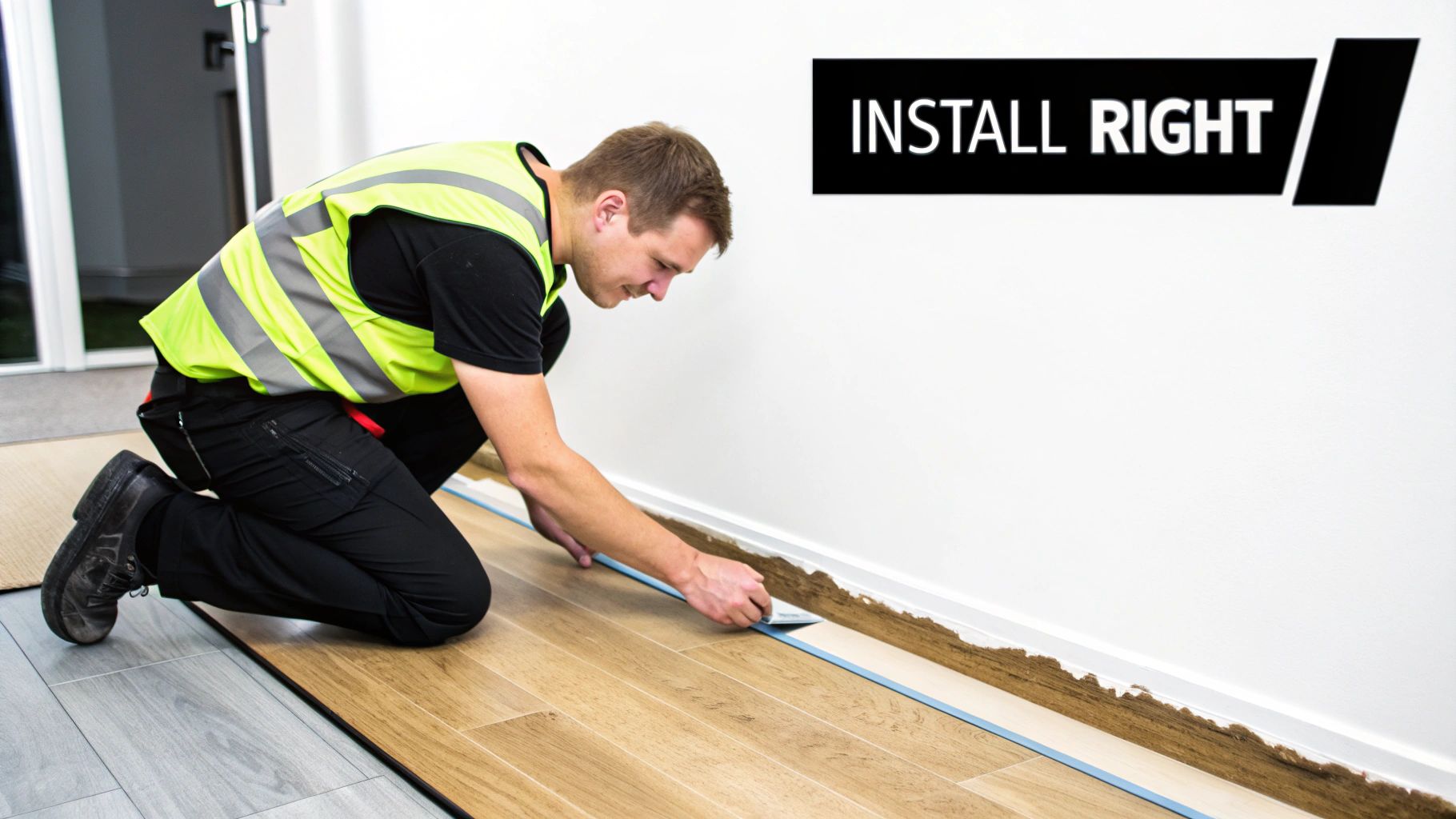
Subfloor Preparation Is Non-Negotiable
Think of it this way: your new laminate floor is only as strong as the foundation it sits on. That means the subfloor must be perfectly clean, flat, and dry before you even think about laying a plank. Any leftover debris, hidden moisture, or uneven spots will create serious problems down the road.
An uneven subfloor, for example, can keep the locking systems from clicking together securely, creating weak spots in your waterproof shield. Over time, this leads to planks that shift, squeak, or even snap under foot. Taking the time to properly level and prep the subfloor is the most critical first step you can take.
Acclimation Is a Must, Not a Suggestion
At its core, laminate is a wood-based product. And like all wood products, it expands and contracts with shifts in temperature and humidity. Skipping the acclimation process is one of the most common—and most costly—mistakes we see. You absolutely have to let the unopened boxes of flooring sit in the installation room for at least 48-72 hours.
This gives the planks time to adjust to your home's specific environment. If you install them straight out of the truck, they'll likely expand or shrink after installation, causing ugly buckling or gaps between boards.
Expert Insight from Flacks Flooring: "We see more installation failures from improper acclimation and subfloor prep than anything else. Homeowners are often in a rush, but these steps are what separate a floor that lasts two years from one that lasts twenty. It's the foundation of a successful project."
Avoiding Warranty-Voiding Mistakes
Some of the biggest installation blunders are the ones that instantly void your manufacturer's warranty, leaving you completely on your own if something goes wrong. Pay close attention to these details to keep your floor covered.
-
Forgetting the Expansion Gap: You have to leave a small gap, usually 1/4 to 3/8 inch, around the entire perimeter of the room. This tiny space is crucial, as it gives the floor room to expand without pushing against the walls and buckling. Don't worry, your baseboards and quarter-round molding will hide it completely.
-
Improper Perimeter Sealing: For a floor to be truly waterproof, its perimeter must also be waterproof. After the planks are down, that expansion gap needs to be filled with 100% silicone sealant before you install the moldings. This creates the final seal, stopping spills from seeping under the floor from the edges—a step required by most waterproof warranties.
-
Using the Wrong Underlayment: Always check the manufacturer's specific guidelines for underlayment. Using an unapproved pad or, even worse, doubling up by putting an underlayment under a plank that already has one attached can void the warranty and mess with how the locking system performs.
By carefully avoiding these common pitfalls, you can ensure your new floor looks and performs exactly as it was engineered to. A proper installation is the final, essential step in turning a great product into a lasting part of your home.
Our Final Verdict for Your Home
So, after laying out all the details on our top picks, what’s the final word? The truth is, there’s no single "best" waterproof laminate for every single person. The right floor for you hinges entirely on your life, your home, and your budget. This is about cutting through the noise of countless waterproof laminate flooring reviews and finding the one that fits your world.
It’s no secret that homeowners are leaning heavily into practical, water-resistant flooring. In fact, waterproof options now make up about a third of all flooring sales by value. That’s a huge leap from just 4% a decade ago, which tells you everything you need to know about where priorities are shifting. You can read more about why waterproof flooring is dominating the market on scharm.com.
Because everyone's needs are different, we’re not just going to give you a single winner. Instead, here’s our breakdown based on what matters most.
Maximum Durability for High-Traffic Homes
For a home that’s constantly buzzing with kids, pets, and general chaos, Mohawk RevWood is the clear front-runner. Its multi-layer defense system is built for the real world, and its scratch resistance—backed by a solid pet warranty—gives you one less thing to worry about. If your number one priority is a floor that can take a beating and still look great, this is it.
Flacks Flooring Final Takeaway: "Choosing the right floor is about anticipating your daily challenges. For a bustling family home, a floor that forgives spills and resists scratches isn't a luxury—it's essential."
Best Value for Budget-Conscious Renovations
If you’re looking for fantastic performance that won’t drain your bank account, AquaGuard Performance is a smart buy. It offers incredible dimensional stability, making it a great option for those large, open-concept spaces or even tricky areas like basements. It’s a versatile and reliable floor that delivers value well beyond its price tag.
Top Choice for Realistic Wood Aesthetics
For those who refuse to sacrifice style, Pergo UltraDefend is the one to beat. It brings together that legendary Pergo durability and an industry-leading 72-hour waterproof guarantee, but what really sets it apart are the visuals. The wood looks are some of the most authentic you'll find anywhere. This is the floor for when you want both beauty and brawn, no compromises.
Still Have a Few Questions?
Even with all the details, you might still be wondering about a few things. We get it. Let’s tackle some of the most common questions our team at Flacks Flooring hears from customers every day.
Can You Really Put Waterproof Laminate in a Full Bathroom?
Absolutely, but you have to do it right. Brands like AquaGuard are designed to handle the humidity and splashes of a full bathroom, but the installation is what makes or breaks it. Your subfloor needs to be completely level and prepped, and you must use a 100% silicone sealant around the entire room's perimeter.
This isn't an optional step—it's what creates a truly watertight barrier where the floor meets the walls, preventing water from getting underneath and voiding your warranty.
How Is This Different from Luxury Vinyl Plank (LVP)?
This is probably the most common question we get! While both are fantastic waterproof options, they have distinct personalities. Luxury vinyl plank (LVP) is a polymer-based product, which means it’s 100% waterproof through and through. It can technically sit in standing water without being damaged.
Waterproof laminate, on the other hand, has a high-density fiberboard core. This core gives it a more rigid, substantial feel underfoot that many people say feels more like real hardwood. High-end laminate also tends to have a slight edge in achieving ultra-realistic wood textures and grain patterns.
Expert Insight from Flacks Flooring: "The choice between laminate and LVP often comes down to location and feel. For a basement or bathroom that might see significant water, LVP’s synthetic core offers an edge. For living areas where you want maximum realism and a sturdier feel, today’s waterproof laminate is hard to beat."
What's the Best Way to Keep It Looking New?
The good news is, maintenance is incredibly easy. A quick sweep or vacuum (just be sure to use a hard floor attachment, not a beater bar) will handle daily dirt. When it's time for a deeper clean, a damp mop and a pH-neutral cleaner designed for laminate floors are all you need.
Here’s what to never do:
- Use a steam mop. The intense heat and moisture can penetrate the seams and damage the core over time.
- Flood the floor with water. A damp mop is perfect; a soaking wet one is not.
- Use abrasive cleaners or rough scouring pads. These will scratch the protective wear layer and dull the finish.
Ready to find the perfect waterproof floor for your home? The experts at Flacks Flooring can guide you through the best options for your lifestyle and budget. Explore our collection and get a personalized consultation by visiting us at our official Flacks Flooring website.