
That sinking feeling when you see your beautiful hardwood floors lifting or warping is unmistakable. What you're witnessing is "buckling," and the culprit is almost always one thing: excess moisture.
Think of a wood plank like a dry sponge. When it gets wet, it swells up. Now, imagine your entire floor doing that at once. With nowhere else to go, the planks push against each other and lift right off the subfloor. It looks dramatic, but it's a simple, and often fixable, physical reaction.
Understanding What's Behind Buckled Hardwood
When hardwood floors start to buckle, it's a big red flag that something is fundamentally wrong. The planks have absorbed too much moisture, expanded beyond their limits, and the resulting pressure is forcing them upward. While the sight can be alarming, the root cause is usually pretty straightforward. To fix it for good, you first have to understand exactly what causes hardwood floors to buckle.
In nearly every situation I’ve encountered, the problem traces back to a major moisture imbalance. Wood is a natural, porous material, which means it breathes and reacts to its environment—especially to humidity and direct water exposure. A sudden spike in moisture is all it takes to throw your floors into chaos.
Pinpointing The Two Main Culprits
The problem almost always comes down to one of two things: moisture from the environment or a mistake during installation.
Here in the Cumming, Milton, and Johns Creek areas, we get some seriously humid summers. That high ambient humidity can cause wood planks to slowly absorb moisture from the air and swell over time. A more immediate threat, however, is a direct water source like a leaky dishwasher, a busted pipe under the sink, or a flood in the basement. That kind of event saturates the wood fast.
On the other hand, a poor installation job can create a ticking time bomb. Every hardwood floor needs expansion gaps—small, hidden spaces left around the perimeter of the room. Wood naturally expands and contracts with the seasons. Without those gaps, the expanding wood has nowhere to go but up.
The Bottom Line: Buckling doesn't mean you have cheap or defective wood. It's a natural reaction to moisture causing the wood fibers to expand. The absolute first step in fixing the problem is finding where that moisture is coming from.
This simple flowchart can help you trace the issue back to its source.
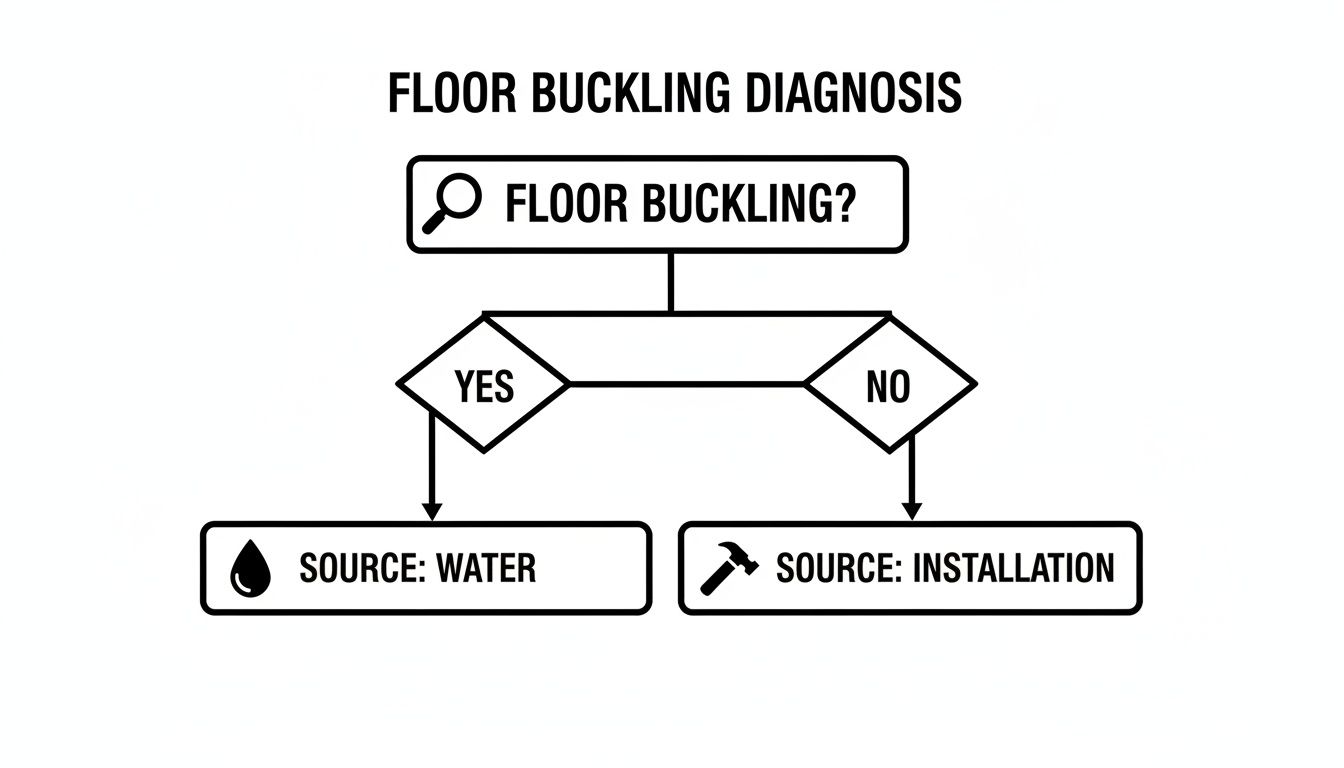
As you can see, the process is all about investigation. Start with the buckling, then work backward to determine if it’s a water problem or an installation flaw.
Quick Diagnostic Guide to Floor Buckling Causes
To help you troubleshoot, I've put together this quick-glance table. Use it to match what you're seeing in your home with the most likely cause.
| Potential Cause | Common Signs and Indicators | Where to Look First |
|---|---|---|
| Excess Moisture | Widespread, wavy buckling; cupped board edges; a damp feeling or musty smell in the room. | Check around appliances (dishwasher, fridge), under sinks, near exterior doors, and in basements or crawl spaces. |
| Improper Installation | Buckling is tight against the walls or baseboards; the issue appears soon after installation; planks are "tenting" in specific spots. | Inspect the perimeter of the room and any transition points where the hardwood meets another type of flooring. |
| Subfloor Issues | The buckling is isolated to a specific hump or dip; you feel spongy or soft spots when you walk on the area. | Head to the crawl space or basement to inspect the subfloor directly beneath the affected planks. |
Think of this table as your initial checklist. By carefully observing the signs, you can narrow down the possibilities and get a much clearer idea of what you're up against before making any decisions.
How Moisture Becomes Your Floor's Worst Enemy
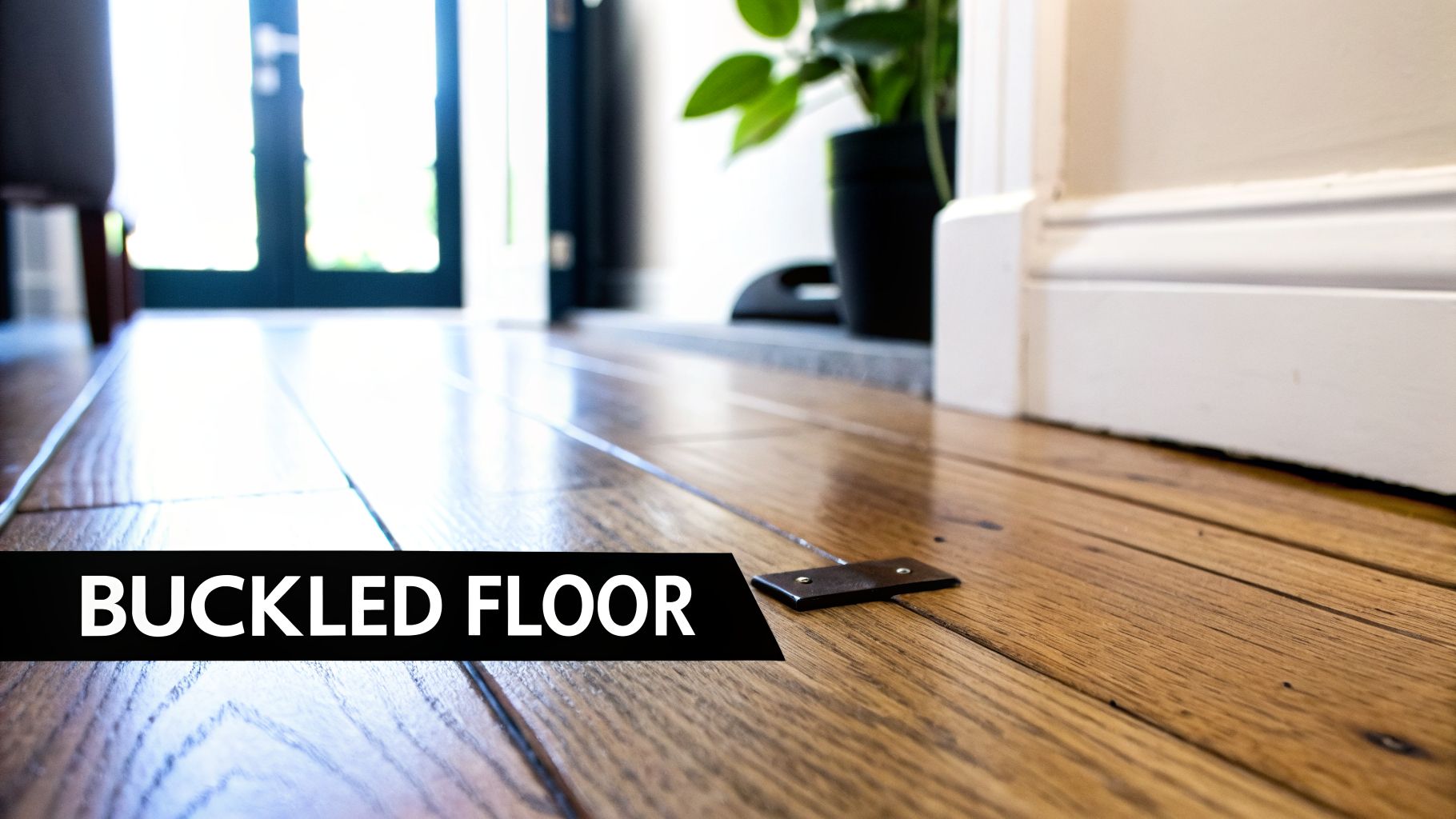
To really get what makes hardwood floors buckle, you have to understand one simple fact: wood and water have a very active relationship. Think of each plank in your floor not as a solid block, but as a tight bundle of microscopic, straw-like fibers. Like a sponge, these fibers will soak up any moisture they can find, causing the wood to expand.
A single plank swelling is no big deal. But when every board across an entire room starts expanding at the same time, they begin a massive shoving match. With no room to expand outward, the only place for that incredible pressure to go is up. That’s when you see those dreaded waves and humps we call buckling.
It's crucial to know this isn't a sign of defective flooring. It's wood doing what wood naturally does. The real trick is figuring out where the moisture is coming from and putting a stop to it.
The Obvious and Hidden Sources of Moisture
Water can find its way to your floors from all sorts of places, some sneakier than others. Here in our part of Georgia—from Cumming and Johns Creek to Milton—we’re dealing with both sudden water events and the relentless seasonal humidity.
Some culprits are easy enough to identify:
- Plumbing Leaks: That slow, forgotten drip from a dishwasher or under-sink pipe can quietly soak your subfloor and the floorboards above it.
- Appliance Failures: A busted washing machine hose or a leaky refrigerator icemaker can dump a shocking amount of water very quickly.
- Major Spills: A glass of water you wipe up right away is fine. But a larger spill that’s left to sit will find its way between the planks and start causing trouble.
The real villains, though, are often the hidden sources of moisture that do their damage over weeks or months. Water vapor can wick straight up through a concrete slab or seep out of a damp crawl space, creating a constant state of moisture your floors are forced to absorb. If your home has a concrete subfloor, it’s worth learning more about how to test concrete for moisture to see if it’s part of the problem.
The Battle Against Humidity
Anyone who’s lived through a North Georgia summer knows our humidity is no joke. When the air inside your home is thick with moisture, your hardwood floors are constantly breathing it in. This slow, steady absorption can eventually lead to the same expansion and buckling you’d get from a full-blown leak.
Your single best defense against buckling is keeping your home's indoor environment stable. For hardwood floors, the sweet spot for relative humidity is between 30% and 50%. You can easily track this with an inexpensive device called a hygrometer.
In fact, excess moisture is the undisputed champion of floor problems. It's the root cause in over 50% of all reported cases of buckled hardwood floors, especially in humid climates like ours here in Forsyth County. For those in Milton, where summer humidity can easily climb above 70%, keeping that indoor range between 30% and 50% is absolutely non-negotiable. A quality dehumidifier is one of the best investments you can make to protect your floors from absorbing all that ambient moisture.
Why a Bad Installation Guarantees Future Problems
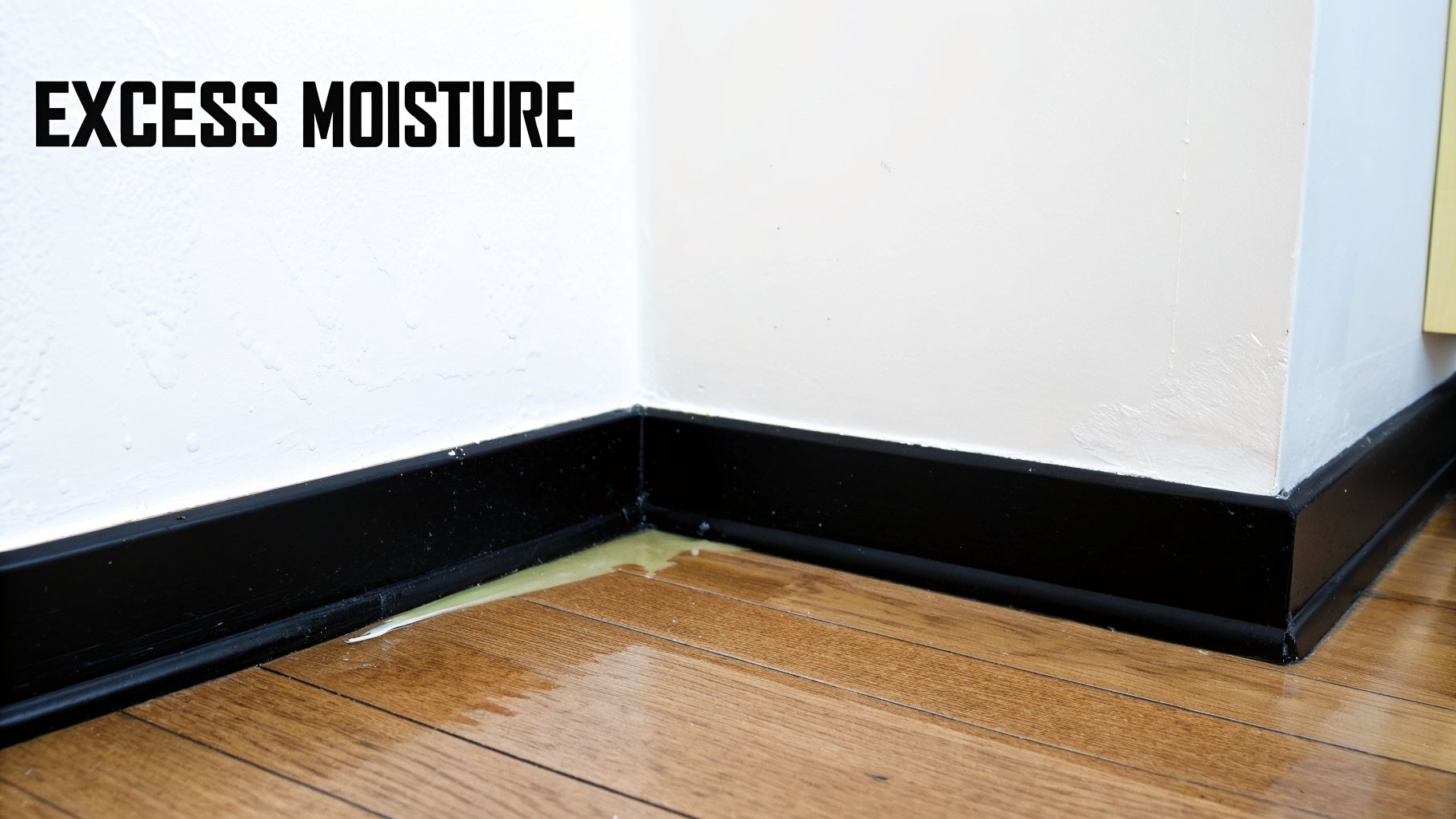
While moisture is the active ingredient in floor buckling, a poor installation absolutely sets the stage for disaster. You could have perfect humidity control and zero leaks, but if the floor was installed incorrectly, it’s just a matter of time before problems appear.
Unfortunately, many installation shortcuts aren't obvious until months or even years later. By then, the damage is already done. Installing hardwood is a science, not just basic construction. Every step is there for a reason—to account for how wood naturally behaves. When installers rush or skip these crucial steps, they're fighting against nature, and that's a battle your floors will always lose.
The Non-Negotiable Step: Acclimation
One of the most common and damaging mistakes is skipping acclimation. Wood is a natural product, and it needs time to get used to its new home. Before a single plank is ever laid, the boxes of flooring need to be brought inside and left to sit for several days.
This simple step allows the moisture content of the wood to sync up with the typical temperature and humidity inside your house. If this is rushed, planks installed when they're too "dry" will swell up in our humid Georgia air. On the other hand, planks installed when they're too "damp" will shrink and leave ugly gaps later on.
Why Expansion Gaps Are So Critical
Another frequent blunder is forgetting the expansion gap. Wood needs room to breathe. As it naturally expands and contracts with the seasons, it needs a small, hidden space around the perimeter of the room to move into. This gap, usually about the thickness of a dime, is neatly concealed by your baseboards.
Without that buffer zone, the expanding planks have nowhere to go. They push right up against the walls, creating immense pressure. That force has to go somewhere, so the wood lifts and buckles in the middle of the room. It’s a classic sign of an amateur job.
Pro Tip: A true professional understands that a hardwood floor isn't a static object; it's a living, breathing system. They'll meticulously prepare the subfloor, ensure proper acclimation, and calculate precise expansion gaps to give your floor the flexibility it needs to last a lifetime.
When you invest in new flooring, you’re also investing in the expertise of the person putting it in. It's worth understanding what goes into a high-quality professional floor installation to see why these details matter so much. Getting it right from the start prevents future headaches and protects your home.
What to Do When You First Spot a Buckled Floor
It’s a startling sight—a sudden wave or hill has appeared right in the middle of your beautiful hardwood floor. Your gut reaction might be to panic, but the best thing you can do is take a deep breath and act methodically. A quick, calm response can be the difference between a simple fix and a full-blown flooring nightmare.
First things first: get everything off the affected area. Move furniture, rugs, and any other heavy items from the buckled planks. This takes the pressure off the wood, which is under a tremendous amount of stress and could otherwise split. Once it’s clear, try to avoid walking on the raised section.
Now, it's time to put on your detective hat. The buckle is just a symptom; the real disease is excess moisture, and you need to find its source before more damage is done.
Tracing the Problem to Its Source
Think of this as an investigation. The culprit—unwanted water—is hiding somewhere, and you need to track it down and stop it at the source. Start your search right around the buckled spot.
Get down on your hands and knees and look for any clues, no matter how small they seem.
- Check Nearby Appliances: Is the buckling happening near a dishwasher, refrigerator ice-maker line, or a washing machine? Carefully inspect all the hoses and connections for slow drips or condensation.
- Inspect Plumbing Fixtures: Look under any nearby sinks in kitchens, bathrooms, or laundry rooms. A tiny, persistent leak is often invisible day-to-day but can easily saturate a subfloor over weeks or months.
- Examine Walls and Ceilings: Scan the walls for discoloration, bubbling paint, or soft spots. If there's a room above, check the ceiling for similar signs. This is often the tell-tale sign of a hidden pipe leak.
Local Insight: Here in the Cumming and Milton area, many homes have crawl spaces or basements. Don't forget to check downstairs! Grab a flashlight and look at the subfloor directly beneath the buckled area. You’re looking for any dampness, dark stains, or even a musty smell that signals a long-term moisture issue.
Assessing the Severity of the Damage
Once you've (hopefully) found and stopped the water source, you need to get a handle on how bad the situation is. Is this a minor swell that might go down on its own, or are you looking at a major repair?
Gently press on the buckled boards with your hand. Do they feel solid, or are they soft and spongy? Sponginess is a bad sign—it means the wood fibers are completely saturated and have lost their integrity.
Next, get a rough idea of the height. A slight rise of less than an inch might settle back down as things dry out. But a significant hump tells you the boards have expanded dramatically and probably won't ever lie flat again on their own.
Finally, look at the scope of the problem. Is it just a couple of boards in a small area? Or has the buckling spread across a large section of the room? Widespread damage is a clear signal that it's time to call in a professional.
Your Game Plan for Fixing and Preventing Buckled Floors
Alright, you've figured out why your floors are buckling. Now it’s time to switch gears from detective to first responder. Acting fast is the key to limiting the damage and paving the way for a smooth repair. Here’s how you can handle the immediate crisis and set up a long-term strategy to make sure this never happens again.
Your absolute first move: stop the source of moisture. It doesn't matter if it's a pinhole leak in a pipe, a sweating appliance, or poor drainage outside—shut off the water supply to that area right away. Every moment that water seeps into your subfloor and planks makes the problem exponentially worse.
Immediate First Aid for Your Floors
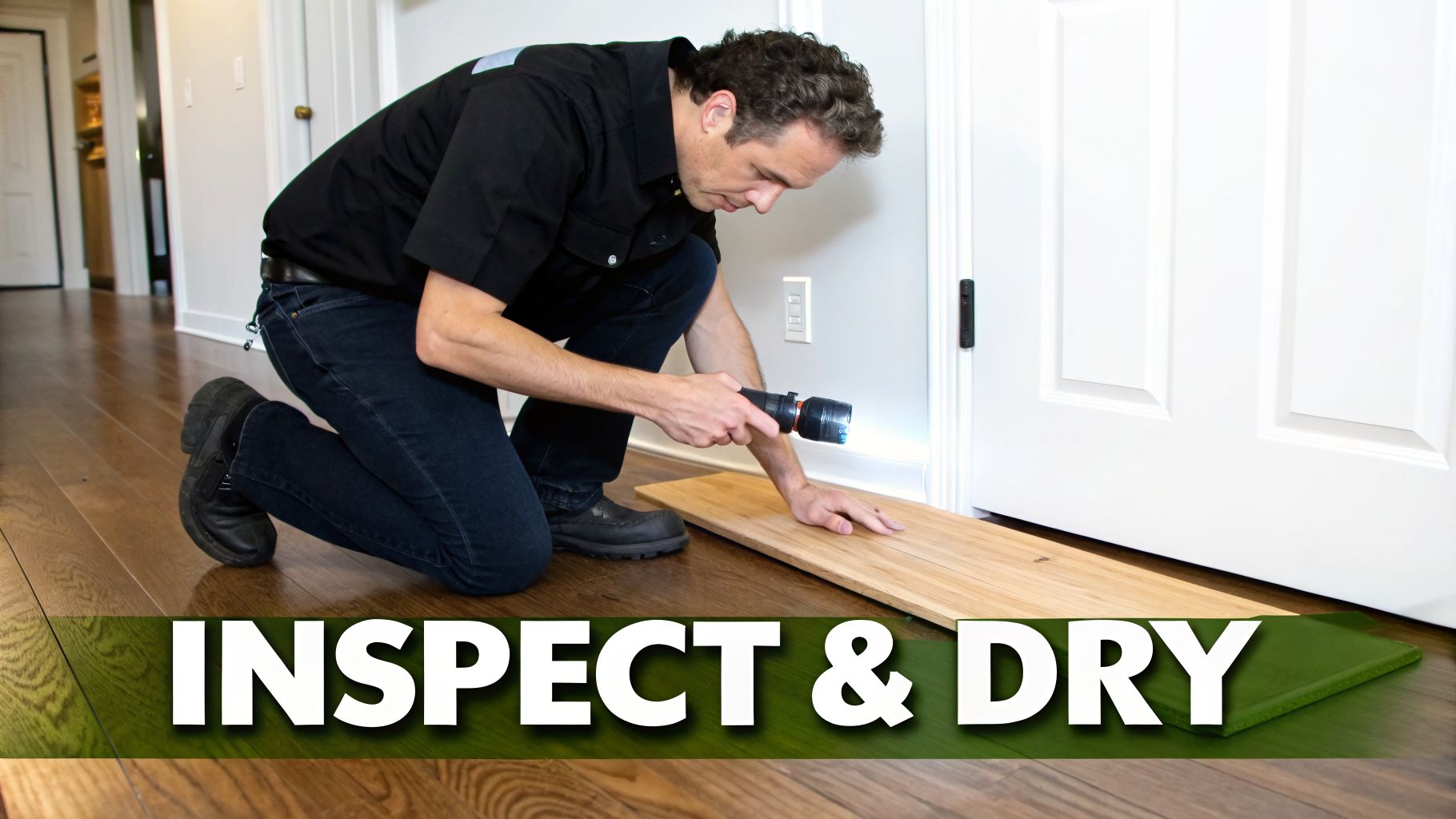
With the water source cut off, your next mission is to get everything dry. And I mean really dry. This isn't just about sopping up puddles; it's about pulling every last drop of moisture out of the air and the wood itself.
Start with towels to get rid of any standing water. Then, bring in the fans. You want to aim them directly at the buckled area, creating a constant airflow across the surface of the boards. This circulation is crucial for coaxing out the moisture trapped between the planks and deep within the wood grain.
For the moisture you can't see, a dehumidifier is your best friend. Especially here in Johns Creek and Forsyth County where the air can get thick and heavy, a good dehumidifier will pull an astonishing amount of water from the atmosphere. Your goal is to get the room's relative humidity back down to that sweet spot of 30-50%. If you're struggling with this, there are some easy and effective tips to reduce humidity in your home that can make a big difference.
It might be tempting to stack heavy books or furniture on the buckled spot to force it back down. For a very minor warp, this can occasionally work as the wood dries. But be careful. If the buckling is severe, adding weight can put immense pressure on the wood, causing the planks to splinter and crack.
Your Long-Term Prevention Checklist
Once the immediate disaster is averted and your floor is repaired, the focus shifts to prevention. A little proactive maintenance goes a long way and can save you a mountain of headaches and expense down the road.
Key Takeaway: The best defense is a good offense. Most flooring failures aren't one-time catastrophes; they're the result of small, unnoticed issues that build up over time. A dry, stable environment is your floor's best protection.
Your strategy from here on out is all about moisture control, both inside and outside your house. Here’s a simple checklist to get you started:
- Check Your Appliances: Twice a year, take a peek behind your dishwasher, refrigerator, and washing machine. Look for brittle hoses or slow drips at the connections.
- Mind Your Gutters: Make sure your gutters are clean and the downspouts are aimed well away from your foundation. You want water flowing away from your house, not pooling against it.
- Keep Basements and Crawl Spaces Dry: If you have a crawl space, check that it's properly ventilated or encapsulated. This stops ground moisture from rising up and into your subfloor.
- Choose the Right Foundation: A quality underlayment is your last line of defense, creating a crucial moisture barrier. To learn more, take a look at our guide on the best hardwood floor underlayment.
When It’s Time to Call a Flooring Professional
Some home repairs make for a great weekend project. Tackling a buckled hardwood floor, however, usually isn't one of them. While you might be able to manage a minor swell by simply drying out the area, more serious situations require the trained eye and specialized tools of a professional.
Trying to fix it yourself can sometimes make things worse. Knowing when to pick up the phone and call in an expert can save you a ton of headaches and money down the road.
Red Flags That Mean You Need an Expert
If you're dealing with any of the following, it’s a clear sign that this is a job for the pros.
- Widespread Buckling: Is the problem affecting a huge section of a room, or even multiple rooms? This isn't just a small spill; it points to a major underlying issue that a quick fix won't resolve.
- The Boards Won't Go Back Down: You’ve found and stopped the moisture, you've had fans running for days, but the planks are still stubbornly lifted. This often means the wood has expanded past its point of no return.
- A Spongy or Soft Subfloor: When you walk on the area around the buckle, does it feel soft, bouncy, or weak? That’s a bad sign. It almost certainly means your subfloor has been damaged by the moisture and needs professional repair.
- You See or Smell Mold: Any musty smells or visible dark spots are tell-tale signs of mold or mildew. This is more than a flooring problem—it's a potential health hazard that needs proper, safe remediation.
A flooring professional does more than just replace a few warped boards. They come equipped with tools like moisture meters to detect hidden dampness in the subfloor, making sure the real source of the problem is completely gone before they even start the repair.
This kind of thorough diagnosis is what makes the difference between a temporary patch and a long-lasting fix. It’s one thing to understand why floors buckle, but it’s another thing entirely to have the skills to fix the structural problem and make the repair blend in seamlessly. Calling a professional ensures the job is done right the first time.
Got Questions About Your Buckled Hardwood Floors?
When your hardwood floors start to lift, it's natural to have a million questions running through your mind. It’s a stressful situation. Here are some straightforward answers to the questions we hear most often from homeowners around Cumming and Johns Creek.
Can My Buckled Hardwood Floor Fix Itself?
It’s the first thing everyone hopes for, but honestly, it’s a long shot. If the buckling is extremely minor and was caused by a temporary humidity spike (like a few rainy Georgia days with the windows open), the boards might settle back down on their own as things dry out.
But this is a rare best-case scenario. For the most part, once wood gets soaked from a leak or has been buckled for a while, the damage is done. The wood fibers have been stretched and warped, and they've lost their original shape. They simply won't return to being perfectly flat without professional intervention.
How Much Does It Cost to Repair a Buckled Hardwood Floor?
This is a tough one to answer without seeing the floor, as the cost can swing pretty dramatically based on the severity of the problem.
- Minor Repairs: If you're lucky and it's just a small, contained area where a few boards need replacing, you could be looking at a few hundred dollars.
- Major Repairs: For widespread damage that requires tearing out large sections, fixing the subfloor underneath, and then weaving in new boards, the cost can easily climb into the thousands.
The only way to get a real number is to have an expert take a look. They need to find the source of the problem before they can even begin to estimate the repair.
Key Insight: Remember, the final bill isn't just for new wood. A true professional repair includes finding and fixing the moisture source, repairing the subfloor, and then expertly blending the new planks to match the color and finish of your existing floor. That’s a craft that takes real experience.
Will Waterproof Flooring Like LVP Buckle From Moisture?
Nope, and that's precisely why it's so popular. High-quality waterproof flooring like Luxury Vinyl Plank (LVP) is built differently. Its core is synthetic, so it doesn't absorb water the way wood does.
That means it won’t swell, expand, or buckle, even when faced with high humidity or direct spills. This makes it a fantastic, worry-free option for those areas of the house that are always a bit risky for hardwood, like basements, bathrooms, and laundry rooms.
At Flacks Flooring, we've seen it all, and we know how upsetting floor damage can be. Whether you're dealing with a buckling emergency or you're thinking about switching to a more moisture-resistant floor, we're here to help. Take a look at the beautiful, durable flooring solutions we offer at https://flacksflooring.com.