
When you're trying to figure out what a good flooring is for a bathroom, the best choices always come down to materials that can masterfully handle constant water, stand up to daily use, and are a breeze to clean. The top contenders you'll hear about again and again are porcelain tile, luxury vinyl plank (LVP), and certain types of natural stone. These materials are champs at fighting off moisture, which means you won't have to worry about the rot and mildew that plague less suitable options.
Navigating Your Bathroom Flooring Choices
Picking a floor for your bathroom is a whole different ballgame compared to any other room in the house. A living room floor needs to feel cozy and look great, and a kitchen floor has to be tough. But a bathroom floor? It's in a league of its own. It's constantly dealing with splashes, steam, and high humidity—a combination that can destroy the wrong material in no time.
It helps to think of your bathroom floor like the deck of a ship. It needs to be completely unfazed by water while giving you a safe, solid surface to stand on. The best options are engineered with exactly that challenge in mind.
Why Material Selection Is So Critical
This decision is about so much more than just looks. A floor that can't handle the wet conditions will eventually warp, stain, or become a breeding ground for mold, leading to expensive headaches down the road. This is precisely why materials like porcelain tile and luxury vinyl have become so popular; for all intents and purposes, they’re waterproof. Natural stone, while it does need to be sealed, brings a timeless elegance and will last a lifetime if cared for.
This guide is here to cut through the noise by focusing on the most dependable choices out there. We’ll compare them based on the factors that really count, helping you land on a floor that's not just beautiful but a sound, long-term investment for your home.
Choosing bathroom flooring isn't just a design decision; it's a functional one. Your primary goal should be to select a material that creates an impermeable barrier against moisture, protecting your home's structure from the ground up.
To give you a clear starting point, the table below offers a side-by-side comparison of the leading materials. You can use it to quickly see how each option measures up on water resistance, cost, durability, and upkeep.
Top Bathroom Flooring Options at a Glance
This table gives you a quick snapshot of the most popular bathroom flooring materials, helping you weigh the key factors that matter to homeowners.
| Material | Water Resistance | Average Cost (per sq. ft.) | Durability | Maintenance Level |
|---|---|---|---|---|
| Porcelain Tile | Excellent | $3 – $35 | Very High | Low |
| Luxury Vinyl | Excellent | $2 – $10 | High | Low |
| Natural Stone | Good (sealed) | $5 – $50 | Very High | Medium |
| Sheet Vinyl | Excellent | $1 – $4 | Medium | Low |
| Ceramic Tile | Very Good | $2 – $20 | High | Low |
Having this at-a-glance view can make your initial decision-making process feel much more manageable.
The Three Pillars of Great Bathroom Flooring
It’s easy to get swept away by a beautiful pattern or a trendy color. But before you fall in love with a particular look, it’s crucial to understand what makes a bathroom floor truly successful. Think of it like a checklist of non-negotiables that separates a fantastic, long-lasting floor from one that becomes a costly headache.
Getting these three fundamentals right gives you a solid framework for judging any material. It ensures your final choice is about more than just style—it’s about practicality, safety, and a floor that will stand the test of time.
Pillar One: Water Performance
Let's be honest: water is the number one enemy of most surfaces in a bathroom. Your floor is going to deal with splashes from the tub, constant steam from the shower, and drips from the sink. This is where you need to know the difference between waterproof and water-resistant.
Water-resistant flooring can fend off water for a little while, but if puddles sit too long, moisture will eventually find its way in and cause damage. Waterproof materials, however, form a complete seal that water simply can't get through. For a room as wet as a bathroom, waterproof is always the winning bet. You can dive deeper into this topic in our ultimate guide to moisture-resistant options.
Pillar Two: Durability and Longevity
Next up is durability. Your bathroom is a surprisingly high-traffic area, with family members in and out all day. The floor needs to be tough enough to handle everything from constant foot traffic to a dropped bottle of shampoo without scratching, chipping, or fading.
A great bathroom floor is one you can install and then practically forget about. It should look just as good years from now as it did on day one, holding up to daily life without needing special treatment.
This kind of resilience is what gives you real long-term value. When you invest in a durable material like porcelain tile or luxury vinyl, you won’t find yourself facing another remodel in just a few years.
Pillar Three: Safety and Slip Resistance
This last pillar is one people often forget about until someone takes a tumble. Safety is paramount, and a wet floor is a slippery one. That makes slip resistance a must-have feature, especially if you have kids or elderly family members at home.
The secret to a non-slip surface is in its texture and finish. Look for materials with a higher Coefficient of Friction (COF) rating, which is just a technical way of measuring how much grip it has. Materials with textured surfaces, matte finishes, or even smaller tiles (which mean more grout lines for traction) are excellent choices.
This push for safe, durable, and stylish flooring is a big deal in the industry. The global flooring market was valued at an impressive USD 360.7 billion in 2024 and is expected to keep growing as homeowners demand better solutions. It’s no surprise that choices like ceramic and porcelain tile are so popular—they tick all the boxes.
By keeping these three pillars—water performance, durability, and safety—in mind, you’ll be perfectly equipped to choose a bathroom floor that’s not just beautiful, but built to handle real life for years to come.
Exploring the Top Bathroom Flooring Materials
Now that we've covered the essentials—water resistance, durability, and safety—it’s time for the fun part: exploring the materials themselves. Choosing the right floor is about more than just picking a pretty color. It’s a balancing act, matching a material's inherent strengths with your family’s lifestyle, your design vision, and how long you expect it to last.
Let's break down the heavy hitters in the world of bathroom flooring. We’ll look at the champions like porcelain and ceramic tile, the modern marvel that is luxury vinyl plank (LVP), and the timeless elegance of natural stone. Each one brings something unique to the table, and by the end of this, you’ll have a much clearer idea of what makes for a good flooring in your bathroom.
The Undisputed Champion: Porcelain Tile
When clients ask me for the absolute toughest, most waterproof, and worry-free option, my answer is almost always porcelain tile. Think of it as the final boss of bathroom flooring. It’s a specific type of ceramic made from finer, denser clay that’s fired at incredibly high temperatures. The result is a tile that’s exceptionally hard and non-porous.
That density is its secret weapon. Porcelain has a water absorption rate of less than 0.5%, which is just a technical way of saying it’s virtually waterproof. Splashes from the tub, puddles on the floor, and constant steam are simply no match for it. That’s real peace of mind.
Porcelain tile isn't just water-resistant; it's genuinely waterproof. This quality alone makes it a premier choice for any area with high moisture, from a busy family bathroom to a luxurious primary suite.
Beyond its performance against water, porcelain is a beast when it comes to durability. It’s incredibly difficult to scratch, dent, or even stain. It handles heavy foot traffic and tough cleaning products without breaking a sweat, meaning it will look fantastic for decades. Plus, the design possibilities are endless, with styles that can perfectly mimic natural stone, concrete, or even rich hardwoods.
The Versatile Contender: Ceramic Tile
Ceramic tile is porcelain's very popular cousin and another fantastic choice for any bathroom. It's made from a slightly less dense clay and fired at lower temperatures, making it a bit more porous than porcelain. But don't let that fool you—once it's protected with a quality glaze, it becomes a strong, reliable barrier against moisture.
I often recommend ceramic as a great all-rounder. It strikes a beautiful balance between cost, toughness, and style. It's typically more affordable than porcelain, which can make a big difference in a larger renovation budget. When you're looking at tile, it helps to know what to look for, and this guide on how to choose bathroom tiles is a great starting point.
- Design Flexibility: Ceramic comes in a staggering variety of colors, shapes, and patterns, from classic subways to eye-catching mosaics.
- Ease of Maintenance: The glazed surface is a breeze to wipe clean and won't trap germs or allergens.
- Good Durability: While not as tough as porcelain, it's more than strong enough to handle the wear and tear of a typical family bathroom.
Just remember, with either porcelain or ceramic, your grout is your first line of defense. Using a high-quality, sealed grout is non-negotiable. It's what keeps water from getting between the tiles and prevents mold and mildew from taking hold.
The Waterproof Innovator: Luxury Vinyl Plank
Luxury Vinyl Plank (LVP) has completely changed the game in recent years, and for good reason. It's a true problem-solver. LVP is a synthetic floor built in layers, featuring a rigid, waterproof core and a surprisingly realistic image layer on top that can mimic wood or stone with stunning accuracy.
The key here is that this material is 100% waterproof, not just on the surface but all the way through. That means if water somehow manages to seep underneath, the planks themselves won't swell, warp, or fall apart. This makes LVP a go-to for bathrooms, basements, and laundry rooms. To really get into the weeds, check out our deep dive on what is luxury vinyl plank flooring in our comprehensive guide.
Another big plus? LVP feels warmer and softer underfoot than tile, which is a very welcome feature on a chilly morning. Its click-lock design also makes installation much faster and often more affordable, particularly for renovation projects.
The Timeless Classic: Natural Stone
If you’re aiming for pure elegance and a touch of organic luxury, nothing quite compares to natural stone. Materials like marble, travertine, slate, and granite bring an immediate high-end feel to a bathroom. Each tile is a unique piece of the earth, with its own veining, patterns, and subtle color shifts.
This incredible beauty, however, comes with a bit of homework. Unlike porcelain or LVP, natural stone is porous by nature. It absolutely must be sealed when it's installed and then resealed every year or two to protect it from water damage and staining.
- Aesthetics: It delivers a spa-like atmosphere that can seriously increase a home's value.
- Durability: With the right care, a stone floor will literally last a lifetime.
- Maintenance: It demands consistent sealing and requires pH-neutral cleaners to avoid scratching or dulling the surface.
Choosing natural stone is a commitment. It’s the perfect fit for someone who truly loves its timeless look and is ready to do the upkeep needed to keep it looking its best.
Detailed Pros and Cons of Bathroom Flooring
To help you weigh your options side-by-side, here is a quick breakdown of the main advantages and disadvantages of each material.
An in-depth look at the advantages and disadvantages of each primary bathroom flooring material to aid in decision-making.
| Flooring Material | Key Advantages (Pros) | Key Disadvantages (Cons) |
|---|---|---|
| Porcelain Tile | Extremely durable, waterproof (less than 0.5% absorption), massive design variety, low maintenance, stain and scratch-resistant. | Can be cold underfoot, grout lines require sealing and cleaning, harder surface (less forgiving if something drops), often higher installation cost. |
| Ceramic Tile | Very durable, water-resistant (when glazed), highly affordable, vast selection of styles and colors, easy to clean. | Slightly more porous than porcelain, grout requires maintenance, can be cold and hard, can chip under heavy impact. |
| Luxury Vinyl Plank (LVP) | 100% waterproof core, warm and comfortable underfoot, easy and often cheaper to install (DIY-friendly), very realistic wood/stone looks. | Can be dented or scratched by heavy/sharp objects, lower perceived value than tile or stone, quality can vary significantly by brand. |
| Natural Stone | Unmatched luxury and beauty, high-end aesthetic, increases home value, incredibly long-lasting with proper care, each piece is unique. | Porous and requires regular sealing, higher material and installation cost, susceptible to staining and etching from acidic products, can be slippery. |
Ultimately, each of these top-tier materials offers a compelling answer for your bathroom floor. The best choice is the one that perfectly aligns with your budget, your style, and how you live your life.
Flooring You Should Never Use in a Bathroom
Knowing what not to put on your bathroom floor is just as important as knowing what works. It can be tempting to run that beautiful hallway flooring straight into the bathroom for a seamless look, but this can be a recipe for disaster. Making the wrong choice isn't just a style faux pas—it's an open invitation for moisture damage, mold, and a total flooring failure.
Think of your bathroom as its own little ecosystem. It's humid, it gets puddles, and the temperature is always fluctuating. Not every material is cut out for that kind of abuse. Let's walk through the flooring types that just can't take the heat (and the water) and explain why they don't belong on your list.
Solid Hardwood: A Beautiful Mistake
There's no denying the classic, warm look of solid hardwood floors, but they are a huge gamble in a full bathroom. Wood is a natural material, and like any natural material, it's porous. When it's constantly exposed to water and high humidity, its fibers soak up moisture like a sponge.
That constant moisture absorption leads to a cascade of problems:
- Warping and Cupping: As the wood planks swell with water, they'll start to curl up at the edges (cupping) or twist completely out of shape (warping).
- Rot and Decay: All that dampness is the perfect setup for wood rot, which doesn't just ruin the floor but can also damage the subfloor beneath it.
- Stains and Discoloration: Water spots can leave behind permanent, ugly dark stains that ruin the wood's finish.
Even engineered hardwood, which has a more stable core, still has a top layer of real wood that's vulnerable to moisture. When it comes to the high-stakes environment of a bathroom, it's best to just say no to real wood flooring.
The Truth About Laminate Flooring
Laminate flooring has a reputation for being tough and water-resistant, but that's a common and costly misunderstanding. While the top wear layer can handle a splash or two, the core of a laminate plank is usually made of high-density fiberboard—which is basically just compressed wood dust.
The fiberboard core is laminate's Achilles' heel. As soon as water seeps through the seams between planks, it hits that core and causes it to swell up like a balloon. The damage is permanent and will destroy your floor.
Even the products sold as "water-resistant" have their limits. They might survive a quick spill you wipe up immediately, but they are not designed for the puddles and constant humidity of a bathroom. Sooner or later, water will find its way into the seams, and you'll be left with a buckled, ruined floor.
Why Carpet is a Serious Health Hazard
Wall-to-wall carpeting in a bathroom might bring back some fuzzy memories of the 70s, but there's a good reason we don't do that anymore. Carpet and its padding are basically one giant sponge, soaking up every bit of water from splashes, steam, and condensation. This creates a permanently damp environment that's a playground for all sorts of nasty stuff.
A carpeted bathroom is known for:
- Mold and Mildew: The trapped moisture and warmth create the perfect five-star resort for mold and mildew, which can cause musty odors and serious health problems.
- Being Impossible to Clean: You can never truly get a bathroom carpet clean and dry. That means bacteria and other germs can just hang out and multiply in the fibers.
- Breaking Down: Over time, the constant dampness will cause the carpet fibers, the backing, and the padding underneath to simply rot away.
At the end of the day, carpet is just unhygienic and completely impractical for any room that gets wet. It's no surprise that modern homeowners are moving toward functional, durable materials that can handle moisture. This shift is part of why the global flooring market is projected to grow from USD 501.1 billion in 2025 to USD 741.7 billion by 2035, as people demand smarter materials for tricky spaces like bathrooms. You can explore more flooring market statistics to see just how much these trends are influencing home design.
How to Select the Perfect Floor for Your Home
Alright, now that you have a good handle on the best materials (and which ones to run from), you're ready to make a smart choice. Picking the right flooring for your bathroom is about more than just finding a style you like. It's a practical decision that has to work with your budget, your lifestyle, and your overall design vision.
Let's walk through the final steps to make sure the floor you choose is the perfect fit for you and your home.
Define Your Total Project Budget
The sticker price per square foot is just the beginning. To avoid any nasty surprises down the road, you need to think about the total cost of the project from start to finish.
- Material Costs: This is your starting point, whether you're eyeing affordable vinyl or splurging on high-end natural stone.
- Installation Labor: Don't underestimate this one. Professional installation can be a big chunk of the budget, but for a bathroom, a flawless, waterproof install is absolutely critical.
- Subfloor Preparation: What's underneath matters. Your existing subfloor might need repairs, leveling, or a new underlayment, and that adds to the bottom line.
- Removal of Old Flooring: Tearing out the old floor isn't free. Remember to factor in the labor and disposal fees.
Thinking about the project as a whole gives you a much more realistic budget. It’s this kind of planning that homeowners across the country are doing. In fact, the U.S. residential flooring market accounted for a massive 51.7% of the industry's total share in 2022. It just goes to show how much people value flooring that's not only beautiful but also built to last, especially in a tough room like a bathroom.
Align Flooring with Your Lifestyle
Think honestly about how your bathroom gets used every single day. The floor that’s perfect for a rarely used guest powder room probably won't hold up in the chaos of a busy family bathroom.
Who's using the space? If you have young kids or elderly family members, safety is paramount. That makes slip resistance a non-negotiable feature. Look for tiles with a bit of texture or a high Coefficient of Friction (COF) rating to help prevent falls when the floor gets wet.
On the other hand, for a primary bathroom that sees a ton of foot traffic, you'll want something that's durable and easy to clean. Materials like porcelain or LVP are workhorses that can handle constant use and frequent mopping without looking worn out.
Match Your Design Vision
Your floor is one of the biggest design statements you'll make in the room—it sets the tone for everything else. Whether you're dreaming of a modern, spa-like escape or a classic, cozy space, your flooring needs to play a leading role. If you want to see how different options might look, you can even play around with a rendered floor plan visualization to get a better feel.
For a clean, contemporary vibe, large-format porcelain tiles in cool grays or crisp whites create a seamless, sophisticated look. If you lean more traditional, luxury vinyl plank that looks just like natural wood can give you that warm, classic charm without any of the water worries.
Don't forget that your flooring can also be a design tool. The right pattern or color can make a small bathroom feel much bigger and brighter. For more on that, check out our guide on picking the best flooring for a small bathroom.
Key Takeaway: The perfect bathroom floor isn't just one thing. It's where your budget, your daily routine, and your personal style all meet. If you start by focusing on water performance and safety, you'll end up with a floor that's as smart as it is beautiful.
This decision tree is a great little shortcut to help you avoid the common pitfalls of bathroom flooring.
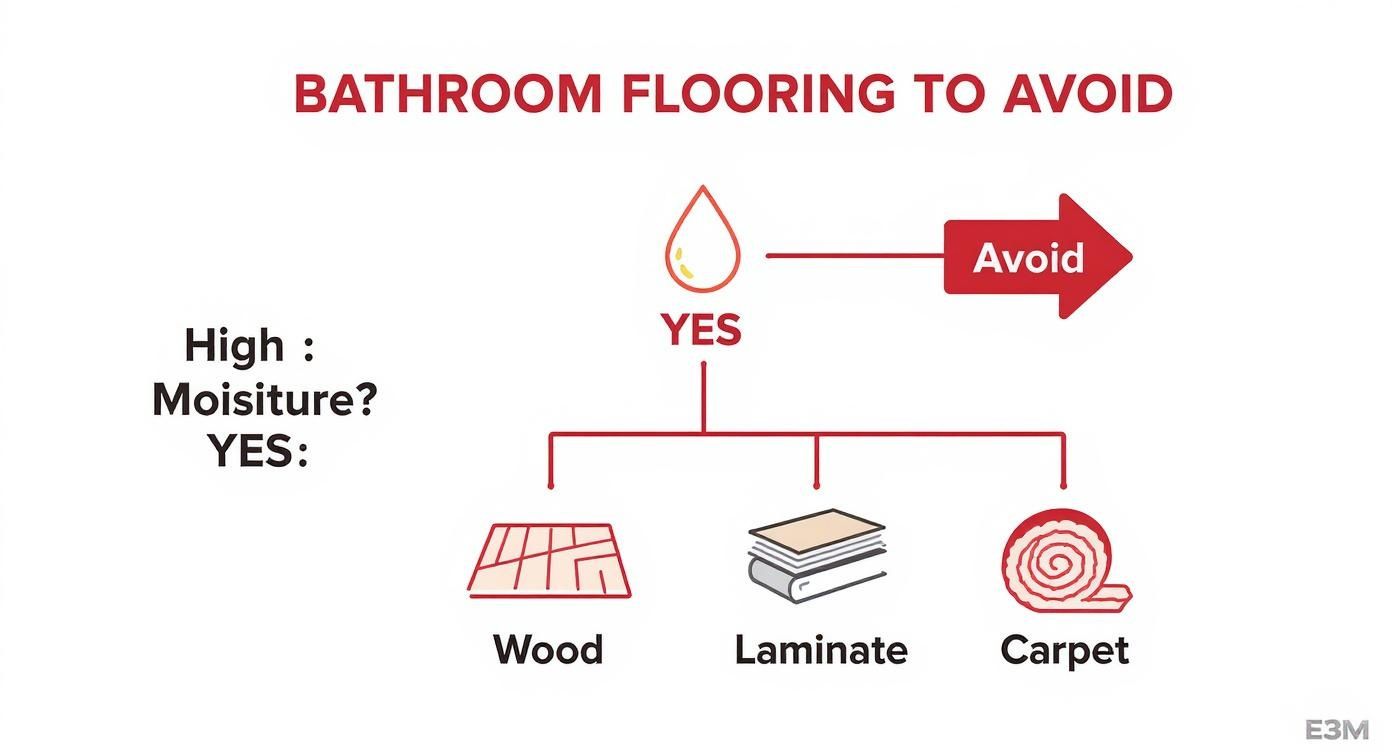
As you can see, the first and most important question is all about moisture. Answering that honestly immediately rules out materials that are simply destined to fail in a bathroom.
Got Questions About Bathroom Flooring? We've Got Answers.
When you're this close to making a final decision on your flooring, a few last-minute questions always seem to pop up. That's a good thing! Getting these details ironed out now is the key to choosing a bathroom floor you'll love for years to come.
Let's walk through some of the most common questions we hear from homeowners to make sure you're moving forward with total confidence.
What Is the Most Waterproof Bathroom Flooring?
If you're looking for a floor that's practically bulletproof against water, two options are in a league of their own: porcelain tile and luxury vinyl. Think of porcelain as a fortress. It's forged from super-dense clay at incredibly high temperatures, which gives it a water absorption rate of less than 0.5%. Basically, water just isn't getting in.
Luxury vinyl is a different beast altogether. As a synthetic material, it's engineered from day one to be 100% waterproof. No matter how many splashes, puddles, or steamy showers it endures, its core simply won't swell or buckle. Either choice gives you fantastic peace of mind.
Is Vinyl Flooring a Good Option for Bathrooms?
Yes, absolutely! Vinyl flooring is a brilliant choice for bathrooms, but it's important to pick the right type of vinyl. For maximum water protection, sheet vinyl or luxury vinyl tile (LVT) are your top contenders. Sheet vinyl is a game-changer because it's installed as one continuous piece, meaning there are zero seams for water to sneak through.
Luxury vinyl planks (LVP) and tiles are also great, but the installation has to be perfect. The click-lock system creates a very tight, water-resistant seal, but it's still made of individual pieces. If you want the most watertight solution possible, nothing beats the seamless surface of sheet vinyl or expertly installed LVT.
The name of the game in a bathroom is minimizing seams. Fewer seams mean fewer places for water to cause trouble. While LVP gives you that stunning hardwood look, the single-piece nature of sheet vinyl creates an almost infallible barrier.
How Can I Make My Bathroom Floor Safer?
Safety is a top priority, especially in a room where floors are bound to get wet. The good news is you can significantly reduce the risk of slips with a few smart choices.
- Pick a Textured Finish: Instead of a slick, polished tile, look for one with a matte or textured surface. That subtle texture gives your feet something to grip, even when the floor is damp.
- Go with Smaller Tiles: This might sound counterintuitive, but more grout lines are your friend here. Smaller tiles mean a grid of grout lines that act just like tire treads, channeling water away and giving you much better traction.
- Check the Slip-Resistance Rating: When shopping for tile, ask about its Coefficient of Friction (COF) rating. A higher COF number means more grip, making it a much safer pick for any wet environment.
Finding the right floor is one of the most important steps in creating a bathroom that’s both beautiful and functional. If you're ready to see some high-quality, waterproof options in person, the team at Flacks Flooring would love to help. Visit us online to browse our selection and schedule a consultation today!