
If you've ever played with LEGOs, you already understand the basic idea behind click lock vinyl flooring. It's a brilliant, modern flooring solution where the planks are designed to snap together perfectly, completely eliminating the need for messy glues or nails.
Each plank has a precisely engineered edge—a "tongue" on one side and a "groove" on the other. When you connect them, they create a super-strong, seamless fit. This simple yet effective system has made it a massive favorite for DIY enthusiasts and homeowners looking for a straightforward upgrade.
Answering Your Core Flooring Questions
At its core, click lock vinyl flooring is all about smart design meeting high performance. Instead of dealing with adhesives, it uses a finely milled locking system. You just angle a new plank against the one you've already laid, push down, and you’ll hear and feel it click firmly into place.
This creates a solid mechanical bond. Because the planks aren't glued down to the subfloor, the entire surface "floats" on top of it. This method isn't just clever; it's become wildly popular for a reason. As highlighted in the latest luxury vinyl flooring trends, this user-friendly approach is a big part of why it's dominating the market.
How This System Benefits You
The real magic of the click lock system is in what you don't have to do. There's no complexity, no sticky mess, and no waiting around for glue to dry. In fact, you can walk on your beautiful new floor the moment you lay the last plank.
This approach brings some huge advantages home:
- Truly DIY-Friendly: The click-and-lock design is so intuitive that almost anyone can get professional-looking results without paying for an installer.
- No Mess, No Fumes: Forget about strong chemical smells and sticky situations. The entire process is clean and straightforward.
- Incredibly Fast Installation: An average-sized room can easily be finished in just one afternoon. There’s absolutely no curing time needed.
The whole point of click lock technology is to put beautiful, durable flooring within everyone's reach, no matter their skill level. It turns what used to be a complicated, multi-day job into a rewarding weekend project.
Ultimately, understanding click lock vinyl is about appreciating its smart engineering. It’s a simple concept that delivers a tough, waterproof, and stylish floor with almost no fuss.
Now that we've covered the basics, let's break down the key features in a quick-glance table. This will give you a clear snapshot of what makes this flooring so popular.
Click Lock Vinyl Flooring At A Glance
| Feature | Description | Primary Benefit |
|---|---|---|
| Locking Mechanism | Planks have tongue-and-groove edges that click together. | Glueless Installation: Fast, clean, and requires no adhesives. |
| Installation Type | "Floating floor" system that sits on the subfloor. | Versatility: Can be installed over most existing hard surfaces. |
| Material Core | Typically made from a rigid, multi-layered vinyl composite. | Durability & Stability: Resists dents, scratches, and temperature changes. |
| DIY Suitability | Designed for easy installation with minimal tools. | Cost Savings: Reduces or eliminates the need for professional labor. |
This table neatly sums up why so many people are turning to click lock vinyl. It's a combination of strength, simplicity, and style that's hard to beat for modern homes.
Understanding the Anatomy of a Vinyl Plank
To really get what click lock vinyl flooring is all about, you have to look past the pretty surface. Each plank isn't just one solid piece; it’s a sophisticated, multi-layered "sandwich" where every single layer has a job to do. Working together, they create a floor that’s tough, beautiful, and surprisingly easy to live with.
It's a bit like a team where each player has a specific role. You've got your defense, your offense, and the solid foundation holding it all together. In a vinyl plank, these layers work in perfect sync to deliver performance day in and day out.
The Protective Wear Layer
Right at the top, you have the wear layer. Think of it as an invisible shield—your floor’s first and most important line of defense. This transparent coating is what takes the brunt of daily life, fighting off scratches, scuffs, and stains.
Its thickness is measured in mils (one-thousandth of an inch), and it's simple: a thicker wear layer means a tougher floor. For most homes, a wear layer between 12 to 20 mils is the sweet spot, giving you fantastic protection against everything from pet claws to kid chaos.
Just beneath that shield is the design layer, which is where the personality comes from. Using high-definition printing, manufacturers can create incredibly realistic visuals that mimic natural wood, stone, or even custom tile patterns. This is what makes your floor look so good.
The infographic below helps tie together how the core ideas behind click lock vinyl—its durability, glue-free installation, and overall simplicity—work in harmony.
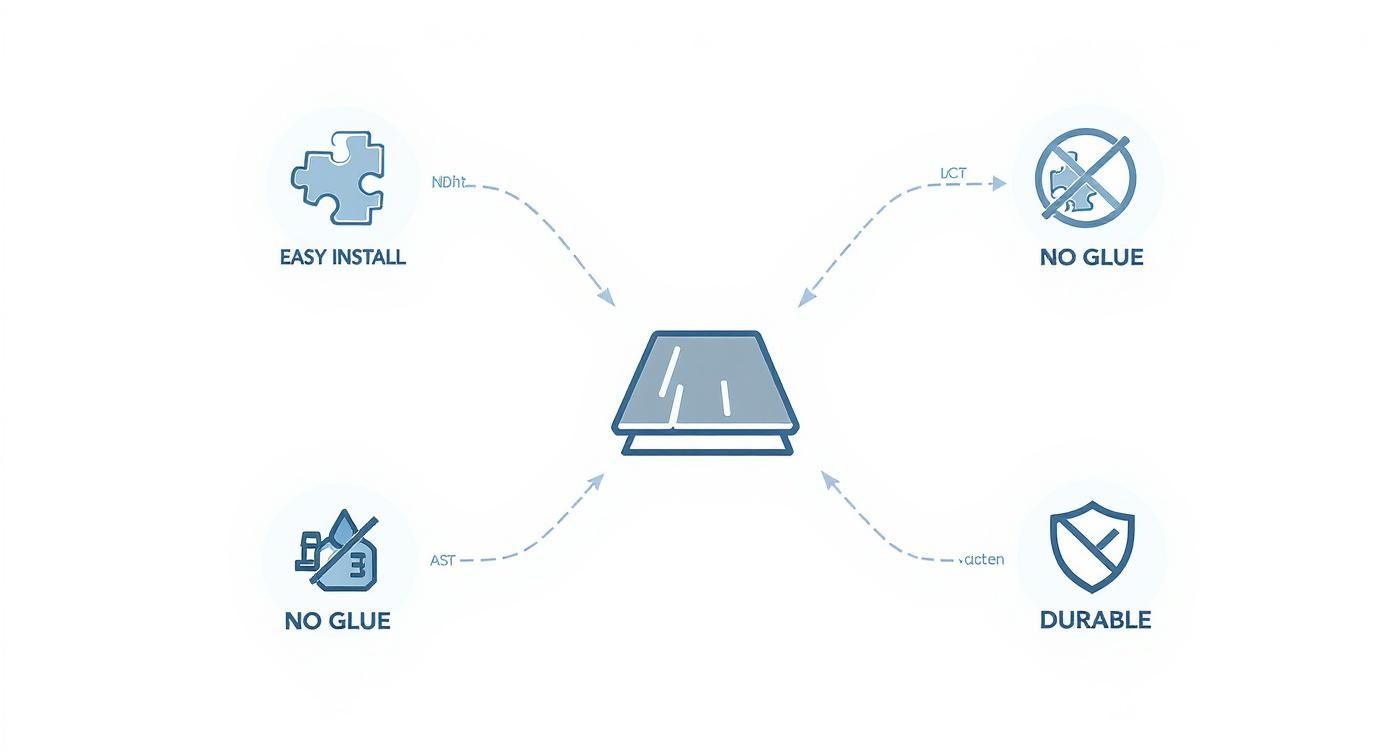
As you can see, the straightforward installation and built-in toughness are what really make these click lock systems so popular.
The Critical Core Structure
At the heart of every vinyl plank is its core. This is the workhorse layer that gives the plank its rigidity, structure, and stability. In fact, the type of core is the main thing that separates different kinds of luxury vinyl flooring from one another.
You'll generally run into a few key types:
- LVT (Luxury Vinyl Tile): The original luxury vinyl, LVT often has a more flexible vinyl core, which can feel a bit softer when you walk on it.
- SPC (Stone Plastic Composite): This core is a powerhouse, made from a mix of natural limestone powder and stabilizers. It’s incredibly dense and rigid, making it the champion of dent and impact resistance.
- WPC (Wood Plastic Composite): WPC cores blend wood pulp with plastic composites. The result is a floor that's thicker, quieter, and feels more comfortable underfoot.
The boom in rigid core products like SPC and WPC—which almost always use a click lock mechanism—has completely changed the game. Their superior stability and waterproof nature make them a great fit for literally any room in the house, from basements to bathrooms.
The Foundation and Backing Layer
Finally, holding it all together at the bottom is the backing layer. This is the plank's foundation, adding more stability and protecting it from any moisture that might creep up from the subfloor.
A lot of modern click lock planks come with a pre-attached underlayment or pad built right into this backing layer. It’s a huge plus, adding cushion for comfort, muffling sound, and saving you an entire step during the installation process.
Once you understand how these layers work together, you can see the clever engineering that makes luxury vinyl such a resilient and go-to choice for modern homes. If you'd like to dive deeper, you can learn more about luxury vinyl plank flooring in our complete guide.
The Real-World Perks of Choosing Click Lock Vinyl
Okay, let's move past the technical stuff—the layers and locking mechanisms—and talk about what really matters. What does choosing click lock vinyl flooring actually feel like in your home, day in and day out? The true magic is in the practical, real-world advantages that have made it such a go-to for so many homeowners. It’s about getting your weekends back and simply enjoying your space.
One of the biggest wins is the ability to install it yourself. The click-and-lock system is so intuitive that it turns a daunting flooring project into a genuinely doable weekend task. Not only does this save you a good chunk of change on professional labor, but there's a real sense of pride that comes with doing it yourself.
Designed for the Beautiful Chaos of Everyday Life
Let's be honest: life is messy, and your floors are on the front lines. This is where click lock vinyl really proves its worth with its incredible durability. That tough wear layer we talked about? Think of it as a bodyguard for your floor, fending off the daily abuse of a busy home.
- Pet-Friendly: It holds its own against pet claws and makes cleaning up muddy paw prints a breeze.
- Kid-Resistant: Spills, dropped toys, and the constant pitter-patter of little feet are no match for its tough surface.
- High-Traffic Ready: It’s built to look great even in the most heavily used parts of your home, like hallways and entryways, without showing its age.
This kind of resilience means you can actually live in your home without walking on eggshells, worried about every little scuff and spill.
At its heart, click lock vinyl flooring offers peace of mind. It’s engineered to handle life as it happens, from a spilled glass of juice in the kitchen to a new puppy tearing through the living room.
It's Genuinely Waterproof
Perhaps the most celebrated feature of click lock vinyl is that it’s 100% waterproof. We’re not talking "water-resistant" here; the planks themselves—from the core to the top layer—simply will not swell, buckle, or fall apart when they get wet. This one quality is a complete game-changer for so many rooms.
It opens up a world of design possibilities, allowing you to get that beautiful, warm wood look in places where real hardwood would be a nightmare. We're talking kitchens, laundry rooms, and even damp basements. Its excellent water resistance and durability make click-lock vinyl flooring a smart and stylish choice for wet areas like bathrooms. If you're planning a bigger project, getting a sense of the overall bathroom renovation costs can help you budget for the entire remodel.
Style, Comfort, and Effortless Maintenance
The advantages don't stop at being tough. Today's click lock vinyl comes in a staggering variety of designs, from hyper-realistic wood grains to chic stone and tile patterns, so you can nail whatever aesthetic you're going for. Many options also come with a pre-attached underlayment, which makes a noticeable difference—it's softer and quieter underfoot than hard surfaces like ceramic tile.
And the best part? Keeping it looking great is almost ridiculously easy. A quick sweep and the occasional once-over with a mop and a pH-neutral cleaner is all you need. No waxing, no polishing, no special treatments required. Your time is yours again.
Your Guide to a Flawless Installation
Ready to lay your new floor? The real beauty of click lock vinyl flooring is how straightforward the installation is. It’s designed to give even a weekend warrior a professional-looking result. The whole process is pretty logical, incredibly rewarding, and really just boils down to a few key principles that will make your floor look fantastic for years to come.
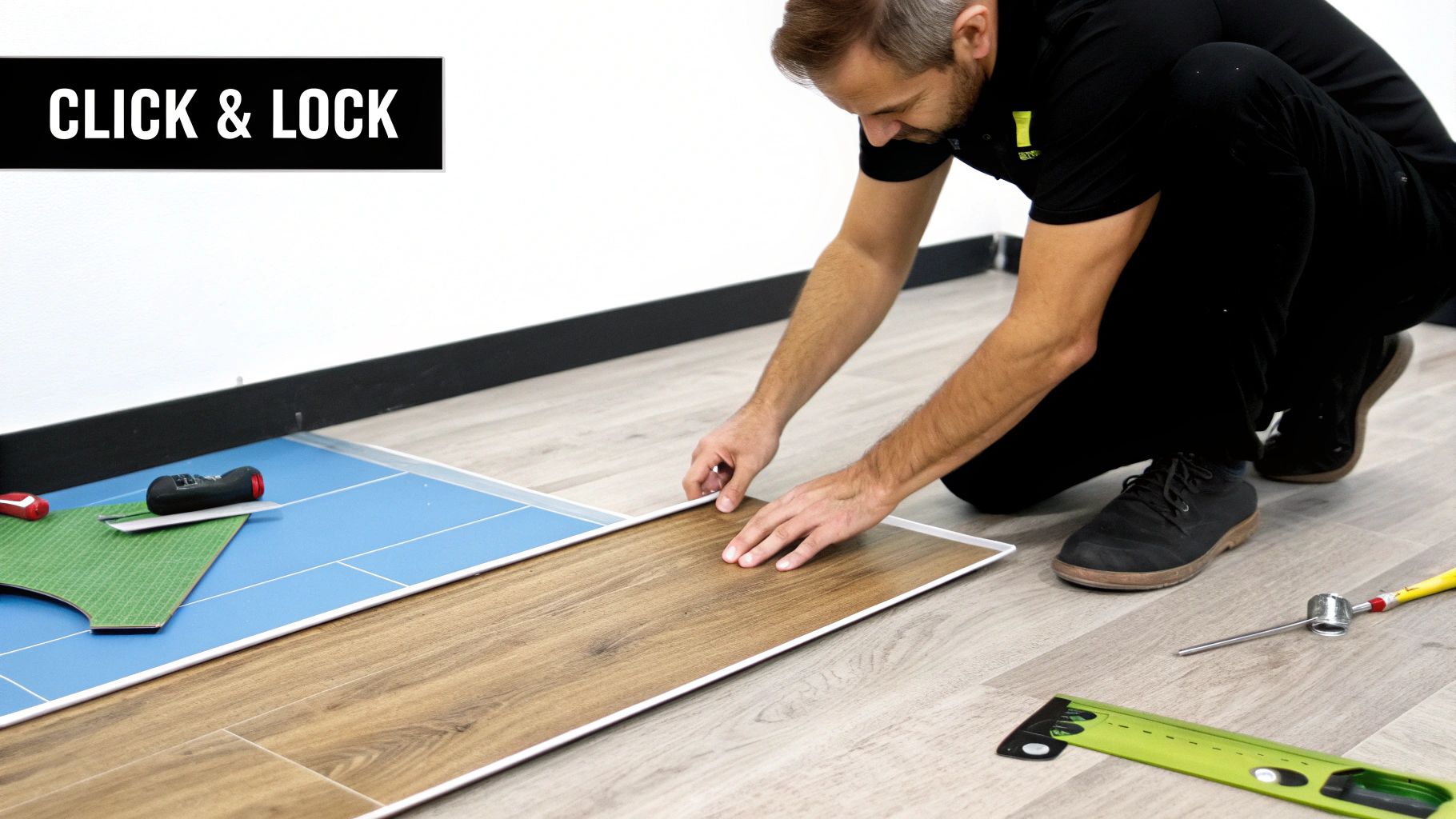
Here's a pro tip: the job doesn't start with the planks. It starts with the foundation they'll rest on. A successful installation is 90% preparation. Honestly, taking the time to get your subfloor right is the most critical step you can take. You're aiming for a surface that is clean, flat, and dry.
Subfloor Preparation: The Foundation of Success
Before you even think about laying that first plank, your subfloor needs some love. It doesn't have to be perfectly level (a common misconception), but it absolutely must be flat. That means no significant bumps or dips. While rigid core vinyl is forgiving and can bridge minor imperfections, bigger issues will cause the planks to flex or even separate over time.
Think of it as a pre-flight checklist for your floor:
- Cleaning: Give the area a thorough sweep and vacuum. Get rid of every last bit of dust and debris.
- Leveling: Run your hand or a straight edge over the floor. Find any high spots? Sand them down. See any low spots or cracks? Fill them with a floor-leveling compound.
- Drying: Make sure the subfloor is completely dry. This is especially important in basements or over concrete slabs where moisture can be an issue.
Once your subfloor is prepped, you're ready to use the "floating floor" method. This is where the magic of the click lock system really shines. The planks don't actually attach to the subfloor at all. They just lock tightly into each other, creating one solid, unified surface that "floats" right on top.
A non-negotiable rule for any floating floor is to leave a small expansion gap—usually about 1/4 inch—around the entire perimeter of the room. This little bit of space is crucial, as it allows the floor to naturally expand and contract with temperature changes without buckling.
The Art of the Click and Lock
With your space prepped and ready, it's time for the fun part. Start in a corner, typically working from left to right. Angle the tongue of a new plank into the groove of the one already in place, then gently push down. You'll hear and feel a satisfying click as it locks securely.
To get that authentic wood look, you'll want to stagger the seams between rows so they don't all line up perfectly. Most installers suggest a random stagger of at least 6-8 inches between the joints in adjacent rows. This looks more natural and adds structural strength.
When you get to the end of a row, you'll need to cut a plank to fit. The great part is that the leftover piece can often be used to start your very next row, which is a clever way to minimize waste. For more complex projects, checking out our guide to commercial flooring installation can provide some great pointers for handling larger, more challenging spaces.
Making those precise cuts around doorways or tricky corners is really what separates an amateur job from a pro one. A sharp utility knife or a dedicated vinyl floor cutter works perfectly for straight cuts. For more complex shapes, a jigsaw is your best friend. While we're talking about flooring, understanding how to handle vinyl in other applications can seriously boost your DIY skills. For instance, an external DIY guide for working with vinyl wraps might teach you some new cutting techniques you can apply here.
How to Choose the Right Vinyl Flooring
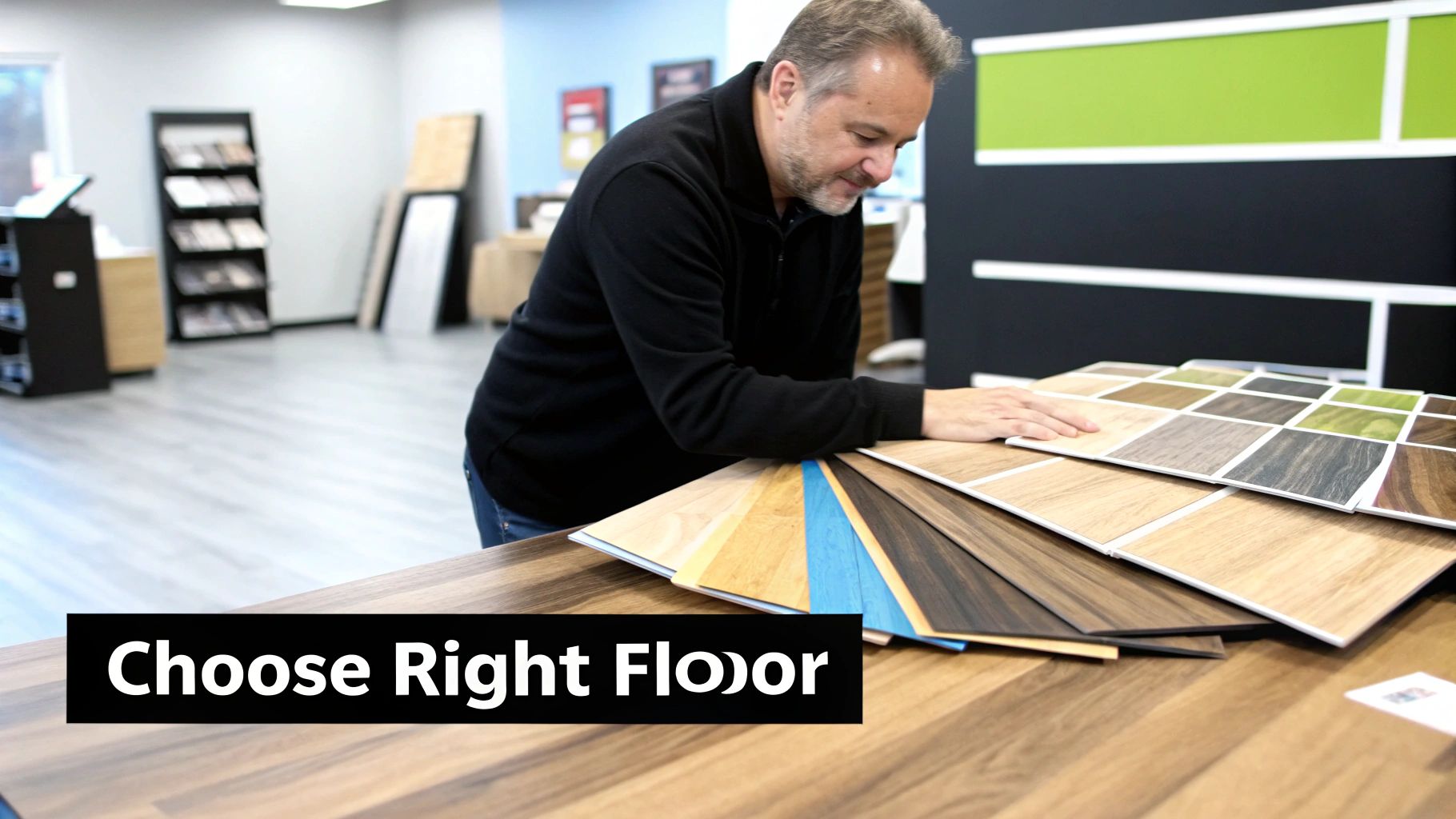
Walking into a flooring store can feel like navigating a maze of options. To shop with confidence, it helps to understand a few key details that separate a good floor from a great one. Knowing what to look for ensures you'll bring home a click lock vinyl floor that not only looks fantastic but also holds up to your life.
The single most important spec to check is the wear layer thickness. Think of it as your floor's invisible bodyguard. Measured in mils (one-thousandth of an inch), this clear topcoat is the first line of defense against scratches, scuffs, and spills. Simply put, a thicker wear layer means a tougher floor.
- For Low-Traffic Areas: A 12 mil wear layer is usually plenty for spaces like bedrooms or a home office.
- For High-Traffic Areas: In busy hallways, kitchens, or living rooms—especially with kids and pets running around—you'll want to look for 20 mil or higher for serious, long-lasting protection.
Selecting the Right Core for Your Space
Underneath that protective wear layer is the core, which gives the plank its rigidity and stability. When it comes to rigid core click lock vinyl, you'll mainly encounter two types: SPC and WPC. They might sound technical, but the difference is pretty straightforward.
SPC (Stone Plastic Composite) features an ultra-dense core made from a mix of limestone powder and stabilizers. This construction makes it incredibly tough and resistant to dents from heavy furniture or dropped items. Its rigidity is also a huge plus if your subfloor isn't perfectly even, as it helps hide minor imperfections.
On the other hand, you have WPC (Wood Plastic Composite). Its core is lighter and thicker because it's aerated, which gives it a slightly softer, warmer feel underfoot. It’s also better at dampening sound, helping to make rooms quieter. WPC is a fantastic choice for areas where comfort is key, like family rooms and bedrooms.
The choice between SPC and WPC really boils down to the room's purpose. SPC is the undisputed champ for durability in high-traffic zones or commercial spaces. WPC takes the prize for comfort and quiet.
To help you decide, here’s a quick side-by-side comparison.
Comparing SPC and WPC Rigid Core Vinyl
| Feature | SPC (Stone Plastic Composite) | WPC (Wood Plastic Composite) |
|---|---|---|
| Durability | Extremely high; highly resistant to dents and impacts. | Very durable, but softer and more prone to dents from heavy objects. |
| Feel Underfoot | Very firm and sturdy; feels more like tile. | Softer and more comfortable; provides more cushioning. |
| Sound Insulation | Less effective at absorbing sound. | Excellent; quieter to walk on and absorbs more ambient noise. |
| Temperature | Can feel cooler to the touch. | Warmer and more insulating. |
| Cost | Often slightly more affordable. | Typically a bit more expensive due to its thicker construction. |
| Best For | Kitchens, entryways, commercial spaces, and high-traffic areas. | Living rooms, bedrooms, playrooms, and basements. |
Ultimately, both are fantastic, high-performance floors. The versatility of these click lock systems has made luxury vinyl a popular and cost-effective alternative to classic materials like hardwood and tile, a trend noted in recent global flooring market reports.
Considering the Final Look and Feel
Once you’ve handled the technical specs, it’s time for the fun part: the aesthetics. Modern vinyl comes in an incredible variety of styles that can fool even a trained eye.
Wide planks can make a room feel more open and grand. Some styles even feature "embossed in register" textures, which means the grain you see perfectly matches the grain you can feel, creating an uncannily realistic wood look. To get a sense of what's out there, you can explore some of the best luxury vinyl flooring brands to see what fits your vision.
By balancing the wear layer, core type, and overall design, you can confidently find the perfect click lock vinyl flooring for your home.
Got Questions? We've Got Answers.
Alright, so you've got the basics down, but a few practical questions are probably rattling around in your head. It's one thing to understand what click lock vinyl is, and another to know how it will actually behave in your home, on your floors. Let's tackle some of the most common questions we get from homeowners every day.
Think of this as the final checklist to clear up any lingering doubts before you commit. We'll cover everything from tricky installations to what "waterproof" really means in the real world.
Can I Just Install This Right Over My Old Tile?
In most situations, yes! This is one of the biggest perks of choosing a rigid core click lock vinyl. The key is to make sure your existing tile floor is in good shape—meaning it's level, clean, and has no loose or cracking tiles.
Now, pay attention to the grout lines. If they're deep (think more than 1/4 inch), you'll want to skim-coat the floor with a self-leveling compound first. This quick step fills in those gaps, giving you a perfectly flat surface and preventing the new planks from flexing or creating weak spots over time. Rigid core vinyl, especially SPC, is fantastic here because its stiffness helps it glide over minor imperfections without any fuss.
Is This Stuff Really Waterproof?
The planks themselves? Yes, they are 100% waterproof. The materials they're made of—vinyl, composites, and sometimes limestone—simply don't care about water. They won't swell up, warp, or fall apart, which makes this flooring a go-to choice for bathrooms, kitchens, laundry rooms, and basements.
But here’s a crucial distinction to make: the planks are waterproof, but the entire floor system is not a submarine. The seams between the planks are tight, but they aren't hermetically sealed. If a huge spill happens and you let it sit for a long, long time, it's possible for moisture to eventually work its way through a joint and down to the subfloor.
So, while the floor is incredibly tough and water-resistant, you should still clean up major spills promptly. It’s just good practice for protecting your home’s structure underneath.
What if I Damage a Plank in the Middle of the Room?
Fixing a plank in the middle of a floating floor is a bit more involved than with glue-down vinyl, but don't worry—it's completely doable. You don't have to tear up half the room to fix one little spot.
Here’s the general process:
- Isolate and Remove: You'll need a sharp utility knife and a multi-tool to carefully cut out the damaged plank. The goal is to remove it without messing up its neighbors.
- Prep the Replacement: Take a new plank and, with your knife, carefully slice off the tongue on one long side and the groove on the corresponding short side. This little modification is what allows it to drop into place.
- Lock It In: Apply a very thin bead of a quality seam sealer or vinyl adhesive to the edges of the modified plank. Gently press it into the opening, and the adhesive will create a solid bond with the surrounding planks.
How Is This Different from Laminate Flooring?
This is probably the number one question we hear, and it's a good one because they can look almost identical. The real difference is what’s on the inside—the core.
Laminate flooring is built on a high-density fiberboard (HDF) core. At the end of the day, that core is a wood product. If water gets past the top wear layer and soaks into that HDF, it will swell, bubble, and warp. Once that happens, the damage is permanent.
Click lock vinyl, on the other hand, is made from waterproof materials from top to bottom. That built-in immunity to moisture makes it a much safer bet for any room that might see spills, splashes, or humidity. While both do a great job of mimicking real wood, you’ll also find vinyl is a bit quieter and has a slightly softer feel underfoot.
Ready to find the perfect waterproof floor for your home in Cumming or Johns Creek? The experts at Flacks Flooring are here to help you navigate all your options and answer any other questions you may have. Explore our selection online at https://flacksflooring.com or visit our showroom for personalized guidance.