
When you think of flooring, materials like hardwood, tile, or carpet probably come to mind first. But there's another option, one that’s been around for ages and is making a serious comeback: cork.
Cork flooring is made from a 100% natural and renewable material—the bark of the Cork Oak tree. The harvesting process is pretty amazing. Instead of cutting the tree down, skilled harvesters gently remove the bark by hand. It’s like giving the tree a haircut; it doesn’t cause any harm, and the bark simply regrows. This can be done every nine years, making it an incredibly sustainable choice.
What Exactly Is Cork Flooring?
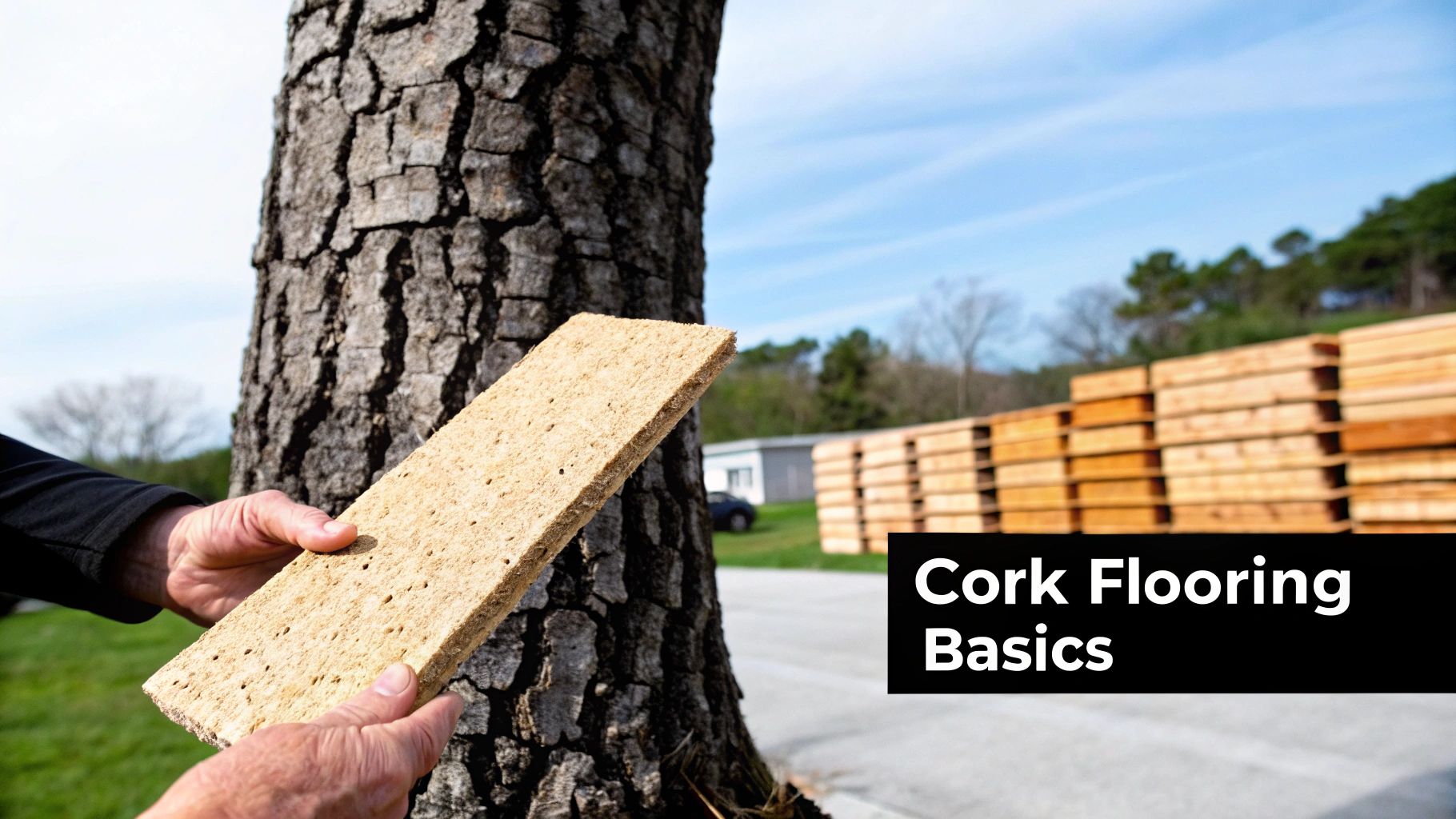
So, what makes this tree bark so special for floors? It all comes down to its incredible natural structure. If you looked at cork under a microscope, you'd see something that looks a lot like a honeycomb. Every cubic inch of cork is packed with millions of tiny, air-filled cells.
This unique composition is the secret sauce behind cork's best qualities. It’s a material that truly performs differently from others. When you compare different flooring types like vinyl, laminate, and hardwood, you'll see that cork offers a combination of benefits you just can't find anywhere else.
This honeycomb-like structure isn’t just for looks; it's a functional powerhouse. It's what gives cork a soft, cushioned feel underfoot, provides natural thermal insulation, and dampens sound like a charm.
In practical terms, this means a cork floor is comfortable to stand on, helps keep your rooms warmer in winter and cooler in summer, and quiets down the noise of footsteps and daily life. It’s a triple-threat of comfort, efficiency, and peace.
For those who want a quick snapshot, here's a rundown of what makes cork flooring stand out.
Cork Flooring At a Glance
| Feature | Description |
|---|---|
| Material Source | Bark from the Cork Oak tree, a 100% natural and renewable resource. |
| Feel Underfoot | Soft, cushioned, and warm to the touch. |
| Insulation | Provides excellent natural thermal and acoustic insulation. |
| Durability | Resilient and "bounces back" from dents and impacts. |
| Sustainability | Harvested without harming the tree, making it an eco-friendly choice. |
This table gives you the highlights, but let's dive a little deeper into these characteristics.
Main Characteristics of Cork Flooring
To really get a feel for what cork flooring is all about, it helps to look at its core features. These are the qualities that make it such a compelling choice for homeowners here in Cumming, GA, and all over the country.
- Eco-Friendly and Sustainable: The harvesting process is completely harmless to the Cork Oak tree, which can live for over 200 years. This makes it one of the most environmentally responsible flooring options you can choose.
- Natural Comfort: Those tiny air pockets create a natural cushioning effect. It's a lifesaver for your feet, joints, and back, especially in rooms where you spend a lot of time standing, like the kitchen.
- Excellent Insulator: Cork is a fantastic natural insulator for both temperature and sound. It helps keep your energy bills down and makes your home a quieter, more peaceful place.
- Resilient and Durable: While it feels soft, cork is tougher than you'd think. It has a natural "memory," allowing it to spring back from indentations left by furniture or dropped objects.
These foundational traits are just the beginning. They set the stage for all the other benefits that cork can bring into your home.
The Surprising Benefits of Cork Floors
Cork flooring isn’t just about being green—though that’s a huge plus. It brings a whole host of practical benefits that you’ll feel, hear, and appreciate every single day. The real magic is how its natural structure works to make your home more comfortable, quieter, and healthier.
The first thing you'll notice is just how comfortable it is to walk on. Cork has a unique cellular makeup, basically millions of tiny, air-filled pockets, that creates a natural cushion underfoot. This subtle give eases the strain on your feet, joints, and back, which is a lifesaver in rooms where you're on your feet a lot, like the kitchen.
A Natural Insulator for Comfort and Sound
Those same little air pockets that make cork soft also make it a fantastic insulator for both temperature and sound. It’s like having a built-in blanket right in your flooring.
- Thermal Insulation: Cork is great at holding a steady temperature. It feels warm and pleasant under bare feet in the winter and doesn't get hot in the summer sun, which can even help trim your energy bills.
- Acoustic Insulation: It’s a superstar at deadening sound. You'll notice less echo from footsteps and a serious drop in noise traveling between floors. It’s perfect for upstairs bedrooms, hallways, or kids' playrooms.
This one-two punch of insulation creates a home that’s not just more efficient, but also far more peaceful.
Cork’s ability to muffle sound is a game-changer for busy households. The clatter of dropped toys, the click of pet claws, or the sound of someone walking upstairs are all softened, contributing to a more serene atmosphere.
A Healthier Choice for Your Home
If you're concerned about indoor air quality, especially in places like Johns Creek and Milton, cork flooring is a fantastic choice. It comes with natural features that help keep your home's environment clean.
Cork is naturally hypoallergenic. It contains a waxy substance called suberin, which acts as a natural repellent for dust, mites, and even mold. Carpets are known for trapping allergens, but cork’s smooth surface gives those irritants nowhere to hide. That's a huge relief for anyone dealing with allergies or asthma.
Remarkable Durability and Resilience
It might feel soft, but don't let that fool you—cork is surprisingly tough. That same cellular structure gives it a unique "memory." When heavy furniture puts pressure on the floor, the air cells compress. But once you move the furniture, they bounce right back, helping the floor resist those ugly dents.
This resilience means cork can absolutely handle the daily chaos of a busy family. While sharp objects can still cause scratches, a good quality factory finish offers a strong layer of protection. If you take care of it, a cork floor can last for decades, proving that you don't have to sacrifice durability for comfort. It’s a smart investment that pays off for years to come.
From Sustainable Forest to Your Floor
The story of your cork floor doesn't start in a factory or a showroom. It begins in the sun-drenched cork oak forests of Portugal and Spain, where a tradition centuries in the making is still practiced by hand.
Skilled harvesters, known as extractors, carefully peel the bark from the Cork Oak tree. It’s a delicate art, done with precision to ensure the tree isn't harmed. This can only be done once every nine years, and a single tree can live for over 200 years, offering up its bark time and time again. Think of it like a sheep getting a haircut; the tree is left perfectly healthy and ready to grow a new coat. This careful, regenerative cycle is why cork is celebrated among top sustainable interior design materials.
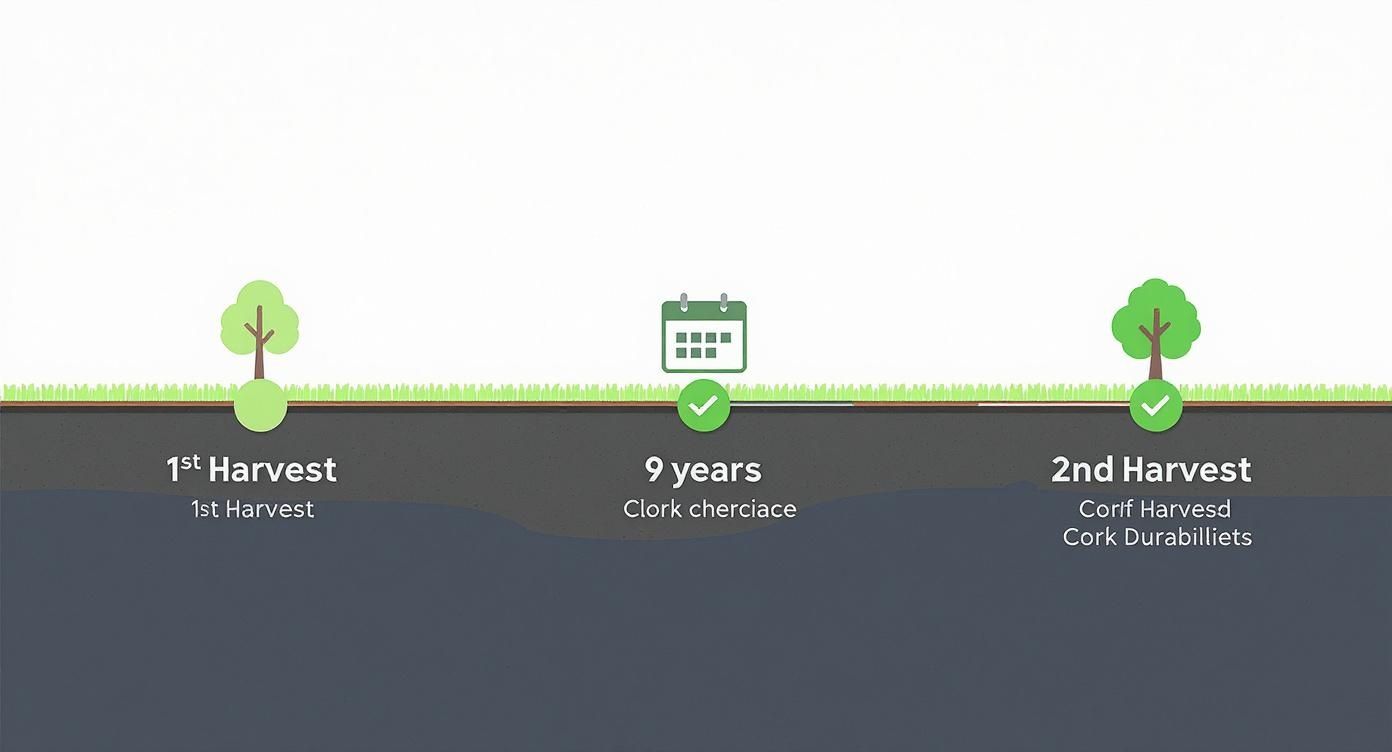
The infographic above really brings this cycle to life. That long, nine-year waiting period is the key to what makes cork a genuinely renewable resource, ensuring the health of the tree and the entire forest ecosystem.
From Bark to Block
So, how does that raw bark become the floor under your feet?
First, the thick planks of bark are boiled in water. It’s a simple but crucial step that cleans the cork, makes it more elastic, and flattens it out for the next stage.
Next, the boiled cork is ground up into granules. These tiny pieces are then mixed with a binder and pressed into dense blocks using a combination of heat and pressure. It's an incredibly efficient process that generates almost no waste. This "behind-the-scenes" journey shows why cork is such a star in the green building world and a fantastic example of a beautiful, functional product that works with nature, not against it. Curious how cork compares to other green materials? Take a look at our breakdown of eco-friendly flooring options.
The entire manufacturing process is designed to respect the material. It preserves the natural properties of cork, resulting in a floor that’s about as close to nature as you can get indoors.
It's no surprise that Europe, especially Portugal and Spain, still leads the world in cork production. After all, that's where the forests are. But what’s interesting is the growing demand in North America, as more and more homeowners prioritize things like indoor air quality and non-toxic materials in their homes. This global appreciation really cements cork's reputation as a premium choice for a healthy, beautiful home.
Exploring Modern Cork Flooring Styles
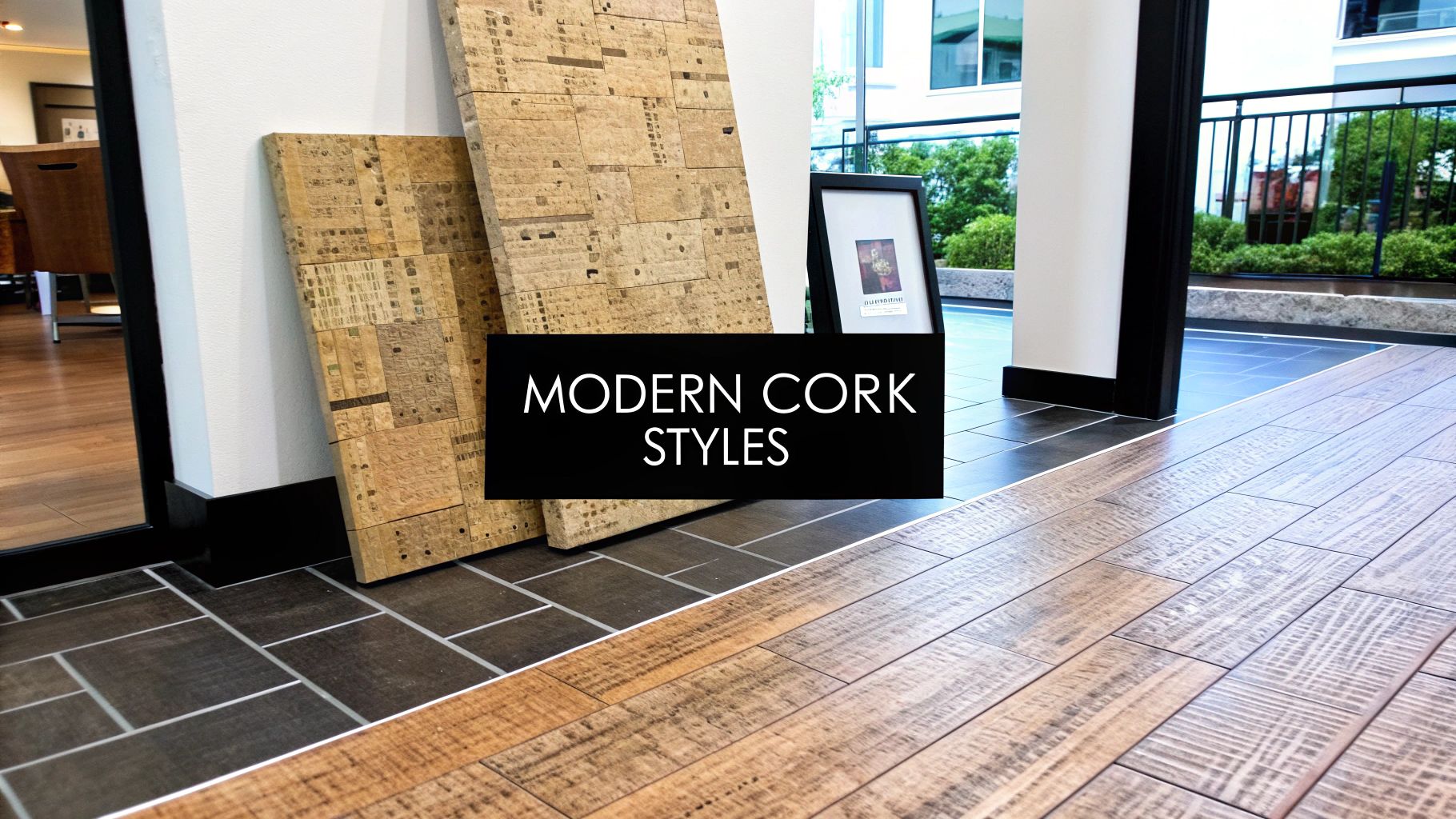
If you hear "cork flooring" and immediately picture a bland, 1970s bulletin board, you're not alone. But it's time to hit the reset button on that image. Modern cork flooring is a design chameleon, capable of fitting into just about any interior style you can dream up, from rustic modern to ultra-sleek contemporary. The cork of yesterday is gone. Today is all about choice.
A big part of that transformation comes down to color. Manufacturers now offer an incredible spectrum of factory-applied stains. We're talking everything from bright, airy whites and cool grays that open up a space, to deep, moody charcoals and rich browns that have all the drama of dark hardwood. There's a shade to match any vision.
The real magic, though, is in the manufacturing. Recent product innovation, driven by new tech, has blown the doors wide open on what cork can look like. Using advanced digital and UV-cured printing, companies can now apply hyper-realistic patterns directly onto the cork surface. It’s these kinds of industry advancements and market growth that are giving homeowners so many exciting new options.
Beyond the Classic Cork Look
This printing technology is a game-changer. It means you're no longer limited to the natural, speckled grain of cork. You can get a floor that looks exactly like another premium material but still feels like, well, cork.
- Wood-Look Cork: Ever wished your hardwood floors were a little softer or quieter? Now you can have the beautiful grain of oak or the rich warmth of walnut printed onto a cork plank. You get the look you love with a much more forgiving feel underfoot.
- Stone and Tile Visuals: Imagine the elegant look of slate, marble, or ceramic tile in your kitchen or basement, but without the ice-cold shock to your feet on a winter morning. It's the perfect blend of high-end style and everyday comfort.
- Geometric and Abstract Designs: For those who want their floor to be a true statement piece, you can find cork with bold geometric patterns, subtle textures, or artistic prints that demand attention.
Planks vs. Tiles: More Than Just Shape
The format of the cork—whether it comes in planks or tiles—also has a massive impact on the final look and feel of your room. It’s a crucial design choice.
The choice between planks and tiles is more than just practical; it’s a design decision. Planks create flow and a sense of spaciousness, while tiles allow for creative patterns and a more classic, defined look.
Wide planks are fantastic for achieving that seamless, contemporary flow. They pull your eye across the room, which is a great trick for making a space feel larger and more open. This format works especially well in living rooms, hallways, and any open-concept area.
On the flip side, classic tiles give you the freedom to get creative. You can lay them in a timeless checkerboard pattern, create a subtle mosaic effect, or just go with a clean, uniform grid. This versatility makes tiles a great option for kitchens, entryways, and bathrooms—places where you might want to inject a little more personality.
A Practical Guide to Installation and Care
So, you're bringing a cork floor into your home. That's fantastic. Getting the installation and care right from the start is what will make you love it for decades to come. It’s all about preserving that natural beauty and resilience so it’s a joy to live on every day.
Proper installation really boils down to picking the right method for your space. There are two main ways to go, and each has its own perks depending on the room and how comfortable you are with a weekend project.
Floating Planks vs. Glue-Down Tiles
Most people, especially for living rooms and bedrooms, go with click-lock floating planks. If you've ever put a puzzle together, you get the basic idea. The planks have special edges that just snap together, forming a new floor that "floats" right over your existing subfloor. No glue needed. This approach is super friendly for DIY-ers and usually gets the job done faster.
Then you have glue-down tiles. These are the champs for places that might see a bit more moisture, like a kitchen or even a finished basement. As the name suggests, you adhere these tiles directly to the subfloor. It's a more involved process and often a job for the pros, but the result is a rock-solid, seamless floor that's incredibly water-resistant.
Key Takeaway: Choose floating planks for a quick, DIY-friendly install in most living areas. Go with glue-down tiles when you need maximum moisture resistance in kitchens or bathrooms.
No matter which path you choose, one thing is an absolute must: a clean, dry, and perfectly level subfloor. Seriously, don't skip this prep work. It's the foundation for a great-looking floor and prevents a world of headaches later on.
Simple Steps for Long-Term Care
Once your beautiful cork floor is down, keeping it looking great is surprisingly easy. The trick is to be consistent but gentle. You can forget about harsh chemicals or abrasive scrubbers; they’ll do more harm than good by wearing down the protective finish.
A simple routine is really all it takes:
- Daily Sweeping: Grab a soft-bristle broom or use your vacuum's soft brush attachment to pick up daily dust and grit. This is your first line of defense against tiny scratches.
- Weekly Mopping: A damp mop is your best tool here—and I mean damp, not soaking wet. A little bit of pH-neutral cleaner is all you need. If you're into green cleaning, there are some great natural floor cleaning solutions that work wonderfully without harsh chemicals.
- Periodic Resealing: Depending on how much foot traffic the room gets, plan on applying a fresh coat of polyurethane sealant every 5 to 10 years. Think of it as renewing the floor's force field. It’s a simple step that restores the protective layer and keeps it looking brand new.
So, What's the Real Cost of Cork Flooring?
When you start looking at flooring, the price tag is always a big question. With cork, it's helpful to think about the total value, not just the upfront cost. It generally lands in a sweet spot—more affordable than many hardwoods, but a bit more of an investment than most laminate options.
You'll find the cork planks or tiles themselves typically run between $4 and $12 per square foot. What causes that spread? It really comes down to the quality and construction. Thicker, more cushioned planks, those with a super-tough wear layer, or styles with high-definition printing that look just like wood or stone will naturally be at the top end of that range.
Breaking Down the Price Factors
The price on the box is just one piece of the puzzle. Several things will influence your final bill:
- Thickness and Density: A thicker, denser cork plank provides more cushioning and better insulation, which usually means a higher price.
- Finish Quality: The top layer is crucial. A premium, commercial-grade finish will stand up to scratches and spills far better, adding to the cost but also making your floor last much longer.
- Installation Method: Click-lock floating planks are often the more budget-friendly route for installation since they go down faster. Glue-down tiles, on the other hand, require more prep, adhesive, and labor, which adds to the cost.
This balance of cost, performance, and eco-friendliness is exactly why cork is gaining so much traction. The global market was valued at around $1.5 billion in 2025 and is expected to grow at a healthy clip of 6% annually through 2033. People are catching on. If you're curious about the numbers behind this trend, you can dive into the full research report on cork flooring.
Don't forget the hidden savings. Cork is a natural insulator, which means it can actually help lower your heating and cooling bills over time. That’s a return on your investment you just don’t get from other types of flooring.
When you're comparing prices, try to think about the long game. Another flooring option might look cheaper at first glance, but cork's durability, potential energy savings, and sheer comfort underfoot deliver a unique kind of value that you'll appreciate for decades.
Common Questions About Cork Flooring
Even after hearing all the great things about cork, it’s completely normal to have a few practical questions. After all, you’re making a big decision for your home. Let's walk through some of the most common things people ask when they're considering a switch to cork.
Can Cork Flooring Get Wet?
This is probably the number one question we hear, and it’s a good one. The short answer is that cork is highly water-resistant, but it’s not truly waterproof. Think of it like a good rain jacket—it'll keep you dry in a downpour, but you wouldn't want to go swimming in it.
Cork has a secret weapon called suberin, a waxy substance that naturally repels water. This means you don’t have to panic over everyday spills; just wipe them up promptly, and you’ll be fine. The potential issue comes from standing water, which can find its way into the seams between floating planks. If you're planning a bathroom renovation, your best bet is to use glue-down cork tiles and apply a quality sealant to create a more water-tight surface.
How Well Does Cork Hold Up Over Time?
People often wonder if cork is tough enough for a busy household. You might be surprised. Cork is incredibly resilient, with a unique honeycomb-like cell structure that acts like a memory foam for your floor.
This structure allows it to compress under the weight of heavy furniture and then bounce back, which helps it resist dents far better than many hardwoods. While it is softer than oak or tile and can be scratched by something sharp, a good factory finish provides excellent protection against the scuffs and scrapes of daily life.
Ready to explore how the comfort and style of cork can transform your home? The team at Flacks Flooring is here to help you find the perfect flooring solution. Visit our showroom in Cumming, GA, to see our collection.