
Think of engineered hardwood flooring as the modern evolution of classic wood floors. It’s a clever solution that gives you the genuine, unmistakable beauty of real hardwood on the surface, but with a high-tech, super-stable core hidden underneath.
This construction was specifically designed to solve the age-old problems of solid wood, like its tendency to warp or cup in humid environments. The result is a floor that delivers the best of both worlds: the authentic look and feel of wood, plus durability that stands up to modern life.
The Smart Choice for Today's Homes
So, what exactly is engineered hardwood? The best way to picture it is as a multi-layered sandwich, meticulously crafted for performance. This isn't a fake wood floor or a plastic imitation—the part you see and walk on is 100% real hardwood. It’s just built in a smarter, more resilient way that makes it a fantastic fit for almost any room in your house.
This innovative design has completely reshaped the flooring world. In fact, engineered wood now dominates the hardwood category, holding a massive 72.37% market share and its popularity continues to climb. With the entire hardwood flooring market valued at around USD 52.38 billion and growing, it's clear that homeowners still crave the timeless appeal of wood, and engineered flooring makes it more accessible than ever. If you're curious about market trends, the team at Mordor Intelligence offers some great insights.
A Perfect Marriage of Nature and Technology
The real magic of engineered hardwood is in its layered structure. By combining different materials, it creates a product that's far more than the sum of its parts. Here’s how it works:
- Authentic Beauty: The top layer is a slice of real, beautiful hardwood—think classic oak, rich hickory, or elegant maple. You get all the natural grain patterns, texture, and warmth that only real wood can offer.
- Rock-Solid Stability: The core is where the engineering comes in. Multiple layers of plywood or high-density fiberboard are stacked and bonded together, with the grain of each layer running in the opposite direction. This cross-grain construction fights against wood's natural urge to expand or shrink with changes in temperature and humidity.
- Go-Anywhere Versatility: Because it’s so stable, you can install engineered hardwood in places where solid wood is a major risk, like over concrete slabs or in finished basements.
For homeowners right here in Cumming and Forsyth County, this is a game-changer. Our Georgia humidity can be tough on solid wood, but engineered hardwood’s resistance to moisture makes it a reliable and practical choice for our local climate.
At the end of the day, engineered hardwood was created to give you the classic elegance of a wood floor without its traditional headaches. It’s the perfect blend of natural artistry and smart engineering, making it the go-to choice for beautiful, lasting floors in today's homes.
Deconstructing How Engineered Hardwood Is Made
To really get what engineered hardwood flooring is all about, you have to look deeper than just the surface. Think of it like a perfectly crafted plywood sandwich—each layer has a specific job, and they all work together to create something strong, stable, and beautiful. This clever construction is the secret sauce behind its incredible performance, especially in a place with humidity swings like Cumming, Georgia.
At its heart, engineered hardwood is a hybrid product. It all starts with a core made of multiple layers of plywood or high-density fiberboard (HDF). These layers are stacked and bonded together with their grain running in opposite directions. On top of that stable core sits the star of the show: a thin slice of real, premium hardwood—the oak, maple, or walnut you see and love. This layered approach gives you that authentic hardwood look while fighting off the warping and gapping that solid wood can suffer from.
This visual really helps break down how the layers come together.
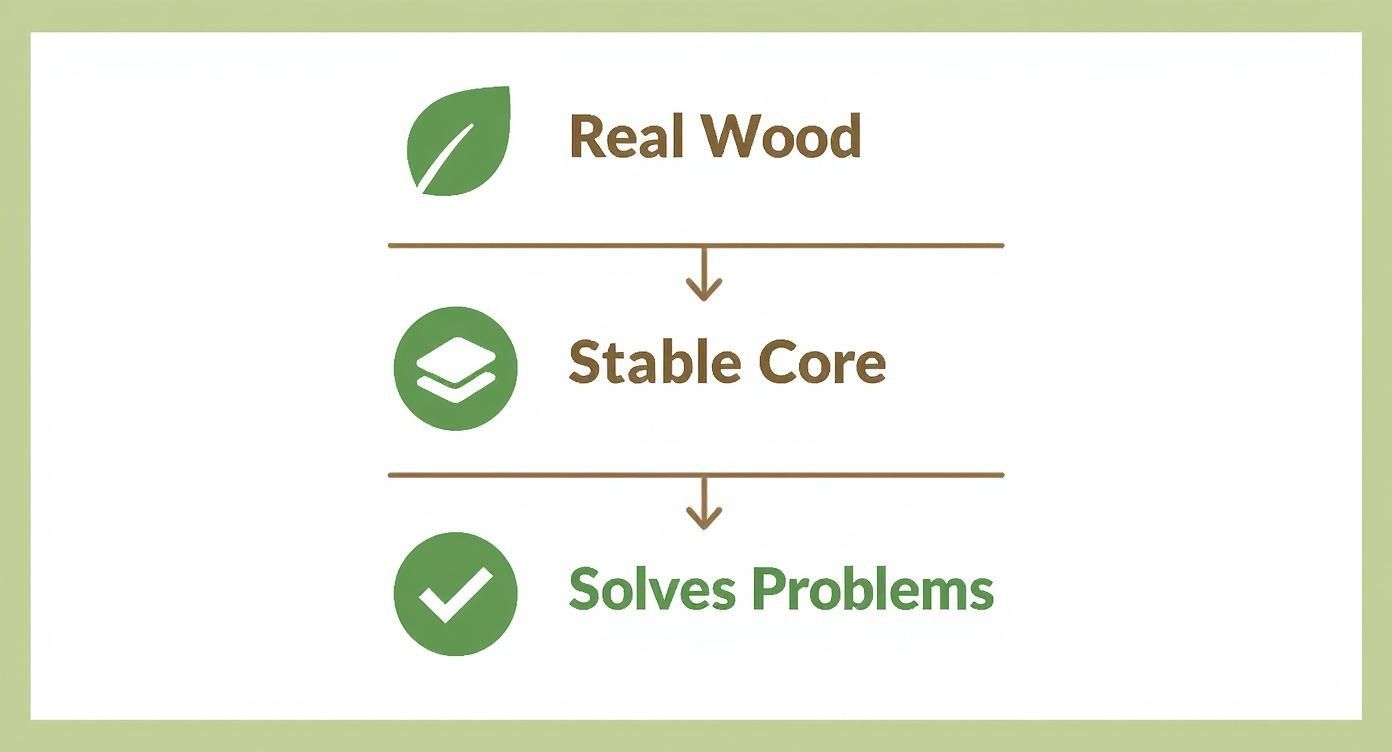
As you can see, combining real wood on top with a super-stable core underneath is precisely how engineered flooring overcomes the classic headaches associated with solid hardwood.
The Wear Layer: The Soul of the Floor
The top layer is what we call the wear layer, and it's everything you see, walk on, and touch. It's a genuine slice of hardwood, and it’s single-handedly responsible for the floor’s entire look and feel. This is where you get all those gorgeous grain patterns, rich colors, and unique textures from species like hickory, oak, or birch.
The thickness of this wear layer is a huge deal—it's one of the most important factors in your floor's quality and lifespan. It can be as thin as 0.6 mm on entry-level products or more than 4 mm on high-end planks.
A thicker wear layer is a direct investment in your floor's lifespan. It allows the floor to be sanded and refinished—sometimes more than once—effectively erasing years of life and making it look brand new again.
Think of it like the tread on a car tire. More tread means you can drive more miles. With flooring, a thicker wear layer gives you the option to completely refresh your floors years down the road, a massive advantage over products that can never be refinished.
The Core Layer: The Stability Powerhouse
Underneath that beautiful hardwood surface is the core, the unsung hero of engineered flooring. This is where the real structural magic happens. The core is usually made from either multiple layers of plywood or a single, dense sheet of High-Density Fiberboard (HDF).
The secret is in the assembly. With a plywood core, each sliver of wood is laid with its grain running perpendicular to the layer above and below it. This cross-grain construction creates an incredibly stable foundation that fights back against expanding, contracting, and twisting when humidity or temperatures change.
- Plywood Core: Generally considered the premium option, plywood cores are celebrated for their strength and superior moisture resistance. They’re a great choice for installations over concrete slabs or in finished basements.
- HDF Core: High-Density Fiberboard creates an exceptionally uniform and stable base that’s also fantastic at resisting dents. It’s a very popular choice for busy households and high-traffic areas.
This smart design is what makes engineered hardwood so much more versatile than old-school solid wood. You can confidently put it in almost any room of your house, from the upstairs bedrooms right down to the basement.
The Backing Layer: The Unseen Foundation
Finally, at the very bottom, is the backing layer. You'll never see it once the floor is down, but its job is critical. This last layer adds even more stability and prevents the plank from cupping or bowing over time.
It essentially counter-balances the forces from the top hardwood layer, keeping the entire plank straight and sound for its entire life. This three-part structure—wear layer, core, and backing—works in perfect harmony to give you a floor that’s both stunning and built to last. It’s the perfect marriage of timeless wood species and modern engineering. To see which look might be right for your home, check out our guide to hardwood species.
Engineered Hardwood vs. Other Flooring Options
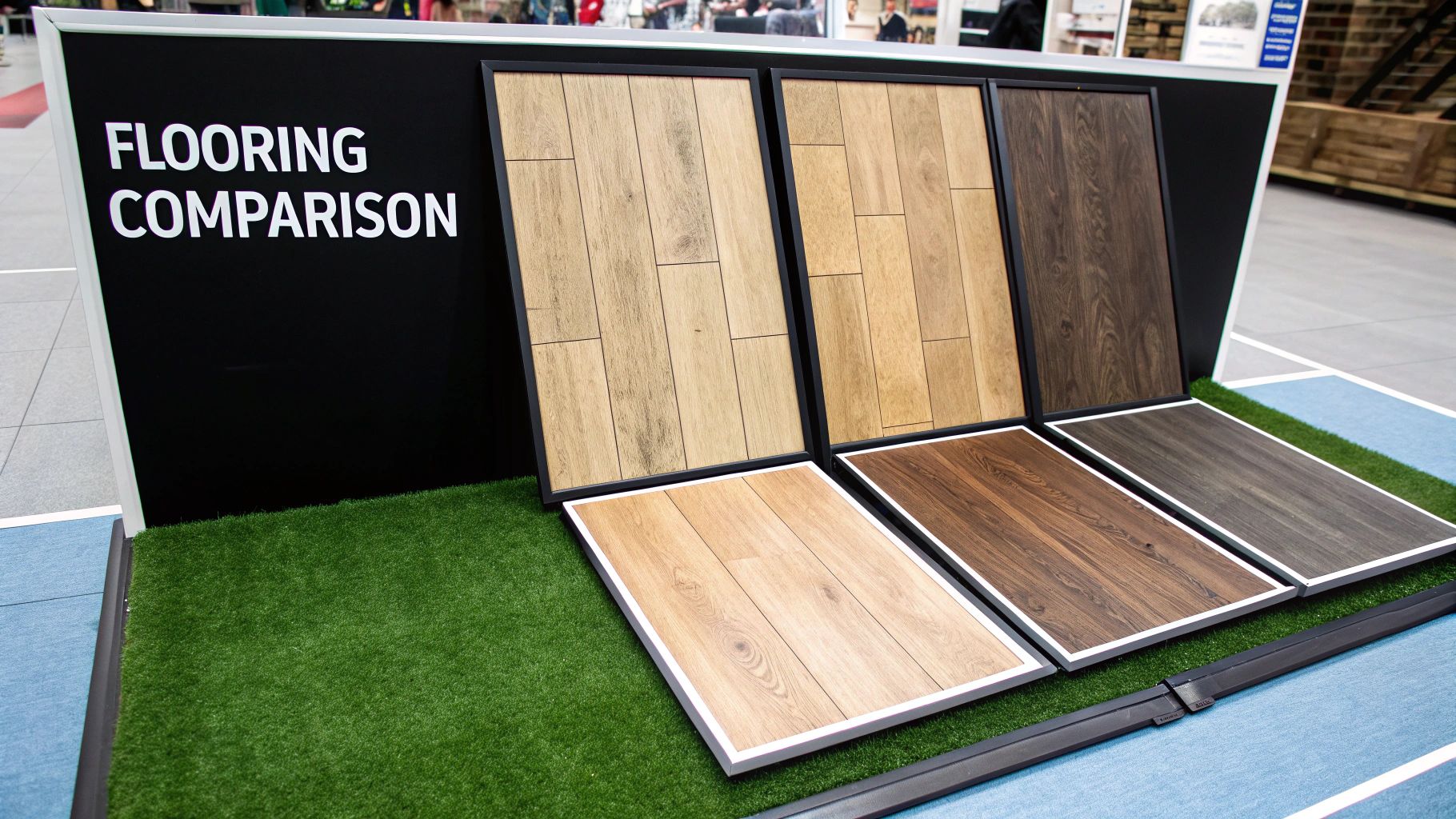
To really get a feel for what engineered hardwood is, it helps to see how it stands up against the other big names in the flooring world. Every option has its place, with unique strengths that make it perfect for some rooms and not-so-great for others.
Let's put them head-to-head. This is about more than just looks; it’s about matching the right material to your lifestyle, your budget, and the unique demands of your home. A humid Forsyth County basement, for example, needs a very different floor than a second-story bedroom.
Engineered Hardwood vs. Solid Hardwood
Think of this as the classic family rivalry. At a glance, they look almost identical because, well, they both have a genuine slice of hardwood on top. The real story is what’s going on underneath, which completely changes the rules of where and how they can be installed.
Solid hardwood is exactly what it says on the tin: one solid plank of wood from top to bottom. It's the traditional gold standard, loved for its timeless feel and the fact you can sand it down and refinish it multiple times over its incredibly long life.
But that solid nature is also its biggest weakness. Wood is a natural material that expands and contracts with every shift in temperature and humidity. This makes solid hardwood a risky choice for installations over concrete slabs or in moisture-prone areas like basements—it’s just too likely to warp, cup, or gap over time.
The Engineered Advantage: The secret weapon of engineered hardwood is its layered core. This plywood-like construction gives it incredible dimensional stability, fighting back against expansion and contraction. This structural backbone means you can confidently install it in almost any room of the house, from below-grade basements to condos with concrete subfloors, giving it a huge leg up on its traditional cousin.
Engineered Hardwood vs. Laminate
Here, the competition comes down to authenticity versus imitation. Modern laminate does a fantastic job of looking like wood, but at its heart, it’s a picture of wood, not wood itself.
Laminate flooring is built around a fiberboard core with a highly detailed, printed image of wood grain on its surface. This picture is then sealed under a tough-as-nails clear wear layer. You won't find any real hardwood in the mix, which is what makes it so scratch-resistant and often more budget-friendly.
Here’s how they differ in practice:
- The Look: Engineered hardwood gives you the unique, one-of-a-kind grain of real wood. Laminate offers a consistent, repeating pattern.
- The Feel: Engineered planks feel warm and solid underfoot, just like traditional hardwood. Laminate can sometimes feel a bit harder and might create a hollow sound when you walk on it.
- The Fix: A deep scratch on engineered wood can often be repaired. A serious gouge in a laminate plank usually means you have to replace the whole board.
Both are solid choices, but they solve different problems. If you're weighing these two, our detailed comparison of manufactured wood flooring vs. laminate can help you pinpoint the best fit for your home.
Engineered Hardwood vs. Luxury Vinyl Plank (LVP)
When engineered wood goes up against Luxury Vinyl Plank (LVP), the conversation almost always turns to one thing: water. These are two of the most popular and durable flooring options today, but they handle moisture in completely different ways.
LVP is a 100% synthetic product, typically made from layers of PVC vinyl. This construction makes it completely, 100% waterproof—not just "water-resistant." You could literally submerge an LVP plank in a bucket of water, pull it out, and it would be perfectly fine. This makes it the undisputed king for seriously wet areas like full bathrooms, laundry rooms, and mudrooms.
Engineered hardwood, on the other hand, still has that real wood veneer on top. While it’s far more stable than solid wood and can handle a quick spill if you wipe it up, it is not waterproof. Let water sit, and you risk damaging both the wood veneer and the core layers.
Flooring Showdown: Engineered Hardwood vs. The Alternatives
Choosing a floor can feel overwhelming with so many great options on the table. To make it easier, we've broken down how these four popular choices stack up against each other based on the factors that matter most to homeowners.
| Feature | Engineered Hardwood | Solid Hardwood | Laminate | Luxury Vinyl Plank (LVP) |
|---|---|---|---|---|
| Material Core | Real wood top layer on a stable, multi-ply core. | A single, solid piece of hardwood. | A high-resolution photo on a fiberboard core. | 100% synthetic PVC vinyl. |
| Water Resistance | Water-resistant. Handles spills but not standing water. | Poor. Prone to warping and cupping with moisture. | Good. Water-resistant but seams can be vulnerable. | Excellent. 100% waterproof construction. |
| Best For… | Almost any room, including basements and over concrete. | Above-grade rooms with stable humidity. | High-traffic areas, budget projects, and homes with pets. | Bathrooms, kitchens, laundry rooms, and basements. |
| Refinishing | Can be sanded 1-3 times, depending on veneer thickness. | Can be sanded multiple times over its lifespan. | Cannot be refinished; damaged planks must be replaced. | Cannot be refinished; damaged planks must be replaced. |
| Feel Underfoot | Warm, solid, and authentic—just like real wood. | The classic, solid feel of traditional wood flooring. | Can feel hard and sometimes sound hollow. | Softer and quieter underfoot than laminate or wood. |
| Resale Value | Excellent. Considered a premium upgrade. | Excellent. The long-time gold standard for home value. | Fair. Generally seen as a good, but not premium, choice. | Very good. Its durability and waterproof nature are major selling points. |
This table gives you a quick snapshot, but the best floor is always the one that fits your specific needs. Engineered hardwood truly hits that sweet spot, offering the undeniable beauty of real wood with the practical stability needed for modern homes.
How It's Installed and Where It Shines
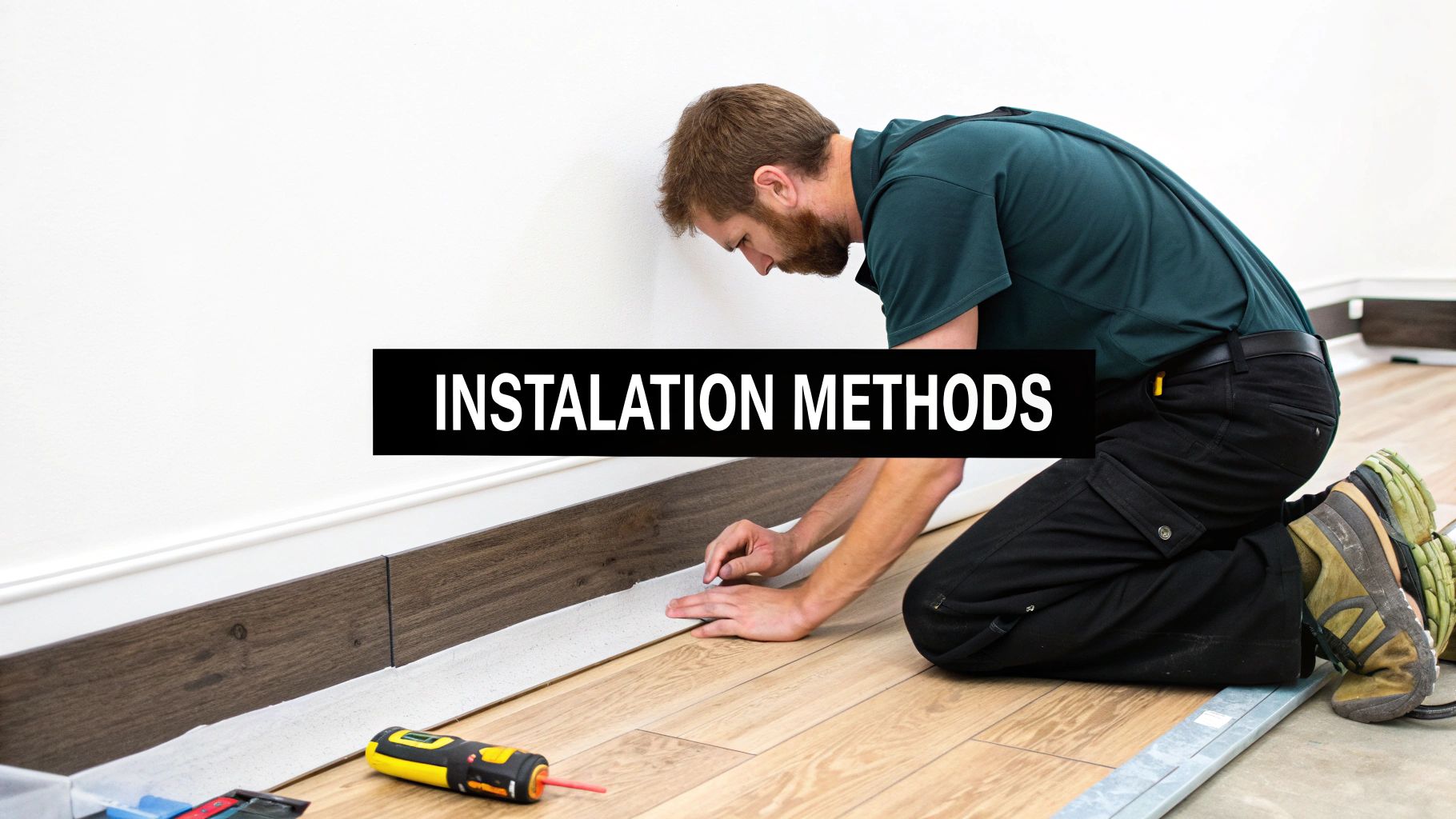
Knowing what engineered hardwood is made of is only half the story. The real magic happens when you understand how it gets installed and where it performs best—that’s how a stack of planks becomes a beautiful, lasting floor. Solid hardwood is pretty particular about how it's installed, but engineered flooring offers incredible flexibility.
This versatility is all thanks to that stable, multi-layered core we talked about. It allows for a few different installation methods, and the right technique really depends on your home’s unique situation, especially the subfloor you're working with. Getting this choice right is the key to a floor that doesn't just look fantastic on day one but performs flawlessly for decades.
Choosing Your Installation Method
Think of installation methods like having different tools in a toolbox. Each one is designed for a specific job, from DIY-friendly projects to installations that demand maximum, rock-solid stability. Let's break down the three main ways we install these floors.
-
Floating Installation: This is by far the most common method, and it's often the most approachable for a seasoned DIYer. The planks simply click or lock together, creating one big "mat" of flooring that "floats" over the subfloor without being permanently attached to it. We first lay down an underlayment pad for cushioning, sound dampening, and moisture protection. It's a fantastic choice for going over existing hard-surface floors or for a simpler, faster job.
-
Glue-Down Installation: For that truly unshakeable, solid feel underfoot, gluing down the planks is the gold standard. A specialized flooring adhesive is troweled onto the subfloor, and each plank is carefully set into it. This creates an incredibly strong bond, eliminating almost all sound or movement. We always recommend this method for installations directly over concrete slabs, which is a common scenario in many Cumming-area homes.
-
Nail-Down or Staple-Down Installation: This one is a bit more traditional, mirroring how solid hardwood has been installed for generations. We use a pneumatic nailer or stapler to fasten each plank directly to a wooden subfloor (like plywood or OSB). It's secure and built to last, but it’s an option only for homes with the right kind of wooden subfloor.
The real beauty of engineered hardwood is that there’s a reliable installation method for just about every home, whether it’s an older house with traditional joists or a modern build on a concrete slab.
The Make-or-Break Step: Subfloor Prep
I can't stress this enough: no matter which method you choose, its success completely hinges on proper subfloor preparation. An uneven, dirty, or damp subfloor is the #1 enemy of a good flooring job and the main cause of headaches like squeaks, gaps, or buckling down the road.
Before a single plank hits the floor, a professional installer will make sure the subfloor is:
- Clean: Totally free of dust, old glue, and any other debris.
- Flat: We check this carefully. The subfloor needs to be level within a strict tolerance, typically no more than a 3/16-inch dip or rise over a 10-foot span.
- Dry: Moisture is the kryptonite of wood floors. We test the subfloor to make sure the moisture content is well within the safe zone to prevent problems later.
This prep work isn't just a suggestion; it’s a non-negotiable part of a professional-grade installation. One of the biggest challenges in the flooring industry right now is finding installers with the specialized skills to head off moisture-related issues like swelling or warping, which really shows why hiring a true craftsman matters.
Because of its stability, engineered hardwood is a fantastic solution for spaces where solid wood just won't work. To see what I mean, check out our guide on using engineered hardwood in a basement. Ultimately, investing in a skilled, professional installation is the best insurance policy you can buy for your new floors. It's the only way to guarantee they perform as beautifully as they were designed to.
A Practical Buyer's Checklist for Your New Floors
Shopping for engineered hardwood can be exciting, but walking into a showroom and seeing a sea of options can feel overwhelming. To cut through the noise, you need to know exactly what to look for.
This checklist breaks down the four most critical factors that separate a good floor from a great one. Think of it as your guide to evaluating any plank you pick up. By focusing on these key features, you can confidently compare products and find the perfect balance of quality, durability, and cost for your home.
1. Examine the Wear Layer Thickness
The single most important factor for your floor's longevity is the thickness of its wear layer—that top slice of real hardwood. This veneer is what you see and live on, and it determines whether your floor can be refinished down the road.
- 1mm – 2mm: You'll find this on many entry-level or budget-friendly floors. They look fantastic out of the box but generally cannot be sanded and refinished. Once they show heavy wear, the planks need to be replaced.
- 2mm – 3mm: This is a solid mid-range sweet spot. A floor with this thickness can typically be sanded and refinished at least once, which can easily add another 15-20 years to its life.
- 4mm and up: Now you're in premium territory. These top-tier floors can often be refinished two, three, or even more times, giving them a lifespan that rivals traditional solid hardwood.
Pro Tip: Always ask for the spec sheet or confirm the wear layer thickness. A thicker veneer is a direct investment in your home's long-term value. It gives you the power to erase years of wear and tear and make your floors look brand new again.
2. Check the Core Construction
Next, flip the plank over and ask about its core. The core is the stability engine of engineered hardwood, the unsung hero that keeps it from warping and buckling. It’s usually made from one of two materials.
- Multi-Ply Plywood: This is the classic, time-tested approach. It’s built like a sandwich, with multiple thin layers of wood glued together, each layer's grain running in the opposite direction from the one below it. This cross-graining creates incredible stability against moisture.
- High-Density Fiberboard (HDF): An HDF core is made from wood fibers compressed under extreme heat and pressure. The result is a rock-solid, uniform base that’s fantastic at resisting dents and dings from everyday life.
Both are great choices, but for the humidity we get here in Forsyth County, multi-ply plywood often has an edge. It’s an incredibly reliable choice for any room in the house, even finished basements.
3. Ask About the Finish and Hardness
The factory-applied finish is your floor’s frontline defense against scratches, scuffs, and spills. Today, most quality engineered floors come with several coats of an aluminum oxide urethane finish. This isn't just a simple coat of sealant; it's a super tough coating that's cured under UV lights at the factory, making it far more durable than any finish that could be applied in your home.
Finally, don’t forget about the wood species itself. The Janka hardness rating is a simple number that tells you how well a particular wood resists denting. For example, Hickory is one of the toughest domestic woods with a Janka rating around 1,820, while White Oak is still very durable at 1,360. A strong finish protects against surface scratches, but a harder wood species provides better underlying protection against dents from dropped objects or heavy furniture.
A Few Final Questions About Engineered Hardwood
To make sure you feel totally comfortable with your flooring choice, let's walk through some of the most common questions we hear from homeowners. Think of this as the final piece of the puzzle, answering those lingering thoughts about what engineered hardwood is and how it will work in your home.
How Long Does Engineered Hardwood Flooring Last?
The honest answer? It really depends on the quality you buy. Two things matter most: the thickness of that top hardwood layer (the veneer) and how tough the factory finish is. A really well-made engineered floor can be an investment that lasts for generations.
A plank with a thick wear layer—we're talking 3mm or more—can easily last 40 to 80 years. Why? Because that thickness gives you the option to have it professionally sanded and refinished, maybe two or even three times over its life. It's like a reset button for your floor, erasing years of wear. On the flip side, floors with a thin veneer (under 2mm) have a shorter lifespan, usually around 20-30 years, and typically can't be refinished.
The real secret to a long life for your floor is simple maintenance. If you keep up with regular cleaning and protect it from deep gouges, you’ll unlock its full potential and keep it looking fantastic for decades.
Can You Put Engineered Hardwood in a Kitchen?
Absolutely. In fact, engineered hardwood is a great choice for kitchens, especially around here in Cumming and the surrounding Forsyth County area where humidity can be a real factor. That layered core we talked about gives it incredible stability against the moisture and temperature swings you get in a kitchen, making it a much more reliable option than solid hardwood.
Now, keep in mind that while it's highly water-resistant, it is not fully waterproof. All that means is you need to wipe up spills when they happen so moisture doesn't have a chance to work its way into the plank's core. For a room that's constantly wet, like a full bathroom or a hardworking mudroom, a truly waterproof floor like Luxury Vinyl Plank (LVP) is probably the more practical way to go.
Is Engineered Hardwood an Eco-Friendly Option?
It’s often considered a more sustainable choice than solid hardwood, and it all comes down to its clever construction. It's a much more efficient way to use our natural wood resources.
Here's why:
- Smarter Use of Premium Wood: Only that top veneer is made from slow-growing hardwoods like oak or hickory. This means a single tree can produce far more flooring than if it were cut into solid planks.
- Fast-Growing Core: The inner core is usually made from faster-growing, more plentiful wood species. This takes the pressure off of older, more valuable forests.
If making a green choice is important to you, look for products with certifications like the FSC (Forest Stewardship Council). That label is your guarantee that the wood came from responsibly managed forests, so you can feel good about your floor's origins. If thinking about new floors brings up other design questions, you can also explore this great collection of general interior design FAQs.
Ready to see how engineered hardwood could look in your home? The experts at Flacks Flooring are here to help you find the perfect floor that fits your style, your life, and your budget. With decades of experience serving Cumming and Forsyth County, we offer personal guidance and professional installation you can count on. Come by our showroom or schedule a consultation today to get started.