
When people ask what is fake hardwood flooring called, they usually mean laminate flooring, luxury vinyl plank (LVP), or sometimes engineered hardwood. In today's market, those aren't cheap knockoffs. They're purpose-built wood-look floors designed for different homes, budgets, and moisture conditions.
Many homeowners in Cumming, Johns Creek, and Milton begin their journey with a similar realization. They admire the appearance of oak or hickory, but daily life intervenes. The dog dashes in from the yard. Children spill water near the kitchen island. The basement feels slightly damp during the summer months. Suddenly, the primary concern shifts from "What looks like hardwood?" to "What is going to work in my house?"
That's where the confusion starts. Some people call all of it vinyl. Some call all of it laminate. Some use “fake hardwood” as a catch-all for anything that isn't solid wood. The better way to think about it is this: you're choosing a wood-look flooring category, and each category solves a different problem.
The Search for Perfect Floors in North Georgia
A homeowner in Alpharetta might want wide-plank hardwood style in the living room but worry about claw marks from a large dog. A family in Forsyth County may want a floor replacement that looks warm and natural but won't become a maintenance project every year. Someone finishing a basement in Cumming usually wants the wood look without taking a gamble on moisture.
That's why the phrase “fake hardwood” doesn't bother most flooring pros anymore. It usually means you want the appearance of wood with fewer headaches. That's a smart starting point, not a bad one.
What people usually mean by fake hardwood
In real conversations, these are the names that come up most:
- Laminate flooring for an affordable wood-look option in dry areas
- Luxury vinyl plank (LVP) for waterproof flooring in kitchens, basements, baths, and busy homes
- Engineered hardwood for buyers who still want a real wood top layer
- Wood-look tile for spaces where water, mud, or heavy wear matter more than softness underfoot
Each one fits a different lifestyle.
Practical rule: If moisture is part of the question, don't shop by color first. Shop by core material first.
Around North Metro Atlanta, climate matters more than many shoppers expect. Humidity, concrete slabs, muddy entries, and open-plan homes all change what performs well long term. A floor that looks perfect in a showroom can be the wrong call if it doesn't fit the room it's going into.
The good news is that the wood-look category is much better than it used to be. You can find farmhouse visuals, cleaner modern planks, classic medium-brown tones, and lighter finishes that suit newer homes in Johns Creek just as well as older homes in Roswell or Canton. The trick is matching the right product to the right use.
Meet the Hardwood Alternatives Laminate LVP and More
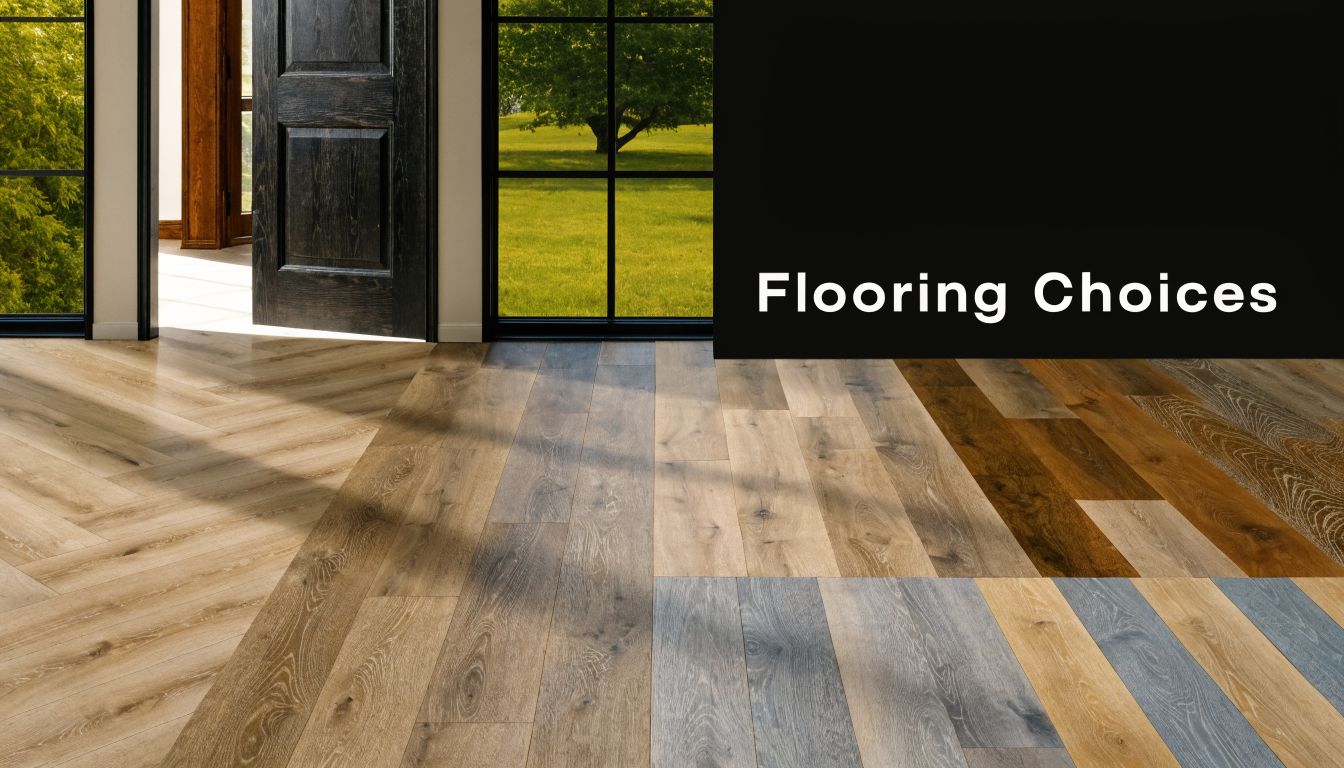
Walk into any flooring store and the choices can blur together fast. They all come in plank shapes. They all mimic wood. They all promise durability. But they aren't built the same way, and that construction is what determines whether the floor is a smart buy or a future problem.
Think of them like different versions of the same idea
A simple way to sort this out is to think of wood-look flooring the way you'd think about coffee drinks. Espresso, latte, and cappuccino all start from a similar idea, but they're made differently and serve different tastes. Wood-look floors work the same way.
Laminate is the original hardwood alternative in this group. It's also been called floating wood tile in the United States. It's a multi-layer synthetic flooring product made with a high-density fiberboard core, a photographic wood-look layer, and a protective wear layer fused together through lamination. Its inner core is typically melamine resin and fiber board material, and the printed wood image sits beneath a clear protective layer. It also helps to clear up one of the most common misconceptions: laminate isn't made from plastic. It's made from wood fibers with a resin wear layer on top, as explained in Flooring Inc's overview of faux wood flooring options.
Why each type exists
The category names make more sense once you know what problem each one was designed to solve.
- Laminate flooring works well for shoppers who want an affordable flooring option with a wood look, low maintenance, and good day-to-day scratch resistance.
- LVP or LVT is for buyers who care most about waterproof flooring, easier living with pets and kids, and installation over spaces where moisture is a concern.
- Engineered hardwood appeals to people who want real wood on the surface but more dimensional stability than solid hardwood.
- Wood-look tile is usually the practical pick in bathrooms, laundry rooms, mudrooms, and other places where water and grit are part of daily life.
Most confusion happens because shoppers compare the visual first and the structure second. Installers do the reverse, because the structure decides how the floor behaves.
For North Georgia homes, that distinction matters. A basement remodel in Cumming and a main-level family room in Woodstock don't ask the same things from a floor. Once you know the names, the next step is figuring out which material fits your traffic, moisture level, and expectations.
Laminate Flooring The Smart and Affordable Choice
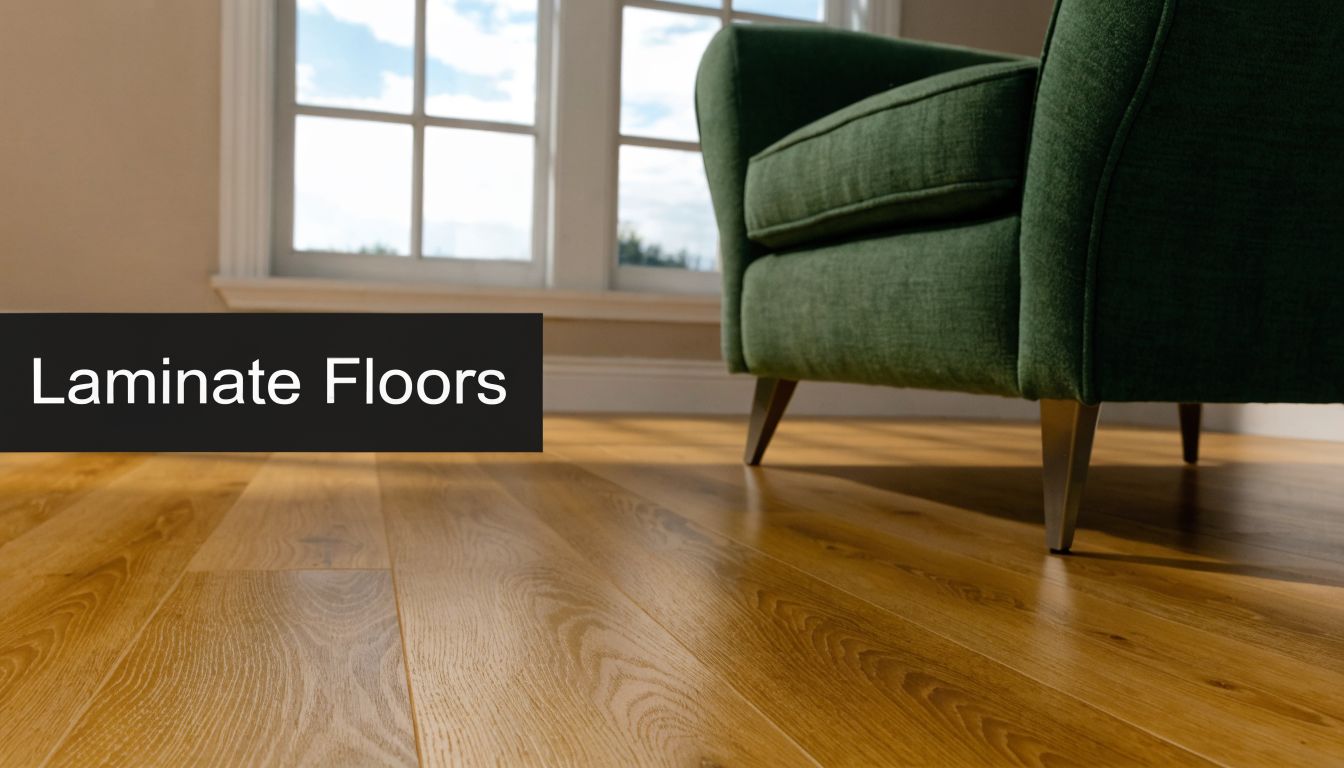
If someone asks me to define the classic answer to “what is fake hardwood flooring called,” laminate is still the first name that comes up. It has been around long enough to carry some old reputations, but modern laminate is a better product than many homeowners remember.
What laminate is made of
Laminate flooring is a multi-layered synthetic product designed to replicate hardwood using a high-density fiberboard core. That HDF core typically falls in the 800-1000 kg/m³ range for dimensional stability, and it provides impact resistance up to 5-10 times higher than standard particleboard under ASTM F2055 standards, according to BestLaminate's laminate flooring glossary.
That same source notes laminate's moisture absorption rate can stay under 8% per EN13329 certification, and testing cited there shows laminate maintaining flatness within 0.5% over 70% RH swings. In Georgia, that matters. You're not just buying a look. You're buying a floor that needs to stay stable through humid summers and everyday traffic.
Where laminate works well
Laminate makes sense when these priorities are at the top of your list:
- Budget control: The same BestLaminate source states laminate can offer 30-50% cost savings over oak hardwood.
- Durability in busy rooms: AC4 and AC5 wear-rated products with a ≥0.30mm aluminum oxide wear layer are benchmarked there for 15-20 year residential durability.
- Fast installation: Floating installation reduces labor by 40%, which helps when speed matters.
- Realistic visuals: Registered embossing is cited there as delivering 90% visual realism.
For homeowners comparing products, this laminate flooring guide from Flacks Flooring is useful for understanding how laminate fits into a broader floor replacement decision.
Laminate is often the right answer for living rooms, bedrooms, hallways, and upstairs spaces where you want the wood look without hardwood upkeep.
Where laminate is the wrong pick
Laminate is not the material I'd steer into a bathroom with regular standing water or a basement with recurring moisture concerns. Even good laminate and bad moisture habits don't make a good pair. It can handle ordinary household life well, but it still isn't the category to choose when waterproof performance is essential.
That's the main trade-off. Laminate does a lot very well for the price. It just needs the right room.
Luxury Vinyl Plank The Ultimate Waterproof Solution
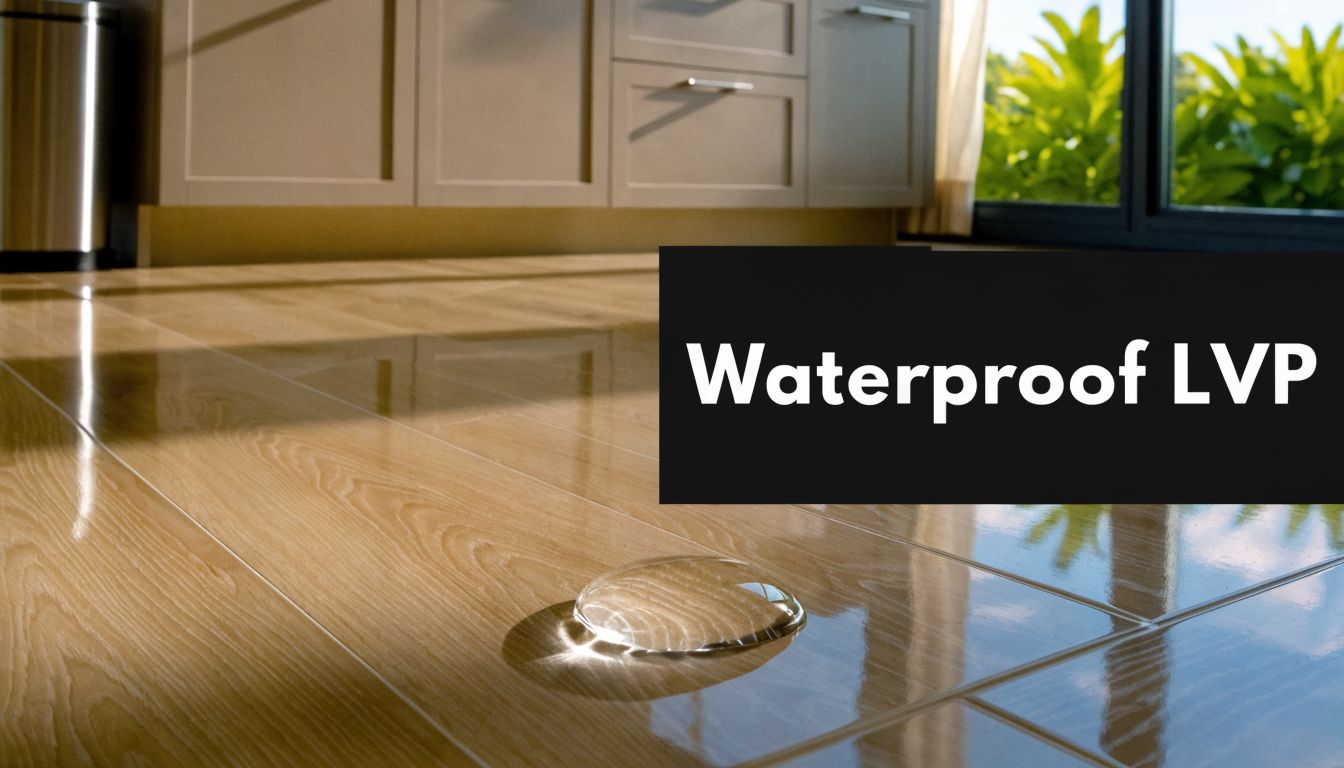
When moisture is the deciding factor, LVP usually moves to the front of the line. This is the product category that has changed the most buyer decisions in North Georgia because it solves a very specific problem cleanly: people want the wood look in places where real wood and water don't belong together.
Why LVP performs differently
Luxury Vinyl Plank uses an SPC core, made from 80% limestone powder + PVC, and that construction delivers 100% waterproofing with flexural strength exceeding 10,000 psi per ASTM D790, according to Flooring America's flooring glossary. The same source compares that to laminate's 5,000 psi.
It also lists thermal expansion at 0.02% per °F, versus laminate's 0.1% vulnerability, and notes no telegraphing over concrete slabs in the benchmark it cites. That makes LVP especially relevant in homes with slab foundations, basements, or rooms where temperature and moisture swings are part of normal life.
Where LVP earns its keep
LVP tends to win in these situations:
- Basements in Cumming or Forsyth County: waterproof performance matters more than tradition
- Kitchens and laundry rooms: spills aren't occasional, they're routine
- Homes with pets: the source above cites 12-20 mil wear layers, SCR 30+ ratings, and scratch resistance associated with Mohs hardness 6-7
- Quick-turn updates: click-lock systems can bridge subfloor imperfections up to 3/16" and can cut install time by 50% versus glue-down hardwoods
If you're comparing product construction and what makes this category different, this LVP flooring overview from Flacks Flooring lays out the basics clearly.
The trade-offs buyers should know
LVP has excellent practical performance, but not every LVP product feels the same underfoot. Some rigid-core products feel firmer than laminate or engineered wood. Some visuals are outstanding. Others look obviously manufactured. That's why wear layer, texture, and plank design matter more here than the category label alone.
For moisture-heavy zones, choose the product that removes the risk first. Then choose the color you like.
The stronger products in this category also deliver convincing surface detail. Flooring America's glossary cites 95% authentic hardwood texture via EIR, and notes post-install zero VOC emissions for the products referenced there. For many families, that combination of waterproofing, realism, and low fuss is exactly what they were hoping “fake hardwood” would mean.
Exploring Engineered Hardwood and Wood Look Tile
Some shoppers know right away they don't want laminate or vinyl. They want something closer to real wood, or they need something tougher than either one. That's where engineered hardwood and wood-look tile enter the conversation.
Engineered hardwood for a real wood surface
Engineered hardwood uses a real wood veneer on top of a layered core. So while people sometimes lump it into fake hardwood, it's more accurate to call it a hardwood alternative than a fake wood floor. You still get authentic wood grain on the surface, but the layered construction helps with stability compared with solid hardwood.
For homeowners who want that category explained in more detail, this engineered hardwood overview from Flacks Flooring is a good starting point.
Engineered hardwood usually fits buyers who care most about:
- Real wood appearance and feel
- A more traditional resale presentation
- Better stability than solid hardwood in everyday residential settings
Wood-look tile for the hardest-working spaces
Wood-look tile sits at the opposite end of the spectrum. It isn't trying to feel like wood underfoot. It's trying to survive water, mud, traffic, and wear with very little drama. In mudrooms, bathrooms, laundry spaces, and some basement applications, that makes it a serious contender.
If you're evaluating plank-style tile, the practical notes in Sunny Day Pro Services installation advice are worth a look, especially around layout and installation planning.
Here's the honest trade-off. Tile is durable and water-friendly, but it's harder underfoot and less forgiving in living spaces where comfort matters. In many North Georgia homes, that means tile works best in selective areas instead of across the whole house.
How to Choose the Right Flooring for Your Cumming Home
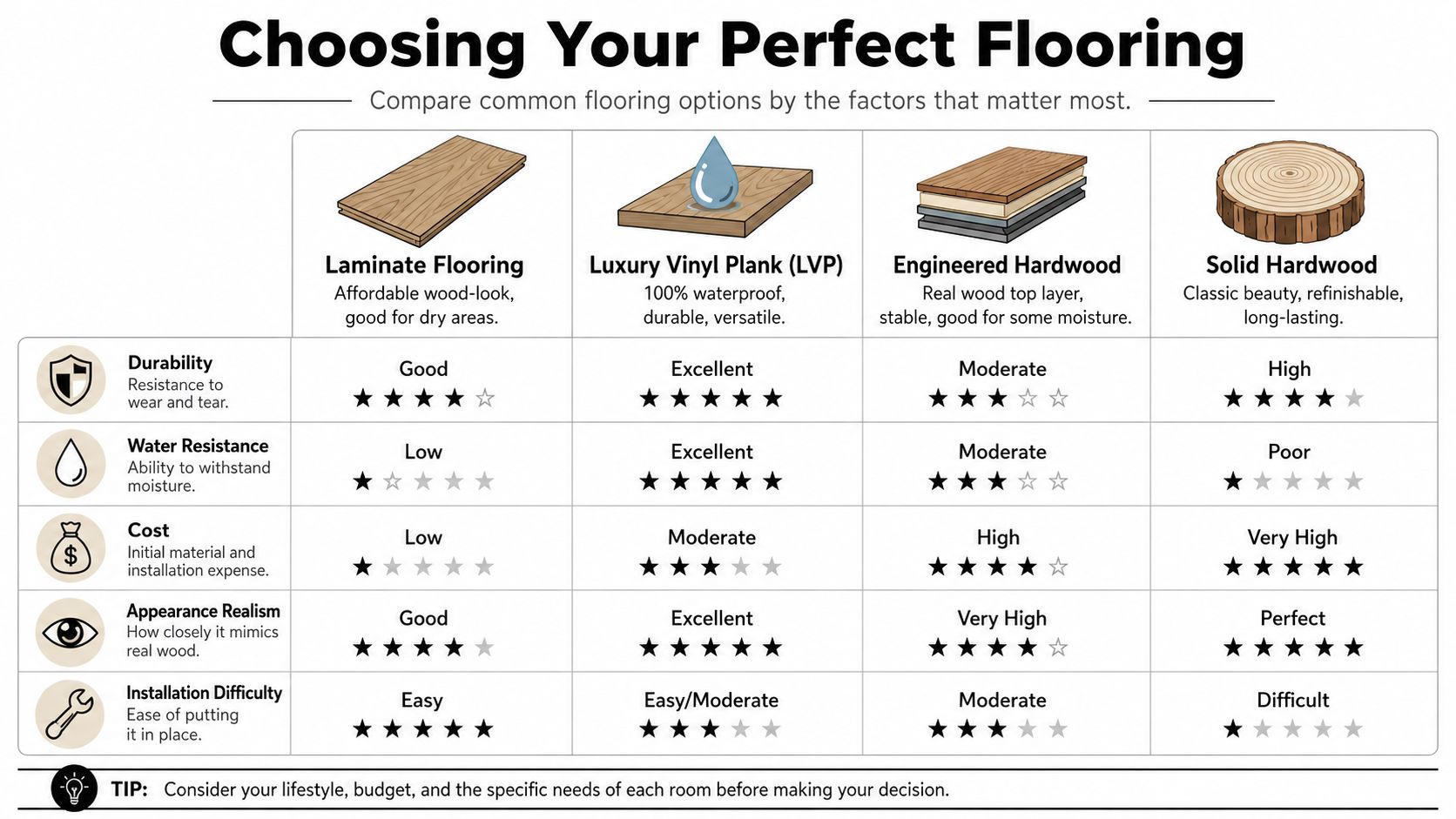
The right floor usually becomes obvious once you stop asking “Which one is best?” and start asking “What does this room need to tolerate?” Kids, dogs, humidity, basement moisture, resale goals, and the style of the home all matter more than product hype.
Start with the room, not the sample board
A wide plank in a showroom can look perfect and still be wrong for the project. I'd sort the decision this way.
- Basement or moisture-prone room: LVP or wood-look tile belongs on the shortlist first.
- Main living area on a tighter budget: laminate often gives the strongest value.
- Buyer wants real wood on top: engineered hardwood makes more sense than trying to force solid hardwood into every space.
- Mudroom, bath, or laundry: tile stays in play because performance matters more than softness.
Comparison table for Georgia homes
| Feature | Laminate | Luxury Vinyl Plank (LVP) | Engineered Hardwood | Wood-Look Tile |
|---|---|---|---|---|
| Best use case | Dry living areas, bedrooms, halls | Kitchens, basements, baths, busy family spaces | Main areas where real wood matters | Baths, mudrooms, laundry, high-moisture zones |
| Moisture handling | Good for normal household humidity, not standing water | Excellent for wet areas | Better stability than solid wood, but still a wood product | Excellent |
| Scratch and wear performance | Strong option for daily traffic | Strong option for pets and active households | Depends heavily on finish and species | Very strong |
| Feel underfoot | Firmer but comfortable with the right underlayment | Can feel firmer in rigid-core formats | More wood-like feel | Hardest surface |
| Style fit | Broad range of modern and classic wood looks | Broad range, especially for busy households | Best when authentic wood character matters | Best when durability leads the decision |
What works for pets, kids, and traffic
For active households, the questions narrow fast.
Large dogs and busy hallways usually point toward AC4 or AC5 laminate in dry zones, or a quality LVP in spill-prone zones. Pet-friendly flooring is really about matching scratch resistance with realistic expectations. No floor is immune to abuse, but some recover from daily life much better than others.
Families with young kids often do better with surfaces that don't require constant worry. LVP works well where water cups, craft messes, and kitchen spills are part of the week. Laminate still holds its own where the concern is traffic rather than moisture.
The best floor for a perfect household and the best floor for a real household are often different products.
Cost, value, and resale
If resale matters, the numbers are worth looking at. Avalon Flooring's discussion of laminate versus engineered hardwood cites laminate and LVP boosting home values by 1.5-2.2%, with an average $5K-$10K ROI per NAR 2025 Remodeling Report for Atlanta metro. That same source states these products can come with 40-60% lower upfront cost ($2-4/sqft vs. $8-12) than comparable alternatives it references, and says fake floors can retain 85% value after 10 years vs. 70% for budget hardwoods due to no refinishing needs.
That source also notes FloorScore+ certified low-VOC laminates reducing indoor air pollutants by 50%, and points to regional humidity-related failure rates of <1% for LVP vs. 5-7% for laminate in Georgia climates. Those details don't mean laminate is bad. They mean room selection matters.
A practical way to narrow it down
If you want a fast filter, use this one:
- Choose LVP if waterproof flooring is the requirement.
- Choose laminate if you want affordable flooring with a strong wood look in dry rooms.
- Choose engineered hardwood if the emotional pull of real wood still matters most.
- Choose wood-look tile if water, grit, and durability outrank comfort.
For in-home selection, one useful option locally is Flacks Flooring, which offers showroom browsing and in-home consultations so homeowners can compare wood-look products under their own lighting and against their own cabinets, wall color, and trim.
Your Next Steps for a Flawless Floor Replacement
Once you know what fake hardwood flooring is called, the next mistake is rushing straight into color selection. Start with measurements, subfloor conditions, and where the floor is going. That saves far more frustration than chasing the perfect sample too early.
For homeowners planning a renovation
Bring your daily life into the decision. Think about the dog bowls, the back door, the basement humidity, and whether you want to baby the floor or just live on it. If you're estimating material needs before an in-home visit, Woodstock Outlet's room sizing guide is a helpful primer for calculating square footage.
A good in-home consultation matters because showroom lighting can flatter colors that look flat or too cool once they're in your house. North Georgia homes also vary a lot by natural light, trim color, and floorplan openness. Seeing samples in the room beats guessing.
For real estate agents and investors
Fast-turn projects usually benefit from restraint. Mid-tone and lighter natural visuals tend to appeal to more buyers than highly specific red or dark espresso looks. If the property has a basement or lower level, waterproof flooring often makes the listing easier to defend during buyer questions.
The wrong flooring can make a house feel like a future maintenance issue. The right flooring can make it feel move-in ready.
For designers and contractors
Specification matters more than labels. A plank can say waterproof, scratch-resistant, or wood-look and still be the wrong fit if the wear layer, core, or installation conditions don't match the job. Coordinating transitions, underlayment, and room-to-room height changes early prevents the finish-stage scramble that slows projects down.
Good flooring choices don't happen from one sample board. They happen when product, room, and installation conditions agree.
Most floor problems blamed on “bad material” are really bad matches between the room and the product. Choose the category first. Then choose the visual. That order usually leads to a floor you still like years later.
If you're comparing laminate, LVP, engineered hardwood, or waterproof flooring for a home in Cumming or the surrounding North Metro Atlanta area, Flacks Flooring is one place to schedule an in-home consultation, look at samples in your own lighting, and sort out which option fits your rooms, traffic, and budget.