
Laminate flooring is a fantastic way to get the stunning look of natural hardwood or stone without the hefty price tag or the high-maintenance headaches. Think of it as a high-tech sandwich of materials, all fused together to create a floor that's as tough as it is beautiful. It's become a go-to choice for homeowners who want both style and practicality.
The Smart Alternative to Hardwood
So, what makes laminate flooring such a clever choice? It masterfully creates the illusion of real wood or stone. You get the rich, warm grain of oak or the elegant look of slate, but it's all engineered to handle the chaos of everyday life.
Unlike solid hardwood, which is just one piece of wood from top to bottom, laminate is built in layers. This multi-layer construction is its secret weapon.
This design gives homeowners some serious advantages:
- Cost-Effective Beauty: It delivers that high-end look you love for a fraction of the cost.
- Superior Durability: Laminate stands up incredibly well to scratches, dings, and even fading from sunlight.
- Easy Maintenance: Forget special cleaners and waxes. A quick sweep or mop is all it takes to keep it looking new.
The real genius of laminate is in its layered construction. A super-high-resolution image of wood or stone is protected by an incredibly tough wear layer. The result? A surface that looks amazing and is built to last through pets, kids, and daily traffic.
The infographic below really brings home why so many people choose laminate.
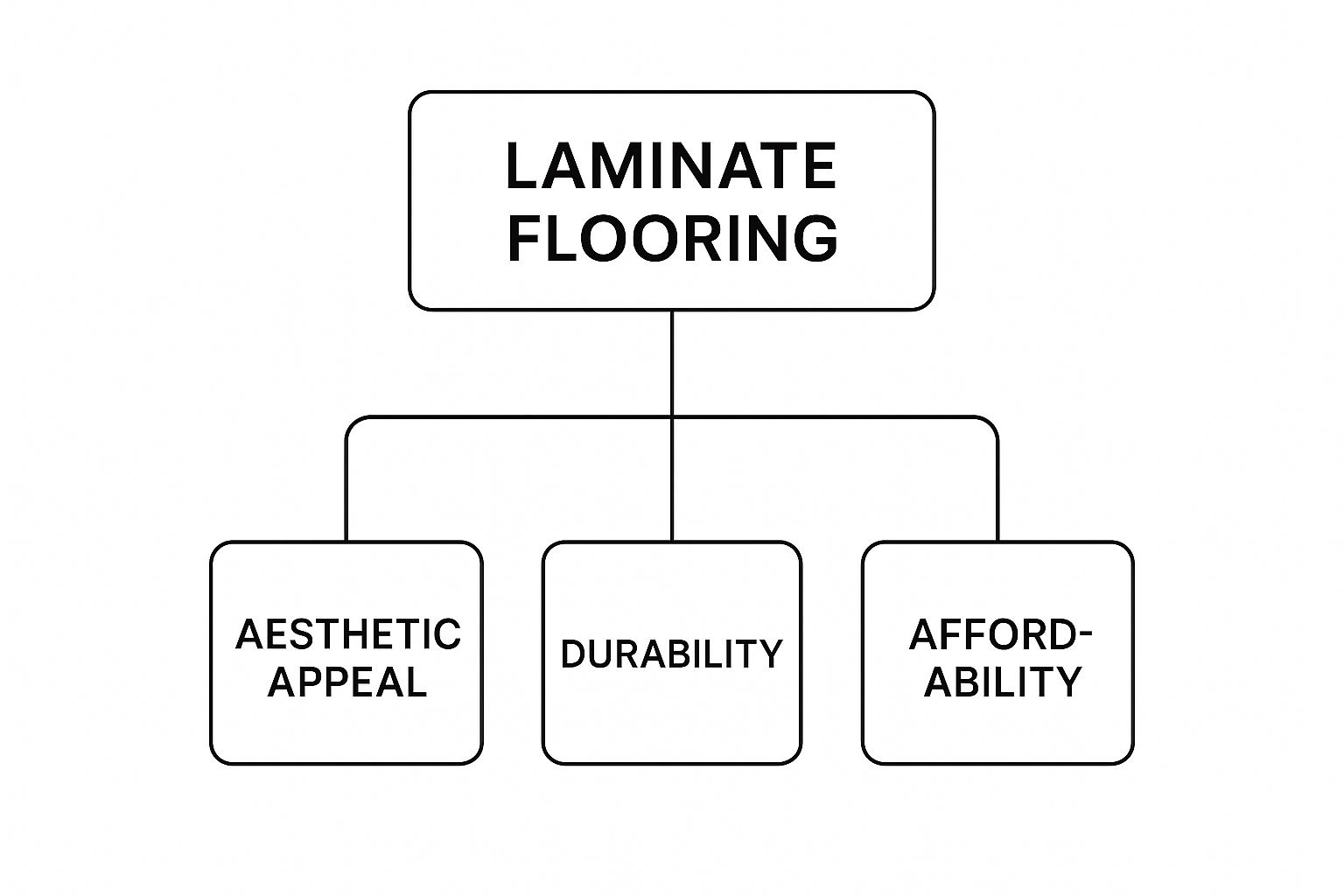
As you can see, the combination of good looks, toughness, and affordability is a powerful one. Laminate has come a long way since it was first introduced, and if you're curious, you can learn more about the evolution of laminate to see how much it has improved.
How the Four Layers of Laminate Flooring Come Together
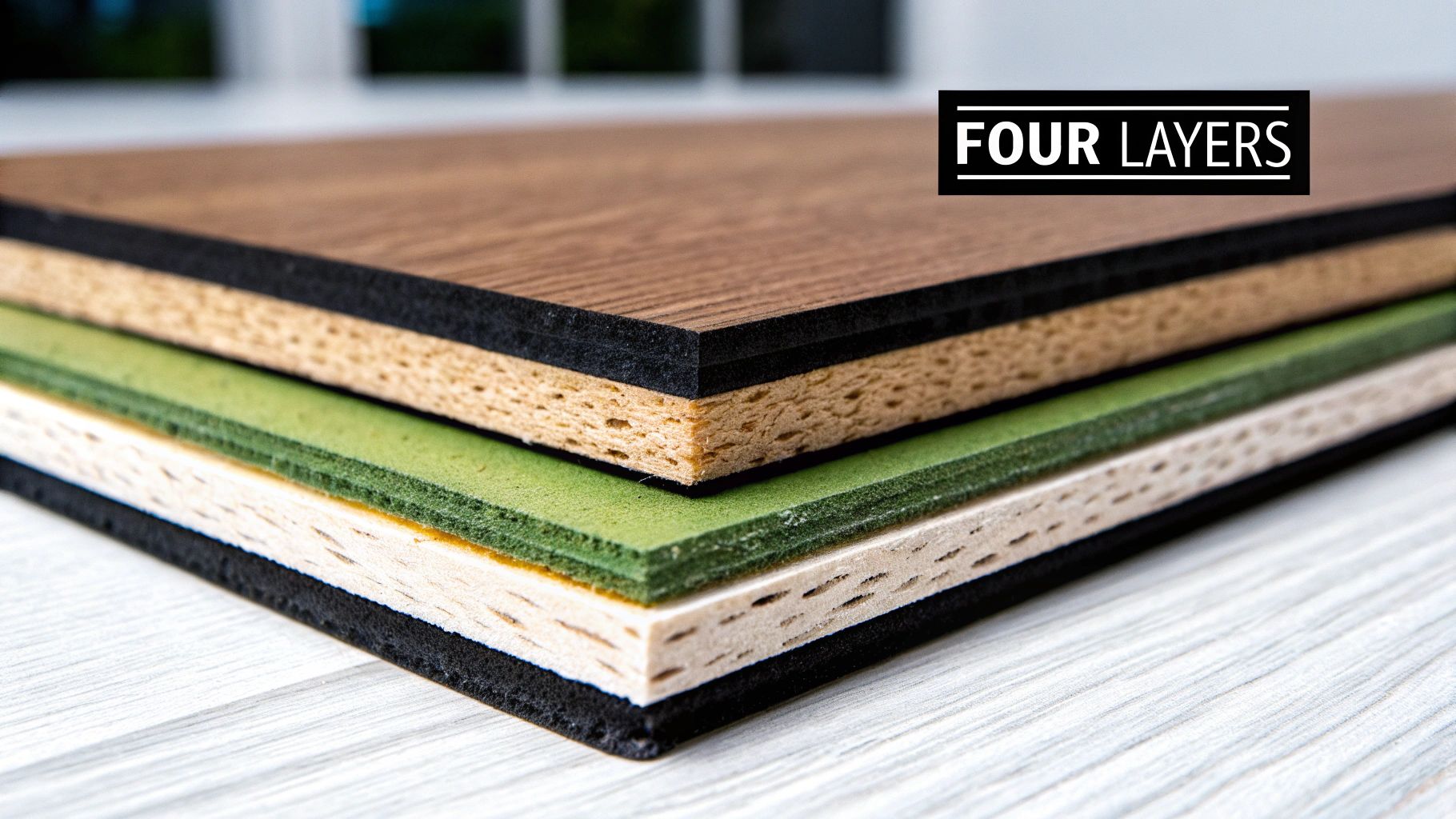
To really get what makes laminate flooring so special, you have to look deeper than just its surface. Each plank is a smart piece of engineering, a fusion of four separate layers that work in harmony to create a floor that's both beautiful and tough. This layered construction is the secret to its success.
Let's start from the top. The first layer is the wear layer, which is essentially your floor’s invisible bodyguard. It’s a clear, tough-as-nails coating made from aluminum oxide that shields the plank from scratches, stains, and fading from sunlight. How well this layer is made directly affects how long your floor will look new, fending off everything from kids' toys to pet claws.
Behind the Beauty and Brawn
Just beneath that protective topcoat is the design layer. This is where the visual magic happens. It’s a super high-resolution photograph of wood, stone, or tile that gives the laminate its convincingly realistic look. Modern printing tech is so good that it captures all the subtle grain patterns and color variations you’d see in the real thing.
Next up is the core layer, the thickest and arguably most critical part of the plank. Usually made from high-density fiberboard (HDF), this is what gives the floor its structure, stability, and ability to resist dents from dropped objects. A solid core is what makes the plank feel sturdy underfoot and even adds a degree of moisture resistance.
The real genius of laminate is how these layers work together. It isn’t just one thing—it’s the combination of a tough topcoat, a beautiful design, a sturdy core, and a stabilizing base that makes it such a compelling choice for so many homes.
At the very bottom, you’ll find the backing layer. It might be out of sight, but its job is vital. This layer adds stability, preventing the plank from warping or bowing over time. It also serves as a crucial moisture barrier, protecting the core from any dampness coming up from the subfloor.
This four-layer sandwich is precisely why laminate has taken off. In fact, the residential market is its biggest fan, accounting for over 56% of global revenue as people choose it for a budget-friendly yet realistic look in their homes. For a deeper dive, you can check out more stats on the global laminate flooring market and see the trends for yourself.
Why Homeowners Love Laminate Flooring
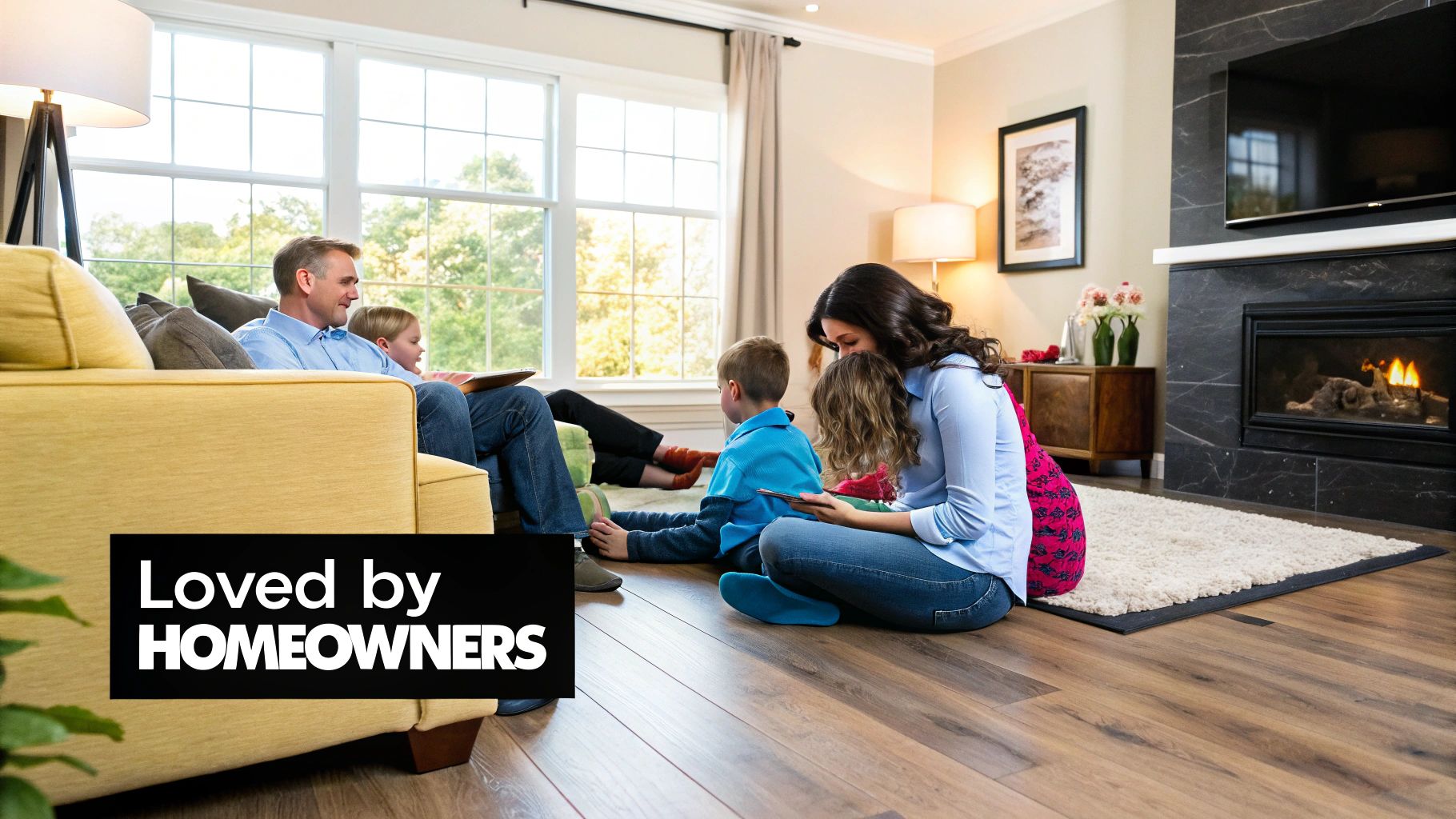
So, what’s the big deal with laminate? Beyond the technical specs, the real reason laminate flooring has become so popular is that it just works. It elegantly solves three of the biggest headaches for homeowners: durability, budget, and installation.
This triple-threat of benefits makes it a serious contender for almost any room in the house. Its resilience, in particular, is a game-changer. Laminate is built to handle the chaos of everyday life, from skittering pet claws to scooting furniture. This isn't just a marketing claim; it's backed by a standardized system called the Abrasion Class (AC) rating.
The AC rating is a straightforward scale that tells you exactly how much foot traffic and abuse a laminate plank is designed to take. Think of it as a toughness score for your floor.
Knowing about AC ratings means you can pick a floor that's perfectly matched to your lifestyle, ensuring it looks great for years to come.
Matching Durability To Your Life
Understanding the AC rating system is the key to getting the most value for your money. It cuts through the confusion and helps you choose a floor that’s built for your specific needs.
- AC1 & AC2: These are for your quiet spots—think guest rooms or walk-in closets where traffic is light.
- AC3: This is the go-to for most homes. It's the perfect balance for everyday living in family rooms, dining areas, and bedrooms.
- AC4: Got a busy household with kids and pets? This is your workhorse. It’s also tough enough for light commercial use, so it can definitely handle your hallways and entryways.
- AC5: This is the heavyweight champion, designed for the heavy-duty demands of commercial spaces like storefronts.
This system means you're not overpaying for durability you don't need.
Of course, the price tag is a huge draw. Laminate gives you that stunning, high-end look of hardwood or stone without the hefty cost, which can free up a significant chunk of your renovation budget.
The final piece of the puzzle is its genius click-lock installation system. The planks are designed to snap together securely, almost like a puzzle. This makes it a favorite for weekend DIY warriors and also helps keep professional installation costs down. Diving into the pros and cons of laminate flooring can give you a complete picture of why it might be the ideal choice for your home.
Laminate Flooring Vs Other Popular Options
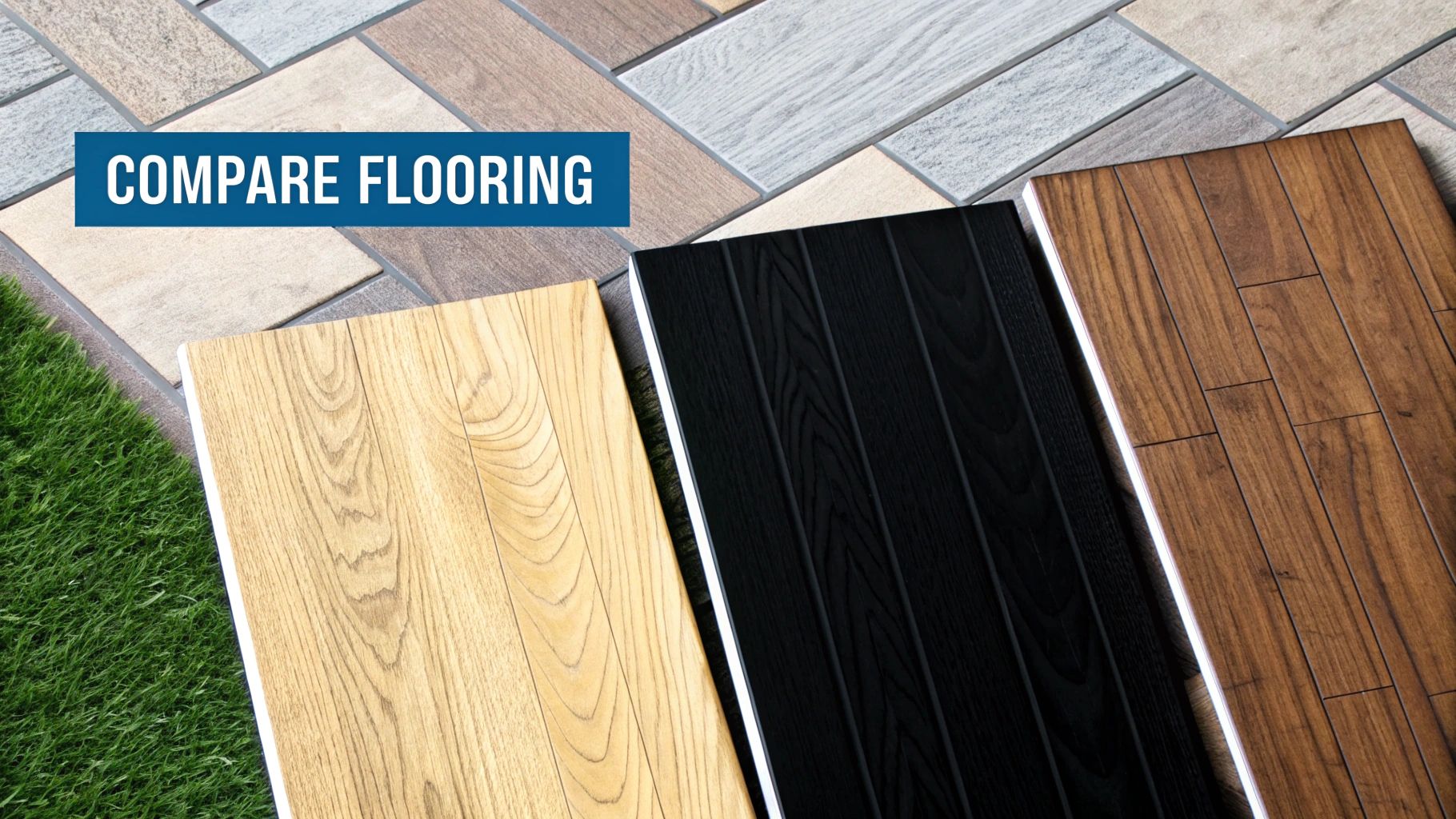
When you're standing in a showroom, the sheer number of flooring choices can be dizzying. To make sense of it all, it helps to compare laminate directly against its two biggest rivals: traditional solid hardwood and the ever-popular luxury vinyl plank (LVP).
Each of these materials has its own personality and purpose. The "best" one isn't a universal answer—it’s about finding the perfect match for your space, your lifestyle, and your wallet.
Laminate Versus Hardwood
Laminate's biggest claim to fame is its incredible ability to mimic the look of genuine hardwood without the hefty price tag. It gives you that classic, elegant aesthetic for a fraction of the cost.
On the other hand, solid hardwood is the real deal. It has an authentic charm that can be sanded down and refinished multiple times, potentially lasting a lifetime. However, that authenticity comes with a price—it's more vulnerable to scratches, dings, and water damage. Laminate, with its tough-as-nails wear layer, often stands up much better to the daily chaos of pets, kids, and dropped objects.
Laminate Versus Luxury Vinyl Plank
Here's where the decision gets a little tougher. Laminate and LVP are both modern, multi-layered flooring marvels that use stunningly realistic images to look like wood or stone. The real difference is what’s on the inside—their core materials—which changes how they behave around water.
The core difference is how they handle moisture. Laminate is typically water-resistant, meaning it can shrug off spills if you clean them up quickly. LVP, however, is built with a solid vinyl core, making it 100% waterproof. This makes it the go-to choice for rooms that see a lot of moisture, like bathrooms, basements, or laundry rooms.
To dive deeper into what makes vinyl so unique, you can learn more about what luxury vinyl plank flooring is and see how its construction gives it that waterproof edge.
Flooring Showdown: Laminate Vs Hardwood Vs Vinyl
To make things even clearer, let's put these three heavyweights side-by-side. This table breaks down the key features you'll want to consider when making your final decision.
| Feature | Laminate Flooring | Hardwood Flooring | Luxury Vinyl Plank (LVP) |
|---|---|---|---|
| Cost | Most budget-friendly | Premium, highest upfront cost | Mid-range, more affordable than hardwood |
| Durability | Excellent scratch resistance | Can scratch and dent easily | Dent-resistant and durable |
| Water Resistance | Water-resistant (spills need quick cleanup) | Highly susceptible to water damage | 100% Waterproof |
| Appearance | Realistic wood and stone looks | Authentic, one-of-a-kind natural beauty | Realistic wood and stone looks |
| Maintenance | Easy to clean; sweep and damp mop | Requires specific cleaners, can be refinished | Very easy to clean; sweep and damp mop |
| Feel Underfoot | Can feel hard and produce a hollow sound | Solid and warm | Softer and quieter than laminate |
At the end of the day, there's no single winner. If you're on a tight budget and need something tough for a high-traffic area, laminate is a fantastic contender. For timeless beauty you can restore for decades, nothing beats hardwood. And for worry-free performance in a wet-prone room, LVP is king.
Picking the Perfect Laminate for Your Space
Walking into a flooring showroom can feel a bit like information overload, but picking the right laminate is actually pretty straightforward once you know the lingo. The real secret is matching the floor's specs to the room where it's going to live.
Think about the AC rating first. This is simply a grade for durability, telling you how much wear and tear the floor can handle. A floor rated AC1 might be fine for a bedroom closet, but for a high-traffic hallway or a busy family room, you’ll want to look for at least an AC3 or AC4. This is your best defense against the daily grind of feet, paws, and dropped toys.
Beyond Just the Pretty Surface
Next up is the plank thickness. You'll see options from a thinner 8mm all the way up to a beefy 12mm. While an 8mm plank is easier on the wallet, upgrading to a 10mm or 12mm plank makes a noticeable difference. Thicker planks feel more like solid hardwood underfoot and do a much better job of dampening sound.
Water resistance is also a huge deal, especially in kitchens, bathrooms, or entryways where spills and splashes are inevitable. Modern laminates have come a long way, with many featuring water-resistant cores and special locking systems designed to keep moisture out. While they aren't 100% waterproof like vinyl, they offer great peace of mind in those mess-prone zones.
And whatever you do, don't skimp on the underlayment! This is the thin layer of foam or felt that goes down before the planks. It’s the unsung hero that gets rid of that hollow, clicky sound some people associate with laminate, adds a bit of cushion, and can even smooth out tiny imperfections in your subfloor.
So, before you head out to shop, just keep these three things in your back pocket:
- AC Rating: Does it match how much you use the room?
- Thickness: Do you want a sturdier feel and quieter steps?
- Water Resistance: Is it going in a kitchen, mudroom, or bathroom?
Thinking through these points ensures you're not just buying a floor that looks good on day one, but one that will stand up to your life for years. It's the simple checklist that makes all the difference.
Still Have a Few Questions?
Even after getting the basics down, you might still have a couple of lingering questions. That's perfectly normal. Getting these last few details ironed out is what gives you the confidence to pull the trigger on a new floor. Let's tackle the two questions we hear most often.
Can You Put Laminate in a Bathroom or Kitchen?
This is a big one. For years, the answer was a hard no, but things have changed. Many modern laminate floors are now built to handle moisture, thanks to water-resistant cores and incredibly tight-locking planks. If you're considering laminate for a kitchen or half-bath, look specifically for products marketed as "water-resistant."
That said, for a full bathroom with a shower or tub—where puddles and constant humidity are a given—luxury vinyl is still probably your safest choice. Always, always check the manufacturer’s warranty. It will tell you exactly where you can and can't install their product without voiding the coverage.
The key is choosing the right type of laminate. Advances in manufacturing mean that water-resistant laminate is now a viable option for kitchens and half-baths, areas where it was once completely unsuitable.
How Do I Keep My Laminate Floors Clean?
Here's the good news: laminate is a breeze to care for. A quick sweep or vacuum (using a hard floor attachment) is all you need to handle everyday dust and crumbs.
When it's time for a more thorough cleaning, a slightly damp mop and a pH-neutral cleaner designed for laminate are your best friends. The golden rule here is to avoid excessive water. Stay away from steam mops and harsh, oil-based soaps, which can strip the protective wear layer and lead to warping. Wiping up spills as soon as they happen is the single best thing you can do to keep your floors looking brand new.
Ready to explore your options? The experts at Flacks Flooring can answer all your questions and help you find the perfect flooring for your home. Discover our flooring solutions today!