
When it comes to bathroom flooring, you need a material that can stand up to a lot—water, humidity, and daily foot traffic—all while looking great. For most of us here in Cumming and Forsyth County, the two champions are porcelain tile and luxury vinyl plank (LVP). They both deliver exactly what a bathroom needs: serious protection against moisture.
Your Guide to Choosing the Best Bathroom Flooring in Cumming
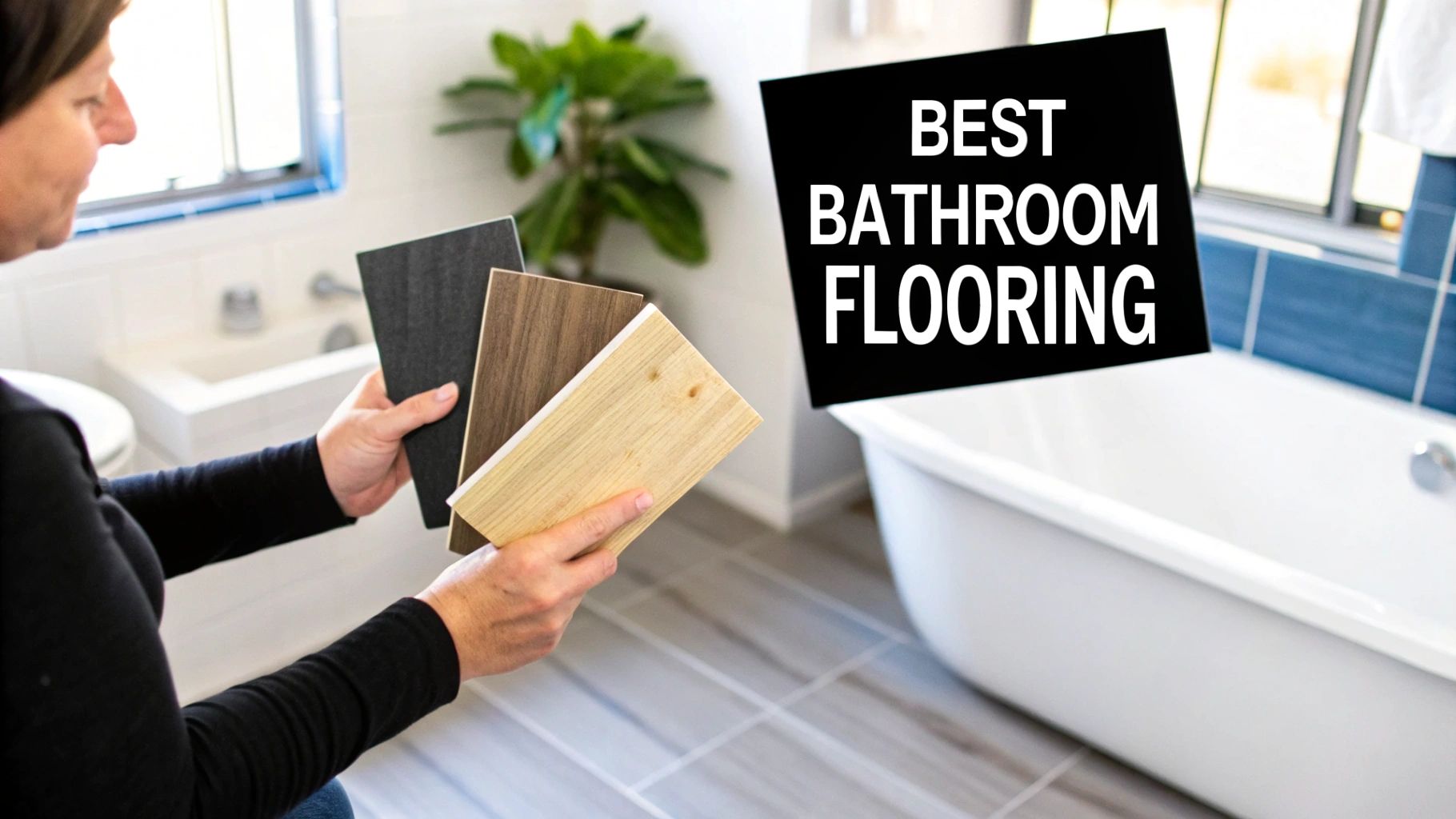
Let's be honest, picking a floor for your bathroom can feel like a huge decision. It’s about more than just matching your vanity; it's one of the most practical choices you'll make for your home. Your bathroom floor has to fend off splashes from the tub, constant steam from the shower, and the inescapable humidity we know so well in North Georgia.
Think of it like a shield. The right material guards your subfloor and the very bones of your house against water damage, which can spiral into costly repairs and dangerous mold. A poor choice might look fantastic for a little while, but it won't be long before it starts to warp, stain, or just give up.
Why This Decision Matters More Than Ever
We're seeing more and more homeowners invest in quality bathroom remodels. It's a smart move that improves your daily life and significantly boosts your home's resale value. In fact, the global bathroom flooring market was valued at a staggering USD 14,250.50 million in 2024 and is only expected to grow.
Within that massive market, ceramic and porcelain tiles dominate, holding a 42.3% share as the go-to choice for bathrooms around the world. And with the residential sector making up about 65% of all bathroom flooring installations, it’s crystal clear that homeowners are putting their money into materials that work as hard as they look good. You can find more details in this comprehensive report on bathroom flooring market trends.
Your bathroom floor isn't just a surface; it's a crucial component of your home's infrastructure. The best flooring for bathrooms is one that solves problems—like moisture and slips—before they even start.
This guide isn't a sales pitch. It’s real-world advice for homeowners right here in Cumming, Johns Creek, and Milton trying to navigate all the options. We’ll dig into how your budget, family needs, and personal style all point toward the perfect floor for you. Our goal is to give you the confidence to make a great choice—one that protects your investment and makes your home a better place to live for years to come.
Why Waterproofing Is Your Most Critical Decision
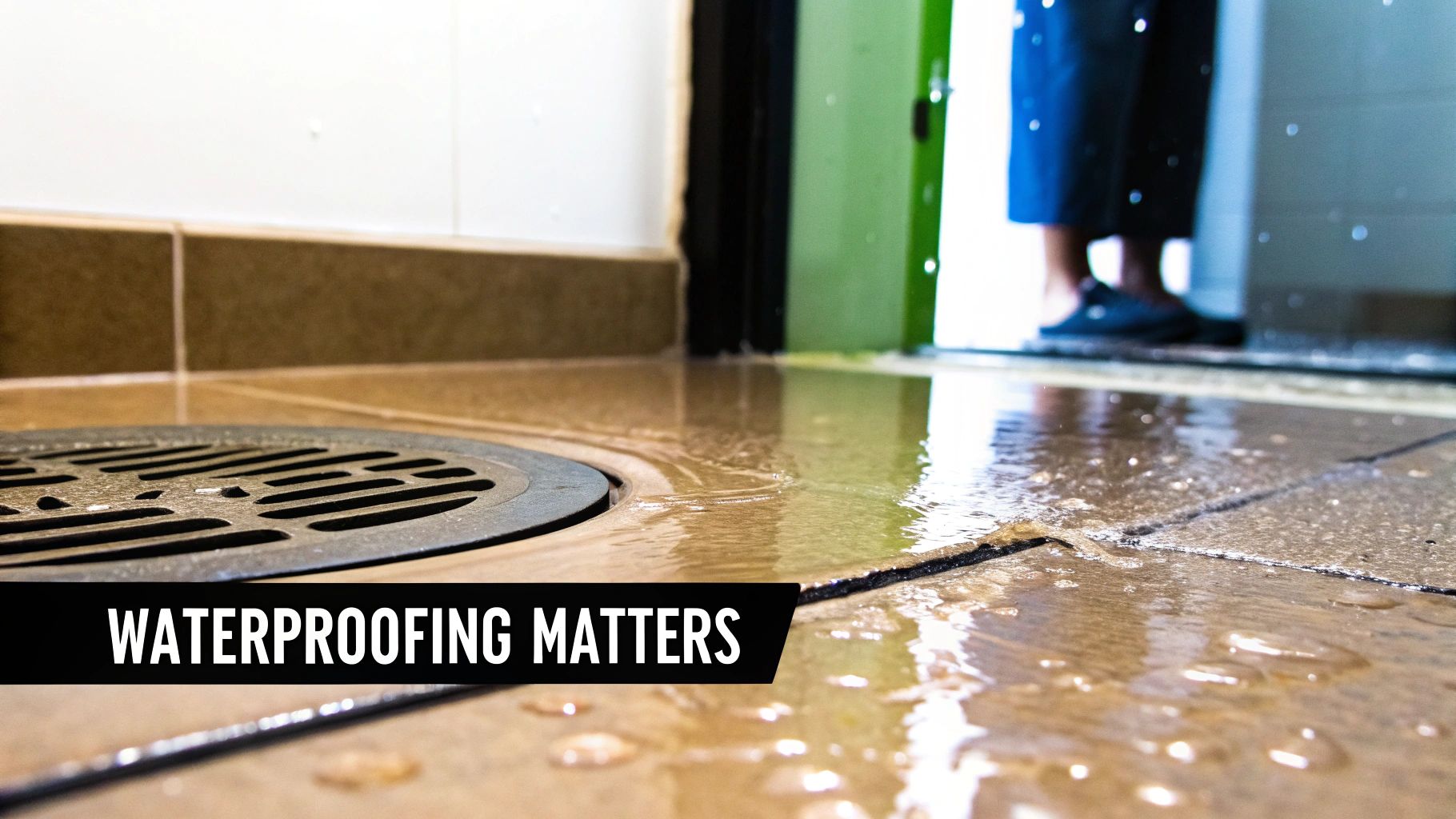
Let's be honest: in a bathroom, water is everywhere. Between daily showers, kids splashing in the tub, and the constant humidity we get here in Georgia, your floor is always in the line of fire. That’s why choosing the right flooring isn’t just about picking a style you love—it’s about installing a rock-solid defense against moisture.
Think of your bathroom floor as the first line of defense for your home's structure. If that defense fails, water will find a way through. It seeps into the cracks, gets trapped beneath the surface, and quietly starts causing major problems.
Once moisture is trapped, it's a breeding ground for mold and mildew, which can seriously impact your family's health. Worse, it slowly rots the wooden subfloor and support beams underneath, leading to spongy floors, structural weakness, and repair bills that can run into the thousands.
Waterproof vs. Water-Resistant: A Critical Distinction
You’ll hear the terms "water-resistant" and "waterproof" thrown around a lot, but they are not the same thing. Getting this right is crucial.
- Water-Resistant: This means the floor can handle a small spill if you wipe it up right away. Think of it as a brief window of protection. If water sits for too long, it will eventually soak through and cause damage.
- Waterproof: This is the real deal. A 100% waterproof floor is built to be completely immune to water, no matter how long it’s exposed. The material itself, from the core to the surface, is a permanent barrier that stops moisture in its tracks.
For any full bathroom—especially a kids' or primary bath—choosing a truly waterproof material isn't just a good idea; it's essential for protecting your investment. For a deeper dive, check out our ultimate guide to moisture-resistant flooring options to see what makes a floor truly stand up to water.
Investing in a fully waterproof floor is the single most important decision you can make for your bathroom’s longevity. It's the difference between a floor that lasts for decades and one that fails in just a few years.
The High Cost of Cutting Corners
Trying to save a few bucks upfront by choosing a floor that isn't fully waterproof is a recipe for disaster. It’s a classic false economy—what you save today, you’ll likely spend tenfold on repairs down the road.
Even with the best flooring, it pays to stay vigilant. Knowing how to detect water leaks early can stop a small drip from becoming a catastrophe. Keep an eye out for musty smells, loose tiles, or discolored baseboards—these are often the first red flags.
At the end of the day, your bathroom floor is the primary shield protecting your home from daily water exposure. When you prioritize waterproofing above all else, you’re not just protecting one room; you're safeguarding the entire structure, value, and health of your home.
Comparing the Top Bathroom Flooring Contenders
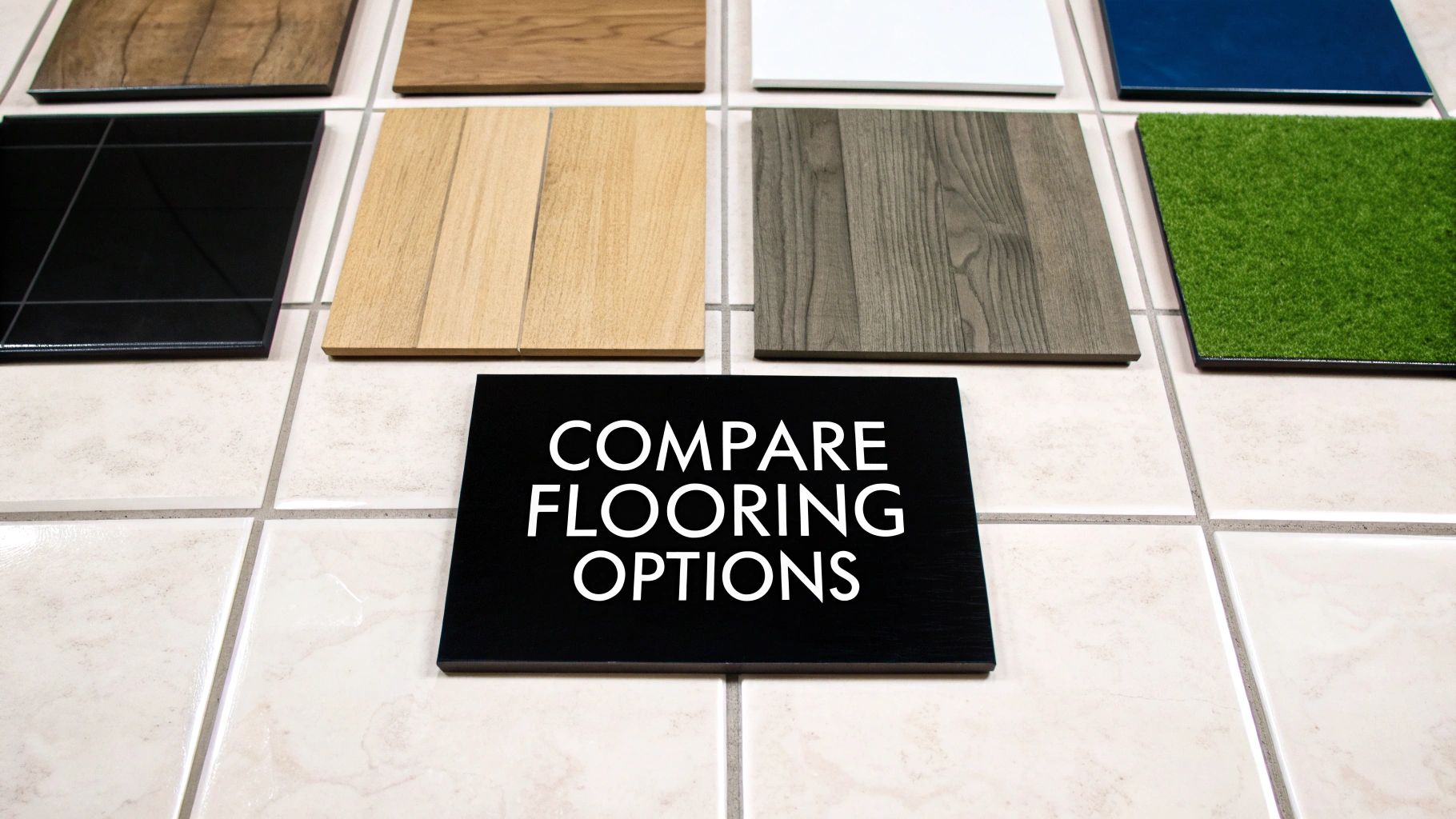
Alright, we’ve hammered home why waterproofing is non-negotiable in a bathroom. Now for the fun part: putting the most popular flooring materials under the microscope. There’s no single “best” floor out there; the right choice is always the one that fits your home, your lifestyle, and your wallet.
Let's dive into the heavy hitters—classic tile, chameleon-like luxury vinyl, and the undeniable elegance of natural stone. Each one has a story to tell.
Porcelain and Ceramic Tile: The Timeless Champion
For as long as most of us can remember, tile has been the go-to for bathrooms, and for very good reasons. Think of it as your floor's suit of armor. Fired at incredibly high temperatures, both ceramic and porcelain are naturally non-porous, meaning water just sits on the surface.
When installed properly with quality, sealed grout, a tile floor is a truly 100% waterproof system. Porcelain, the denser of the two, is practically bulletproof—it shrugs off dropped curling irons, constant foot traffic, and years of cleaning without a scratch.
Beyond its brawn, tile’s design potential is virtually endless. Want the look of reclaimed barn wood, sophisticated Italian marble, or a funky geometric pattern? There’s a tile for that.
Of course, no material is perfect. A few things to keep in mind:
- Feel Underfoot: Tile can be cold and hard, a fact you’ll be well aware of on a chilly Cumming morning.
- Grout Maintenance: The tiles themselves are a breeze to clean, but grout lines are their Achilles' heel. They need regular cleaning and periodic resealing to keep them from getting dingy or growing mildew.
- Slip Factor: A high-gloss tile looks stunning, but it can be dangerously slick when wet. Safety is paramount, especially in a bathroom. For a deep dive into safety ratings, this complete guide to anti-slip tile safety is a fantastic resource.
Key Takeaway: For unmatched durability and design freedom, tile is king. It's a fantastic long-term investment for homeowners who appreciate classic style and don't mind a little bit of grout upkeep.
Luxury Vinyl Plank and Tile: The Versatile Modern Favorite
In the last decade, luxury vinyl—in both plank (LVP) and tile (LVT) formats—has absolutely taken the flooring world by storm. Forget the flimsy linoleum you remember from your childhood; this is a completely different animal. Today's luxury vinyl is a sophisticated, multi-layered product engineered for the real world.
Its biggest selling point for bathrooms? It’s waterproof through and through. The core is a composite material that simply doesn’t care about water, making it ideal for a space with constant humidity and splashes.
But the benefits don't stop there. Luxury vinyl is noticeably softer and warmer under your feet than tile, which adds a welcome touch of comfort. It's also a dream to clean—no grout lines to scrub, just a quick sweep and a damp mop. If you want to learn more, our guide explains what luxury vinyl plank flooring is in detail.
Here are the trade-offs:
- Long-Term Value: While it looks incredible, LVP typically doesn't add the same high-end resale value as natural stone or premium porcelain tile.
- Vulnerability to Damage: The top wear layer is tough, but it can be gouged or scratched by sharp objects or dragging heavy items.
- Quality Varies: The market is flooded with LVP options. Sticking with a reputable brand is key to getting a thick, durable wear layer and a truly convincing look.
Sheet Vinyl: The Budget-Savvy Workhorse
While LVP gets most of the attention, traditional sheet vinyl is still a fantastic and highly practical choice, especially if you're on a tight budget. Its superpower is its seamless nature. Because it’s installed from a large roll, most small or mid-sized bathrooms can be done with a single piece.
No seams means nowhere for water to sneak through, making it one of the most watertight floors you can buy. Just like its LVP cousins, it's warm, comfortable, and simple to maintain.
The compromises come with the lower price tag. The designs have improved, but they often lack the convincing texture and depth of premium luxury vinyl. And if you do manage to tear or gouge the sheet, repairs can be tricky and hard to hide.
Natural Stone Tile: The Premium High-End Choice
If you’re aiming for pure, unadulterated luxury, natural stone is in a class of its own. Materials like marble, travertine, and slate bring an organic beauty to a bathroom that man-made products just can't duplicate. Every single tile has unique veining and character, making your floor a true one-of-a-kind installation.
Stone is incredibly durable and will literally last a lifetime with the right care. It’s also a major plus for resale value, something homeowners in sought-after areas like Johns Creek and Milton definitely appreciate.
This level of elegance, however, demands more from you:
- High Maintenance: Most stone is porous. This means it needs to be sealed regularly (usually once a year) to fend off water, stains, and etching from things like soap or cleaners.
- Higher Cost: This is the most expensive option, factoring in both the price of the material and the specialized labor needed for a proper installation.
- Potential for Slipping: Polished stone is beautiful but slippery. For a bathroom, it’s much safer to opt for a honed, tumbled, or textured finish.
To make the decision a bit easier, let's break these options down side-by-side.
Detailed Feature Comparison of Bathroom Flooring Materials
This table offers a clear, at-a-glance comparison of the key factors you'll want to consider when making your choice.
| Material | Waterproof Level | Durability | Maintenance | Feel Underfoot | DIY Friendliness |
|---|---|---|---|---|---|
| Ceramic/Porcelain Tile | 100% Waterproof (with sealed grout) | Excellent; highly resistant to scratches, dents, and stains. | Low for tile; moderate for grout (requires sealing). | Hard, cold (can use heating). | Moderate |
| Luxury Vinyl Plank/Tile | 100% Waterproof | Very Good; resistant to scratches but can be dented/gouged. | Very Low; easy to clean, no sealing needed. | Soft, warm, comfortable. | High |
| Sheet Vinyl | 100% Waterproof (seamless installation) | Good; can be torn or gouged more easily than LVP. | Very Low; seamless surface is extremely easy to clean. | Softest, warm. | High |
| Natural Stone Tile | Water-Resistant (requires regular sealing) | Excellent; incredibly durable but can chip or stain if unsealed. | High; must be sealed periodically to prevent damage. | Hard, cold (can use heating). | Low (Pro recommended) |
As you can see, there's a clear trade-off between factors like cost, maintenance, and durability. Ultimately, the best flooring for your bathroom is the one that best aligns with how you balance these features for your home and family.
What Flooring Should You Never, Ever Put in a Bathroom?
Knowing which floors will hold up is one thing, but knowing which ones will fail spectacularly is just as important. Picking the wrong material isn't just a style mistake; it can kick off a cascade of problems, from buckled planks to hazardous mold growing just out of sight.
Think of your bathroom as a torture chamber for building materials. It's constantly under assault from humidity, direct splashes, and steam. Some of the most popular flooring choices just weren't designed to survive that kind of daily battle.
Solid Hardwood: A Beautiful Mistake
Solid hardwood is gorgeous, no doubt about it. But in a full bathroom, it’s a ticking time bomb. Wood is a natural, porous material, and its fibers act like a sponge around water. Once moisture gets in, it’s game over.
This leads to a whole laundry list of problems you can't fix:
- Warping and Cupping: The planks will twist, bend, and curl up at the edges, creating a floor that's both ugly and unsafe to walk on.
- Staining: Water seeps in and leaves behind permanent dark spots and streaks that ruin the finish.
- Gapping: As the wood swells and then shrinks back, ugly gaps open up between the planks. This just creates more entry points for water to get down to your subfloor.
While certain engineered hardwoods are built for damp spaces, traditional solid hardwood has no business being in a bathroom with a shower or tub. The risk of permanent, expensive damage is just way too high.
Standard Laminate: The Weakness Is Hidden
Laminate can be tempting. It often looks like real wood or stone and comes with a wallet-friendly price tag. But the problem isn't the tough top layer you see—it's the core hidden underneath.
The core of most standard laminate is basically just high-density fiberboard (HDF), which is a fancy term for compressed wood dust and resin. Once water finds its way into the seams between planks, that core acts like a biscuit dunked in tea. It swells, turns to mush, and never goes back to its original shape.
When the core is shot, you'll see the planks start to peel, bubble, and literally fall apart. Even so-called "water-resistant" laminate only buys you a little time. In a room as wet as a bathroom, it’s not a matter of if water will get in, but when.
Wall-to-Wall Carpet: A Mold Magnet
Sure, carpet feels warm underfoot on a cold morning, but it is hands-down the worst choice you can make for a bathroom. From a health and hygiene standpoint, it's a nightmare. Its absorbent fibers and cushy padding trap every drop of moisture, soap scum, and bacteria.
This creates the perfect breeding ground for mold and mildew. Long before you even smell that tell-tale musty odor, colonies can be thriving deep within the carpet. A bathroom carpet never truly dries out, especially in a humid climate like ours in North Georgia. This doesn't just stink; it can also trigger allergies and respiratory problems.
Steering clear of these moisture-hating materials is the first step toward a bathroom floor that lasts. It protects your home’s structure, your family's health, and the investment you've made in your property.
Choosing the Right Floor for Your Lifestyle and Budget
Technical specs are one thing, but let's be honest—the best bathroom floor is the one that actually works for your life. This is where we move past the data sheets and figure out what makes sense for your family, your style, and your wallet.
Think of it like buying a car. A sleek, two-seater sports car might have incredible performance specs, but it’s a terrible choice for a family of five. In the same way, a gorgeous marble floor that needs constant upkeep is probably a poor fit for a chaotic kids' bathroom. We just need to ask the right questions to find your perfect match.
Balancing Budget and Long-Term Value
It’s tempting to just look at the price tag on the materials, but that’s only part of the story. A truly smart decision balances the upfront cost with what you'll spend down the road. After all, a "cheap" floor that you have to replace in five years isn't much of a bargain.
Here's how to think about the total investment:
- Upfront Material Cost: This is the price per square foot for the actual product, whether it's tile, vinyl, or stone.
- Installation Labor: Getting a truly waterproof finish requires a pro, and that's an investment. A complex herringbone tile pattern or heavy natural stone will cost more in labor than a simple, click-together LVP floor.
- Long-Term Maintenance: Will you need to buy special cleaners? Will you have to pay someone to reseal grout or stone every couple of years? Those little costs add up.
For homeowners here in competitive markets like Forsyth County, the right flooring isn't just a purchase; it's an investment in your home's equity. A beautiful, well-installed floor can make a real difference at resale.
This shift toward quality is happening everywhere. The global flooring market is expected to hit an incredible USD 634.8 billion by 2033, and residential projects make up over 50% of that. It just goes to show that homeowners are putting their money into durable, high-quality flooring. You can explore more about these trends and flooring market growth at reportsanddata.com.
Matching Flooring to Your Household Dynamics
The day-to-day life inside your home is a huge factor. The floor in a quiet guest powder room has a much easier job than the one in a primary bathroom that sees a stampede of activity every morning.
A busy family bathroom, for example, needs to be a fortress. It has to handle constant foot traffic, splashes from bath time, and the occasional dropped shampoo bottle. This is where Luxury Vinyl Plank (LVP) really shines, giving you a powerful combination of waterproof performance, serious scratch resistance, and a softer feel underfoot.
For homes with young kids or older family members, slip resistance isn't a luxury—it's a critical safety feature. A matte-finish porcelain tile with a slightly textured surface is a fantastic choice here, offering excellent grip even when the floor is wet.
The infographic below makes it crystal clear which common flooring materials just can't handle the moisture of a bathroom.
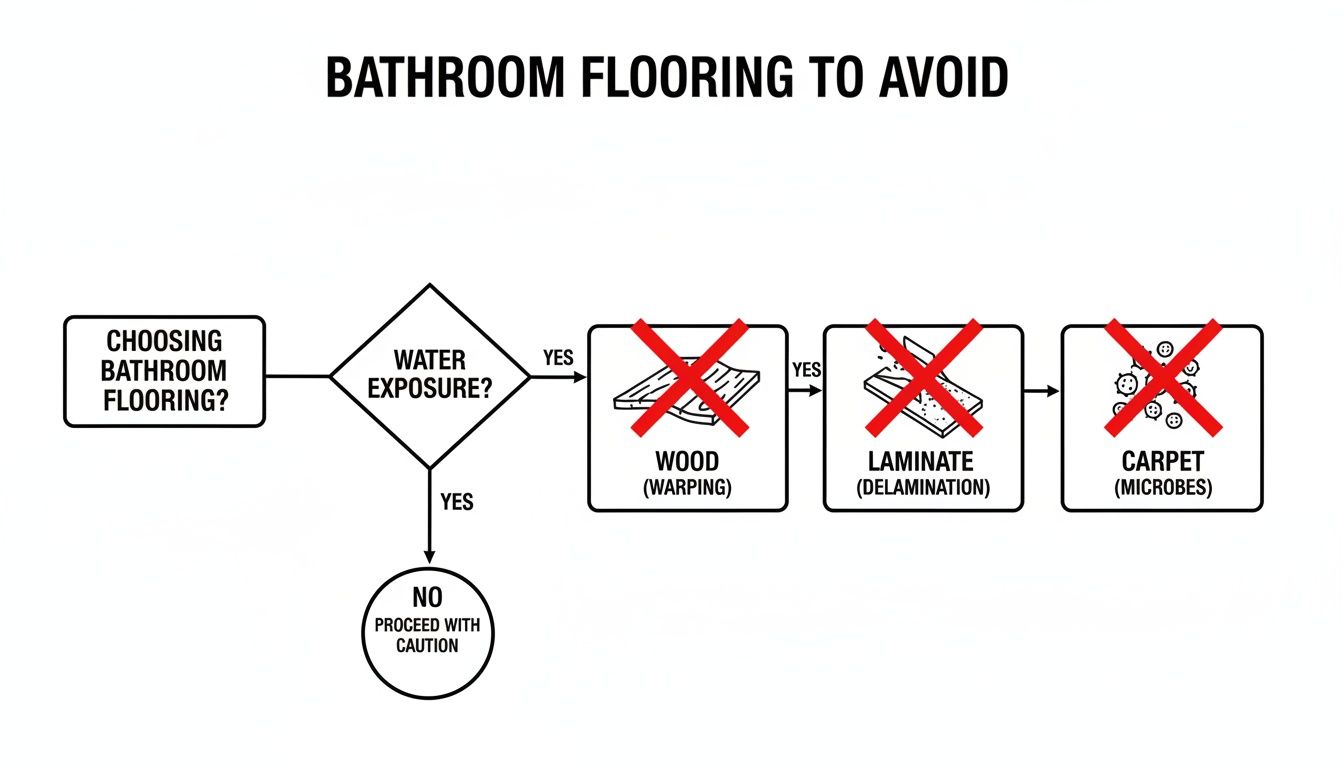
As you can see, materials like solid hardwood, standard laminate, and carpet are practically guaranteed to fail. They simply weren't designed for the constant humidity and water exposure.
Aligning Your Floor with Your Design Aesthetic
Finally, your new floor has to look good and feel right in the room. Your personal style is what guides you toward the sleek, modern lines of a large-format porcelain tile or the warm, rustic charm of a wood-look LVP.
Don’t just think about the floor by itself. Picture how it will work with your vanity, wall color, and fixtures. A floor with a bold, busy pattern might feel overwhelming in a small bathroom, whereas a simple, elegant stone-look tile can make the space feel bigger and more peaceful.
Always bring samples home. See how they look in your bathroom's unique lighting in the morning, afternoon, and evening. It’s a simple step, but it’s the best way to make sure the final result is a space you'll absolutely love.
What to Know Before You Lay That First Tile
So you’ve picked out the perfect flooring. That’s a huge step, but don't get ahead of yourself. Even the most bulletproof, 100% waterproof floor on the market can fail spectacularly if the installation is botched. It's like buying a top-of-the-line raincoat but leaving it unzipped in a downpour—the quality of the material doesn't matter if it's not put together correctly.
Your bathroom floor's success story begins long before the first piece is ever laid. It starts with the subfloor. This is the foundation, and it has to be perfect: spotlessly clean, bone dry, and dead level. Skip this step, and you’re setting yourself up for disaster. Even a little bit of leftover debris or a slight dip in the subfloor can cause tiles to crack or vinyl planks to pop apart down the road.
DIY vs. Professional Installation: A High-Stakes Decision
I get it. The temptation to roll up your sleeves and save a few bucks with a DIY install is real, especially with all the "easy" click-lock flooring systems out there. And for a simple, half-bath powder room? You might be okay.
But a full bathroom—with a tub, a shower, and daily steam—is a whole different ballgame. Water is persistent, and it will find a way in. A tiny, improperly sealed gap around the toilet or a weak caulk line along the tub can become a secret entryway for moisture. You won't see it happening, but over time, that slow, silent leak can completely rot out your subfloor, leading to thousands in structural damage.
A professional installation isn't just about laying a floor. It's about building a completely sealed, waterproof system designed to protect your home for decades. In a moisture-heavy room like a bathroom, it’s the smartest money you can spend.
What a Professional Brings to the Job
A seasoned flooring installer has seen it all. They know how to spot the subtle issues you’d never notice, from prepping a tricky subfloor to applying the right waterproofing membranes and making flawless cuts around pipes and drains.
Here’s what their expertise really means for you:
- A Flawless Foundation: They’ll grind down high spots and use self-leveling compounds to create a perfectly flat surface, which is non-negotiable for a lasting floor.
- A Watertight System: They use proven techniques to seal every single edge, seam, and joint. No weak spots, no entry points for water.
- Warranty Protection: Did you know that many flooring warranties are instantly voided by an improper installation? Hiring a pro ensures your investment stays protected.
Before any work kicks off, it's crucial to understand the role of a proper flooring moisture barrier, as it’s the unsung hero of any bathroom project. Think of professional installation not as an added expense, but as an insurance policy for your floor and your home.
Answering Your Final Bathroom Flooring Questions
Even after you’ve narrowed down your choices, a few practical questions almost always pop up. It's completely normal. Getting these last few details ironed out is what helps you move forward with real confidence. Here are some of the most common things we get asked by homeowners around Cumming and Johns Creek.
Can I Just Put Luxury Vinyl Plank Over My Old Tile Floor?
Yes, you often can! This is one of the big perks of LVP—it can frequently be installed right on top of an existing ceramic or porcelain tile floor. Going this route can save you a ton of money and a major headache by avoiding demolition.
But there’s a catch. The existing tile has to be in really good shape. We're talking perfectly level, with no cracked, loose, or shifting tiles. If the old floor has deep grout lines or any uneven spots, those imperfections can eventually transfer through to the surface of the new vinyl. It's an issue called "telegraphing," and it can ruin the look of your new floor. A good installer will always check the subfloor first and might use a leveling compound to create a perfectly smooth base.
What’s the Safest, Most Slip-Resistant Flooring for a Bathroom?
This is a huge consideration, especially if you have young kids or older family members at home. You're looking for a floor with a high coefficient of friction (COF), which is just the technical term for how much grip it has.
- Matte or textured porcelain and ceramic tiles are some of the best you can get. They're specifically designed with slip resistance in mind and are fantastic for wet areas.
- Luxury vinyl plank (LVP) and tile (LVT) are also great choices, as their texture and composition provide a solid, reliable grip underfoot.
When you're shopping, don't hesitate to ask your flooring expert about the specific slip-resistance ratings for the products you're considering. It’s a key piece of information for keeping everyone safe.
A textured finish on your bathroom floor is more than a design decision—it’s a practical safety feature that gives you peace of mind every single day.
How Do I Take Care of My New Bathroom Floor So It Lasts?
The good news is that modern bathroom flooring is pretty low-maintenance. For tile floors, all you really need is regular sweeping and mopping with a pH-neutral cleaner. The key is the grout—you’ll want to reseal those grout lines every one to two years to keep them from staining and absorbing moisture.
Luxury vinyl is even simpler. A quick sweep and a damp mop with a cleaner approved by the manufacturer is all it takes. The most important rule for any bathroom floor, though, is to wipe up spills and puddles as soon as you see them. A couple of good bath mats can do most of the work for you. This one small habit is the single best thing you can do to protect your investment and keep your floor looking brand new.
Ready to find the perfect waterproof floor for your Cumming or Forsyth County home? The team at Flacks Flooring has the expertise to guide you through every option, ensuring you get a beautiful, durable floor that protects your home for years. Visit our showroom or schedule an in-home consultation today.