
Choosing the right flooring is one of the most impactful decisions you can make for your home’s aesthetic and functional harmony. A cohesive, whole-house flooring strategy eliminates jarring transitions, creates a sense of spaciousness, and establishes a foundational design element that ties every room together. It’s about more than just picking a material; it’s about creating a unified flow that enhances your daily life and boosts your home’s value. As you consider these whole house flooring ideas, a crucial first step in creating a seamless foundation is understanding your home’s floor plans to visualize flow and transitions.
For homeowners in Cumming, Johns Creek, Milton, and throughout Forsyth County, selecting the right material involves balancing style with the practical demands of Georgia’s climate. Humidity and the need for durable, family-friendly surfaces are key considerations. This comprehensive guide moves beyond simple material choices to explore eight whole house flooring ideas, delving into cohesive strategies, modern installation techniques, and smart design principles.
We will explore a range of options, from waterproof luxury vinyl plank and engineered hardwood to strategies for mixing materials effectively. You’ll find actionable insights on wide-plank styles for visual continuity, and tips for coordinating color palettes. Whether you’re building a new home or undertaking a major renovation, these proven concepts will help you create a beautiful, unified, and long-lasting foundation for your entire living space. This list provides the practical information needed to select a flooring solution that is both stunning and perfectly suited to your lifestyle.
1. Waterproof Luxury Vinyl Plank (LVP) Flooring
Waterproof Luxury Vinyl Plank (LVP) has emerged as a dominant choice for homeowners seeking a unified, stylish, and practical whole-house flooring solution. This engineered product brilliantly mimics the look of natural materials like hardwood or stone but offers superior resilience against moisture. Its multi-layer construction features a rigid, waterproof core, making it an ideal candidate for every room in your home, from moisture-prone basements and bathrooms to high-traffic kitchens and living areas.
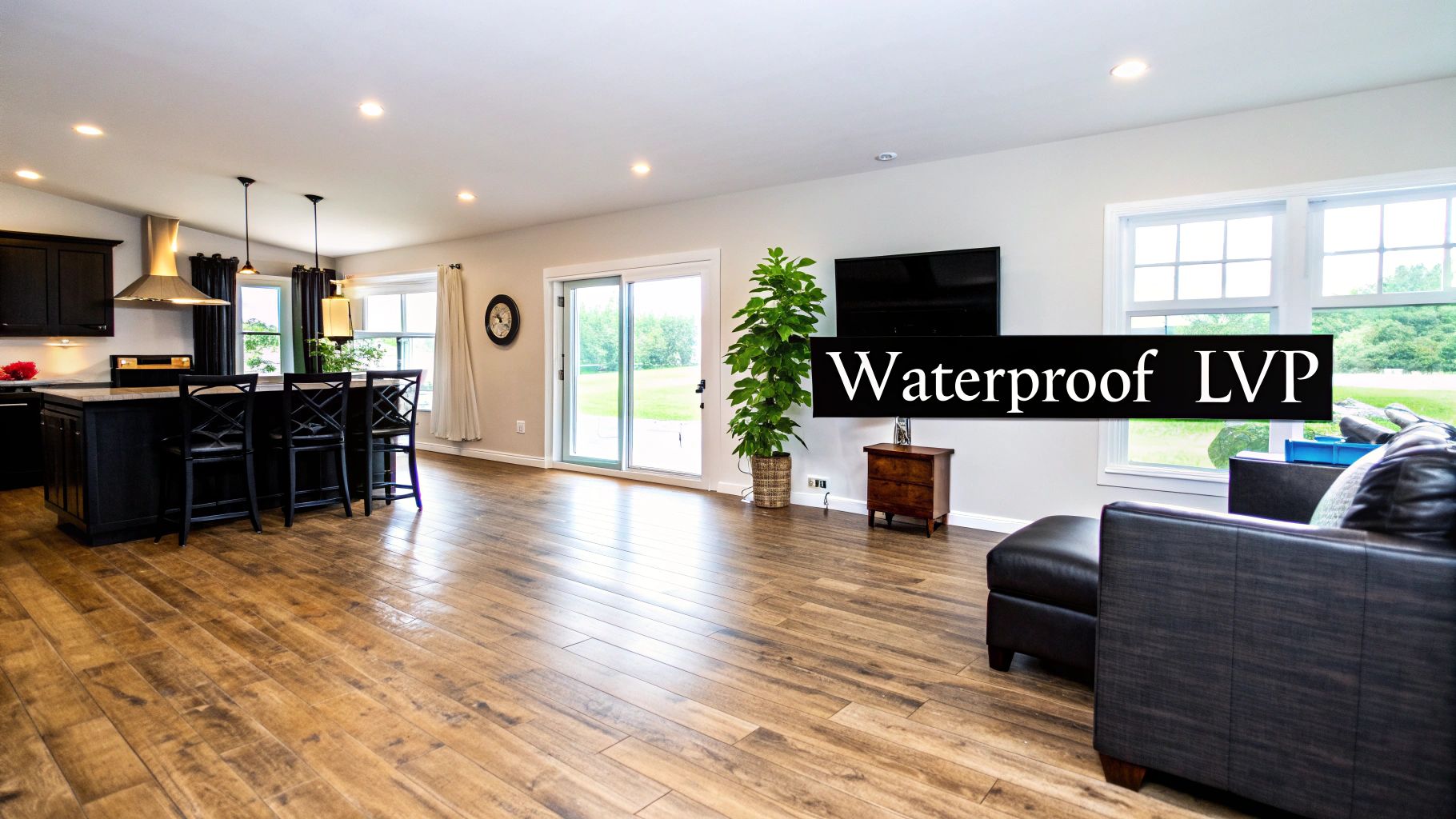
Unlike traditional hardwood that can warp or swell with humidity changes common in the Forsyth County area, LVP remains stable. This allows for a seamless, continuous look throughout an entire floor plan, a popular design choice in modern Cumming and Johns Creek homes with open concepts. Brands like Coretec and Lifeproof have perfected this technology, offering stunning visuals with unbeatable durability.
Why It’s a Top Whole-House Flooring Idea
The primary advantage of waterproof LVP is its versatility. You can achieve the warm, inviting look of wide-plank oak in your living room and carry that same exact flooring directly into your kitchen and adjoining powder room without worrying about spills or splashes. This cohesion creates a sense of spaciousness and flow that is difficult to achieve with multiple flooring types. For families with children and pets, its scratch-resistant wear layer and easy-to-clean surface make it a low-maintenance dream.
Implementation Tips for a Flawless Finish
To ensure your LVP performs as a true whole-house flooring system, consider these key steps:
- Prioritize Durability: Select a product with a high wear layer rating (at least 20 mil) and a rigid core. This is crucial for handling the varied traffic levels across an entire home.
- Create Visual Flow: Use wider planks (7 inches or more) to make spaces feel larger and more connected. Lay the planks parallel to the longest wall or main light source to enhance the sense of continuity.
- Proper Installation is Key: Ensure your installer leaves the correct expansion gaps around the perimeter. LVP needs room to expand and contract with temperature changes to prevent buckling.
- Don’t Skip the Underlayment: A quality underlayment improves acoustics by reducing sound transmission between floors and adds comfort underfoot.
For a deeper dive into product specifics, our comprehensive LVP flooring reviews can help you compare top brands and their features.
2. Engineered Hardwood Flooring
Engineered hardwood offers the timeless beauty of real wood with enhanced stability, making it a stellar option for a whole-house flooring strategy. This product features a top layer of genuine hardwood veneer bonded to multiple layers of plywood or high-density fiberboard. This cross-grain construction significantly reduces the wood’s natural tendency to expand and contract, providing superior performance against the humidity shifts common in the Forsyth County climate.
Unlike solid hardwood, engineered planks are versatile enough for installation on any level of the home, including basements. This stability allows for the creation of cohesive, flowing interiors, a sought-after feature in Milton and Johns Creek homes with open-concept layouts. Top brands like Bruce Hardwoods and Carlisle Wide Plank Hardwoods provide an array of species and finishes to match any design aesthetic.
Why It’s a Top Whole-House Flooring Idea
The key benefit of engineered hardwood is its ability to deliver the authentic look, feel, and value of real wood in areas where solid hardwood isn’t recommended. You can install stunning wide-plank oak throughout your main level, carrying it from the living room directly into the kitchen. For homeowners who refuse to compromise on having real wood, this is the most practical and versatile choice.
Implementation Tips for a Flawless Finish
To maximize the performance and beauty of your engineered hardwood as a whole-house flooring solution, follow these guidelines:
- Focus on Veneer Thickness: Choose a product with a wear layer of at least 2-4mm. This thicker veneer allows for future refinishing, extending the life of your floors significantly.
- Go Wide for Continuity: Select wider planks (5 to 9 inches) to minimize seams and create a more unified, expansive feel across different rooms.
- Acclimation is Non-Negotiable: Allow the planks to acclimate inside your home for at least 3-7 days before installation. This lets the wood adjust to your home’s specific temperature and humidity.
- Hide Daily Wear: Consider a hand-scraped or distressed finish, which is excellent at concealing minor scratches and dents in high-traffic areas like hallways and family rooms.
To see how this versatile option can transform even below-grade spaces, explore the possibilities of using engineered hardwood in a basement.
3. Mixed Flooring Materials with Transition Zones
While a single flooring material offers simplicity, a strategic mix of materials allows for zone-specific functionality and aesthetic impact. This approach, popular in recent Cumming and Johns Creek renovations, involves using different flooring types in designated areas, such as waterproof vinyl in bathrooms, durable hardwood in living spaces, and elegant tile in foyers. This method lets you optimize performance where it’s needed most while creating unique, layered designs.

This whole-house flooring idea is about balance. For instance, a Milton home might feature premium engineered hardwood in the main living areas for warmth and visual appeal, transitioning to practical and stylish waterproof LVP in the adjoining kitchen and laundry room. The key is to make these transitions feel intentional and seamless, enhancing the home’s overall character rather than fragmenting it.
Why It’s a Top Whole-House Flooring Idea
The biggest advantage of a mixed-material strategy is performance optimization. You get the best material for each job: the unmatched water resistance of porcelain tile in a bathroom, the timeless beauty of hardwood in a bedroom, and the rugged durability of LVT in a high-traffic mudroom. This approach also allows for better budget allocation, letting you invest in high-end materials for high-visibility areas while using more cost-effective options in secondary spaces. It’s a smart, customized solution that caters directly to a family’s lifestyle.
Implementation Tips for a Flawless Finish
Creating cohesive transitions is crucial for a successful mixed-flooring project. Consider these tips:
- Plan Your Zones: Designate clear zones for each material, typically separating wet areas (kitchens, baths) from dry areas (living rooms, bedrooms).
- Maintain Visual Harmony: Choose materials with complementary colors, tones, and textures. A warm-toned wood next to a warm-toned tile creates a more unified look than clashing undertones.
- Invest in Quality Transitions: High-quality transition strips (T-molding, reducers) are essential for a clean, professional, and safe connection between different flooring types.
- Ensure Consistent Height: Work with your installer to ensure the subfloor is prepared correctly so that different flooring materials meet at the same height, preventing trip hazards.
Properly executed transitions are vital for this approach. You can explore detailed advice on managing floor transitions to ensure a polished final result.
4. Solid Hardwood Flooring with Strategic Moisture Management
For many homeowners, nothing compares to the timeless elegance and lasting value of solid hardwood. It remains a gold-standard choice for a whole-house flooring idea, especially in above-grade installations where its natural beauty can shine. While engineered products offer moisture resistance, solid hardwood provides an unmatched authenticity and the unique ability to be sanded and refinished multiple times, offering a lifetime of service. Its natural warmth and character add significant resale value, making it a sound investment.
The key to a successful whole-house solid hardwood installation, particularly in the variable humidity of North Georgia, is strategic moisture management. This involves meticulous subfloor preparation and proper acclimation of the wood. Brands like Anderson Hardwood Floors and Carlisle Wide Plank Floors have perfected manufacturing processes to create stable, beautiful planks suitable for open-concept living spaces in Forsyth County or classic master suites in Johns Creek homes.
Why It’s a Top Whole-House Flooring Idea
The primary appeal of solid hardwood is its enduring beauty and longevity. A single species, like wide-plank white oak, can be installed throughout the main living areas, hallways, and bedrooms to create a cohesive and luxurious foundation for your home’s design. This seamless look enhances architectural flow and makes spaces feel larger and more connected. Unlike other flooring types that may need replacement, solid hardwood can be professionally refinished every 5-10 years to erase wear and tear, essentially giving you a brand-new floor.
Implementation Tips for a Flawless Finish
To ensure your solid hardwood stands the test of time as a whole-house solution, focus on these critical steps:
- Prioritize Acclimation: Have the wood delivered to your home at least 7-14 days before installation. This allows it to adjust to the specific temperature and humidity levels inside, preventing future gapping or buckling.
- Insist on Moisture Barriers: A high-quality moisture barrier installed over the subfloor is non-negotiable. This protects the wood from any moisture vapor that can rise from a crawlspace or concrete slab.
- Choose a Suitable Finish: Hand-scraped or distressed finishes are excellent for high-traffic areas as they naturally camouflage minor scratches, dents, and footprints, keeping the floor looking pristine longer.
- Control Your Climate: Maintain consistent indoor humidity levels year-round. Using a humidifier in the dry winter months and a dehumidifier during the humid summer will protect your investment and maintain the wood’s stability.
5. Click-Lock Installation Method
The click-lock installation method has revolutionized whole-house flooring projects, making them faster, more accessible, and often more cost-effective. Rather than using nails or messy adhesives, this system features planks with specially designed interlocking edges that simply click together. This creates a “floating floor” that sits securely over an underlayment, making it a popular choice for renovations throughout Forsyth County where speed and minimal disruption are valued. This technology is a key feature of LVP, laminate, and many engineered hardwoods.
This method’s adaptability makes it a practical solution for diverse local scenarios, from quick renovation projects in Johns Creek homes using click-lock engineered hardwood to DIY-friendly basement finishing in Milton with waterproof LVP. Brands like Pergo pioneered this technology with laminate, and it has since been perfected by LVP leaders like Coretec and LifeProof, making seamless, multi-room installations more achievable than ever.
Why It’s a Top Whole-House Flooring Idea
The primary benefit of a click-lock system is the efficiency and flexibility it offers for a whole-house project. Installation is significantly faster and cleaner than traditional glue-down or nail-down methods, reducing labor costs and getting your home back to normal sooner. Furthermore, the floating nature of the floor allows for slight subfloor imperfections and makes future repairs simple. If a plank gets damaged, a skilled installer can often replace just that single piece without disturbing the entire floor. This makes it an excellent choice for a cohesive flooring plan across multiple rooms, where the risk of isolated damage is higher.
Implementation Tips for a Flawless Finish
To leverage the full potential of a click-lock system for your whole-house flooring, proper execution is essential:
- Ensure a Level Subfloor: The subfloor must be flat, typically within 3/16 of an inch over a 10-foot span. An uneven base can cause planks to flex, squeak, or even separate over time.
- Leave an Expansion Gap: A perimeter gap of about 1/2 inch is critical. This space allows the entire floating floor to expand and contract with seasonal temperature changes, preventing buckling.
- Invest in Quality Underlayment: Don’t cut costs here. A good underlayment provides crucial moisture protection, improves acoustics, and adds comfort underfoot, which is vital for a whole-house application.
- Use Transition Strips: At doorways and when meeting other flooring types, use appropriate transition strips. This protects the vulnerable interlocking edges from heavy foot traffic and creates a clean, finished look.
6. Wide-Plank Hardwood and LVP Flooring for Visual Continuity
Using wide-plank flooring, available in both authentic hardwood and waterproof LVP, is a powerful design strategy for creating a cohesive, expansive feel throughout an entire home. Planks are considered “wide” when they measure 7 inches or more, a significant increase from the traditional 2 to 3-inch strips. This broader format reduces the number of seams visible on the floor, resulting in a cleaner, more minimalist aesthetic that makes any room feel larger and more open.
This approach is especially effective in the open-concept layouts popular in Cumming and Milton, where visual flow is paramount. Whether you choose the timeless authenticity of 8-inch engineered oak or the practical durability of 10-inch waterproof LVP, the effect is the same: a sophisticated, unified foundation that connects disparate spaces. The trend, popularized by brands like Carlisle Wide Plank Floors and amplified by modern home design shows, has become a staple for creating high-impact interiors.
Why It’s a Top Whole-House Flooring Idea
The primary benefit of wide-plank flooring is its ability to create visual continuity. Fewer seams mean less visual clutter, allowing the eye to travel uninterrupted across the floor plan. This makes it one of the best whole house flooring ideas for unifying a kitchen, dining room, and living area into a single, harmonious space. In both hardwood and LVP, wider planks better showcase the material’s natural grain, color variation, and character, adding a touch of rustic luxury or modern simplicity depending on the finish.
Implementation Tips for a Flawless Finish
To make the most of wide-plank flooring for your whole-house project, follow these tips:
- Choose for Open Concepts: Maximize the visual benefit by installing wide planks in open, connected areas. The effect is most dramatic where long sightlines exist.
- Consider Textured Finishes: A hand-scraped or distressed finish is excellent for hiding dust, footprints, and minor imperfections that can be more noticeable on a larger, flat surface.
- Maintain Plank Direction: For ultimate cohesion, ensure the planks are laid in the same direction throughout the entire level. This creates a powerful sense of flow from room to room.
- Balance Plank Width to Room Size: While wide planks are great for large areas, consider scaling down to a 5-inch or 6-inch plank in smaller, enclosed rooms like powder rooms or laundry rooms to maintain visual balance.
7. Transitional Color Palettes and Flooring Tone Coordination
Modern whole-house flooring design is less about using one single material and more about creating a harmonious flow through coordinated color. Transitional color palettes, which expertly blend traditional warmth with contemporary cool tones, are the key to this approach. This strategy allows you to use different, function-specific flooring materials in various rooms while maintaining a seamless and intentional visual connection, a popular technique in open-concept homes across Milton and Johns Creek.
This method focuses on maintaining a consistent undertone (warm, cool, or neutral) across different materials. For example, a Cumming home might feature warm-toned engineered oak in the main living areas, which transitions flawlessly to a waterproof LVP in the kitchen that shares the exact same warm, honeyed undertones. The materials change, but the color story remains unbroken, creating a sophisticated and unified feel.
Why It’s a Top Whole-House Flooring Idea
The power of a coordinated color palette is its ability to provide both cohesion and practicality. You get the authentic beauty of hardwood in your living room and the waterproof durability of LVP or tile in your bathroom without a jarring visual break. This design-forward strategy makes the entire home feel larger, more thoughtfully planned, and cohesive. It’s a favorite among interior designers like Shea McGee who champion spaces that feel both elegant and livable, proving that a unified look doesn’t require a single flooring type.
Implementation Tips for a Flawless Finish
To master the art of color coordination for your whole house flooring ideas, follow these professional tips:
- Establish a Dominant Tone: Decide early if your home’s palette will lean warm (reds, yellows, browns), cool (grays, blues), or neutral. This will be your guiding principle for all flooring, paint, and furnishing choices.
- Use Large Samples: Never judge a color from a small square. Request large flooring samples and view them in different rooms at various times of day (morning, noon, evening) to see how natural and artificial light affects the color.
- Match Undertones, Not Just Colors: The secret is in the undertones. A gray floor with a subtle warm brown undertone will pair beautifully with beige walls, while a cool blue-gray floor will not.
- Create a Mood Board: Bring paint chips, cabinet samples, and fabric swatches together with your potential flooring options. This allows you to see the complete picture and ensure every element works together harmoniously.
8. Professional In-Home Flooring Consultation and Installation
The most brilliant whole house flooring ideas can fail without expert execution. A professional in-home consultation and installation process transforms a concept into a flawless reality. This service moves beyond the showroom, bringing specialists into your actual living space to assess unique variables like natural and artificial lighting, subfloor conditions, and daily traffic patterns. This tailored approach ensures the chosen flooring not only looks stunning but also performs optimally for your family’s lifestyle.
This crucial step prevents common but costly mistakes, such as selecting a color that looks different under your home’s lighting or choosing a material ill-suited for your subfloor. Companies like Flacks Flooring prioritize this personalized service in the Cumming and Milton area, understanding that what works in one home may not work in another. Professional installation guarantees that warranties remain valid and that the flooring is laid to handle the specific demands of a cohesive, whole-house application.
Why It’s a Top Whole-House Flooring Idea
The primary benefit of professional consultation is risk mitigation and optimization. A flooring expert can identify potential issues, like uneven subfloors or moisture problems, before they derail your project, saving you time and money. They bring samples directly to you, allowing you to see how different materials and colors interact with your wall paint, furniture, and lighting. This on-site planning ensures the final result is a harmonious and durable flooring system that elevates your entire home.
Implementation Tips for a Flawless Finish
To maximize the value of professional services for your whole-house flooring project, follow these guidelines:
- Prepare for the Consultation: Have your design inspirations, paint swatches, and a list of questions ready. Discuss your family’s habits, including pets, children, and high-traffic zones.
- Discuss Subfloor Preparation: Ask the installer what specific steps are needed to prepare your subfloor. Proper preparation is the foundation of a long-lasting installation.
- Verify Installation Expertise: Confirm that the installation team is experienced with the specific material you’ve chosen, whether it’s LVP, hardwood, or carpet.
- Plan for Logistics: Understand the project timeline, how furniture will be moved, and what the cleanup process entails to ensure a smooth and minimally disruptive installation.
To see how this process works firsthand, you can explore our approach to professional flooring installation and understand the difference expertise makes.
Whole-Home Flooring Ideas — 8-Point Comparison
| Item | 🔄 Implementation Complexity | ⚡ Resource Requirements | 📊 Expected Outcomes | 💡 Ideal Use Cases | ⭐ Key Advantages |
|---|---|---|---|---|---|
| Waterproof Luxury Vinyl Plank (LVP) | 🔄 Moderate — click-lock or glue-down; quick install but needs moisture barrier | ⚡ Low–Medium — affordable material, underlayment and professional install recommended | 📊 High water resistance and durability; realistic wood/stone look; medium resale value | 💡 Kitchens, bathrooms, basements, families, whole‑house waterproofing | ⭐ Waterproof, low maintenance, fast install, cost-effective |
| Engineered Hardwood Flooring | 🔄 Moderate — multiple install methods; requires acclimation | ⚡ Medium — mid-range material cost, underlayment, possible professional labor | 📊 Authentic wood surface with improved dimensional stability; good resale | 💡 Open-concept living, basements (when rated) | ⭐ Real wood appearance, stability vs. solid hardwood, better resale than vinyl |
| Mixed Flooring Materials with Transition Zones | 🔄 High — coordination of multiple materials and transition details | ⚡ Medium–High — varied materials, skilled installers, quality transition strips | 📊 Optimized performance per zone, cost-efficiency if planned well | 💡 Homes needing zonal performance (wet vs dry), budget-conscious whole-house work | ⭐ Right material for each room, strategic cost allocation, functional flexibility |
| Solid Hardwood with Strategic Moisture Management | 🔄 High — nail‑down install, long acclimation and strict moisture control | ⚡ High — premium material cost, professional labor, ongoing humidity management | 📊 Timeless appearance, highest resale and multiple refinish cycles | 💡 Dry, above‑grade luxury homes and long‑term residency | ⭐ Authentic beauty, refinishable, top resale value and longevity |
| Click‑Lock Installation Method | 🔄 Low–Moderate — fast floating install but requires very level subfloor | ⚡ Low — labor savings, needs quality underlayment and expansion gaps | 📊 Faster project timelines; easy plank replacement; floating floor limitations | 💡 Quick renovations, rentals, DIY projects with engineered/LVP products | ⭐ Speed, lower labor cost, repairable planks, DIY feasible |
| Wide‑Plank Hardwood and LVP for Visual Continuity | 🔄 Moderate — attention to plank orientation and grain matching | ⚡ Medium — similar $/sqft; slightly higher per‑unit plank cost | 📊 Strong visual continuity; rooms appear larger; contemporary aesthetic | 💡 Open‑concept homes and large rooms seeking a cohesive look | ⭐ Expansive modern look, fewer visual seams, high‑end appearance |
| Transitional Color Palettes & Tone Coordination | 🔄 Moderate — requires design planning and extensive sample review | ⚡ Low–Medium — modest design fees; large samples and consultations helpful | 📊 Improved visual flow and perceived home value; fewer jarring transitions | 💡 Open‑concept whole‑house renovations and mixed‑material projects | ⭐ Cohesive look, flexible décor compatibility, reduces visual disruption |
| Professional In‑Home Flooring Consultation & Installation | 🔄 Moderate — scheduling and thorough on‑site assessment required | ⚡ Medium — consultation fee plus professional installation and warranties | 📊 Fewer selection/installation errors; tailored recommendations and documented subfloor issues | 💡 Whole‑house projects, high‑humidity climates, complex material mixes | ⭐ Expert guidance, site‑specific solutions, warranty and long‑term support |
Bringing Your Vision to Life with the Right Partner
Choosing the right flooring is one of the most impactful decisions you can make for your home’s aesthetic, functionality, and long-term value. As we’ve explored, developing a cohesive whole-house flooring plan involves much more than just picking a pretty material. It’s about creating a seamless flow that connects spaces, enhances your home’s architectural style, and stands up to the demands of your daily life. From the moment you step through the entryway to the quiet retreat of your bedrooms, your floors set the stage for every experience within your walls.
This comprehensive guide has equipped you with a diverse palette of whole house flooring ideas, from the waterproof practicality of Luxury Vinyl Plank (LVP) and porcelain tile to the timeless, organic warmth of solid and engineered hardwood. We’ve delved into the strategic use of mixed materials, the visual expansion created by wide-plank formats, and the importance of coordinating color palettes and finish sheens for a harmonious look. By understanding these concepts, you can move beyond a room-by-room approach and begin to see your home’s foundation as a single, unified design element.
From Inspiration to Installation: Your Key Takeaways
The journey from inspiration to a beautifully finished floor hinges on a few critical principles. Mastering these ensures your investment is not only stunning but also durable and perfectly suited to your needs.
- Cohesion is King: The most successful whole house flooring ideas prioritize a sense of continuity. Whether you use a single material like engineered hardwood throughout or create deliberate transitions, the goal is to guide the eye smoothly from one space to the next.
- Function Dictates Form: Always match the flooring material to the room’s function. Waterproof options like LVP and tile are non-negotiable for full bathrooms and basements, while the softer, warmer feel of hardwood or high-quality carpet can enhance comfort in living areas and bedrooms.
- Expert Installation is Non-Negotiable: A flawless installation is what separates a good flooring project from a great one. Professional installers ensure subfloors are properly prepped, transitions are seamless, and materials are handled according to manufacturer specifications, protecting your warranty and the longevity of your floors.
A Final Thought: Your home’s floors are more than just a surface; they are the foundation of your daily life. They bear witness to family gatherings, quiet moments, and everyday routines. Investing in a well-planned, professionally installed whole-house flooring system is an investment in your home’s comfort, beauty, and enduring value.
Ultimately, bringing your vision to life requires translating these ideas into a tangible, expertly executed plan. For homeowners in Cumming, Forsyth County, Johns Creek, and Milton, this is where a local, trusted partner becomes your most valuable asset. An in-home consultation allows you to see samples in your home’s unique lighting, get precise measurements, and receive tailored advice that considers your family’s lifestyle and budget. By bridging the gap between your ideas and a professional execution, you ensure a final result that is not only beautiful and cohesive but also built to last for decades to come.
Ready to transform your home with a beautiful, cohesive flooring plan? The experts at Flacks Flooring specialize in turning whole house flooring ideas into reality for residents in Cumming and the greater North Georgia area. Visit Flacks Flooring to schedule your free in-home consultation and discover the perfect foundation for your home.