
Picking the right hardwood flooring width is a balancing act between your personal style, the size of your room, and your budget. Narrow planks, usually between 2-4 inches, give you that classic, textured look that works wonders in smaller rooms. On the flip side, wide planks—anything 5 inches or more—create a modern, open feel that's perfect for those big, airy spaces.
Your Foundational Guide to Hardwood Plank Widths
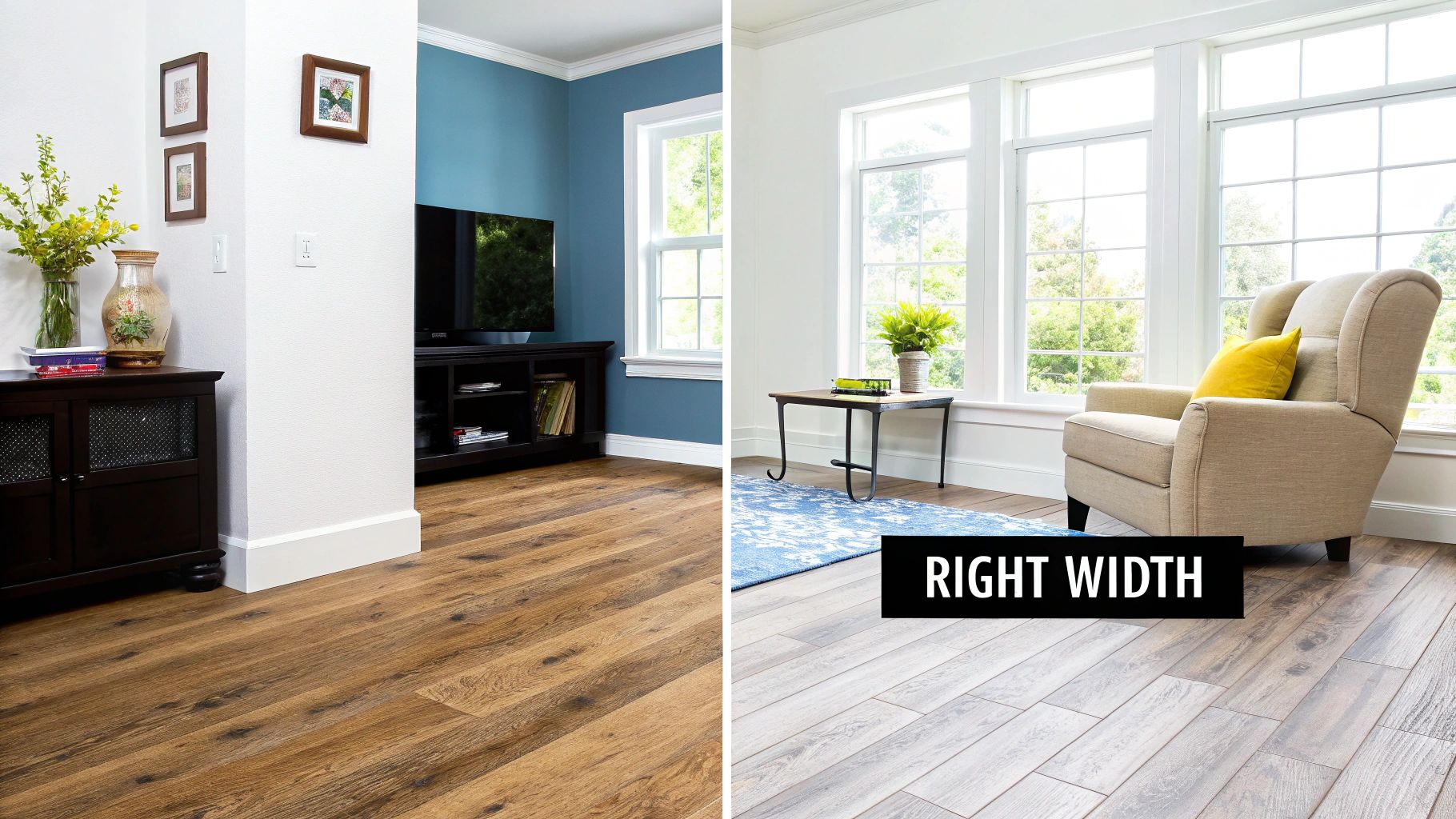
The width of your hardwood planks is easily one of the most important design choices you'll make for your home. It’s not just a number; it’s the visual foundation that dictates a room's entire personality and how big it feels. Think of it like this: narrow planks are like pinstripes on a suit—classic and detailed. Wide planks are like a solid, bold color—modern and clean. Both look great, but they leave a completely different impression.
Whether you're in Cumming or Johns Creek, this choice is what helps define your home's character while still meeting your everyday needs. The perfect width will tie together your home's architecture, your decor, and the scale of each room.
Understanding the Standard Categories
When you start shopping, you’ll see that hardwood flooring widths generally fall into three buckets. Each one has its own distinct personality and works best in certain situations.
-
Narrow Planks (Under 4 inches): These create a timeless, linear look. With more seams running across the floor, you get a lot of texture and visual rhythm. They’re fantastic for making smaller rooms feel more detailed or for capturing that authentic, traditional vibe in older homes. The old-school standard you see everywhere is 2 ¼ inches.
-
Medium or Standard Planks (4 to 6 inches): This is the sweet spot for many homeowners. It’s a versatile middle ground that can lean traditional or contemporary, depending on the wood species and finish. It’s a safe bet that looks great in almost any room without being too busy or too plain.
-
Wide Planks (Over 6 inches): Wide planks are incredibly popular right now, and for good reason. They create an open, expansive feel that can make a room feel huge. With far fewer seams, the focus is all on the beautiful, natural grain of the wood, which gives off a sense of luxury and calm. They are the go-to for large, open-concept living areas.
Your choice between narrow, medium, and wide planks directly influences the visual rhythm of your space. Fewer seams from wide planks create a calm, uncluttered canvas, while the numerous lines of narrow planks add energy and traditional detail.
Here’s a simple table to help you visualize these categories at a glance.
Quick Guide to Hardwood Plank Widths
| Width Category | Typical Range (Inches) | Primary Aesthetic | Best For |
|---|---|---|---|
| Narrow | 2 ¼ – 4 | Traditional, Detailed, Textured | Smaller rooms, historic homes, classic designs |
| Medium/Standard | 4 – 6 | Versatile, Balanced, Transitional | Most room sizes, bridging modern & traditional |
| Wide | 6+ | Modern, Spacious, Rustic | Large open areas, minimalist or farmhouse styles |
This table should give you a great starting point for figuring out what might work best for your space.
Picking the right width is a crucial first step, but it’s just one piece of the puzzle. For a complete overview of the entire selection process, from species to finish, you can learn more about how to choose hardwood flooring in our comprehensive guide. It’ll help you put all the pieces together for a look you'll love for years.
How Plank Width Shapes Your Home's Aesthetic
The width of your hardwood planks does more than just cover the ground; it sets the entire visual tone for a room. Think of it as the foundational brushstroke in a painting. Your choice between narrow, medium, and wide boards will fundamentally define whether your space feels traditional and detailed or modern and expansive.
This decision directly impacts the room's sense of scale, rhythm, and character. Just as the cut of a suit can make someone appear taller or broader, the widths of hardwood flooring you choose will visually alter the proportions of your home. It’s a powerful design tool that brings your vision to life from the ground up.
The Classic Appeal of Narrow Planks
Narrow planks, which are typically 2 ¼ to 4 inches wide, have a way of creating a sense of tradition and formal structure. Because there are more seams running parallel across the floor, they introduce a distinct linear rhythm that adds a ton of texture and visual interest. It's a detailed look that's perfect for capturing a classic, timeless feel.
Picture a historic home in downtown Milton or a cozy colonial-style house. The intricate lines of narrow planks feel right at home, complementing the detailed woodwork, classic furniture, and formal architecture you often find in those styles. They can also make smaller rooms feel more dynamic, as the numerous lines draw your eye forward, creating a sense of busy elegance.
- Best For: Traditional, Colonial, and Victorian styles.
- Effect: Creates a textured, detailed, and formal appearance.
- Room Size: Works well in smaller spaces or rooms with classic architectural details.
With this traditional approach, the floor becomes an active design element. It contributes to a rich, layered look rather than just fading into the background.
The Modern Luxury of Wide Planks
On the other hand, wide planks—anything 5 inches or wider—are the hallmark of modern, open-concept living. Their biggest advantage is having far fewer seams, which creates a clean, uncluttered canvas. This really lets the natural beauty, grain, and character of the wood become the star of the show.
With fewer visual breaks, the floor instantly establishes a feeling of spaciousness and calm. This is exactly why wide planks are a perfect match for minimalist, rustic, and modern farmhouse designs. In a big, open-plan living area in Johns Creek, for example, wide planks can unite the entire space, making it feel larger, more cohesive, and incredibly luxurious.
The trend toward wider boards isn't just a fad; it's been growing for years. What was once a niche choice for historical reproductions has become a go-to feature in modern design. We're seeing demand shift from the 7-inch range into 8-inch, 9-inch, and even 10-inch planks as people seek a more premium, seamless look. You can find more insights on this industry shift over at floordaily.net.
By minimizing seams, wide plank flooring allows the inherent beauty of the wood—its grain, knots, and color variations—to become the primary design feature, creating a bold yet natural statement.
This bold simplicity is what makes wide planks so appealing today. They provide a sophisticated foundation that doesn't compete with your other design elements, allowing your furniture, art, and architecture to truly shine.
Finding a Balanced and Versatile Middle Ground
What if narrow planks feel too busy and wide planks seem a bit too bold? For many homeowners, medium-width boards offer the perfect compromise. Ranging from 4 to 6 inches, these planks are incredibly versatile and can easily bridge the gap between traditional and contemporary styles.
This "just right" width is adaptable enough to suit almost any decor. It gives you a more updated feel than classic narrow strips without making the strong statement of ultra-wide boards. Whether you're renovating a suburban home in Forsyth County or decorating a new build, medium-width planks provide a timeless and flexible foundation that won't go out of style. They offer a clean look with just enough detail to remain interesting, making them a safe and stylish choice for just about any room.
Matching Plank Width to Your Room's Proportions
Picking the right plank width for your hardwood floors is about more than just what looks good on a sample board; it's about getting the scale just right. Think of it like buying a new suit. The cut has to fit your frame. The same goes for your floors—the plank width needs to harmonize with the room's dimensions to look truly polished.
The core idea here is proportionality. Get it wrong, and things can feel off.
For instance, if you lay super-wide planks in a tiny powder room or a tight hallway, you might only see two or three boards from wall to wall. This can visually chop up the space and, ironically, make it feel even smaller. On the flip side, using skinny, traditional strips in a huge, open-concept great room can create a "bowling alley" effect. The floor becomes a dizzying sea of seams that feels way too busy and detracts from the room's expansive feel.
Sizing Up Your Space
A great place to start is with your room's square footage. It's a practical way to get a feel for what will work, ensuring the flooring complements the room instead of competing with it. A well-chosen plank width makes a room feel like it was designed with intention.
Here’s a practical guide to get you started:
- Small Rooms (Under 150 sq. ft.): In a home office, small bedroom, or galley kitchen, it’s usually best to stick with planks under 4 inches wide. Classic 2 ¼-inch or 3 ¼-inch strips add a sense of detail without making the floor feel crowded.
- Medium Rooms (150-300 sq. ft.): This is the sweet spot for most living rooms, dining areas, and master bedrooms. Planks between 4 and 6 inches are incredibly versatile, striking a perfect balance that works for both classic and modern styles.
- Large Rooms (Over 300 sq. ft.): If you have a great room, an open-plan living area, or a sprawling master suite, this is where wide planks come alive. Go for widths of 6 inches or more to create a luxurious, open feeling with fewer seams breaking up the visual flow.
The rule of thumb is simple: The larger the room, the wider the plank you can comfortably use. This ensures the flooring scale is in harmony with the architectural scale of your home.
This decision-tree infographic helps visualize how your style preferences can guide your flooring choices, a key first step before considering proportions.
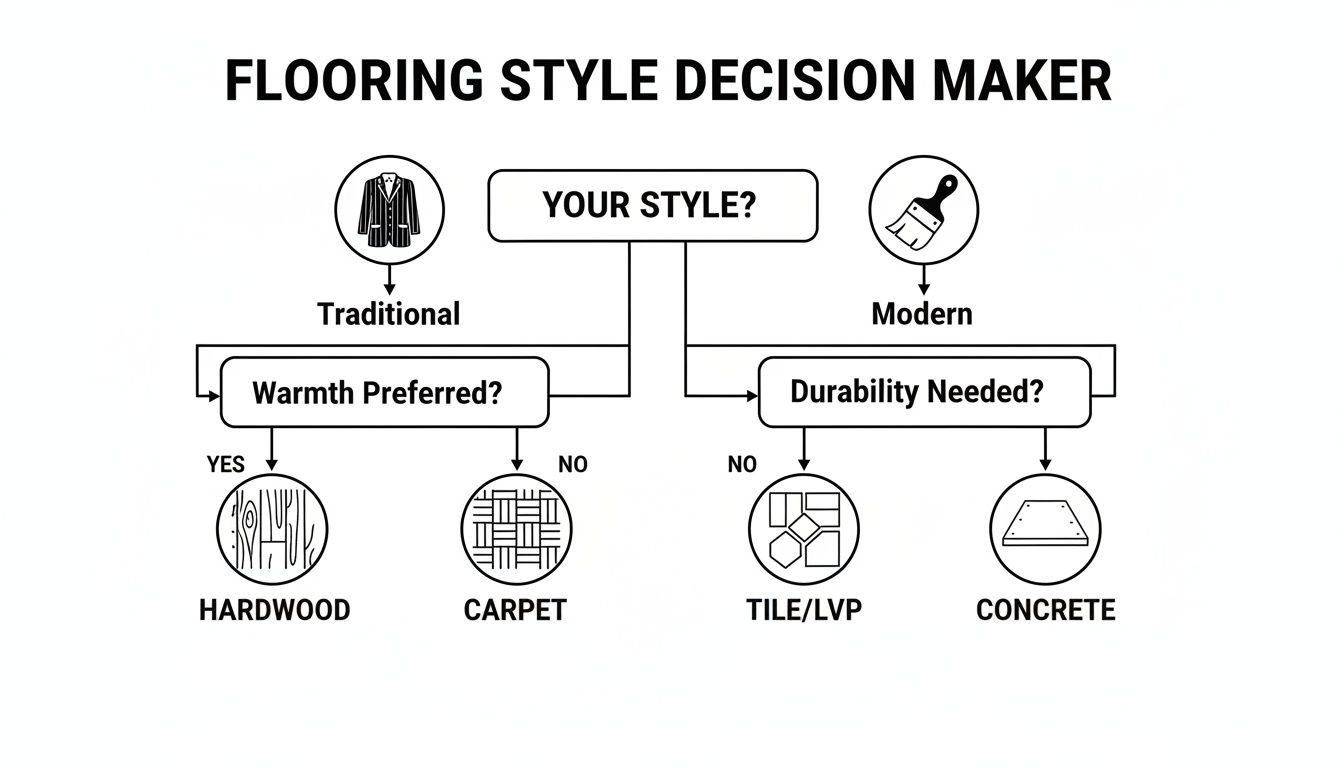
As the flowchart shows, there isn't just one path to a beautiful floor. The "right" choice is all about matching the material to your home's unique character.
Beyond Square Footage
While room size is a fantastic starting point, it's not the only thing to consider. Don't forget to look up! Ceiling height plays a big role. A room with soaring ceilings can easily handle wider planks because the vertical space balances the floor's horizontal sweep. In a room with lower ceilings, medium-width planks might be a safer bet to keep the space from feeling too compressed.
Also, think about the room's purpose and the type of wood you're planning to use. A busy kitchen needs a durable species, and the plank width should complement that choice. To see how different woods hold up, take a look at our guide to hardwood species and make sure your floor is as tough as it is beautiful. Thinking like a designer helps you see the whole picture, ensuring your floors don't just fill a space—they enhance it.
Technical and Installation Differences You Need to Know
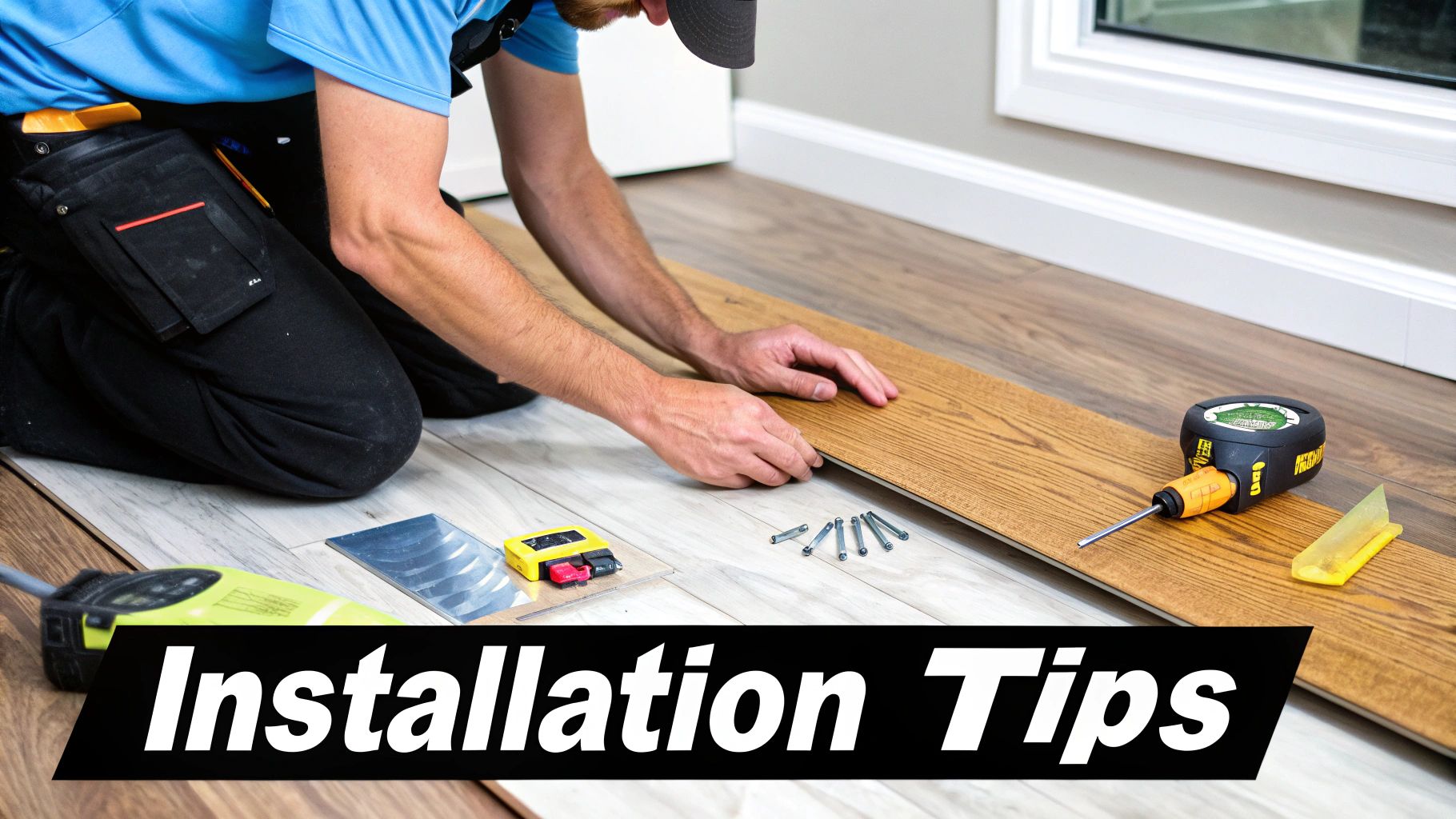
Beyond just looks, the width of your hardwood planks has a huge impact on how they're installed and how they perform over time. Wood is a natural material, and that means it breathes—expanding and contracting with every shift in temperature and humidity. The wider a single plank is, the more dramatic this movement becomes.
This simple fact of nature is the key to understanding why installing wide plank flooring is a job for a seasoned pro. A single 5-inch solid oak plank will move more than twice as much as a traditional 2 ¼-inch plank of the exact same wood. To get a floor that stays beautiful for decades, the installation has to account for that movement from day one.
The Stability Challenge of Wide Planks
Think of a wide wood plank like a big sponge. During a humid Forsyth County summer, it soaks up moisture from the air and swells. When the air dries out in winter, it releases that moisture and shrinks. All this movement can create problems, like cupping (when the edges of a board rise higher than its center) or gapping (when spaces appear between the planks).
Narrow planks are just naturally more stable. Because each board is smaller, its individual movement is tiny and far less noticeable. This built-in stability is why a standard nail-down installation is usually all you need for planks under 4 inches wide.
But once you get into solid hardwood planks over 5 inches, that risk of movement goes way up. This is where professional expertise isn't just a good idea—it's absolutely necessary.
The wider the plank, the greater its potential for movement with humidity changes. This fundamental principle dictates the need for more robust installation methods to ensure long-term stability and prevent gapping or cupping.
To keep these beautiful wide boards in check, installers often have to bring in the heavy artillery. A glue-assist installation, where a powerful adhesive is used along with traditional nails or staples, is standard procedure. This technique creates a super-strong bond to the subfloor, helping to restrict movement and keep every board perfectly flat and secure.
The Subfloor and Acclimation Imperative
A flawless wide plank installation actually begins long before the first board is ever laid. It starts with the subfloor, which has to be perfectly flat, clean, and completely dry. Any little bumps or dips in the subfloor will be magnified by wide boards, leading to annoying squeaks, hollow spots, or an uneven surface you can feel underfoot.
We always stress how critical subfloor prep is, and picking the right foundation is a crucial first step. You can learn more about how this unseen layer supports your entire floor in our guide on the best underlay for wood flooring.
Just as important is acclimation. This is the patient process of letting the new hardwood sit inside your home for several days, sometimes even weeks. This gives the wood time to adjust its moisture content to match the typical humidity of your space, which minimizes swelling and shrinking after it's installed. Rushing this step is one of the most common—and costly—mistakes in the book.
Engineered Hardwood: The Wide Plank Solution
So, how do you get that stunning, expansive look of wide planks without the stability worries of solid wood? The answer is engineered hardwood. Its clever construction—a core of cross-layered plywood topped with a real hardwood veneer—makes it far more stable against changes in humidity.
This structural advantage allows manufacturers to create planks in stunning widths of 7, 8, or even 10 inches that perform beautifully. For homeowners in places like Johns Creek who love the wide plank look but worry about Georgia's humidity, engineered hardwood is very often the perfect choice.
Below is a quick breakdown of how plank width changes the game when it comes to installation.
Installation Factors by Plank Width
This table compares the key installation and stability differences between narrow and wide plank hardwood, highlighting why wide planks require a more specialized approach.
| Factor | Narrow Planks (< 4") | Wide Planks (> 5") |
|---|---|---|
| Stability | High | Moderate to Low (Solid) / High (Engineered) |
| Installation Method | Nail-down or staple-down is typical | Glue-assist (glue and nail) is often required |
| Subfloor Prep | Standard preparation needed | Meticulous flatness is critical |
| Acclimation Time | Shorter period required | Longer, more critical period required |
| Susceptibility to Gapping | Low | Higher (especially for solid wood) |
As you can see, the wider the plank, the more critical every step of the installation process becomes, from subfloor prep to the final fastening method.
How Plank Width Hits Your Wallet and Home Value
It’s easy to get caught up in the look and feel of different hardwood flooring widths, but let's talk about what really matters: the money. The width you choose has a direct, and often surprising, impact on both your initial project cost and your home's long-term value. Getting this right is about making a smart investment, not just a design choice.
Generally speaking, the wider the plank, the higher the price per square foot for the same type of wood. The logic here is straightforward and goes right back to the tree. To get those beautiful, expansive, clear boards, you need to mill them from the trunks of larger, more mature trees. Those trees are rarer, which makes the raw lumber more valuable from the get-go.
The Upfront Costs: More Than Just Wood
That higher price tag on wide planks isn't just for the material. The installation can cost a fair bit more, too. As we’ve discussed, wider boards are a lot pickier about how they're installed and what they're installed on.
Here’s where the extra costs creep in:
- Subfloor Perfection: Wide planks don't hide anything. Your subfloor has to be perfectly flat and solid, which often means extra labor and materials to get it just right.
- A More Involved Installation: You can't just nail these boards down and call it a day. Installers often have to use a "glue-assist" method—a combination of premium flooring adhesive and traditional fasteners—to lock the planks in place and keep them from shifting. This adds to the cost of both materials and labor.
- Paying for Expertise: Installing wide plank flooring is a specialized skill. Not every crew has the experience to handle the unique challenges, so you're paying for a craftsman who knows how to do the job without any expensive surprises down the road.
When you add it all up, the total bill for a wide plank floor can be significantly higher than for a standard narrow-strip floor. But looking at it as just an expense is missing the bigger picture.
Wide Planks: A Smart Long-Term Investment
Your floors are one of the first things people notice, and they play a huge role in your home's overall appeal and value. In today’s market, especially in neighborhoods like Milton and Johns Creek, wide plank floors are a signal of quality and modern design—something buyers are actively looking for. Choosing wider boards isn't just spending money; it's investing in your home's future.
This isn't just a hunch. We see it in the market data. Even when the housing market slows down, high-end features like wide planks hold their value. Industry reports show that even when overall hardwood sales dip, the demand for premium, wider boards—we're talking 9 to 10 inches—helps keep average prices strong. These floors are seen as a luxury item. You can dig into these market dynamics and their financial impact if you want to see the numbers.
Think of wide plank flooring not just as a construction material, but as a strategic design upgrade. It can elevate your home's perceived value in the eyes of potential buyers, much like a renovated kitchen or a modern bathroom.
Installing wide planks can give your home a serious edge over other listings, making it stand out and stick in a buyer's mind. When you're ready to sell, that can mean a quicker sale and a better offer. Of course, flooring is just one piece of the puzzle; smart approaches like effective home staging strategies also play a massive role in how well your property performs on the market.
Ultimately, you have to find the right balance between your budget today and your goals for tomorrow. Narrower planks are undeniably easier on the wallet right now. But the undeniable style and market appeal of wide plank flooring can pay you back handsomely when it’s time to put that "For Sale" sign in the yard.
Your Hardwood Plank Width Questions, Answered
Choosing the right hardwood plank width can feel like a big decision, and it naturally brings up a lot of questions. From what's currently in style to how all the different pieces of the puzzle fit together, getting straight answers is key to choosing a floor you'll love for decades.
Here, we'll tackle the most common questions we hear from homeowners right here in Cumming, Johns Creek, and the surrounding areas. My goal is to clear up any confusion and give you the confidence to pick the perfect foundation for your home.
Is Wide Plank Flooring Just a Trend?
It’s smart to ask this. While design fads definitely come and go, the move toward wide plank flooring is much more than a fleeting trend. It’s really a broader shift in how we want our homes to feel: more natural, open, and authentic.
Think of it this way: wide planks simply let the wood do the talking. With fewer seams interrupting your view, the floor becomes a clean, expansive canvas. You get to see more of the wood’s beautiful grain, its unique knots, and all the character that makes it special. This creates a calm, uncluttered feeling that’s both high-end and deeply timeless.
Wide plank flooring isn’t just a trend; it's a timeless choice that emphasizes the inherent beauty of natural wood. Its ability to create a sense of openness and luxury ensures it adds lasting value and appeal to any home.
This style connects so well with today's architecture—like open-concept layouts and modern farmhouse designs—that it’s really become a durable classic. Instead of looking dated in five years, wide plank flooring is an investment that boosts a home's long-term value and appeal. It's a classic look, perfectly reinterpreted for the way we live now.
Can I Mix Different Plank Widths?
Absolutely! In fact, mixing plank widths—what we call a random-width or mixed-width installation—is one of my favorite ways to create a floor with incredible personality and visual depth. This approach moves away from a uniform look, adding a layer of texture and rustic charm that feels both custom and historically grounded.
This style is actually a nod to the past, back when old sawmills produced planks in whatever sizes the logs would yield. Builders used what they had, and the result was beautifully varied floors.
- For a Rustic or Farmhouse Vibe: A mix of three or more widths (say, 4-inch, 6-inch, and 8-inch planks) creates a wonderfully organic look that feels like it’s always been there.
- For Subtle Character: You don't have to go big. Even a simple two-width pattern, like alternating 3-inch and 5-inch planks, adds a custom touch without overwhelming the room.
The secret to a great mixed-width floor is planning. We don't just throw the planks down; the layout has to be carefully mapped out to ensure the different sizes are distributed naturally. You want a balanced look that feels intentional, not messy. When it's done right, the result is a floor that's truly one-of-a-kind.
What Is More Important: Plank Width or Wood Species?
That’s an excellent question, and the answer is that they are both crucial, but for different reasons. I like to compare it to building a car: the wood species is the engine, while the plank width is the body style. You need the right engine for performance and the right body for the look you want.
Here’s how I advise homeowners to think about it:
-
Start with the Wood Species: This should always be your first decision. Choosing between oak, hickory, maple, or walnut determines the floor's most fundamental qualities: its durability (hardness), its grain pattern, and its base color. For a busy family in Forsyth County with kids and a dog, a tough wood like Hickory or White Oak is almost a necessity. If you pick a species that can’t handle your lifestyle, you’ll be unhappy with it no matter how good it looks.
-
Then, Choose the Plank Width: Once you’ve picked a species that can stand up to your daily life, you can move on to the fun part—the aesthetics of plank width. The width is what will truly shape the style of the room. It’s the design lever you pull to achieve a modern, rustic, or traditional feel.
In short, function has to come before form. A floor must first work for your life. After you've nailed down the practical side by choosing the right species, you can select the plank width that brings your design vision to life. Getting both right is the key to a floor that’s not only beautiful but also built to last.
Ready to see how different plank widths can transform your home? At Flacks Flooring, we have over 30 years of experience helping homeowners in Cumming, Milton, and the surrounding areas find the perfect hardwood floors. Visit our showroom or schedule an in-home consultation to explore our wide selection and get expert guidance for your project. https://flacksflooring.com