
When you're looking for a wood floor cleaner safe for pets, the best bet is to stick with plant-derived, pH-neutral formulas. You'll want to avoid harsh chemicals like ammonia, bleach, and phenols. A simple mix of diluted white vinegar and water can work in a pinch, but you absolutely have to test it on a small, hidden spot of your floor first to see how the finish reacts.
The goal is to find something that gets your floors clean without leaving behind a toxic mess for your furry friends.
Why Your Floor Cleaner Matters for Pet Safety
As a pet owner, you know your home is their entire world. They spend their days napping, playing, and rolling around on those beautiful wood floors. This constant contact means whatever you use to clean your floors becomes a part of their environment in a very real, very direct way.
Suddenly, choosing a floor cleaner isn't just about sparkle and shine; it's a critical part of being a responsible pet parent.
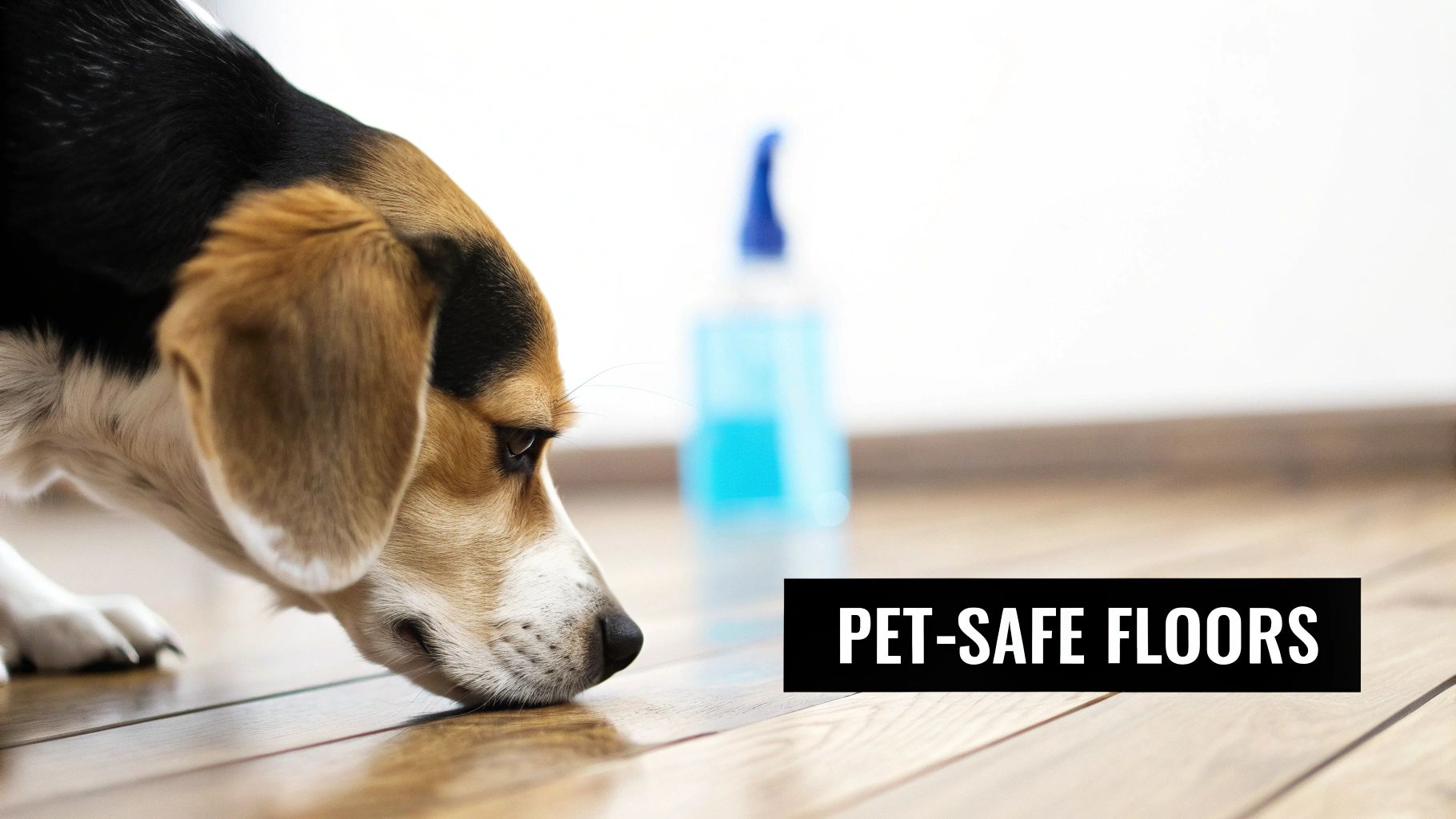
Unlike us, our pets don't wear shoes inside. Their paws absorb residues directly from the floor. And because they're meticulous groomers, they inevitably lick their paws and fur, ingesting whatever chemicals you've just wiped all over the house. That’s where the real danger lies.
The Unseen Dangers in Common Cleaners
Walk down any cleaning aisle, and you'll find a cocktail of chemicals in most conventional wood floor cleaners. Even products slapped with a "natural" label can hide ingredients that pose a risk. Consider your dog’s sense of smell—it’s up to 100,000 times more powerful than ours. That "fresh linen" or "lemon burst" scent we find pleasant can be an overwhelming assault on their respiratory systems.
This isn't just a minor issue; it's a serious health concern. The ASPCA Animal Poison Control Center reports that a staggering 8.3% of all their pet poisoning calls are directly linked to household cleaning products. The risk is even higher with floors because pets spend so much time lounging on them, absorbing and ingesting residues long after the mop is dry.
How Pets Are Uniquely Vulnerable
A pet's physiology and daily habits make them far more susceptible to the toxins hiding in cleaning agents. Here’s why what's on your floor ends up in their system:
- Direct Ingestion: When pets clean their paws and coat, they're swallowing any chemical residue they've picked up from the floor.
- Respiratory Sensitivity: The strong fumes from ingredients like ammonia or bleach can cause severe respiratory distress, especially in smaller pets and birds.
- Skin Absorption: Paw pads are porous and can absorb chemicals, leading to everything from simple irritation and burns to more serious systemic problems.
It's wise to think beyond just wood floors. Getting a complete view of harmful ingredients is key, and this guide on understanding safe cleaning practices for pets is a fantastic resource for any pet-loving household.
You're looking for that perfect balance: a cleaner tough enough to handle dirt and paw prints but gentle enough to keep your home a safe haven for your four-legged family members. It’s a choice that matters more than you might think.
Many homeowners I talk to in Cumming and Johns Creek ask about DIY solutions. It's crucial to know the potential impact of these homemade cleaners. For instance, before you mix up a batch of vinegar and water, take a moment to read our guide on whether it's actually safe to use on your specific hardwood floors: https://flacksflooring.com/can-you-use-vinegar-on-hardwood-floors/
Decoding Labels to Find a Truly Pet-Safe Cleaner
Let’s be honest, the cleaning aisle can be a maze. When you’re a pet owner, it gets even trickier. Labels shout things like "natural" and "green," but those words often don't mean what we think they do. The key to keeping your pets safe is learning to read the ingredient list, not the marketing claims on the front of the bottle.
Think about it: your dog naps on the floor, your cat grooms its paws after walking across it. Any chemical residue left behind can easily be ingested. That’s why we have to be vigilant.
The Big Offenders: Chemicals to Keep Off Your Wood Floors
Some of the most common chemicals in standard floor cleaners are precisely the ones that pose the biggest risks to our pets. It’s a sobering thought, but household products are a major source of pet poisonings—over 200,000 cases are reported each year in the U.S. alone, and floor cleaners are a frequent culprit.
Here are the ingredients I always tell my clients to steer clear of:
- Ammonia: Great for cutting grease, terrible for lungs. The harsh fumes can irritate your pet’s entire respiratory system, from their nose to their throat.
- Bleach (Sodium Hypochlorite): It’s a powerful disinfectant, but it’s also caustic. It can cause painful chemical burns on paw pads and is highly toxic if licked or ingested.
- Phenols: These are often used to create that "pine-fresh" scent. They are especially dangerous for cats because their livers just can't process them, leading to serious health issues.
- Glycol Ethers: These solvents are sneaky. They can be absorbed right through the skin (paws!) and have been linked to kidney and nerve damage in pets over time.
- Phthalates: This is the big one often hidden under the vague term "fragrance." Phthalates are known endocrine disruptors, meaning they can wreak havoc on your pet’s hormones.
When you're scanning labels, paying attention to pH balance is also a smart move. For a deeper dive into why this matters, check out this guide on understanding pH neutral cleaners for pet safety. A neutral pH is gentler on both your floor's finish and your pet's skin.
"A cleaner isn't 'pet-safe' just because the label says so. True safety comes from ingredient transparency. If you can't pronounce it or the company won't disclose it, it probably doesn't belong on a floor your pet lives on."
A Cheat Sheet for Your Next Shopping Trip
To make things easier, I’ve put together a quick reference table. Think of it as your cheat sheet for spotting the bad stuff before it ends up in your shopping cart. It helps you connect the toxic ingredient to what you'll actually see printed on the label.
Common Wood Floor Cleaner Ingredients to Avoid for Pet Safety
| Toxic Ingredient | Potential Risks to Pets | Look for This on the Label |
|---|---|---|
| Formaldehyde | A known carcinogen; causes skin and respiratory irritation. | Formalin, Methanal, Methylene Glycol |
| Phenols | Liver damage (especially in cats), respiratory distress. | Pine Oil, Phenolic Compounds, anything ending in "-phenol" |
| Ammonia | Respiratory damage; burns eyes, nose, and throat. | Ammonium Hydroxide, Quaternary Ammonium Compounds |
| Chlorine Bleach | Vomiting, diarrhea; chemical burns on skin and paws. | Sodium Hypochlorite, Calcium Hypochlorite |
Getting familiar with these names gives you the power to see past the flashy marketing. The safest choice for a wood floor cleaner safe for pets will almost always be one with a short, simple, and recognizable ingredient list. A little diligence in the store means a lot more peace of mind at home.
Nailing Down Your Pet-Safe Floor Cleaning Routine
Creating a cleaning routine that keeps your hardwood floors pristine and your pets safe isn't just about picking the right bottle off the shelf. It's about building a consistent, thoughtful process. A good routine is your best defense, minimizing your pet's exposure to anything harmful and keeping your home a healthy space for everyone—two-legged and four-legged. It all comes down to the details before, during, and after you mop.
Your first step, and it's a big one, is always preparation. Before a drop of cleaner hits the floor, you've got to deal with all the loose stuff. We all know how pet hair, dander, and whatever they track in from the yard can build up. If you add liquid to that mix, you just get a muddy, gritty mess.
So, grab a microfiber dust mop or use your vacuum's hard floor attachment for a quick pass. This pre-clean makes your actual cleaning solution way more effective and stops you from just smearing dirt around.
Applying Your Cleaner the Smart Way
Once the floor is clear of debris, it’s time for your chosen wood floor cleaner safe for pets. The golden rule here is simple: less is more. You never want to saturate your wood floors. Too much liquid can easily seep between the planks, leading to warping, discoloration, and long-term damage. Nobody wants that.
Instead, lightly mist a small section of the floor at a time. I always recommend working in a manageable area, maybe 4×4 feet, and then immediately wiping it up with a damp microfiber mop. This technique gets your floors sparkling clean without ever letting moisture sit too long on the surface.
Decoding labels in the store can feel overwhelming, but it's a crucial part of the process. This little guide breaks it down.
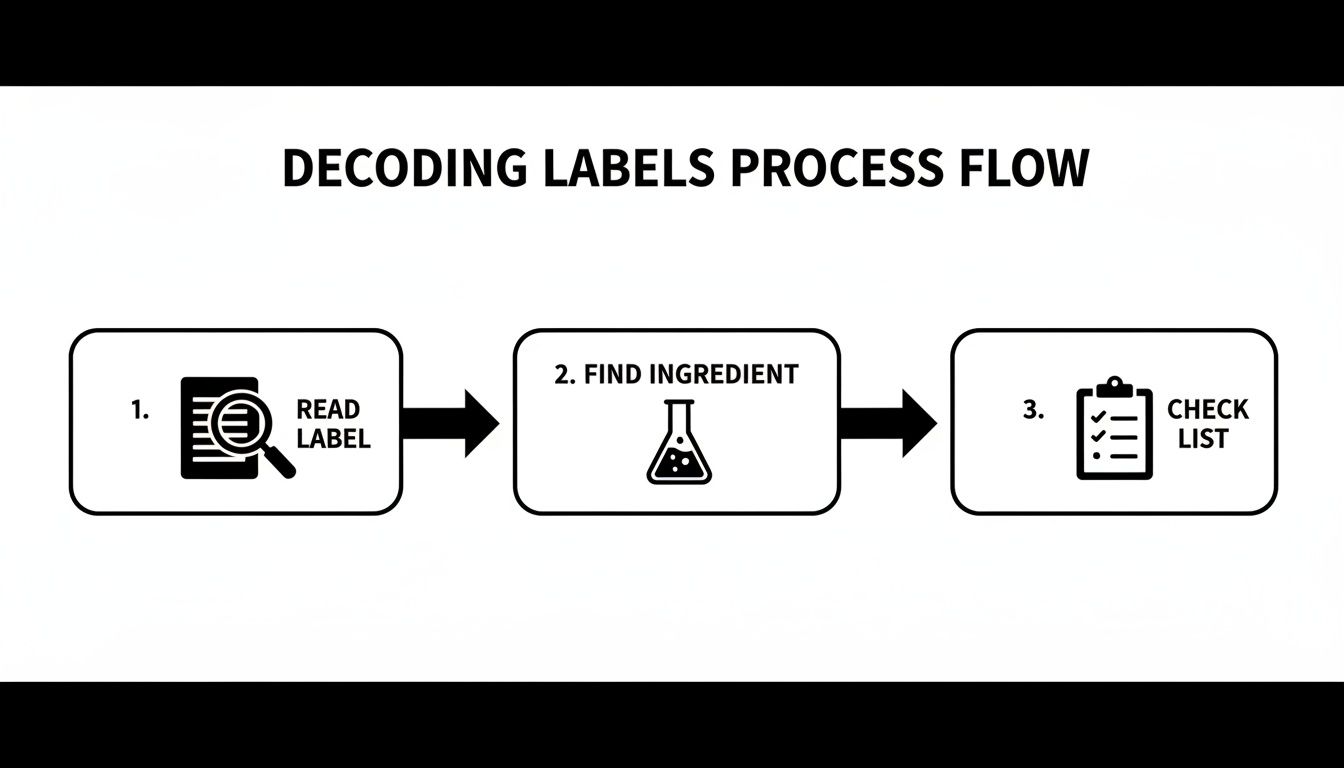
This simple Read, Find, and Check method helps you make a smart choice on the spot, so you can avoid bringing harsh chemicals home in the first place.
Safety First: During and After the Clean
The job isn't done when you put the mop away. What you do after cleaning is just as important for your pet’s safety. With 68% of U.S. households now home to a pet, these practices are more vital than ever. It's shocking, but nearly 10% of poison control calls worldwide involve animals harmed by common household cleaners, especially those with bleach or ammonia.
The most effective safety measure is also the simplest: keep your pets out of the room while you clean and until the floor is completely dry. This single step prevents them from walking on wet surfaces and then licking chemical residues off their paws.
Don't forget about ventilation! Throw open some windows or turn on a fan to get the air moving and help any fumes dissipate faster. A dog's sense of smell is thousands of times more powerful than ours, so even "safe" or natural scents can be overwhelming in an enclosed room.
Once you think the floor is dry, do a quick "touch test" with your hand to be sure. It needs to be bone-dry before you let your furry friends back in. This simple habit drastically reduces their direct exposure. And for those inevitable accidents, knowing the right way to tackle them is key; check out our guide on how to clean dog pee on hardwood floors for specific, safe techniques.
Want to Make Your Own Pet-Safe Wood Cleaner? Here’s How.
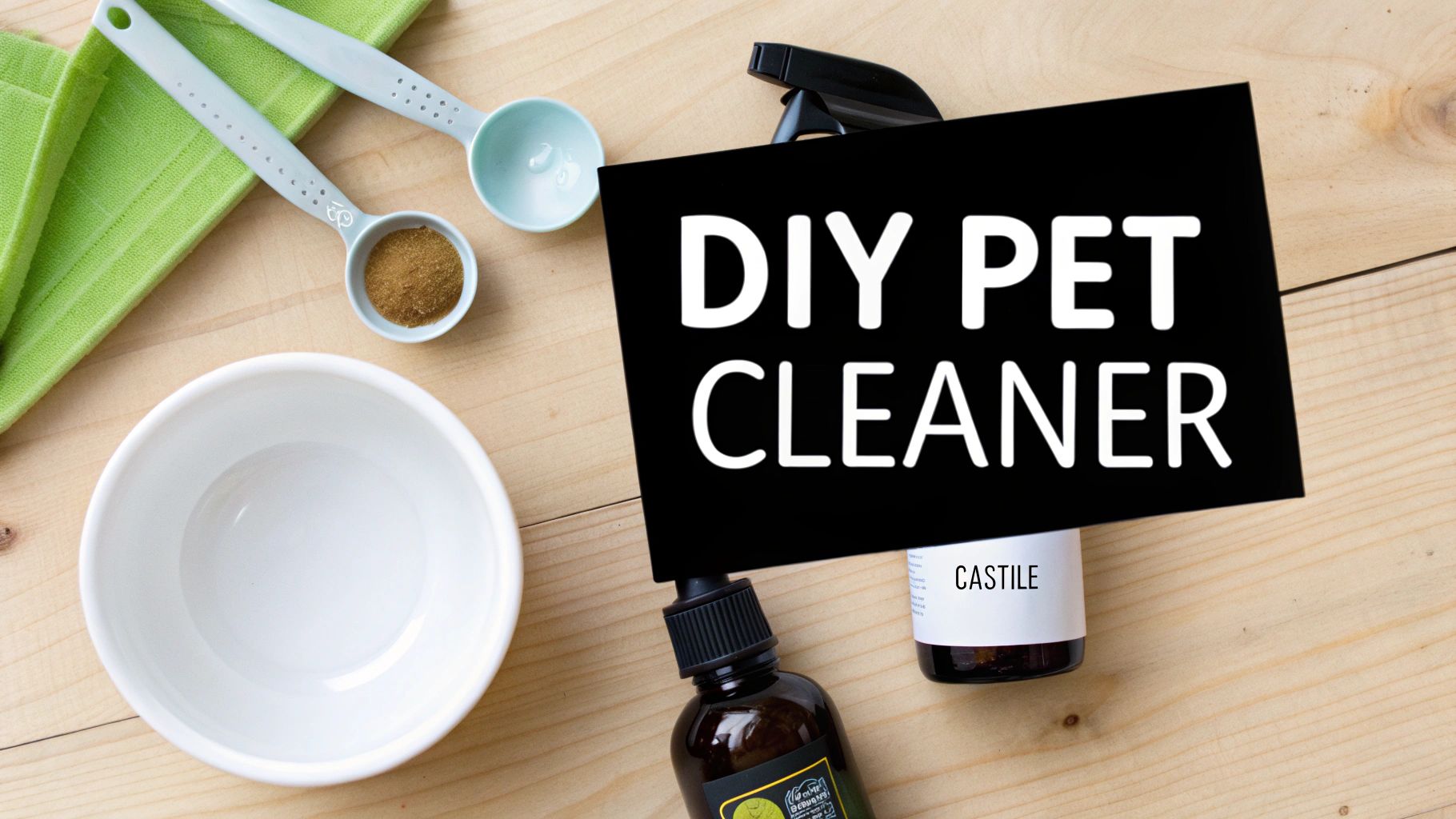
For pet owners who want total peace of mind, mixing up your own wood floor cleaner is a fantastic option. It's easier than you think, kinder to your wallet, and often uses ingredients you probably already have at home. This way, you can create a powerful cleaner without any of the harsh chemicals that could harm your four-legged friends.
The best part? You'll know exactly what's in it, down to the last drop.
Two Simple, Go-To Recipes
A great DIY cleaner is all about simplicity and the right ratios. One of the most common and effective choices is a highly diluted vinegar solution. Straight vinegar is far too acidic for wood finishes, but just a touch mixed into water works wonders on grime without leaving behind toxic residues.
Another great alternative is a simple, plant-based soap. A mild, unscented castile soap, for example, gives you that cleaning muscle without any harsh detergents.
Here are a couple of my favorite tried-and-true recipes:
- The Gentle Vinegar Rinse: Mix one-half cup of distilled white vinegar into one gallon of warm water. The dilution here is key. It’s gentle enough for most sealed polyurethane finishes but still strong enough to clean effectively.
- The Castile Soap Solution: Add just one to two teaspoons of unscented liquid castile soap to one gallon of warm water. Seriously, a little goes a long way! Using too much soap can leave a dull, sticky film on your beautiful floors.
If you’re curious about other homemade options, our guide to natural floor cleaning solutions has even more ideas for keeping your home sparkling and safe.
A Quick Word of Caution: Always, always do a spot test before cleaning your entire floor with a new solution. Pick a hidden area—under the sofa or inside a closet—and apply a small amount. Let it dry completely to make sure it doesn't damage or discolor your floor's finish.
Ingredients to Never, Ever Add to Your DIY Cleaner
It can be tempting to add a few drops of your favorite essential oil for a nice, fresh scent. But this is a major mistake many pet owners make. A lot of essential oils are actually toxic to pets, especially cats, whose livers just can't process them.
Steer clear of these common but dangerous oils:
- Tea Tree Oil
- Pine Oil
- Eucalyptus Oil
- Cinnamon Oil
- Peppermint Oil
Even oils that are sometimes labeled "pet-safe" can still irritate your pet's sensitive respiratory system. When it comes to a truly safe wood floor cleaner safe for pets, sticking to the basic, unscented recipes is your best bet. A temporary fragrance just isn't worth the risk to your pet's health.
Local Cleaning Tips for North Georgia Pet Owners
Anyone living in Cumming or Milton knows the struggle. We love our beautiful North Georgia outdoors, but our pets have a knack for tracking it all inside. That infamous Georgia red clay, in particular, isn't just dirt; it’s a fine, stubborn dust that seems to weld itself to hardwood floors, turning every paw print into a reddish-brown smear.
This isn't your average cleaning challenge, so it requires a slightly different game plan. When you're up against that persistent clay, you need a wood floor cleaner safe for pets that does more than just wipe the surface. It needs to lift that fine particulate without being harsh or abrasive. Honestly, a simple DIY vinegar mix often just doesn't have the muscle for this job.
Beating the Clay and Pollen Problem
To cut through that stubborn red film, look for a cleaner with a gentle, plant-based surfactant. You'll often see ingredients derived from coconut or corn, and they make a massive difference. They work by breaking the static cling between the clay dust and your floor's finish, letting your mop actually pick it up instead of just spreading it around. You can find some great pet-safe, plant-based options at local shops right here in Forsyth County.
Of course, clay isn't our only battle. We also deal with a heavy pollen season every spring. That fine yellow dust gets everywhere, and it can be a nightmare for allergies—for both you and your four-legged friends.
A solid strategy to keep the pollen down includes a few key steps:
- Dust Mop Daily: During peak pollen season, make a quick pass with a dry microfiber mop every day. This simple habit snags the allergens before they have a chance to get ground in.
- Mop Strategically: Damp mop with your pet-safe solution at least twice a week. This will tackle the sticky pollen residue that a dry mop just can't grab.
- Clear the Air: An air purifier with a good HEPA filter is a game-changer. It dramatically cuts down on the amount of pollen and dander that even makes it to your floors.
A word of advice for dealing with Georgia red clay: fight the urge to scrub hard. A quality microfiber mop paired with a gentle, effective cleaner will lift the particles without damaging your floor's finish or exposing your pet's paws to harsh chemicals.
Where to Find the Right Products in Our Area
If you live in Johns Creek or the surrounding areas, you've got some great local choices. Don't just head to the big-box stores. Take a look at some of the smaller, locally-owned pet supply shops or natural health food stores.
These places often carry specialty cleaning brands that are serious about non-toxic, pet-friendly ingredients—the kind designed for challenges just like ours. When you're reading labels, look for products that are not only free of ammonia and bleach but are also pH-neutral. This is crucial for protecting the seal on your hardwood floors. Finding the right cleaner means you can handle the local grime while keeping your home a safe, healthy space for the whole family, paws and all.
Common Questions from Pet Owners
Even when you've got a solid routine down, questions are bound to come up. It's only natural, especially when you're balancing the health of your furry friends with the care of your beautiful hardwood floors. Let's walk through some of the most common questions we hear from pet owners.
Think of this as your go-to guide for getting that last bit of confidence and peace of mind.
Is a Vinegar and Water Mix Truly Safe for My Floor and Pet?
This is the big one, and we get it. A heavily diluted mix of white vinegar and water is non-toxic for pets, which is why it's such a popular DIY cleaner. But here's the catch: its safety for your floor is a whole different story. It really comes down to your floor's finish. While it's generally okay on modern polyurethane finishes, it can be a slow-motion disaster for oiled or waxed floors, gradually dulling or damaging them over time.
A critical piece of advice we always give homeowners in Cumming is to always perform a spot test in a hidden area first. This simple step can be the difference between a clean floor and a costly refinishing project. Also, even if it's safe, the strong smell can be a lot for your pet's sensitive nose, so make sure the room is well-ventilated.
How Do I Know if a Cleaner Is Actually Pet-Safe?
You have to learn to look past the flashy marketing buzzwords like "natural" or "green." A truly safe wood floor cleaner safe for pets won't hide its ingredients. The best thing you can do is become a label-reader. Flip the bottle over and compare the ingredient list to the chemicals we mentioned earlier—things like ammonia, bleach, and phenols are immediate red flags.
Look for products that are clear about using plant-derived ingredients and having a neutral pH. If you're still on the fence, check the manufacturer's website for more details. When in doubt, a quick call to your vet can give you the final green light.
What's the Best Way to Clean Pet Urine from Wood Floors?
With pet urine, time is absolutely not on your side. The second you spot an accident, your goal is to prevent permanent damage. Grab a clean, dry cloth and blot the area immediately. Whatever you do, don't rub—that just forces the urine deeper into the wood grain and subfloor. Once you've blotted up as much as possible, clean the spot with your go-to pet-safe wood floor cleaner.
If a smell lingers, an enzyme-based cleaner is what you need. These aren't just masking the odor; they use beneficial bacteria to literally break down and digest the organic proteins in the urine, eliminating the smell at its source. One thing to avoid is using vinegar on urine stains. Its scent can be similar enough to urine that it might actually encourage your pet to revisit that same spot.
How Often Should I Clean Wood Floors in a Home with Pets?
When it comes to homes with pets, consistency beats intensity every time. A daily sweep with a microfiber mop or a quick run with the vacuum does wonders for managing pet hair, dander, and all the dirt they track inside. This simple habit keeps abrasive grit from acting like sandpaper on your floors.
For general cleaning, a light damp-mopping with your pet-safe solution about once a week is usually sufficient. You might plan for a slightly more thorough clean every month or so, depending on how much traffic your floors see. This gentle, steady approach is so much better for the life of your floors—and the health of your pets—than letting things build up and then hitting them with a harsh, deep scrub.
At Flacks Flooring, we've seen it all when it comes to the unique challenges North Georgia pet owners face. If you have more questions about keeping your hardwood floors looking their best, our team is always here to help. Take a look at our durable and beautiful flooring solutions at https://flacksflooring.com to find the perfect fit for your home.