
The real difference in the wood floors vs carpet cost debate boils down to one thing: carpet is almost always cheaper upfront, while hardwood is a long-term investment that often pays for itself. The right choice really depends on whether your budget is built for immediate savings or for lifetime value and a boost in home equity.
But that initial price tag is just the first chapter of a much more complex financial story.
Understanding the Financial Snapshot
Choosing new flooring is a huge decision that directly affects your home’s comfort, style, and wallet. While it’s easy to focus on the sticker price, that number doesn’t tell you everything. A true cost analysis means looking past the purchase and installation to what comes next—maintenance, lifespan, and even how your choice impacts your home’s resale value down the road.
Initial Cost vs. Long-Term Investment
Right out of the gate, the upfront costs are worlds apart. You can expect standard carpet installation to run you between $2 to $7 per square foot, although high-end wools and plusher materials can certainly cost more. On the other hand, hardwood flooring starts around $3 per square foot and can go up to $15 or more depending on the species and finish you choose. You can get more details on these figures in a comprehensive homeowner’s guide to flooring.
The key takeaway? Hardwood’s higher initial cost is often balanced out by its incredible longevity. It can be refinished multiple times, whereas carpet has a firm expiration date and will always need a full replacement.
When planning a budget, it helps to see how flooring costs stack up against other big home projects. For example, understanding what typical chimney removal costs look like can put your flooring investment into perspective. To make this initial comparison easier, here’s a quick look at how these two popular options measure up financially.
Wood Floors vs. Carpet Cost At a Glance
The table below offers a quick summary of the key financial differences, giving you an at-a-glance view before we dive deeper into the specifics.
| Financial Factor | Carpet | Hardwood Floors |
|---|---|---|
| Upfront Cost | Lower ($2 – $7+ / sq. ft.) | Higher ($3 – $15+ / sq. ft.) |
| Average Lifespan | 8 – 10 Years | 50+ Years (can be refinished) |
| Maintenance | Regular vacuuming, professional deep cleaning ($$$) | Sweeping, occasional refinishing ($$$) |
| Resale Value Impact | Neutral to slightly negative | Positive, can increase home value by up to 2.5% |
| Long-Term Value | Low (requires replacement) | High (durable, premium feature) |
This table provides a great starting point, but the real story is in the details. In the sections that follow, we’ll break down everything from installation quirks to lifecycle costs, giving you the complete financial picture to confidently choose the right floor for your home in Cumming or the greater Forsyth County area.
Upfront Costs: The Initial Investment in Wood vs. Carpet
The first number you see—the price tag—is often what steers the entire flooring decision. But the initial cost is more than just a single price per square foot. It’s a mix of the materials you choose, the quality of those materials, and the skilled labor needed to put it all together.
When you start looking, you’ll find a huge price spectrum in both categories. A basic, builder-grade nylon carpet can look like a steal. But a high-end, plush wool carpet can easily cost as much as some hardwood floors. The same goes for wood. A practical engineered oak will be much easier on the wallet than a solid Brazilian cherry.
Breaking Down Material Costs
The material itself is the biggest line item on your initial invoice. Whether you lean toward the softness of carpet or the classic look of hardwood, there are options for nearly every budget.
- Carpet Materials: Most carpets today are made from synthetic fibers like nylon or polypropylene. They’re built for durability and are generally quite affordable. If you’re looking for luxury, natural fibers like wool offer an incredible feel and bounce-back, but you’ll definitely pay a premium for it.
- Hardwood Materials: Here, the main choice is between solid and engineered hardwood. Solid wood is exactly what it sounds like—a single, solid plank of timber that can be sanded down and refinished for generations. Engineered wood has a real wood veneer on top of a plywood-like core, making it more stable in humid areas (like a basement) and often more budget-friendly.
On average, a full carpet project costs around $1,656, while a hardwood flooring project averages closer to $1,970. Broken down by the square foot, carpet materials usually run $7 to $12, while hardwood can be anywhere from $12 to $20. For a typical 140-square-foot bedroom, you could expect to pay $980 to $1,680 for carpet, versus $1,680 to $2,800 for wood. This initial gap is just the start of the story.
The Hidden Driver: Installation Labor
While materials set the stage, the cost of labor is where the financial gap between carpet and hardwood really widens.
Putting in carpet is a pretty straightforward job for a professional crew. They lay the padding, stretch the carpet over tack strips, and can often finish a few rooms in a single day. The work is faster, simpler, and less expensive.
Hardwood installation, on the other hand, is a true craft. It demands a perfectly prepped subfloor—flat, clean, and dry. Each plank has to be cut and laid with precision, which is a slow, methodical process. Solid hardwood often has to sit inside the home for days just to acclimate to the humidity levels before a single board can be installed.
The complexity of the job is the single biggest factor in labor costs. Installing hardwood involves more prep, more specialized tools, and has virtually no room for error. That’s why professional labor makes up a much bigger chunk of the total upfront cost.
This is the main reason hardwood feels so much more expensive right out of the gate. For homeowners in areas like Cumming or Milton, local labor rates will also influence the final bill. You can get a much clearer picture of what’s involved by checking out our guide on hardwood flooring installation cost.
Cost Scenarios for a Standard Room
Let’s ground these numbers with a real-world example. Imagine you’re redoing the floor in a 15′ x 15′ living room (that’s 225 square feet) in your Forsyth County home.
1. Mid-Grade Carpet Scenario:
- Material Cost: $5/sq ft x 225 sq ft = $1,125
- Installation & Padding: $2/sq ft x 225 sq ft = $450
- Total Estimated Cost: $1,575
2. Mid-Grade Hardwood Scenario:
- Material Cost: $8/sq ft x 225 sq ft = $1,800
- Installation & Prep: $5/sq ft x 225 sq ft = $1,125
- Total Estimated Cost: $2,925
As you can see, the initial outlay for hardwood is nearly double that of carpet, and the cost of labor is the main culprit. While these are just estimates, they show exactly how the installation process drives the upfront cost conversation from day one.
The Real Cost: Calculating Long-Term Maintenance and Lifecycle Value
The price you pay upfront is just the entry ticket. The real financial story of the wood floors vs carpet cost debate plays out over decades, shifting the focus from a one-time purchase to the total cost of owning that floor. This is where you see the true value of each option really shine through.
For carpeting, the lifecycle is pretty short and predictable. Beyond regular vacuuming, you have to factor in professional deep cleanings—which are a good idea annually to manage allergens and stubborn dirt. Then there are the inevitable spot treatments for spills and, eventually, a full replacement. Most carpets just don’t look or feel good after 7 to 10 years.
Hardwood, on the other hand, is in it for the long haul. Its day-to-day maintenance is simple—a quick sweep or occasional mopping does the trick. Its incredible longevity comes from more intensive care done every decade or so, like fixing minor scratches and, most importantly, refinishing the surface to bring it back to its original glory.
Comparing Lifetime Maintenance Expenses
When you zoom in on the year-to-year upkeep, hardwood starts to pull ahead financially. A professional carpet cleaning can run you a few hundred dollars each time, but hardwood maintenance is often far less expensive over the same period.
This infographic gives a snapshot of typical upfront costs, which is our starting line for calculating long-term value.
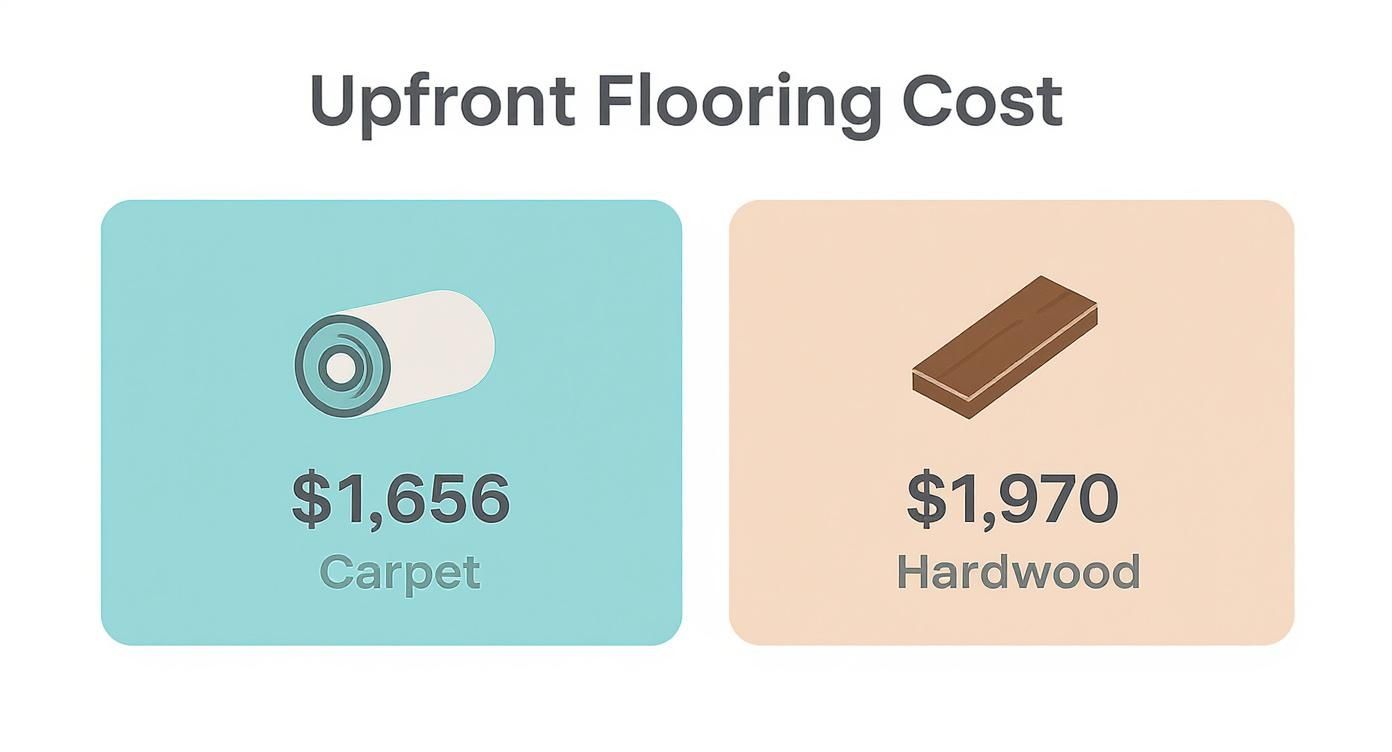
While hardwood looks a little pricier at the start, that picture changes dramatically once you factor in years of maintenance.
The data backs this up. A comprehensive study found that over a 100-square-foot area, hardwood maintenance averaged just $3.02 annually. Carpet maintenance, however, was more than triple that at $10.46. When you remember that carpet lasts about 7.5 years on average compared to hardwood’s 50-plus years, the financial argument for wood becomes crystal clear. You can dig into the full findings on flooring lifecycle costs from the U.S. Forest Service.
A 20-Year Cost Projection
Let’s make this real. Imagine we’re projecting the total costs over two decades for a 500-square-foot living room in a Johns Creek home. This timeframe almost guarantees you’ll replace carpet at least once, while your hardwood floor would just be ready for its first refinishing.
The crucial difference isn’t just in the maintenance; it’s in the replacement cycle. Hardwood is a permanent feature you restore, while carpet is a temporary furnishing you replace entirely, resetting your investment to zero.
To illustrate the total cost of ownership over two decades, let’s compare the numbers side-by-side for a 500 sq ft area. This includes the initial installation, ongoing maintenance, and one major lifecycle event for each—a full replacement for carpet and a refinishing for hardwood. The cost to refinish hardwood floors is a key part of this equation, as it’s the primary long-term expense that keeps them looking brand new.
Projected 20-Year Lifecycle Cost Comparison
| Cost Category | Carpet (with one replacement) | Hardwood (with one refinishing) |
|---|---|---|
| Initial Installation | ~$2,500 | ~$4,500 |
| Annual Professional Cleaning | $150/year x 20 = $3,000 | N/A |
| Replacement / Refinishing | ~$2,500 | ~$1,750 |
| Total 20-Year Cost | ~$8,000 | ~$6,250 |
This projection shows exactly where the tables turn. Despite its higher upfront price, hardwood flooring proves to be the more economical choice over 20 years. The need to completely replace the carpet effectively doubles its initial cost. Meanwhile, refinishing the hardwood is a smaller, one-time investment that preps it for another decade or more of life. That lifecycle value is something you can’t ignore when choosing the right flooring for your home.
How Flooring Choices Impact Home Resale Value
Your flooring isn’t just about personal taste or what feels good underfoot—it’s a serious financial decision that can directly affect your home’s marketability and final sale price. When buyers walk through your front door, their first impression often starts from the ground up. What they see can translate into real dollars at the negotiating table, making the wood floors vs carpet cost debate a critical piece of your long-term investment strategy.
Hardwood floors are almost universally seen by buyers and real estate agents as a premium, lasting upgrade. Carpet, on the other hand, often comes across as a temporary, personal design choice that the new owner will likely want to change. Wood is viewed as a permanent part of the home’s very structure, and that perception of quality and permanence is a powerful motivator for buyers.
The Financial Return on Hardwood Floors
The numbers don’t lie: investing in hardwood flooring really does pay off when it’s time to sell. Homes with hardwood floors often sell for more, with some studies showing they can boost a home’s value by as much as 2.5%. For a $400,000 home right here in Forsyth County, that’s a potential $10,000 increase in value, just from the floors alone.
That’s one of the best returns on investment you can get from any home remodeling project. Buyers are often willing to pay a premium for that move-in-ready feel and the promise of a durable, easy-to-maintain surface. To see how this fits into the bigger picture, it’s worth understanding how to price a home for sale accurately, since premium features like hardwood are always part of the calculation.
How Carpet Affects Buyer Perceptions
Carpet, in contrast, tends to have a neutral or even slightly negative impact on resale value. Let’s be honest—many potential buyers look at existing carpet with a bit of suspicion. They’re wondering about hidden stains, lurking allergens, and years of wear from the previous owners. It’s very common for buyers to immediately start factoring in the cost of replacing all the carpet, which can easily lead to a lower offer.
Even if your carpet is brand new, the specific color and style might not click with everyone. A bold or unique carpet choice can be a real turn-off, while the classic, neutral appeal of wood works for just about everybody.
A revealing survey found that 54% of home buyers are willing to pay more for a house with hardwood floors. This statistic highlights a clear market preference and underscores the financial advantage hardwood holds over carpet in the real estate market.
Strategic Flooring Choices for Maximum Value
The influence flooring has on your property’s value is undeniable. For homeowners in competitive areas like Johns Creek and Milton, it’s smart to view hardwood not as an expense, but as a direct investment in your home’s equity. Yes, the upfront cost is higher, but the long-term financial payoff—from lower maintenance costs to a higher sale price—is significant.
The trick is to think like a buyer. They want timeless, durable features that won’t need to be ripped out and replaced right away. You can dive deeper into how floors can increase the value of your home to make sure you’re making the right call. At the end of the day, hardwood floors offer a clear path to boosting both your home’s appeal and its bottom line.
Matching Your Flooring to Your Lifestyle and Room
The debate over wood floors vs. carpet goes way beyond the price tag. It’s really about matching the material to your everyday life. Let’s be honest, the “best” flooring is completely situational. What works perfectly in a quiet, cozy bedroom could be a total disaster in a bustling entryway. The real secret to a smart investment is aligning your choice with how you actually live in each space.
Think about it: foot traffic, noise, comfort, and cleanup are all part of the equation. A one-size-fits-all approach rarely works for an entire house. Instead, the most practical method is to pick the right surface for each zone, creating a home that’s not just beautiful but genuinely functional.
High-Traffic Zones: The Living Room and Entryway
Your living room, hallways, and entryway are the workhorses of your home. They take a beating from constant foot traffic, muddy shoes, and the daily hustle. In these spots, durability isn’t just a nice-to-have feature—it’s everything.
This is where hardwood really proves its worth. Its tough surface can handle years of heavy use without showing the kind of wear patterns that pop up on carpet almost immediately. Sure, an initial scratch might feel like a big deal, but remember that hardwood can be refinished multiple times, effectively hitting the reset button on decades of wear and tear.
Carpet in these high-traffic areas almost always develops those dreaded “traffic lanes” where people walk most. The fibers get crushed and matted down, and even a professional deep clean can’t always bring them back to life. This drastically shortens the carpet’s good-looking years, forcing you into a much sooner—and costlier—replacement cycle.
Comfort Zones: Bedrooms and Family Rooms
When your feet hit the floor first thing in the morning, comfort is paramount. For bedrooms and snug family rooms, the softness, warmth, and sound-dampening magic of carpet are hard to beat. It creates a quiet, insulated atmosphere that just feels more inviting and calm.
Carpet is a natural sound absorber, far more effective than any hard surface. It cuts down on echo and makes a room feel more peaceful, which is a massive plus in multi-story homes or in rooms where kids are playing. That softness underfoot is also a huge selling point for anyone who craves a cozier, more relaxed vibe.
Hardwood, for all its elegance, can feel cold and stark in a bedroom. It also amplifies sound, which could be a real problem for light sleepers or families with little ones. You can always add area rugs to soften the space and absorb some noise, but they just don’t deliver the same wall-to-wall comfort and quiet that carpet does.
Ultimately, the bedroom decision comes down to what you value most. If your goal is a quiet, warm sanctuary, carpet is a fantastic and budget-friendly choice. If you’re prioritizing a clean, allergen-free look, hardwood with a plush area rug is the perfect compromise.
The Ultimate Test: Homes with Kids and Pets
For households with children and pets, flooring choices are all about practicality. Spills, accidents, scratches, and stains aren’t just possibilities—they’re inevitable. The right floor has to be easy to clean, tough to damage, and healthy for everyone.
Here, the decision gets a bit more complex. On one hand, hardwood floors are incredibly easy to clean. Spills and pet accidents can be wiped up in a second before they have a chance to soak in, a major advantage over carpet. This also makes wood a much better option for anyone with allergies, as it doesn’t trap dust, dander, and other irritants the way carpet fibers do. The trade-off? Pet claws can definitely scratch the surface, which might mean you need to refinish sooner than you’d planned.
On the other hand, don’t count carpet out. Modern carpeting has come a long way, with many synthetic options offering built-in stain and soil resistance that makes them far easier to maintain. A low-pile, durable carpet can also provide a softer, safer play surface for young kids and a more comfortable spot for older pets to snooze.
Flooring Decision Checklist for Kids and Pets
- Ease of Cleaning: Hardwood is the clear winner for wiping up liquid spills in a flash.
- Stain Resistance: Don’t underestimate modern stain-resistant carpet; it can handle common household messes surprisingly well.
- Scratch Durability: Hardwood is vulnerable to scratches from pet nails. You’ll need to stay on top of nail trims or choose a harder wood species.
- Comfort and Safety: Carpet offers a non-slip, cushioned surface that’s safer for wobbly toddlers and more comfortable for pets.
- Allergen Control: For minimizing dust, pet dander, and other airborne irritants, hardwood is the superior choice.
Answering Your Top Flooring Cost Questions
Once you’ve looked at the big picture—upfront costs, maintenance, and lifestyle—a few specific money questions usually pop up. These are the practical, nitty-gritty details that often make or break the final decision between wood and carpet. Let’s tackle them head-on so you can feel confident about your choice.
Is It Cheaper To Refinish Wood Or Install New Carpet?
I get asked this one all the time. If you’re lucky enough to have hardwood floors hiding under old carpet, you’re probably wondering if it’s worth the effort to restore them. In almost every case, refinishing is the more cost-effective option.
Bringing old hardwood back to life typically runs $3 to $7 per square foot. Compare that to installing brand-new, mid-grade carpet, which usually starts at $7 to $9 per square foot once you factor in the material, padding, and labor. Refinishing isn’t just cheaper; it restores a valuable, long-lasting feature of your home.
Does Hardwood Always Add More Value Than New Carpet?
From a real estate perspective, the answer is a resounding yes. Hardwood flooring consistently delivers a better return on investment. While fresh, neutral carpet can certainly make a home look clean and move-in-ready for a sale, buyers don’t see it as a permanent upgrade. They often factor in the cost of replacing it down the line.
Hardwood, on the other hand, is a premium feature that adds tangible, lasting value. It’s seen as a permanent part of the house, not just a covering. In fact, studies have shown that hardwood floors can increase a home’s sale price by as much as 2.5%, making it a clear winner for building equity.
Think of it this way: new carpet is an expense, while new hardwood is an asset. One depreciates and needs replacing, while the other appreciates right along with your home.
Are There Big Savings with Engineered Hardwood?
People often assume engineered hardwood is a huge money-saver compared to solid hardwood, but the difference isn’t always as dramatic as you’d think. While it can be slightly more affordable upfront, the biggest cost drivers are often the species of the wood veneer (like walnut vs. oak) and the complexity of the installation. A high-end engineered plank can easily cost as much as a standard solid oak floor.
What About Local Costs in Cumming and Johns Creek?
While material costs from manufacturers are pretty consistent, labor rates are what really make prices vary from one area to another. The cost of installation in Cumming might be different from Johns Creek or Milton. The only way to get a true picture is to get a few quotes from reputable, local installers. This ensures your budget is based on real-world pricing right here in Forsyth County.
Ready to explore the perfect flooring for your home? The team at Flacks Flooring has been helping homeowners in Cumming, GA, and the surrounding areas for over 30 years. Visit our showroom or schedule an in-home consultation to get personalized advice and transparent pricing for your project. Find your ideal flooring solution today at https://flacksflooring.com.