
If you live in a place with high humidity, you already know that some flooring just can't handle the moisture. The best choices are always going to be waterproof materials like luxury vinyl plank (LVP) and porcelain tile. They simply don't absorb moisture, which sidesteps the warping, cupping, and mold that can ruin other floors in damp conditions. For those who really want the look of real wood, engineered hardwood is a solid, humidity-resistant alternative.
Why Your Flooring Choice Matters in Humid Climates
High humidity is more than just uncomfortable—it’s a constant enemy of your home's structure, and the attack often starts with your floors. For anyone living in Cumming, Johns Creek, and across Forsyth County, where sticky summers are a given, picking the right flooring isn't just about style. It's a critical investment in your home's health and value.
When flooring materials are constantly exposed to damp air, they start to absorb that moisture. Solid hardwood is a prime example. As it soaks up water vapor, the wood swells, leading to a host of problems that are both ugly and unsafe:
- Warping: The planks start to look wavy and uneven.
- Cupping: The edges of each board curl up, becoming higher than the center.
- Buckling: In worst-case scenarios, the flooring can lift entirely off the subfloor.
Beyond the structural damage, that trapped moisture creates the perfect environment for mold and mildew. These unwelcome guests can thrive unseen beneath your floors, damaging your home's air quality and setting you up for a costly removal process. Choosing a floor built to handle humidity is a protective measure for your property and your family.
Understanding Key Flooring Threats in Humid Areas
To make a smart decision, you have to know what you're up against. The constant fight against moisture means some floors are just naturally better suited for the job. Here’s a quick look at the main threats and which materials are best equipped to handle them.
| Threat | How It Damages Flooring | Best Resistant Options |
|---|---|---|
| Moisture Absorption | Causes natural materials like wood to swell, leading to warping and cupping. | Luxury Vinyl, Porcelain Tile |
| Mold & Mildew Growth | Thrives in damp, dark spaces under porous materials like carpet or damaged wood. | Tile, Sealed Concrete, Vinyl |
| Structural Instability | Constant expansion and contraction can weaken adhesives and cause planks to lift. | Engineered Hardwood, Tile |
According to the EPA, mold can start growing on a damp surface in just 24 to 48 hours. That tiny window of time really drives home why it's so important to choose non-porous flooring that doesn't hold onto moisture, especially in our Georgia climate.
Comparing the Top Humidity-Resistant Flooring Options
When you're picking out new floors for a humid climate, it's about more than just what looks good. You're weighing how each material will hold up against our sticky Georgia summers, how it fits your family's lifestyle, and where it's going in your home. It’s not just a question of "is it waterproof?" but a deeper look at the real-world performance of today's best options.
Let's pit the big three against each other: luxury vinyl plank, porcelain tile, and engineered hardwood. Each one is a solid choice for homeowners in places like Cumming and Milton, but they all have their own unique personalities. Knowing the nitty-gritty differences is what will help you make a smart investment that lasts. After all, constant humidity is a floor's worst enemy, leading to warping, cupping, and nasty mold growth you can't always see.
This infographic lays out the three biggest threats humidity poses to your floors.

Seeing the potential damage makes it crystal clear why choosing a moisture-resistant material isn't just a good idea—it's essential.
Humidity-Resistant Flooring At a Glance
To make sense of the options, it helps to see how they stack up side-by-side. This quick-reference table breaks down the key features of the top contenders, giving you a starting point for deciding which material best suits your needs.
| Flooring Type | Moisture Resistance Level | Best For… | Average Lifespan | Key Benefit |
|---|---|---|---|---|
| Luxury Vinyl Plank (LVP) | 100% Waterproof | Basements, bathrooms, kitchens, laundry rooms | 15-25 years | Completely impervious to water damage |
| Porcelain Tile | Nearly Impermeable | Bathrooms, entryways, mudrooms, kitchens | 50+ years | Unmatched durability and mold resistance |
| Engineered Hardwood | Good (Moisture-Resistant) | Living rooms, bedrooms, dining rooms | 20-40 years | Authentic wood look with enhanced stability |
| Sealed Concrete | Excellent | Basements, garages, modern living spaces | 100+ years | Extremely durable and contemporary style |
| Laminate | Good (Water-Resistant) | Bedrooms, hallways, living areas | 10-20 years | Budget-friendly wood and stone looks |
While this table provides a great overview, the best choice always depends on the specific room and your expectations for performance and maintenance.
Luxury Vinyl Plank (LVP): The Waterproof Champion
Luxury vinyl is a game-changer. It’s a synthetic floor engineered from the ground up to be 100% waterproof. Thanks to its rigid core—usually a stone-plastic composite (SPC) or wood-plastic composite (WPC)—moisture simply has nowhere to go. It can't be absorbed, which means LVP is a fantastic pick for any room in the house, especially trouble spots like basements and bathrooms.
There's a big difference between "water-resistant" and "waterproof." LVP can handle a burst pipe or a major spill without swelling up, buckling, or falling apart. That kind of resilience is why it has taken over the market.
Resilient flooring, especially luxury vinyl, now commands a massive 34.2% of the U.S. flooring market share. Its explosion in popularity is no accident; it’s driven by that unbeatable moisture resistance, making it the default choice for builders in humid regions. You can find more details in these U.S. flooring market trends.
Key Takeaway: For total peace of mind in basements, laundry rooms, or any area below ground level, LVP is your safest bet. Being truly waterproof eliminates any worry about moisture damage from spills or damp subfloors.
Porcelain Tile: The Timeless Protector
Porcelain tile has been a go-to for wet areas for ages, and for good reason. It’s incredibly dense, with a water absorption rate of less than 0.5%, making it practically waterproof. When it's fired at blistering temperatures, it becomes almost like glass—water just can't get in.
Where tile really proves its worth is its surface. The glazed finish acts as an impenetrable shield, stopping mold and mildew before they can even start. It’s also tough as nails, shrugging off scratches, stains, and years of heavy foot traffic without breaking a sweat.
Comparison Snapshot: LVP vs. Porcelain Tile
- Feel Underfoot: LVP has a bit of give and feels warmer, while porcelain is rock-solid and cool to the touch.
- Installation: Many LVP products use a DIY-friendly click-lock system. Tile is a job for the pros, requiring mortar, grout, and a lot more labor.
- Durability: Both are incredibly durable. Porcelain is tougher against deep scratches, but a dropped cast-iron skillet can crack a tile, and replacement is a real chore.
The only potential chink in tile's armor is the grout. In a humid climate, you absolutely must use a high-quality, sealed grout to keep moisture from seeping in and creating mildew stains down the line.
Engineered Hardwood: The Stylish Compromise
What if you have your heart set on the classic warmth of hardwood but live somewhere like Johns Creek where the air feels thick all summer? Engineered hardwood is the answer. It’s made with a top layer of real, beautiful hardwood, but it’s bonded to a core of cross-layered plywood.
That layered construction is the secret to its stability. It fights wood's natural urge to expand and shrink with humidity changes, drastically cutting down the risk of the dreaded cupping and warping that plagues solid wood floors.
While it's not waterproof, its stability makes it a perfectly good option for main living areas, bedrooms, and even kitchens in homes with good climate control. You get the genuine look and feel of wood because, well, the part you see and walk on is real wood.
It does have its limits, though. I wouldn't recommend it for basements or full bathrooms where puddles and direct water contact are a given. Standing water can still damage the wood veneer and weaken the core layers over time.
Where Does Each Flooring Excel?
- Luxury Vinyl Plank (LVP): The undisputed king of basements, bathrooms, laundry rooms, and kitchens. It’s the worry-free solution for any space where water is a real possibility.
- Porcelain Tile: The premium workhorse for bathrooms, mudrooms, and entryways. It delivers bulletproof durability and a clean, timeless look in the wettest zones.
- Engineered Hardwood: The perfect choice for living rooms, dining rooms, and bedrooms. It brings the authentic beauty of wood with the stability needed to handle our humid climate.
Waterproof Vinyl Flooring: The Go-To Solution for Humidity
If you're looking for the absolute best flooring for a humid climate, it's hard to argue against waterproof vinyl. This isn't your grandma's old sheet vinyl. Today's resilient flooring—think Luxury Vinyl Plank (LVP) and Luxury Vinyl Tile (LVT)—has quickly become the top choice for homeowners in Cumming, Milton, and all over Forsyth County. And for good reason. Its success isn't just clever marketing; it’s built from the ground up to handle moisture.
So, what's the secret? It’s all in the core. Unlike flooring that’s merely "water-resistant," truly waterproof vinyl is engineered to be 100% impervious to water. This is thanks to its solid composite core, which is typically made of a stone-plastic or wood-plastic blend. This core simply can't absorb water, which means no swelling, no warping, and no peeling apart, even when it's up against a serious spill or the constant dampness we often find in basements here in North Georgia.

This technology makes waterproof vinyl the ultimate problem-solver for the trickiest spots in your home.
How It Holds Up in Real Life
Picture a finished basement in Johns Creek that gets that clammy feeling after a heavy summer storm. With most floors, that's a constant worry—you're always on the lookout for mold or water damage. Waterproof vinyl takes that stress away. Since it’s synthetic, there's nothing for mold to feed on, and its waterproof nature keeps any moisture from the concrete slab locked safely below.
Or think about a busy family kitchen, where spills are just part of daily life. LVP gives you the peace of mind to know that a knocked-over glass of sweet tea or a minor leak from the dishwasher won't turn into a flooring disaster. On top of that, a tough, clear wear layer protects the beautiful design from scratches and scuffs, making it a workhorse for high-traffic areas.
The proof is in the numbers, especially on the commercial side where performance is everything. In demanding spaces, resilient flooring accounts for roughly 55% of all commercial hard surface sales. This isn't a fluke. It shows just how well materials like LVT perform when durability and moisture management are absolute must-haves.
A Smart Investment for Property Owners and Realtors
For anyone managing rental properties or getting a house ready for sale, waterproof vinyl offers a fantastic return. Its incredible durability means fewer headaches and less money spent on repairs between tenants. Plus, the low-maintenance appeal is a huge selling point for renters and buyers who want a beautiful home without the fuss.
Key Insight: The game-changer has been the visuals. Modern LVP uses high-definition printing to create wood and stone looks that are stunningly realistic. You get that high-end aesthetic without any of the risks that come with putting natural materials in our humid climate.
This blend of style, toughness, and waterproof performance instantly boosts a property's value. When a potential buyer walks in and sees a floor that looks amazing and is completely worry-free, it makes a powerful impression. We get asked all the time, "is vinyl plank waterproof?" and being able to give a confident "yes" is a major advantage. You can learn more in our guide on the waterproof qualities of vinyl plank flooring.
Ultimately, choosing waterproof vinyl is a strategic move. It protects your investment, makes life easier, and gives you a beautiful floor that will last for years. It’s a direct answer to the challenges of humidity, offering a reliable and stylish solution that works in any room of the house.
The Enduring Reliability of Tile in Wet Areas
When it comes to the wettest, most humid spots in your home, tile isn't just a good choice—it’s the gold standard. For centuries, porcelain and ceramic have been the go-to for bathrooms, kitchens, and entryways for one simple reason: they provide an almost impenetrable defense against moisture.
Unlike other materials that can soak up humidity right out of the air, a properly glazed tile creates a solid, non-porous barrier. Water and spills just sit on the surface, unable to seep in and cause the swelling, warping, or delamination that plagues other flooring types. It's this simple fact that makes tile a powerhouse in a climate like ours.

This incredible performance is why tile continues to dominate the global market for humid environments, particularly in homes. The residential sector actually accounts for over 55% of the entire flooring market, with homeowners consistently choosing tile for its durability. You can learn more about the global demand for these durable materials and see just how popular it remains.
Porcelain vs. Ceramic: A Deeper Dive
Though people often use the terms interchangeably, there’s a key difference between porcelain and ceramic that really matters in high-moisture areas. Porcelain is crafted from a denser clay and fired at much higher temperatures, which gives it a water absorption rate of less than 0.5%. This makes it virtually waterproof and the clear winner for the most demanding jobs, like shower walls, bathroom floors, and mudrooms.
Ceramic tile is still an excellent water-resistant option, but it's slightly more porous. Its protective glaze does a fantastic job of shielding it from surface moisture, making it a great, often more budget-friendly, choice for places like kitchen backsplashes, laundry rooms, and main kitchen floors.
The only real weak spot in any tile installation is the grout. Here in Forsyth County, using a high-quality sealed or epoxy-based grout is non-negotiable. It’s the only way to stop moisture from creeping between the tiles and creating a haven for mildew.
Expert Insight: For maximum protection, always pair your tile with the right underlayment—think cement backer board and a waterproofing membrane, especially in a full bathroom. This creates a completely sealed system that funnels any water that might get through toward the drain, not into your subfloor.
Style Without Compromise: Wood-Look Porcelain
One of the best things to happen in the tile world is the rise of wood-look porcelain. Homeowners in Cumming and Milton who love the warm, inviting look of hardwood but dread its performance in our climate finally have the perfect solution. Thanks to high-definition printing, today's porcelain planks have incredibly realistic wood grains, textures, and colors.
This lets you run the continuous look of hardwood from your living room straight into your kitchen without a second thought about splashes or spills. You get the timeless beauty of oak or hickory with the bulletproof durability and waterproof nature of porcelain. It's a design-forward choice that doesn't ask you to sacrifice an ounce of performance.
This versatility also makes tile a smart pick for other areas you might not have considered:
- Sunrooms: Tile handles the big temperature swings and moisture from open windows without breaking a sweat.
- Entryways and Mudrooms: It stands up to tracked-in rain, mud, and heavy foot traffic effortlessly.
- Laundry Rooms: It’s completely unfazed by potential washing machine leaks or detergent spills.
Many homeowners ask, "does porcelain tile need sealing?" The tile itself almost never does. Our guide explains why sealing porcelain tile is usually unnecessary, shifting the focus to where it belongs: on properly sealed grout lines for total moisture protection.
Proper Installation and Maintenance for Humid Climates
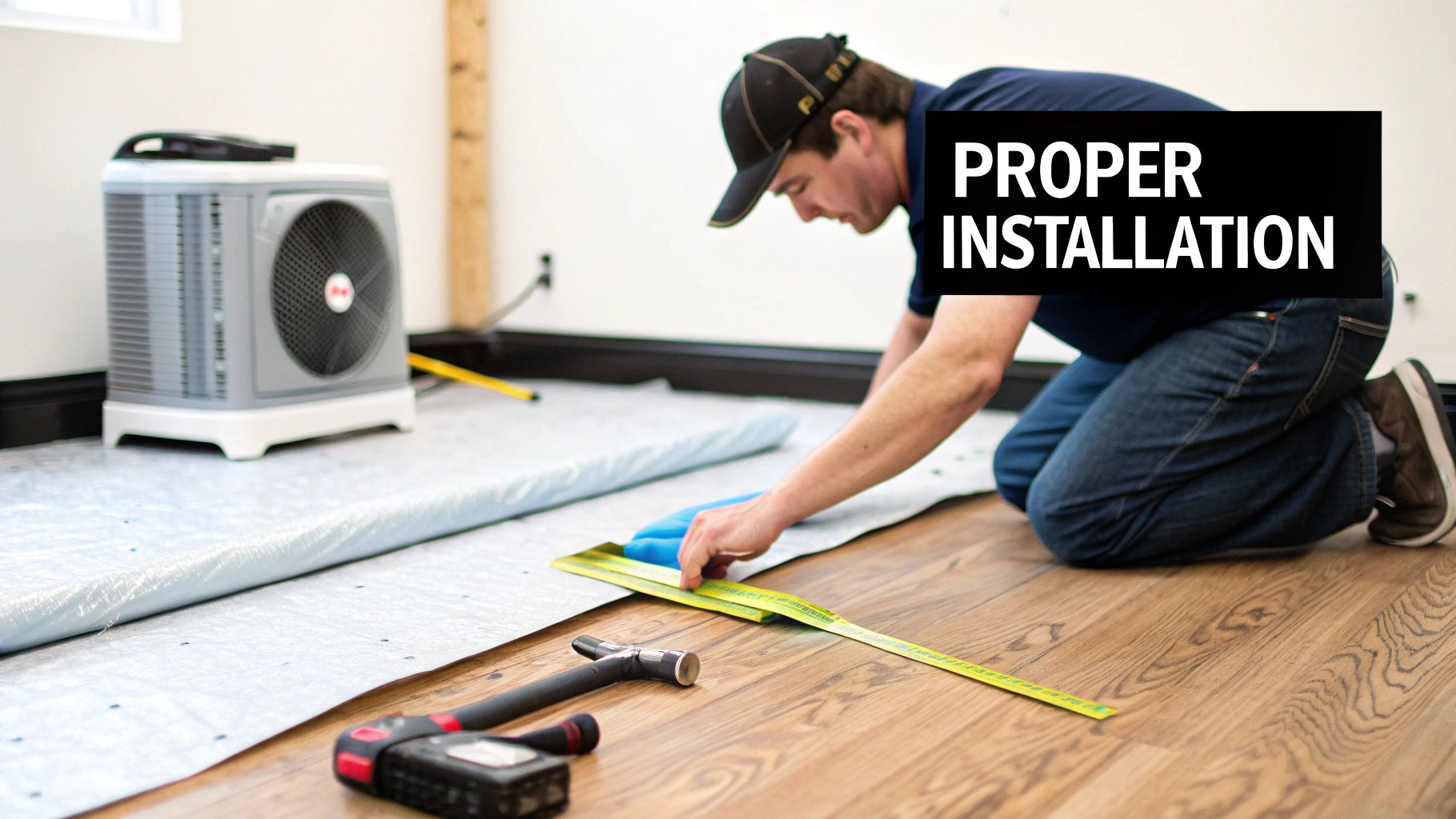
Picking the right material is half the battle, but even the best flooring for a humid climate will fail if it's not installed and cared for correctly. Around here in Cumming and Johns Creek, where the air gets heavy and damp, following proper procedure isn't just a good idea—it's the only way to protect your investment and make sure your new floors last. A quality installation is everything.
The work starts long before the first plank goes down. Prepping the subfloor is absolutely essential, especially over the concrete slabs common in North Georgia homes. Concrete is porous, meaning it can pull moisture right up from the ground, creating a damp environment that will wreck your flooring from underneath. This is where choosing the right floor underlayment for basements comes in, creating a critical barrier that stops moisture in its tracks.
You can learn more about how this works in our detailed guide on the role of a flooring moisture barrier.
Critical Installation Steps for Lasting Results
Beyond the subfloor prep, a few key steps are designed specifically to fight back against humidity. Skipping any of them can lead to problems like buckling, gaps, or even mold, no matter how "waterproof" the flooring box says it is.
One of the most overlooked steps is acclimation. Your new flooring needs time to get used to your home’s specific temperature and humidity levels before it's installed. This simple step prevents the material from swelling or shrinking dramatically after it's locked in place.
- The Acclimation Window: For most floors, including LVP and engineered hardwood, you’ll want to let the boxes sit in the room for at least 48-72 hours before you start.
- Moisture-Rated Supplies: Always use adhesives and grouts specifically made for high-moisture areas. Products with mold and mildew inhibitors offer an extra layer of defense in places like bathrooms and basements.
- Room to Breathe: Leaving a small expansion gap (usually about ¼ inch) around the edge of the room is crucial. It gives the floor space to expand and contract with the seasons without pushing against the walls and buckling.
Pro Tip: Never, ever install a floor over a "wet" concrete slab. A quick moisture test will tell you if your subfloor is dry enough. If the reading is too high, you have to solve that moisture problem first, whether with sealants or a dehumidifier, before a single board gets laid.
Maintaining Your Floors in Georgia’s Humidity
Once the floor is down, the game shifts to proactive maintenance. The goal is simple: control your indoor environment and tackle any moisture right away. It's not just about cleaning; it’s about having a smart strategy for our humid climate.
Consistency is your floor's best friend. Try to keep your home's relative humidity between 35% and 55%. A good dehumidifier is a fantastic investment, especially for basements or during those notoriously muggy summer months.
Here are a few practical habits to get into:
- Wipe Spills Immediately: Even with waterproof floors, don't let puddles sit. Cleaning up spills fast stops water from seeping into seams or getting under baseboards.
- Use the Right Cleaners: Stay away from harsh, acidic, or abrasive chemicals. They can eat away at your floor's protective finish. Stick to the pH-neutral cleaners recommended by the manufacturer.
- Put Mats at Every Door: A good doormat is your first line of defense, catching water, mud, and dirt before it ever gets tracked across your beautiful floors.
By following these installation and maintenance tips, you give your flooring a fighting chance to perform as it should, ensuring it stays a durable and beautiful part of your home for years to come.
Answering Your Flooring Questions for Humid Homes
When you're picking out new floors in a place like Cumming or Milton, the humidity can really throw a wrench in the works. It's natural to have questions about what materials will hold up and what installation really requires. Let's clear up some of the most common concerns we hear from homeowners around here.
Can I Install Engineered Hardwood in a Basement?
I get this question a lot. While engineered hardwood is definitely more dimensionally stable than its solid counterpart, putting it in a basement is a risky move, especially in North Georgia. Basements are just naturally damp spots, thanks to moisture from the soil and our famous downpours.
For any below-grade space, you're much better off with something genuinely waterproof. I always steer clients toward Luxury Vinyl Plank (LVP) or porcelain tile for basements. These materials are built to be completely immune to water, so you won’t have to worry about warping, mold, or a costly tear-out down the road.
Here's the key difference: "Water-resistant" means it'll handle a quick spill if you wipe it up fast. "Waterproof" flooring, like LVP, can literally sit under water without swelling or falling apart. For a basement, there's no contest—waterproof is the only way to go.
Does Underlayment Really Matter in Humid Areas?
Yes, a thousand times yes. Think of underlayment as the unsung hero of your floor. It’s an essential moisture barrier that sits between the subfloor and your beautiful new flooring. Around here, where concrete slab foundations are the norm, a vapor barrier underlayment isn't just a good idea; it's non-negotiable.
This layer physically blocks moisture from creeping up from the ground and ruining your investment from below. Plus, you absolutely have to follow the flooring manufacturer's specs for underlayment to keep your warranty valid. Don't skip this step.
How Does Humidity Affect Solid Hardwood?
Solid hardwood and high humidity are a terrible mix. Wood is a natural, porous material, which means it acts like a sponge. When the air is thick with moisture, wood fibers soak it all up and expand. This is what causes planks to cup, where the edges curl up higher than the center, or in worst-case scenarios, buckle right off the floor.
Then, when the air dries out, the wood shrinks, leaving you with noticeable gaps between the boards. That constant expansion and contraction makes solid hardwood a really challenging choice for any home dealing with our kind of humidity swings.
Ready to find the perfect humidity-proof flooring for your home? The experts at Flacks Flooring are here to help you explore beautiful, durable options that are built to last in our Georgia climate. Visit our Cumming showroom or schedule an in-home consultation today!