
The most common advice about waterproof flooring for a bedroom is to choose the plank with the strongest water-resistance claim. That's only part of the decision. A waterproof surface can still sit over a damp slab, trap water at a seam, feel cold under bare feet, or make a quiet bedroom sound hard and echoing.
The floor that works best depends on what's beneath it and how you use the room. Whether you're comparing hardwood flooring installation, luxury vinyl plank (LVP), laminate flooring, tile flooring, or carpet installation, check the subfloor, humidity, comfort, and repair plan before choosing a finish.
Waterproof Flooring Options at a Glance
| Option | Water resistance of top layer | Barefoot feel | Sound underfoot | Installation method |
|---|---|---|---|---|
| Luxury vinyl plank with rigid core | High; nonabsorbent surface and core | Cool to mild, firm | Hard; underlayment reduces echo | Floating or glue-down |
| Waterproof engineered wood | Moderate to high; depends on seams and edge sealing | Warm, natural | Hard; underlayment reduces echo | Floating or glue-down, within manufacturer limits |
| Ceramic or porcelain tile | High; grout lines need care | Cold, hard | Hard and loud | Mortar set, longer install |
| Waterproof carpet tile | Low over chronic wet spots; top sheds surface spills | Soft, warm | Quietest of the four | Interlocking or adhesive, DIY-friendly |
The waterproof label describes the top layer, so this table compares surfaces, not complete floor installations.
In a bedroom, barefoot feel and sound deserve more weight than they would in a kitchen. You'll step onto the floor beside the bed, and furniture puts concentrated weight on a small area. A hard floor can also carry footsteps and the scrape of a dresser into nearby rooms.
For a room that stays dry, engineered wood or carpet tile may offer a warmer, softer feel. For occasional spills, LVP or waterproof engineered wood can make surface cleanup straightforward, provided water doesn't sit at seams or edges. Near a bathroom, exterior door, or known moisture source, tile or LVP is usually the more practical surface choice, but neither fixes a leak or damp subfloor.
The decision isn't just which product sheds water best. It's which option fits this room's humidity, subfloor, comfort needs, and daily use.
Why Waterproof Does Not Mean Moisture-Proof
A waterproof surface isn't the same thing as a moisture-proof room. The wear layer can resist spills from above, but it can't stop vapor moving up through concrete, condensation forming at a cold wall edge, or a leak reaching the floor from underneath.
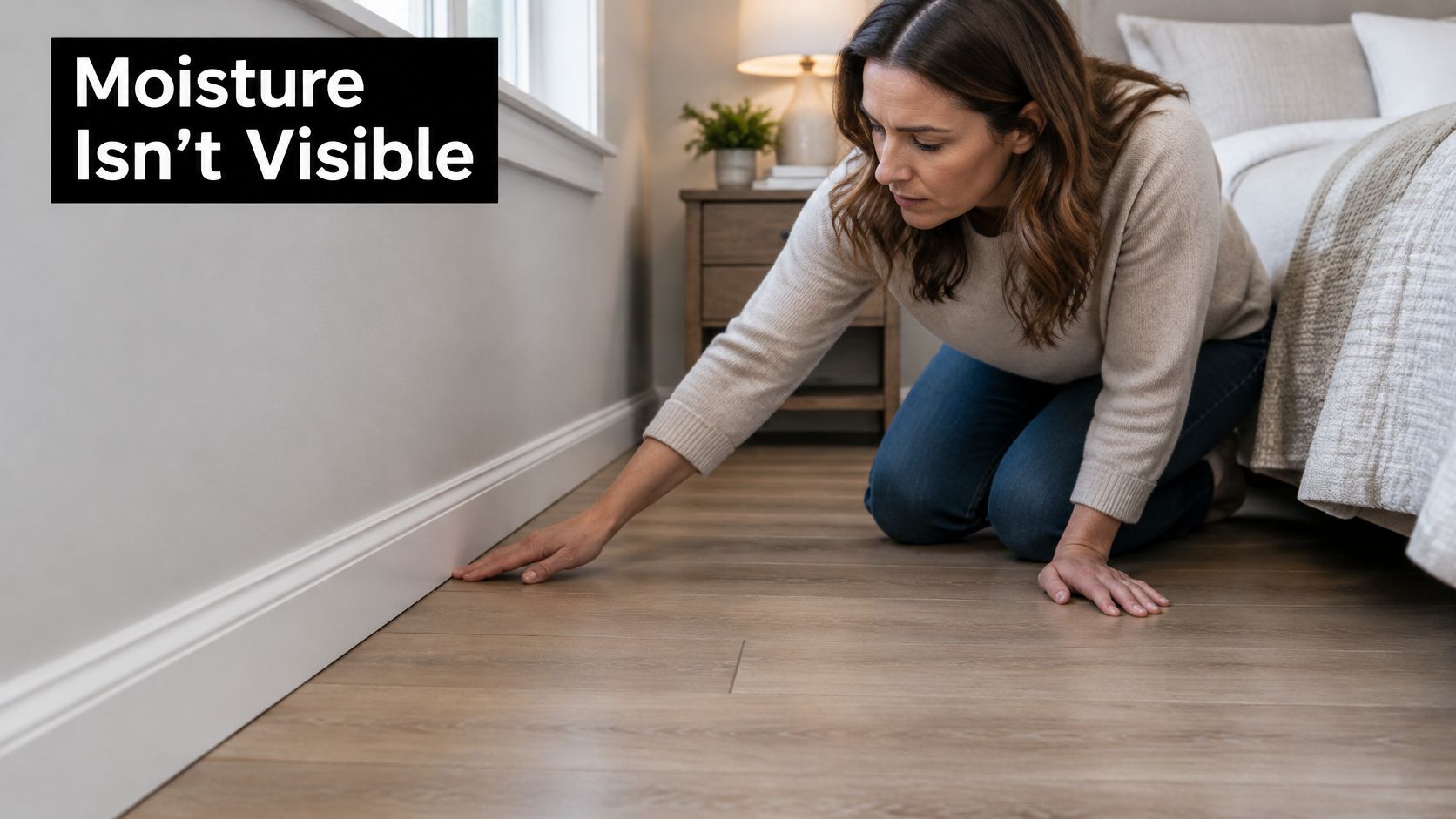
Three common moisture sources need attention before installation:
- A slow leak beneath the surface. A small plumbing leak can keep a subfloor or underlayment damp even when the planks look intact. Find and repair the source before covering the area.
- Condensation at exterior edges. Cold spots where the floor meets an outside wall can collect moisture. Perimeter gaps and baseboard areas deserve a close look, particularly if you notice a musty smell or discoloration.
- Humidity that rises while the house is empty. If HVAC operation changes when nobody's home, indoor humidity may climb. A waterproof plank won't correct the conditions that let moisture accumulate.
Seams, transitions, and perimeter gaps are practical weak points. Water can run through them and become trapped below the visible surface, where drying is harder. In humid Georgia summers, don't assume that a dry-looking bedroom has controlled humidity year round. A bedroom hygrometer gives you an actual reading instead of a guess.
The EPA's mold guidance recommends keeping indoor relative humidity between 30% and 60% and completely drying damp or wet surfaces within 24 to 48 hours. Its guidance also emphasizes fixing leaks and excess moisture rather than relying on a floor's surface rating.
For additional background on the distinction between surface resistance and moisture management, see this guide to water-resistant flooring. The practical rule is to judge the whole floor assembly and moisture plan, not the label alone.
How to Check the Subfloor Before You Buy
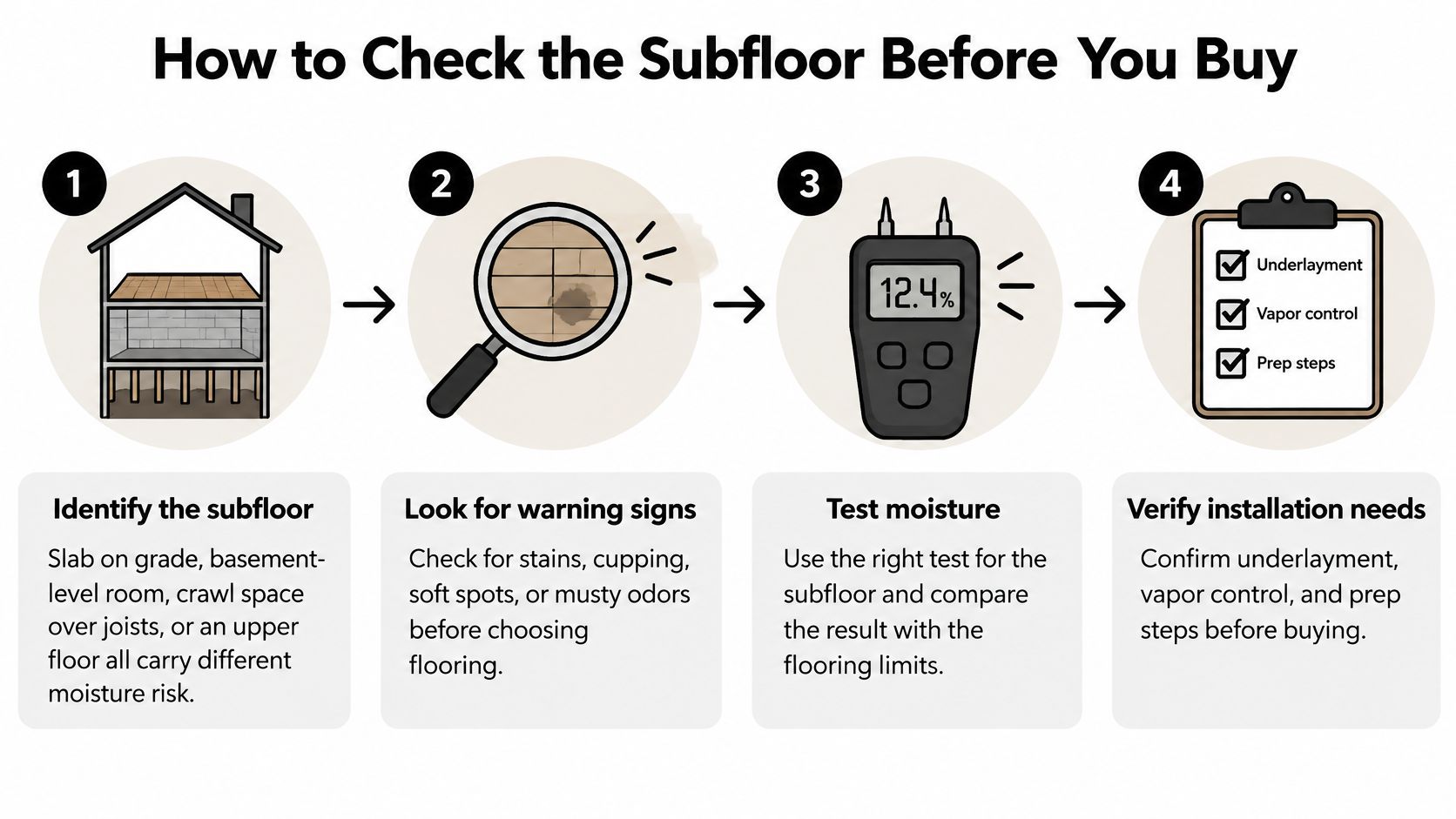
The finish can't compensate for a substrate that's wet, unstable, or poorly prepared. For concrete installations, the ASTM standards for resilient floor coverings address moisture testing, pH, vapor retarders, and substrate porosity. Use this pre-purchase routine to find issues before they're buried.
Identify the subfloor. Establish whether the bedroom is over a slab on grade, a basement-level slab, a crawl space over joists, or an upper floor; each has different moisture risks. Don't choose a product before confirming what it will sit on.
Look for warning signs. Check for stains, white mineral deposits, musty odors, soft or loose boards, and evidence of old leak repairs. A “waterproof” label isn't a reason to ignore visible damage or smells.
Test concrete moisture. Request documented in-situ relative-humidity testing under ASTM F2170, calcium-chloride vapor-emission testing under ASTM F1869, or a method required by the flooring and adhesive manufacturers. Concrete should be tested regardless of age or grade level; skipping a test because the finish resists spills is a common and costly mistake.
Request a pH test. ASTM F710 calls for testing concrete floors for pH before resilient flooring installation. Ask for the reading, not just verbal confirmation that the slab is ready.
Confirm vapor control. For on- or below-grade concrete slabs, verify that an effective permanent moisture-vapor retarder meets the applicable thickness and permeance requirements. Don't assume the flooring itself serves as a barrier beneath the slab.
Check substrate porosity. ASTM F3191 provides a field method for determining whether the surface is porous or nonporous, which affects primer, adhesive, and self-leveling-underlayment choices. Using the wrong preparation can undermine adhesion.
Inspect flatness and cracks. Have uneven areas and cracks assessed and repaired before installation. A floating floor still needs suitable support, and a rigid surface can reveal problems in the substrate.
Record results and compare limits. Put each test result on the quote and compare it with the product and adhesive manufacturer's stated limits. If a reading exceeds those limits, delay installation and address the moisture source first.
If a leak is suspected, fix the plumbing problem before the flooring goes down. A resource on help with installing replacement plumbing can help homeowners understand the plumbing work involved. For concrete-specific steps, use this guide to testing concrete for moisture.
Comfort, Sound and Air Quality in a Bedroom
A bedroom floor gets judged by the soles of your feet at 6 a.m., not by a spec sheet. The room is small, the door is usually shut, and you spend hours in it unconscious and barefoot. Warmth, noise and what the material gives off deserve a place in the specification right next to the waterproof rating.
Warmth underfoot
Carpet tile is the warmest and softest surface underfoot, and it holds that feel in a room with little solar gain. Engineered wood reads warm to neutral. LVP and tile feel cooler on bare feet, which is a comfort fact rather than a defect. A bedside rug solves the first step out of bed far more cheaply than changing the whole floor. Underlayment shifts both feel and acoustics, and it has to be approved for the specific flooring system. A cushion that conflicts with the manufacturer's installation requirements can cause joint failure or void the warranty.
Sound in the room and through the structure
Hard surfaces reflect sound, so a drawer closing, a chair leg scraping or a footstep lands louder than it did over carpet. Carpet tile absorbs more of that airborne noise. For LVP, an acoustic underlayment mainly helps with impact noise, which matters most over a living space or on an upper floor where footfall transfers into the ceiling below. Ask what the underlayment is rated for, impact or airborne, and confirm it suits both the floor and the subfloor.
Air quality and the first nights in the room
New resilient flooring, adhesives and maintenance products can emit volatile organic compounds. The EPA's guidance on resilient flooring and indoor air quality explains that emissions depend on the material, the installation method and the maintenance procedure. It identifies FloorScore as a voluntary hard-surface flooring certification for VOC-emission criteria and recommends airing out spaces where resilient flooring is installed for at least 72 hours.
Specify the whole system for emissions, not just the plank: underlayment, primer, adhesive and seam products all contribute. Where glue is required, use a manufacturer-approved low-VOC adhesive. If the bed itself is also being replaced, you can compare cooling mattress types for the sleep setup, though the floor decision still rests on warmth, sound and emissions whatever goes on top of it.
A wear layer and a waterproof rating say nothing about quietness, comfort or emissions. Review options for waterproof flooring underlayment as part of the complete specification, then plan the first night back in the room around ventilation and cure instructions. A bedroom needs quiet, warmth and clean air as much as it needs spill resistance.
Durability and Repairs Over the Long Term
Long-term durability in a bedroom is decided below the surface. A wear layer resists scratches and spills, but water that slips under planks, a subfloor that stays damp, or a leak left running will shorten the floor's life no matter what the label says. Dry wet areas fast. The EPA's guidance on mold and moisture says water-damaged areas and materials should be dried within 24 to 48 hours to help prevent mold growth. Moldy carpet or padding usually needs replacement because growth can reach crevices that cleaning cannot reach.
| Damage | LVP | Waterproof engineered wood | Waterproof carpet tile |
|---|---|---|---|
| Surface spill, dried within 24 to 48 hours | Wipe, dry, and check seams and edges | Wipe, dry, and check edges and seams for swelling | Lift tile; dry pad and subfloor |
| Water under the floor | Pull planks, dry subfloor, and check for odor | Pull planks, dry subfloor, and check edges for swelling | Remove tiles and padding; replace damp or moldy material |
| Deep gouge or stain | Replace plank | Replace plank; refinish only if the wear layer allows | Replace tile |
| Mold in materials | Replace affected planks and fix the moisture source | Replace affected planks and fix the moisture source | Replace affected tiles and padding; fix the moisture source |
Match the repair to the damage
A surface spill calls for prompt wiping and drying, then a seam or edge check. Water beneath the floor is a different job: lift the affected pieces, inspect and dry the subfloor and underlayment, and check for odor or discoloration. A waterproof top layer does not remove the need to find where the water went. If the subfloor stays damp, replacing planks or tiles only hides the problem.
LVP and engineered wood use wear layers to protect the design surface, but a deep gouge may still require replacing a plank. Engineered wood can be refinished only if its wood wear layer is thick enough. Carpet tile can be spot-cleaned when the spill stays on the surface, and an individual tile can be replaced if it stains. With pets or children, compare wear layer thickness and scratch resistance rather than assuming every product in a category handles claws or dragged toys equally well. Humidity swings matter as much as spills. A floor that stays dry on top but sits over a damp crawlspace or a leaking exterior wall will cup, swell, or grow odor at the seams. Spare planks or tiles from the same lot make future repairs simpler, especially when a dye lot changes.
For water that gets below resilient planks, Eagle Restoration on moisture beneath vinyl explains how trapped moisture shows up and why drying the subfloor matters more than drying the surface. For a repair assessment, lift a piece if it is safe, inspect the subfloor and underlayment, check for odor or discoloration, and photograph the damage for insurance records. Fix the moisture source before installing new material, and keep a small stock of matching planks or tiles for the repairs that come later.
Budget, Cost and Maintenance Over Time
The floor material is one line in the budget. The waterproof claim applies to the top layer, not the whole assembly, so price the subfloor and the room's moisture control before you compare finishes. A bedroom over a slab, a basement bedroom, or a room beside a bathroom carries costs that a sample will not show.
The line items that decide the final number are subfloor repair or moisture mitigation, self-leveling compound or acoustic underlayment, floating versus glue-down labor, tear-out of the old floor, transitions and trim, and moving furniture. A loose plank or stained carpet tile is a small repair. A moldy subfloor turns the same job into containment, drying and remediation.
Build the budget in this order:
- Price subfloor repair or moisture correction first.
- Add the specified underlayment and adhesive.
- Include tear-out, trim, transitions and cleanup.
- Hold a contingency for what tear-out reveals.
Routine care is straightforward: sweep or vacuum grit, damp-mop with a pH-neutral cleaner labeled for the product, and dry standing water at seams and edges. Felt pads under furniture legs and spot-cleaning carpet tile to its care instructions extend the surface. Cleaning products affect indoor air, so choose low-emission options and ventilate while using them. In a bedroom, long-term cost usually follows moisture: a humidistat or dehumidifier in a basement room, sealed perimeter gaps, and prompt attention to darkening at seams.
Ask for an itemized quote that separates subfloor work, underlayment, tear-out, trim and cleanup from the flooring itself. That lets you compare bids on the same scope. A low material price with vague prep often grows during installation. Flacks Flooring quotes are all-inclusive and cover site preparation, a choice of underlayment, installation to manufacturer specifications, necessary trim on floorboards, and cleanup with furniture placement.
Choosing Your Bedroom Floor and Getting Help
Different bedrooms call for different trade-offs. Use the room's moisture exposure and construction to narrow the choices before comparing color, texture, or style.
| Bedroom situation | Best fit | Reason | Watch for |
|---|---|---|---|
| Over a concrete slab or at basement level | Waterproof LVP or tile | Water-resistant top layer | Slab moisture and pH tests first |
| Next to a bathroom or exterior door | LVP or tile | Hard-surface guidance within 4 feet of fixtures or exterior doors | Sealed transitions and edges |
| Pets or young children | LVP or waterproof engineered wood | Spill cleanup and scratch resistance | Wear-layer rating for heavy use |
| Light sleeper or upstairs bedroom | Carpet tile or LVP on acoustic underlayment | Softer sound and less echo | Carpet tile isn't for chronic moisture spots |
| Rental or short-term upgrade | Floating LVP or carpet tile | Can be quicker to install and easier to remove | Lease rules and removal terms |
Over a concrete slab or at basement level, start with LVP or tile and verify the slab's moisture and pH results. Near a bathroom or exterior door, choose LVP or tile with well-detailed transitions; the EPA Indoor airPLUS verification requirements specify water-resistant hard-surface flooring within 4 feet of plumbing fixtures or exterior doors in areas where moisture or splash damage could occur.
For pets or young children, compare LVP with waterproof engineered wood and check that the wear layer suits the expected use. For a light sleeper or an upstairs room, consider carpet tile or LVP over compatible acoustic underlayment; don't put carpet tile over a chronic wet spot. For a rental or short-term upgrade, floating LVP or carpet tile may suit the project, but confirm the lease allows the work and establishes removal expectations. If pets and a slab create competing priorities, let the moisture test guide the decision first.
Compare samples in the actual room
A showroom visit lets you see, feel, and walk on flooring choices. Then an in-home consultation brings samples into the bedroom, allows precise measurements, and supports a custom quote based on the project. A finish that looks right under showroom lights can read differently beside your bed, wall color, and furniture.
In Cumming, Forsyth County, Johns Creek, and Milton, homeowners searching for flooring near me can compare options for local installation and replacement needs. The same process helps real estate professionals planning a refresh, contractors coordinating reliable installation, designers narrowing down a palette, and renters checking whether a temporary upgrade is suitable.
At Flacks Flooring, the in-home process starts with a free consultation scheduled at your convenience. Our flooring specialist can bring samples, measure the room, and prepare a custom quote; quoted flooring prices are all-inclusive and cover site preparation, a choice of underlayment, installation to the manufacturer's specifications, necessary trim, site cleanup, and furniture placement. Ask for moisture results and a clear breakdown of the work before approving the project.
Choose the floor that the room's moisture conditions, sleep needs, and daily use can support, not the product with the boldest waterproof claim.
Visit Flacks Flooring to compare waterproof flooring, hardwood, carpet, and other bedroom options with a flooring specialist. Schedule a free in-home consultation to review samples, measure the room, and get a custom quote that accounts for preparation and installation.