
You've got wood floors that are too dark, too orange, or too beaten up to love, and a can of white paint looks like the fastest fix. It can be. It can also peel at the doorway in six months, show every paw print, and turn a simple refresh into a full floor replacement.
I treat white painted wood floors as a maintenance decision first and a style choice second. Judge each room by its worst day, not its best photo. Decide paint versus replace before you pick a shade. Then tie every choice to prep, coat count, and the cleaning you're willing to do.
Why Painted Floors Suit Farmhouse, Classic and Modern Homes
Thomas Jefferson's entry hall at Monticello still gets cited for a reason. The floor was painted green, and it was not a novelty. According to Wood Floor Business's history of wood flooring, pine floors were sometimes coated with white-lead paint, pigments, and linseed oil, and paint was a practical finish long before engineered boards existed.
Paint unified cheap softwood, softened irregular grain, and brightened rooms that had small windows and no overhead lighting. That's still the job today in older homes around Cumming, Johns Creek, Milton, and the rest of Forsyth County. You're not improvising. You're using a traditional finish, just with safer modern coatings.
How the look changes by style
Farmhouse works best with white over wide plank pine, where the grain stays faintly visible under the paint. Pair it with black hardware, simple flat trim, and natural textiles, and the floor reads calm rather than stark. If you're comparing that direction with new materials, our guide to flooring choices for farmhouse homes puts painted wood alongside light oak and woven textures.
Classic homes suit a warmer cream in a foyer or formal dining room. A painted border in a soft taupe or muted blue turns the perimeter into trim, so the floor looks planned even without a rug. Kept rectangular and low contrast, it won't fight chair rails or wainscoting.
Modern open plans take a clean matte white better, balanced with light oak cabinetry, gray upholstery, or black window frames. Without that warmth somewhere, a white floor and white walls can look like an unfinished gallery. Texture does the work that color used to do.
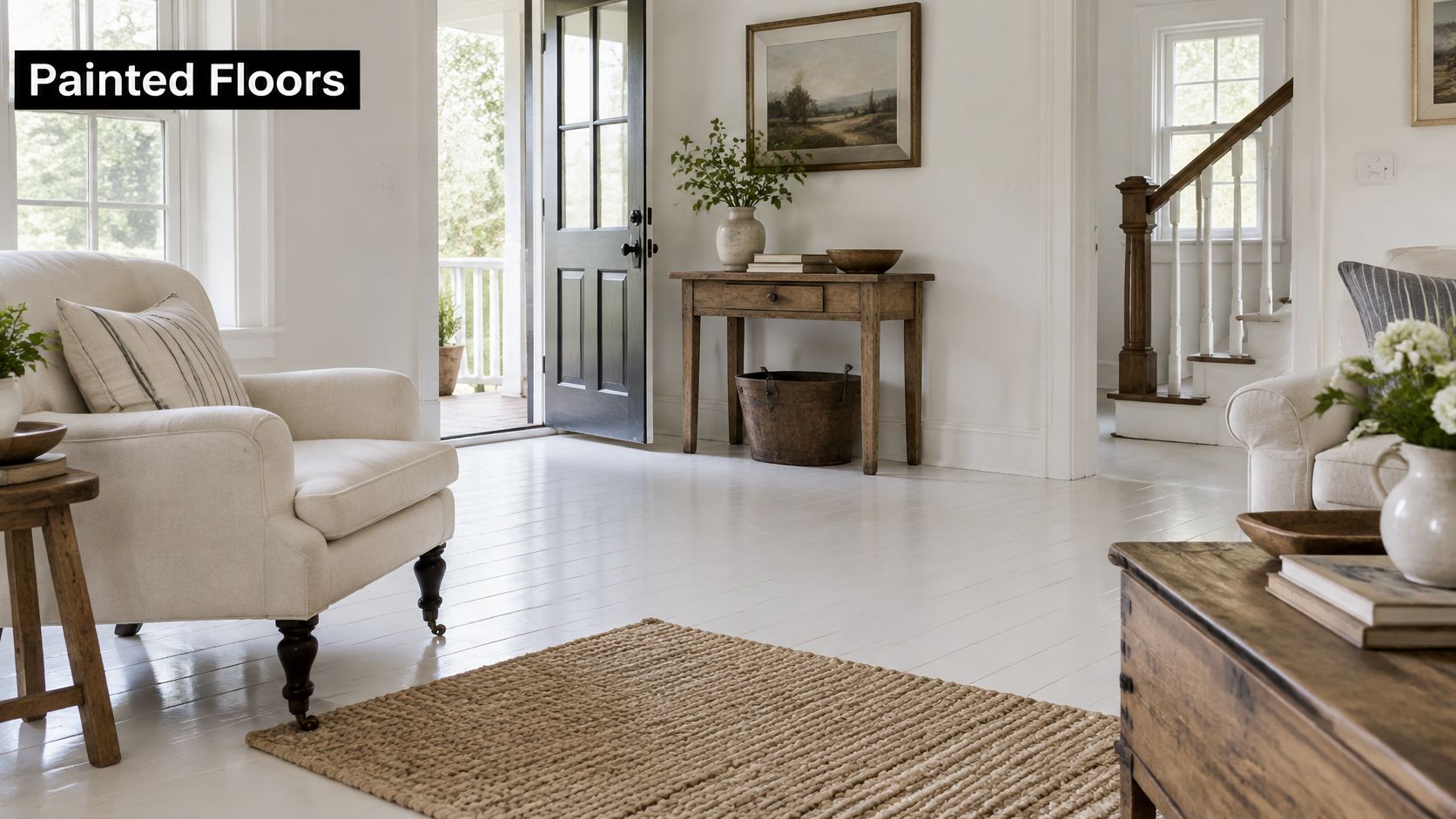
Two patterns are worth testing on sample boards first. A harlequin diamond pattern in white and pale gray hides dust better than solid white and suits a hallway or laundry room. A simple painted border does the opposite. It keeps the center quiet and makes the floor itself the feature.
Older white paints may contain lead, so test before you sand, scrape, or strip anything.
Run a quick self test. Does the room already lean on white walls and trim, and do you want the floor as background or feature? Then look down. Wide, flat, sound boards fit the tradition. Cupped, loose, or moisture stained boards don't, no matter how good the inspiration photo looks.
Which Rooms Can Take a White Painted Floor
| Room | Suitability | Main Risk | Best Finish |
|---|---|---|---|
| Bedroom | Excellent | Low foot traffic, few spills | Matte water-based acrylic |
| Home office | Good | Chair wheels and scuffs | Satin water-based polyurethane |
| Living room | Good | Heavy foot traffic, sun glare | Satin with polyurethane topcoat |
| Dining room | Good | Chair scraping, spills | Satin with polyurethane topcoat |
| Entryway | Fair | Grit, wet shoes, abrasion | Durable topcoat plus entry mat |
| Kitchen | Fair | Water, grease, dropped items | Satin with polyurethane topcoat |
| Rental unit | Fair | Turnover, scuffs, repainting | Matte or low-sheen durable topcoat |
| Bathroom | Poor | Standing water | Waterproof vinyl or tile instead |
| Basement | Poor | Moisture and humidity | Waterproof vinyl or tile instead |
The logic is simple. Low abrasion, light shoes, and no standing water rank highest. Bedrooms win because people wear socks, furniture rarely moves, and spills get wiped up fast. A home office drops a grade because a rolling chair will grind grit into the film all day. Use a hard chair mat, not good intentions.
Where traffic changes the answer
Living and dining rooms are workable if you're realistic about chairs. Felt pads are not optional, and dining chairs need them replaced when they compress and pick up grit. Entryways and kitchens only rate fair even with a strong topcoat. Shoes bring in sand, dog nails dig in when animals launch off a mat, and dropped pans chip paint in a way they wouldn't chip factory luxury vinyl plank (LVP) flooring or tile flooring.
For households searching for the best flooring for high traffic areas or scratch-resistant flooring for dogs, painted wood is rarely the toughest option. In Alpharetta, Roswell, Marietta, and Woodstock, I often compare it against LVP, laminate flooring, and porcelain tile for mudrooms and kitchens. Paint wins on looks and reuse of existing boards. It loses on dent resistance.
Moisture and sun in North Metro homes
Moisture decides more failures than color ever will. The Consumer Reports flooring buying guide notes that solid wood expands and contracts as humidity changes and is not recommended for basements or other areas that may become damp, while vinyl is waterproof and works as an alternative to tile in kitchens and bathrooms. That's why basements and full bathrooms belong in the waterproof flooring category, not the painted wood category.
Humid Georgia summers push moisture up from crawlspaces and slabs across Cobb County, Cherokee County, North Fulton, and Forsyth County. Before you commit to a ground level room, check for musty odors, cupping along exterior walls, and dark seams that stay damp after rain. A pinless moisture meter reading that jumps near a slab edge is a stop sign, not a prep detail.
Sun matters too. Under large south or west facing windows, white shows dust and throws glare back into the room. Satin is easier to live with there than dead matte because it cleans better and breaks up reflections less patchily. In a shaded north facing bedroom, matte looks softer and hides minor scuffs well.
Practical rule: choose by the room's worst day, a rainy school morning with wet shoes and a dog at the door, not by its average Tuesday.
If that worst day involves standing water, daily grit, or constant chair drag, price waterproof flooring for basements, bathrooms, and entries alongside paint. People searching flooring near me in Canton, Acworth, or Johns Creek usually want a fast answer. The faster answer is useless if you repaint the traffic lane every spring.
Pet, Child and Resale Trade-Offs
Reflects light: white can make small rooms feel larger
Simple touch-ups: paint hides grain and makes color matching easier
Refreshes tired boards: you can revive a worn surface without full replacement
Shows wear: scuffs and chips can appear faster
Exposes contrast: a claw mark through white paint reveals darker wood underneath
Punishes gloss: shiny paint highlights dust, paw marks, and roller texture
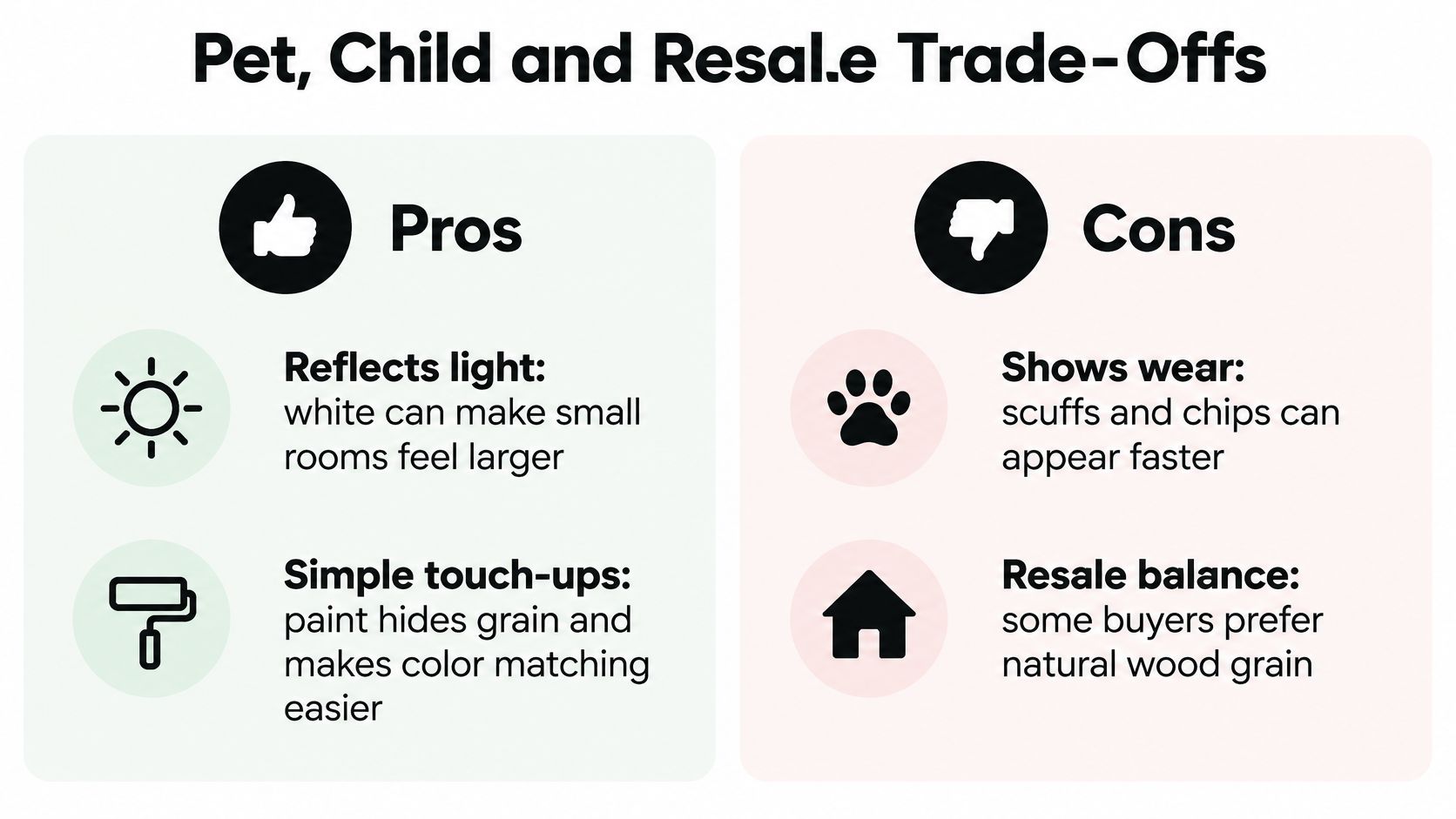
That list only helps if you test it against your house. I use five checks. How visible will soil and paw marks be at the back door? Can a localized touch-up blend, or will the sheen flash at an angle? Which sheen are you picking, because matte and low-sheen disguise minor wear better than gloss? Is there real entry protection, meaning a mat long enough for two steps? And how often does furniture move for cleaning, homework, or rearranging?
Children change the math in a different way than pets. Toy trucks, dropped wooden blocks, and chair legs dragged sideways concentrate force on tiny points. A painted film can handle foot traffic and still chip where a metal toy edge hits it. That's not a product failure. It's physics.
Confirm the boards are stable before you plan around kids or dogs. A board that flexes or gaps seasonally will crack any paint film along the joint, then moisture and dirt work into the crack. Tight, flat boards repaint well. Springy boards need flooring repair first.
What buyers see later
Recent homeowner research summarized in Forbes coverage of 2026 flooring trends lists ease of maintenance, affordability, appearance, and scratch resistance or durability as leading flooring priorities. That order matters. Buyers in Johns Creek, Milton, and Cumming respond to clean, neutral floors, but chipped white paint reads as deferred work, not charm.
Fresh touch-ups before listing are usually easier than a full refinish if the film is still bonded. Keep a labeled quart of the exact paint and topcoat, plus the sheen and product names. Without that, a simple scuff repair turns into color matching under store lighting.
For a true pet-friendly flooring plan, I'd use white paint selectively in lower abrasion rooms or accept a refreshable strategy in busy zones. Whole home white floors in a house with two large dogs and no entry mat is not bravery. It's a repaint schedule.
Ask one question before you commit. Would this floor still look good after a year of your household's worst habits, not your best ones?
Paint or Replace the Existing Floor
Plenty of homeowners would rather save the wood they have. The Bona 2026 trend report reports that roughly three-quarters of American homeowners would rather refinish existing wood than replace it, and it cites an IVL Swedish Environmental Institute study finding refinishing can reduce carbon emissions by more than 89% compared with replacement. That supports restoration in general. It doesn't automatically make white paint the right restoration.
Run five checks before you decide.
- Substrate condition: stable, flat, tight jointed boards are candidates. Cupped, loose, split, or rotting boards aren't.
- Lead risk: test existing paint before sanding or stripping. A positive result changes the method, the crew, and the budget.
- Moisture history: look for water stains, past leaks, soft spots near exterior doors, and a damp crawlspace below.
- Sanding limits: check remaining wood thickness at a floor register or threshold. Thin boards can't take repeated aggressive sanding.
- Reversibility: paint is harder to remove later than a clear finish. If a future buyer would value bare wood, weigh that loss now.
Paint makes sense when boards are sound but ugly. Mismatched repairs, pet stains that sanding won't lift, and patched areas from an old wall removal often look worse under clear finish than under opaque white. Paint unifies what stain would highlight.
Replace when damage is structural or moisture is the cause. painting over active moisture traps the problem under a film and guarantees peeling. At that point, compare hardwood flooring installation with waterproof LVP, laminate, tile, or carpet installation by room. A dry bedroom might justify new hardwood in Marietta or Alpharetta. A damp lower level in Canton usually points to floor replacement with a waterproof product instead.
Paint the floor you have only if the boards underneath deserve another service life.
I would decide room by room. A sound upstairs bedroom can be painted while a water damaged kitchen gets replaced. One rule for the whole house usually serves the budget meeting, not the house.
Choosing a Finish and Sheen That Hides Wear
Judge a white floor by the room's roughest day, not its best-looking one. Grit, wet shoes, pets, and chair legs make scuffs more visible, while a glossier surface can highlight dust and uneven boards.
| Finish | Sheen | Scuff Visibility | Cleaning |
|---|---|---|---|
| Matte water-based acrylic | Flat | Low | Dry sweep, damp mop |
| Satin water-based polyurethane | Satin | Moderate | Damp mop with pH-neutral cleaner |
| Acrylic base with polyurethane topcoat | Satin to matte | Low to moderate | Damp mop |
| Semi-gloss | High | High, shows dust and scuffs | Damp mop |
Matte can soften the look of dust and footprints, making it a practical choice for bedrooms. Satin is easier to clean, a useful trade-off in living and dining areas. An acrylic color base with a polyurethane topcoat combines painted color with a protective surface; consider it for rooms that see more traffic.
Semi-gloss tends to reveal grit, lap marks, and board unevenness. If you're coordinating floor sheen with walls and trim, Soca Services Painting's interior finish guide offers a useful comparison.
Coat count beats color name
An additional topcoat adds film thickness, so abrasion has more material to wear through before reaching the wood. It cannot make a poorly bonded first coat adhere. The full system still depends on a clean, dry, sound surface and compatible primer and finish. For more on protective films, see this guide to polyurethane finishes for hardwood floors.
White near bright windows may reflect more light than a dark floor, but the result depends on how opaque the coating is and how much sun reaches the room. A thin whitewash will look and wear differently from an opaque painted finish.
Check sample boards in morning, midday, and evening light. Window direction and light bulbs can make a white look blue, yellow, or gray. In rooms with strong daylight, glare may matter more to your sheen choice than the paint chip does.
Before work starts, get the finish specification in writing:
- Substrate preparation: cleaning method and repairs included
- Primer compatibility: exact primer paired with the topcoat
- Coat count and recoat interval: number of finish coats and required wait time
- Traffic expectation: intended room use, including pets
How to Prep and Paint a Wood Floor Safely
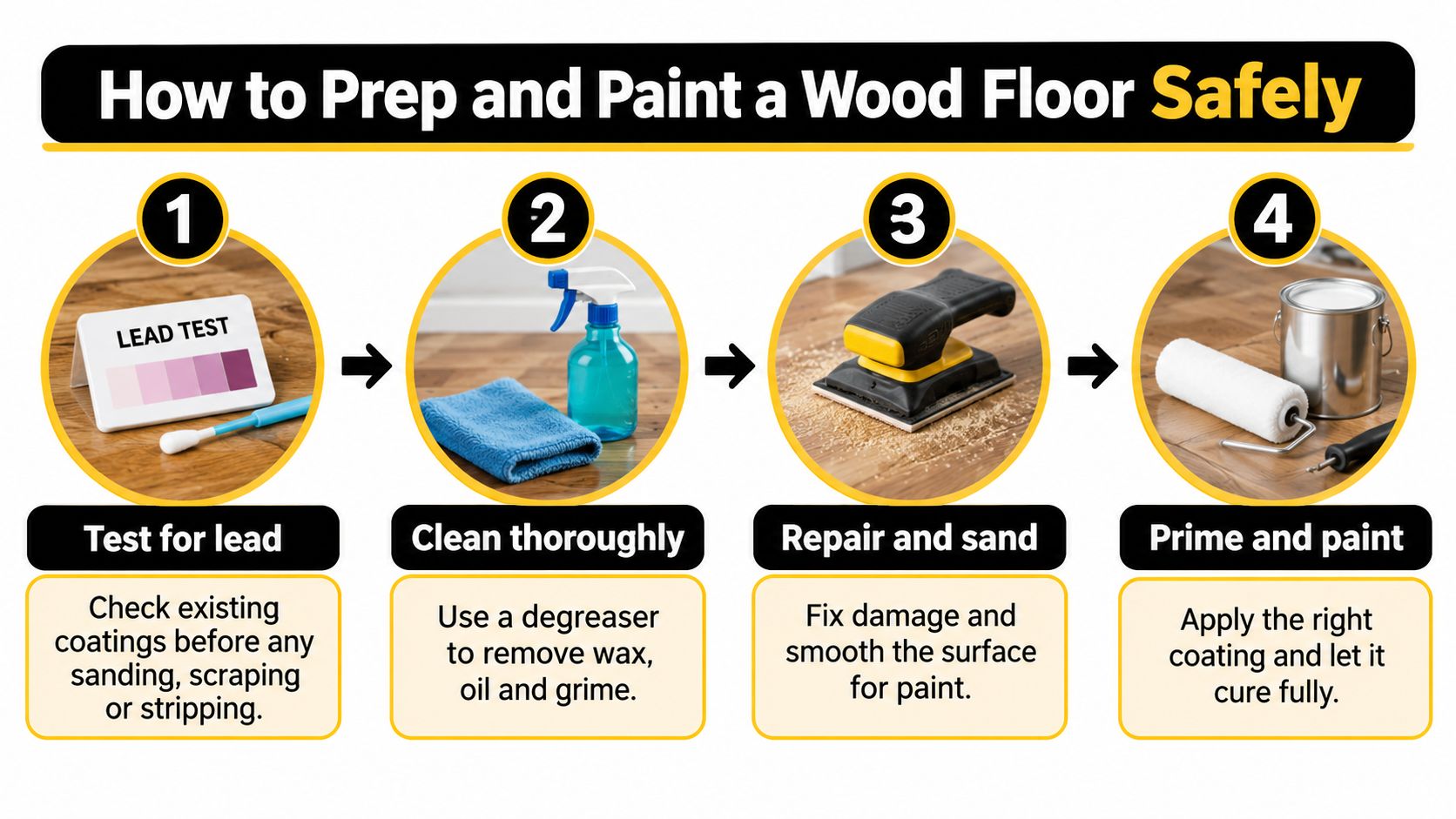
Prep decides whether white paint lasts years or peels by the first holiday. Follow the order. Skipping ahead is how edges lift and footprints ghost through the finish.
Test for lead first. Check existing coatings before any sanding, scraping, or stripping, since older white paints may contain lead. A swab test is a screen, not a clearance for aggressive sanding. If it's positive or unclear, stop and get lab confirmation or professional help.
Degrease the whole floor. Use a degreaser to remove wax, oil, cooking residue, and silicone based cleaners. Residue blocks adhesion invisibly, then the paint releases in sheets where someone once sprayed polish every week.
Repair movement before cosmetics. Screw down loose boards into joists where accessible, fill gaps that are true gaps, and replace split or soft boards. A rocking board will crack its paint film no matter which premium brand you buy.
Sand lightly to dull, not to strip. After a negative lead test, scuff sand with 120 to 150 grit on a pole sander or orbital sander to remove shine. You're creating tooth for primer, not flattening the floor. Aggressive sanding belongs to a full refinish.
For the mechanics of sanding and priming wood surfaces, that Neasden Hardware walkthrough covers grit progression and dust control in plain terms. It's useful if you've painted cabinets but never a surface people walk on.
Vacuum, then tack. Vacuum with a brush attachment, get the seams with a crevice tool, then wipe with a tack cloth or a slightly damp microfiber pad. Grit left behind becomes sandpaper sealed under your coat.
Apply a bonding primer. Use a primer that's compatible with your finish paint and rated for previously coated wood. This is the most skipped step and the usual reason paint peels first at board edges and door swings. Let it dry fully, not just to the touch.
Lay two thin finish coats. Cut in edges with a brush, then roll with a 3/8 inch nap microfiber roller in the direction of the boards. Wait the recoat time printed on the can. Thick coats look efficient, drip at seams, and cure soft.
Cure before real use. Allow several days before light sock traffic and longer before furniture returns, following the product label. Drag nothing. Lift everything, and put felt pads on before pieces go back.
Ventilation and VOC checks
Ask for emissions data, not just a color card. The U.S. federal architectural coating rules list a maximum VOC content of 400 grams per liter, or 3.3 pounds per gallon, for the floor-coating category. That number gives you a benchmark when you compare primers, paints, and topcoats.
Ventilate during application and curing, and follow the re-entry instructions on the label. Formulation, ventilation, and drying conditions change exposure, so a low odor claim alone isn't a plan. In occupied homes and quick turn rentals around North Metro Atlanta, curing time is part of the schedule, not dead time you can borrow back.
Don't judge the job wet. Judge it after full cure, in daylight, from a low angle.
A good result looks boring in the best way. Coverage is even, seams don't flash darker, there are no roller ridges, and no spots feel tacky after cure. If a thumbnail dents the film easily days later, it needed thinner coats or more time.
What's the most common slip? Primer over a floor that only looks clean. What's the second? Furniture back too early because the room is needed Monday morning. Both are avoidable, and both are expensive to undo once the film tears.
What You Can DIY and When to Hire a Pro
| Task | DIY Friendly | Hire a Pro When |
|---|---|---|
| Dusting and damp mopping | Yes | Never needed |
| Replacing felt pads and adding entry mats | Yes | Never needed |
| Touching up small scuffs | Yes | Color match is visibly off |
| Lead testing of existing paint | Test kit first, then lab if needed | Any positive or uncertain result |
| Sanding or stripping old paint | Rarely | Lead present, large area or uneven boards |
| Full-room priming and two finish coats | Experienced DIYers only | Large area, tight deadline or cupped boards |
| Board repair or replacement | No | Rot, movement or moisture damage |
Don't ask only about the cost to install hardwood or LVP or what a painter charges per room. Quotes move on specifics. The drivers are floor area, existing finish condition, lead testing and any abatement, board repairs, number of coats, topcoat quality, stairs and built ins, and whether furniture moving is included. There's no honest single number without seeing the floor, and you shouldn't trust one.
Ask for a written quote that itemizes prep, primer, coats, topcoat, trim, and cleanup. Have each contractor price lead testing as a separate line, so a positive result doesn't reopen the whole bid after work starts. Compare how each quote handles cure time too. A bid that ignores curing will rush coats in humid weather and leave you with a soft film.
Timing surprises people. A single small bedroom can still take a few days once cleaning, primer, two coats, and cure time are counted. A whole main level with testing, repairs, and stairs runs longer. A fast installation timeline for new LVP is a different promise than a fast paint job, and the two shouldn't be compared day for day.
The upkeep rhythm that protects the film
- Weekly dry sweep: use a soft dust mop to remove grit before it abrades the surface
- Damp mop only: use a pH-neutral cleaner and a wrung out pad, never a soaking mop
- Felt pads and mats: replace pads when they flatten, and size entry mats for two full steps
- Monthly scuff check: catch black marks and edge chips while they're touch up sized
- Annual touch-up: refresh high wear lanes before bare wood shows through
Small scuffs in the paint film can be cleaned, lightly scuffed, and touched up with matching paint. Wear through to bare wood needs spot sanding, spot priming, and usually a full coat across the board or traffic lane so the sheen matches. A dab of paint on raw wood will flash and wear faster than the surrounding film.
Hire a pro when lead is present, boards cup or move, moisture shows up, or the area is large enough that lap marks and fatigue become real risks. For homeowners in Acworth, Canton, and Marietta comparing affordable flooring options, a pro paint job on sound boards can beat replacement cost. On failing boards, it's the most expensive way to delay the inevitable.
Book an In-Home Consultation Before You Paint
A painted floor should be judged against the room's hardest day: wet shoes at the entry, pet claws in the kitchen, or chairs scraping across the finish. Before choosing a white, decide whether the existing boards can be prepared properly and whether regular touch-ups suit your household.
Flacks Flooring offers a free in-home flooring consultation with a flooring specialist, scheduled at your convenience. The specialist asks about your project, helps you consider suitable options, then visits with samples and takes precise measurements before preparing a custom quote. View samples in the room's morning and evening light, beside the trim and rugs. If replacement is the better fit, compare hardwood, luxury vinyl, laminate, and carpet for your needs in Cumming, Johns Creek, Milton, and Forsyth County.
What your written quote should itemize
Flacks Flooring's quoted flooring prices include site preparation, a choice of underlayment, expert installation to the manufacturer's specifications, necessary floorboard trim, site cleanup, and furniture placement to your liking. For a painted-floor proposal, ask for the scope in writing: surface preparation, primer, number of coats, finish, trim, cleanup, schedule, and time before the floor can be used. Those details make it easier to compare the cost of painting with replacing the floor.
Before the visit, gather the details that affect the recommendation:
- Room list: Identify likely paint candidates and rooms you are unsure about.
- Daily wear: Note pets, children, rolling chairs, and the usual entry route.
- Existing finish: Mention the house's age and any old paint layers.
- Current condition: Photograph scuffs, gaps, stains, and damp spots, both close up and across the room.
A consultation is most useful when it settles a practical question: can the boards take the preparation a durable finish needs, or will replacement be the more dependable choice? An in-home assessment also lets you review samples and measurements in the space itself.