
Color swatches don't decide whether a wood floor still looks good in ten years. Moisture control and wear layer thickness do. That's the unglamorous truth behind prefinished hardwood flooring, and it's why you should judge boards in Cumming, Forsyth County, Johns Creek, and Milton the way an installer does, by construction, documented moisture readings, and refinishability, not by a showroom photo. Get those three things right and the faster, cleaner install is a genuine bonus. Get them wrong and you'll be paying for flooring repair long before the finish wears out.
What Prefinished Hardwood Flooring Is and Why It Took Over
Prefinished wood flooring represented roughly 85% of U.S. domestic wood-flooring sales in 2024, up from approximately 75% in 2023, according to Floor Covering News research on hardwood market share. That's not a styling fad. Buyers have moved decisively toward boards that arrive finished, and unfinished wood is now the exception in most residential hardwood flooring installation work.
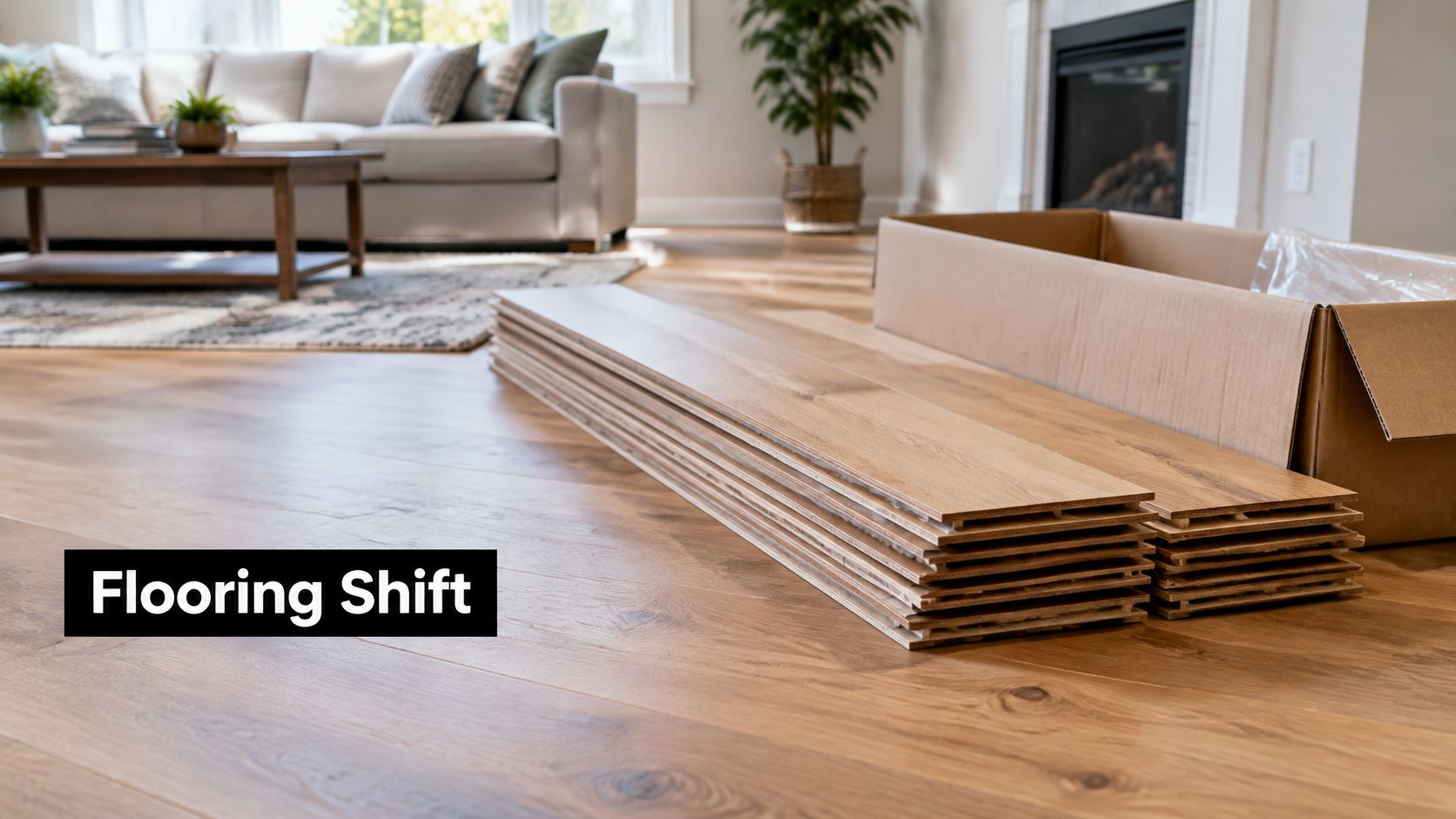
Prefinished hardwood flooring is simple to define. It's solid or engineered hardwood that leaves the factory with stain and topcoat already applied and cured. Your installer lays, cuts, and trims the boards, but nobody sands or coats them in your living room.
Think of a pre-painted door versus one painted after it's hung. The factory version gets even coats in a dust-controlled space, with a consistent cure you can't reliably reproduce in an occupied house. The site-painted version can match anything, but it's slower and messier.
The Two Constructions You'll Actually See
Solid prefinished boards are one piece of wood from top to bottom, usually nailed or stapled to a wood subfloor above grade. They offer generous wood above the tongue for future sanding, but they move more with seasonal humidity and don't belong directly on concrete.
Engineered prefinished planks bond a real hardwood wear layer over a plywood or similar stable core. You walk on real oak, hickory, or maple, while the cross-layered core resists cupping and gapping. That stability is why engineered construction suits wider planks, slabs, and rooms where solid wood is a poor risk. The trade-off sits in that wear layer. A thick one can be refinished, a thin veneer often can't.
Three decisions matter from here. First, does the factory-finish method fit your household and timeline better than finishing in place. Second, can your home meet the moisture conditions the install requires. Third, do the construction, wear layer, and warranty specs protect you after the crew leaves. Answer those in order and style selection, modern, farmhouse, or classic, becomes the easy part.
Prefinished vs Site-Finished Hardwood Side by Side
| Factor | Prefinished | Site-finished |
|---|---|---|
| Where the finish is applied | Factory, under controlled curing | On site, after boards are installed |
| Dust, noise and odor on install day | Lower, because sanding and staining are skipped | Higher, with sanding and coats done in the home |
| Time before rooms are back in use | Shorter, with no on-site coats to cure | Longer, while multiple coats dry and cure |
| Finish consistency | More even thickness and cure | Uneven risk from crew, humidity and conditions |
| Custom color matching | Limited to manufacturer options | Full custom stain possible |
| Refinishing later | Possible only with sufficient wear layer thickness | Can be sanded and recoated in place |
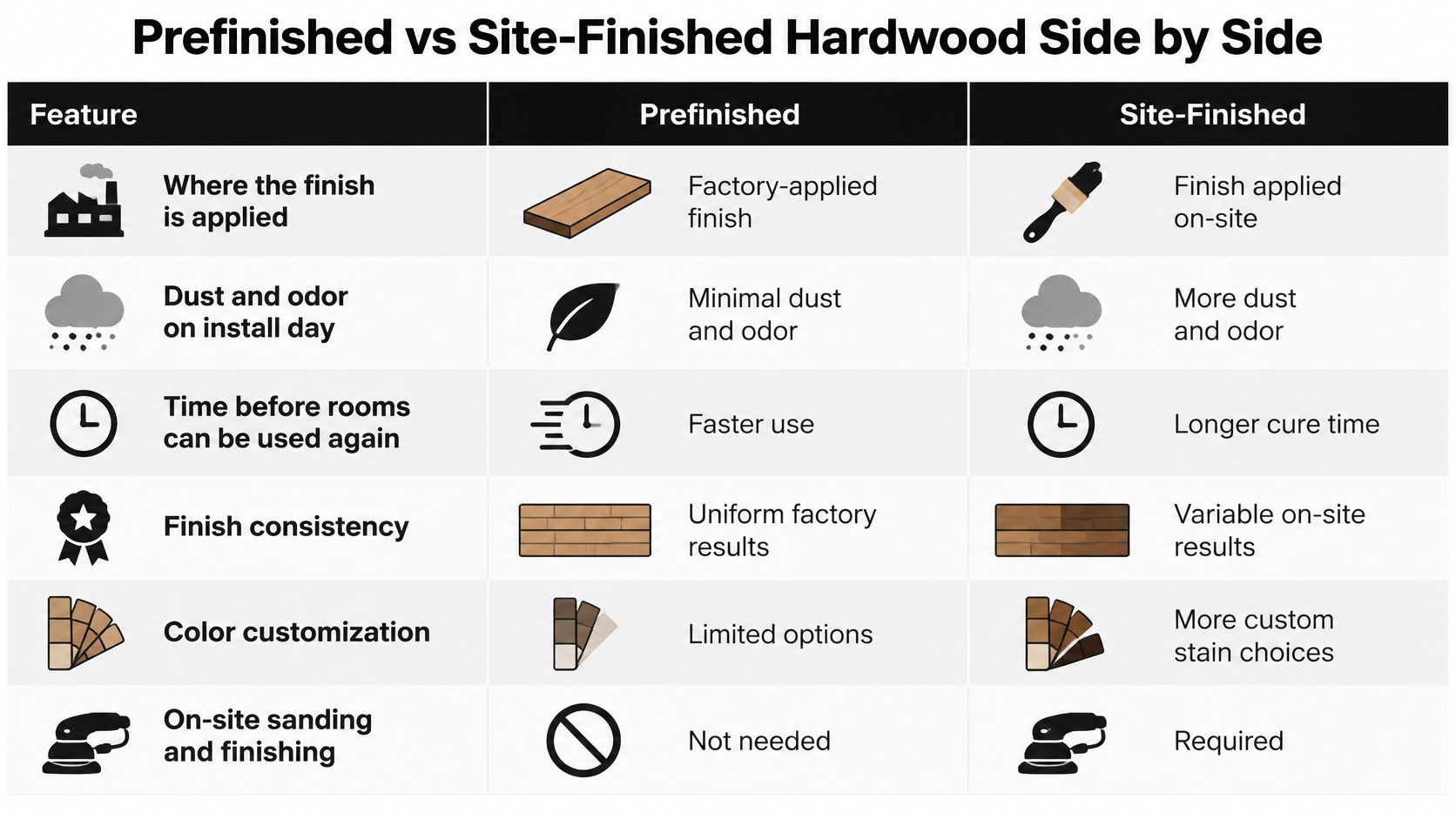
The rows point to one core difference. Prefinished moves the disruptive work off your property. Because sanding, staining, and multiple finish coats happen before delivery, installation creates less dust, noise, and odor, and rooms don't sit empty waiting for a cure. That efficiency advantage is covered in Woodworking Network reporting on the hardwood flooring market, and it's the strongest reason most occupied-home renovations choose this format.
Site finishing offers one real advantage. A crew finishing in place can mix a custom stain, blend new boards into existing floors, and produce a flat surface with no micro-bevels between boards. If exact color matching across an older Marietta or Roswell home matters more than schedule, that's a legitimate reason to accept the disruption.
Where Prefinished Wins and Where It Doesn't
- Faster occupancy: You can usually walk on the floor and replace furniture without a multi-day cure window.
- Consistent factory cure: Controlled coating thickness beats conditions that shift with weather and open windows.
- Fewer trades on site: One install crew finishes the job, which simplifies scheduling for contractors and designers.
- Lower disruption: This is the practical choice for families living through a floor replacement in Alpharetta, Canton, or Woodstock.
Now the honest limits:
- Factory color menu: You're choosing from set stains, not inventing one on site.
- Visible board definition: Micro-beveled edges make each plank read individually, which some homeowners love and some don't.
- Refinishing ceiling: A thin engineered veneer may allow only a recoat, so today's savings can shorten the floor's service life.
A factory finish improves abrasion resistance. It does not make any hardwood floor waterproof, and it never excuses wet mopping or an unaddressed leak.
My verdict is direct. Choose prefinished for occupied homes, rental turns, tight resale timelines, and busy kitchens where downtime costs you money. Choose site-finished when a fully custom color, a historic match, or a uniform single-tone field matters enough to vacate rooms and absorb dust and drying time.
Matching Prefinished Hardwood to Each Room and Use
| Space or use | Fit for prefinished | Check before buying |
|---|---|---|
| Living room and bedrooms | Strong fit with low moisture exposure | Species, finish warranty and traffic class |
| Kitchen and entry | Good fit, since the factory coating resists abrasion | Cleaning limits, wear layer and spill response |
| Basement or ground-level room | Caution, because moisture drives performance | Confirm moisture control first and consider waterproof alternatives |
| Light commercial office or retail | Strong fit with faster occupancy | Commercial traffic rating and warranty terms |
| Rental or temporary home | Strong fit for long holds with a refinishable layer | Refinishability and removal plan |
Living rooms and bedrooms are the safest territory. Moisture exposure is low, traffic is predictable, and your main job is matching species hardness and finish warranty to household use. If you're comparing oak, hickory, and maple for dents and grain character, use this guide to hardwood species for North Metro Atlanta homes before you fall for a stain color.
Kitchens and entries are a good fit, with conditions. These are the best flooring for high traffic areas questions in miniature. The factory coating handles grit and chair movement well, but you need mats at exterior doors, felt pads under stools, and fast spill cleanup. Ask for the manufacturer's cleaning limits in writing, because steam mops void more warranties than dogs do.
The Rooms That Need a Harder Look
Basements and ground-level rooms on slab are where I stop homeowners most often. Engineered prefinished planks can work below grade when slab moisture tests pass and the manufacturer allows it. Solid boards generally shouldn't go there. If water exposure is likely, waterproof flooring for basements is the smarter search, and waterproof luxury vinyl plank (LVP) flooring often beats hardwood on risk alone. Confirm slab or subfloor moisture before choosing either product, not after delivery.
Light commercial offices and retail spaces in Johns Creek and North Fulton suit prefinished boards because faster occupancy protects revenue. Check that the warranty carries a commercial traffic classification. A residential-only warranty in a retail space is worth very little when the finish dulls at the entrance.
Rentals reward a different calculation. Refinishability and an exit plan beat first-day appearance, because a floor you can screen and recoat between tenants costs less than one you must replace. Owners weighing that trade-off will find useful context in Edinhart Realty's rental flooring recommendations, particularly on balancing durability against turnover cost. Renters in Acworth or Canton should also confirm in writing who owns the floor at move-out and what removal involves.
Pet-friendly flooring deserves plain talk. For scratch-resistant flooring for dogs, prioritize an aluminum oxide reinforced factory finish and a wear layer thick enough for later sanding. Claws can still mark wood, so trimmed nails and entry rugs matter more than species choice. If that risk bothers you daily, laminate flooring or LVP may suit your household better than any hardwood.
Specs That Decide How Long Your Floor Lasts
Appearance and price are weak predictors of lifespan. Four specifications decide whether your floor is a thirty-year asset or a costly redo, and you can verify all four before ordering.
- Board construction: Confirm whether you're buying solid wood or engineered planks, and name the core material. Plywood cores with cross-banded plies resist seasonal movement better than cheap fiberboard cores, and construction determines where the product can be installed at all.
- Wear layer thickness: This is the single most skipped question in flooring near me searches. A thick sawn wear layer can be sanded and refinished like solid wood. A thin sliced or peeled veneer may allow one light recoat and nothing more. Ask for the measurement, not the marketing label, and ask whether the product qualifies as refinishable.
- Warranty traffic class and cleaning limits: Read what the warranty covers, residential or light commercial traffic, finish wear-through or structural failure, and which cleaners or moisture exposures void it. A long warranty with narrow conditions protects you less than a shorter one written for real households.
- Documentation for composite components: Engineered cores, adhesives, and underlayments all contribute to what enters your indoor air. Request emissions paperwork for the full system, not just the board.
What the Finish Can and Cannot Do
Factory finishes cured under controlled temperature and ultraviolet conditions, often reinforced with aluminum oxide or ceramic, resist abrasion and staining better than many site-applied coatings, as explained in the Bruce homeowner guide to prefinished hardwood flooring. That helps most in entries, kitchens, and light commercial areas. It still isn't waterproofing. Standing water, plumbing leaks, wet mopping, and moisture migrating through a slab will damage wood under any topcoat.
On formaldehyde, skip claims like zero emissions and check labels instead. EPA's TSCA Title VI limits formaldehyde emissions from hardwood plywood to 0.05 ppm and requires covered composite wood products to be labeled compliant after March 22, 2019, a threshold and date also noted in the Bruce guide linked above. Compliance labeling for plywood cores is a concrete purchasing check you can photograph and file.
For households with asthma, infants, or chemical sensitivities, treat ventilation as part of the install plan. The EPA guidance on formaldehyde and indoor air quality advises increasing ventilation after new sources are introduced and keeping temperature and humidity lower to reduce emissions from some composite wood products. Prefinished planks remove on-site coating odor, but adhesives and underlayments still deserve the same documentation request.
Installation Timeline and Moisture Prep Before Delivery
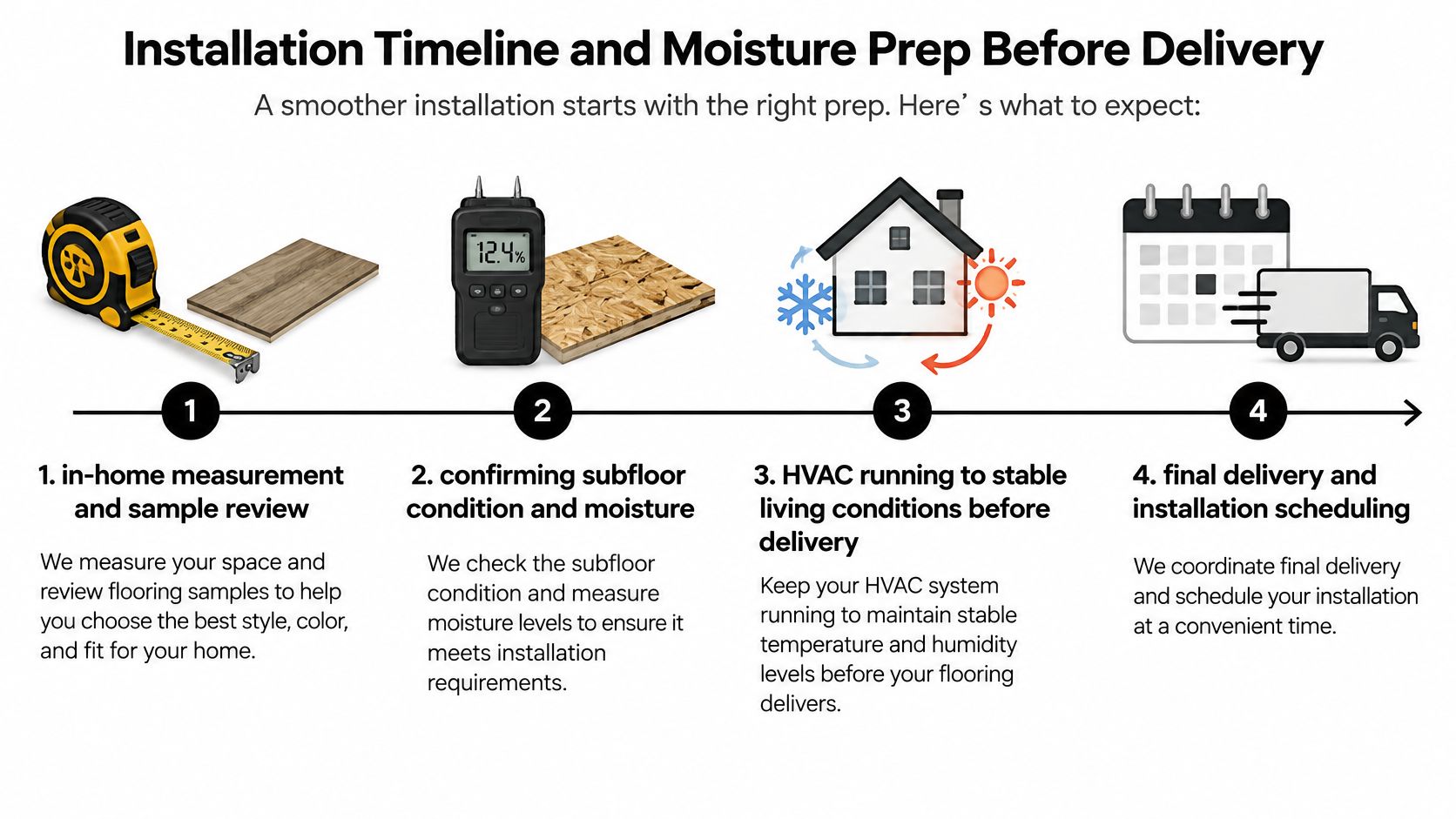
A clean prefinished install looks fast because the slow work happened earlier. Here's the sequence I'd expect any competent crew serving Cumming, Woodstock, and Metro Atlanta to follow, with the slip that usually causes trouble at each stage.
- In-home measurement and sample review: Precise measurements and samples viewed in your lighting prevent short orders and color regret. The common slip is measuring from a listing's room dimensions.
- Subfloor and moisture confirmation: The crew checks flatness, squeaks, and moisture with a pin or pinless meter on wood, or proper slab testing on concrete. If your project sits on a slab, learn how to test concrete for moisture before flooring installation so you can read the results yourself.
- HVAC running at living conditions: Heating and cooling must operate before delivery so the house, not the warehouse, sets the boards' moisture level. Installing into a house that's been sitting unconditioned is the most common cause of gaps months later.
- Acclimation in the rooms: Boards rest in the spaces where they'll be installed until their moisture content matches expected in-use conditions. Stacking them in a garage doesn't count.
- Removal of old flooring and furniture: Carpet installation tear-out, old laminate, or tile flooring demolition happens now, with disposal and subfloor repairs exposed and priced fairly.
- Underlayment and layout: The crew sets moisture barriers or underlayment where specified, then plans board direction, racking, and transitions at doorways before the first plank locks in.
- Board installation with trim: Nail-down, glue-down, or floating methods follow the manufacturer's specifications for that product. Shoe molding and transition strips finish the edges.
- Cleanup and furniture placement: Everything goes back, with felt protectors on furniture feet before anything slides across a new finish.
Moisture Is the Controlling Variable
The National Wood Flooring Association installation guidelines recommend occupied interiors near 60 to 80°F and 30 to 50% relative humidity, with flooring moisture content within about 2 percentage points of expected in-use moisture content before installation. Wood expands as humidity rises and contracts as it falls. No coating changes that physics.
| Condition | Target | Why it matters |
|---|---|---|
| Indoor temperature during occupancy | 60 to 80 degrees Fahrenheit | Keeps wood from swelling or shrinking with temperature swings |
| Relative humidity | 30 to 50 percent | Stops boards from expanding in humid air and shrinking in dry air |
| Flooring vs in-use moisture content | Within about 2 percentage points | Reduces cupping, crowning, gaps and adhesive failure |
| HVAC operation | Running before delivery | Establishes stable conditions before boards arrive |
Georgia's mixed-humid climate tests both ends of that range. Cobb County and Cherokee County summers push indoor humidity up, so a dehumidifier may be necessary, while winter heating dries the air enough that humidification prevents shrinkage gaps. A subfloor that looks dry proves nothing. Only meter readings do.
Handoff rule: Don't accept the finished job without a written record of subfloor readings, flooring readings, indoor temperature and humidity, and the manufacturer's permitted installation range.
Put the schedule in writing too. Ask your installer to state how many days the install needs for your square footage and room count, which rooms must stay vacant during moisture checks, and who moves furniture. Fast installation timelines are a real advantage of prefinished products, but speed claims mean nothing without those specifics attached to your actual floor plan.
What Prefinished Hardwood Costs and What Drives It
Start with a benchmark, then stop trusting it. The average cost of professional hardwood-floor installation was $4,723 in 2025, with most projects ranging from $2,469 to $7,034, according to HomeAdvisor hardwood installation cost data. That's a general hardwood figure, useful for spotting quotes that are wildly off, useless as a prediction for your Cumming or Alpharetta home. For a local breakdown of what the cost to install hardwood or LVP includes, compare your quotes against this hardwood flooring installation cost guide.
What moves your price:
- Square footage and layout: Hallways, stairs, and diagonal patterns add cuts and labor faster than open rooms.
- Species and board grade: Wider planks and cleaner grades cost more than narrow character-grade boards.
- Board construction: Thick wear layer engineered products carry higher material cost and longer service life.
- Subfloor repair and moisture mitigation: Leveling, slab sealing, and replacing damaged underlayment are legitimate line items.
- Removal, trim, and furniture moving: Old carpet, tile, or laminate removal plus disposal belongs in the scope, not in a surprise invoice.
A low quote usually wins by omission. Underlayment, transitions, cleanup, and furniture placement disappear, then reappear as change orders. Commercial readers face the same scope trap at larger scale, which is why understanding tenant improvement allowances matters before signing a build-out budget for office or retail flooring in Forsyth County.
Affordable flooring options exist at every tier, but affordability means total scope per year of service, not the cheapest board. Our quotes are all-inclusive, covering site preparation, a choice of underlayment, installation to manufacturer specifications, necessary trim, full cleanup, and furniture placement, so you can compare offers line by line. Before signing anything, confirm scope, moisture work, warranty terms, and the install timeline in writing. Four confirmations, no surprises.
Choose Prefinished Flooring for Your Space and Book a Visit
Start with the room, not the board. A floor that suits a quiet guest room can disappoint in a busy kitchen or entry.
- Decide how much disruption you can handle: Prefinished hardwood is the practical choice when you want a faster installation and to remain in the home during the project.
- Set the performance floor first: Use the busiest room to establish the wear layer, traffic rating, and emissions documentation every candidate product must meet.
- Confirm moisture readiness before delivery: The project should document HVAC operation, subfloor moisture readings, acclimation requirements, and responsibility for correcting a failed reading.
- Match the board to daily use: Pets, rolling chairs, frequent entertaining, and direct sunlight should narrow the field before color or board width enters the decision.
- Book the free consultation: Seeing samples under your home's lighting and having the space measured turns a general estimate into a useful quote.
What a Good Consultation Actually Adds
A consultation earns its place by turning options into a written plan. Flacks Flooring schedules a FREE In-Home consultation at your convenience. The flooring specialist asks about your project, helps you choose suitable products, measures the space precisely, and presents pricing and financing options before issuing a custom quote.
Use that time to test your shortlist against the room's real demands. Ask how the product's wear layer handles traffic, what manufacturer requirements apply, and how moisture readiness will be documented before installation day. If a below-grade room or another challenging space makes hardwood a poor fit, ask the specialist to compare waterproof flooring, luxury vinyl, laminate, or carpet instead.
Flacks Flooring is a family-owned Cumming business with more than 30 years of experience. Appointments are recommended but not required, so you can visit the showroom, walk on different flooring choices, and speak with a specialist when convenient. Bring your room dimensions, moisture questions, household traffic patterns, and any priorities for timing or furniture placement.
Ready to compare prefinished hardwood samples in your own light and receive a written, all-inclusive quote? Book a free in-home consultation with a flooring specialist who will discuss your project, help you choose products, measure precisely, and explain pricing and financing. For homes in Cumming, Johns Creek, Milton, or elsewhere in Forsyth County, visit Flacks Flooring to schedule a consultation or plan a showroom visit.